


























Zach Woods steps away from the sardonic cadence of Silicon Valley to explore intimacy and dislocation in his feature directorial debut, The Accompanist. The narrative begins in the quotidian rhythms of New Jersey, where nine-year-old Emily lives under the care of her grandfather, whose cognitive decline abruptly destabilizes her life. She is placed with Sylvia, a 73-year-old foster parent whose eccentricity and wry charm disguise layers of grief.
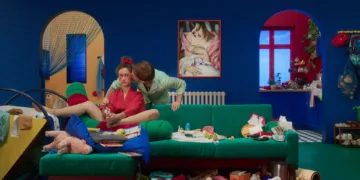
The film positions itself at the intersection of realism and subtle fantasy, occasionally slipping into dreamlike sequences that visualize memory and loss. Woods’ eye for setting renders Sylvia’s home almost storybook in its cluttered warmth, a space where past trauma and present care collide. At its center, the film interrogates the fragile architecture of found family, the invisible inheritance of grief, and the tender, sometimes awkward, ways intergenerational connections form.
The emotional stakes—Emily’s uprooting from her only family figure and Sylvia’s confrontation with her late daughter’s memory—infuse the story with both melancholy and the odd humor of survival, suggesting that even fractured lives can produce unexpected symmetries.
Portraits of Complexity: Sylvia and Emily
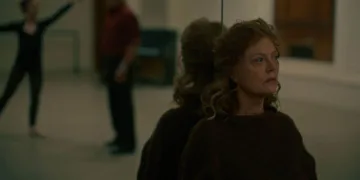
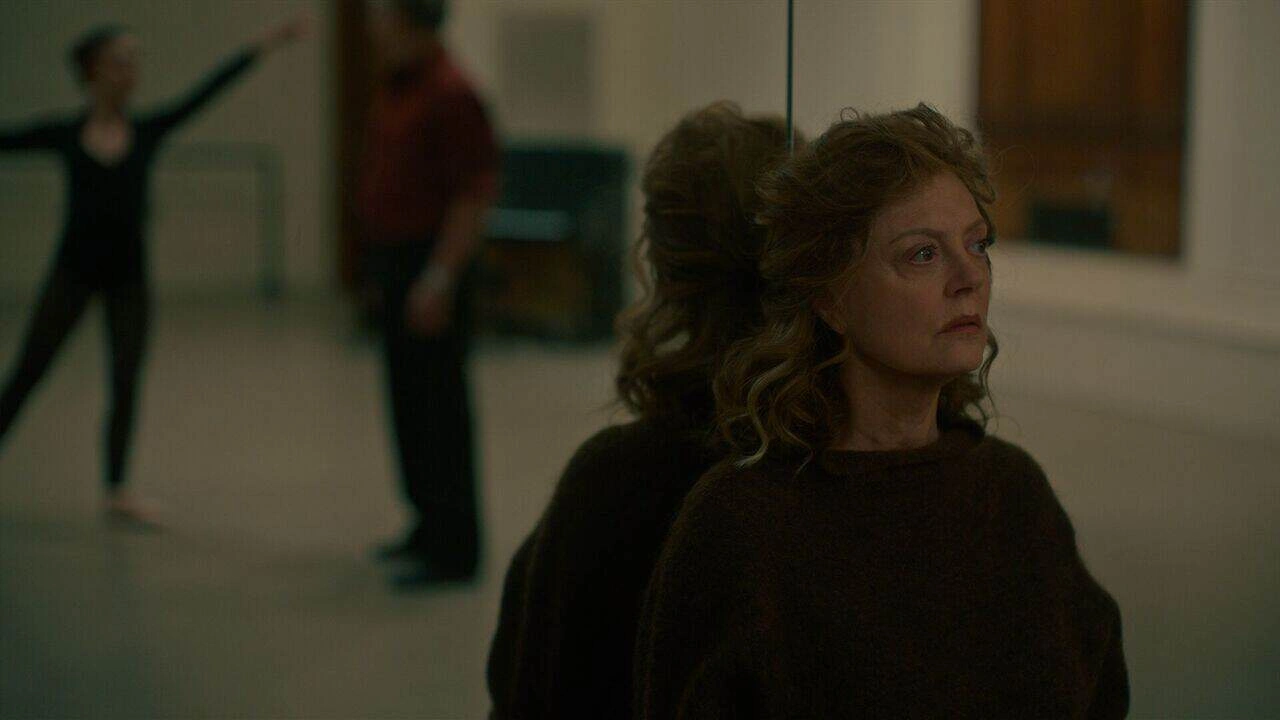
Sylvia, played by Susan Sarandon, is a study in contradictions. Mischievous yet emotionally burdened, she wields chain-smoking, pranks, and rule-bending as both armor and expression. Her grief for Nadia, glimpsed through flashbacks and hallucinations, informs her tentative approach to Emily, revealing a caregiver simultaneously capable of warmth and reckless oversight. Sarandon balances melancholy and levity, making Sylvia believable as a woman in her mid-70s negotiating both desire for connection and fear of repeating past failures.

Emily, embodied by Everly Carganilla, is at once precocious and fragile. Her uncontrollable twitches, possibly indicating Tourette Syndrome, signal a body that acts against her will, mirroring the instability in her family life. She oscillates between childlike dependence and reluctant agency, acting as quasi-caregiver to her ailing grandfather before entering Sylvia’s orbit.
The evolution of their bond is delicate. Early mistrust softens into moments of levity and tenderness: an impromptu night in a playground, piano practice as a conduit for Sylvia’s memories, small gestures of reassurance that carry disproportionate weight.
Kevyn Morrow’s Martin anchors the narrative with quiet fragility, while Aubrey Plaza’s social worker Sarah introduces bureaucratic friction, her ineptitude serving as foil to Sylvia’s idiosyncratic care. The chemistry between Sarandon and Carganilla emerges as the film’s axis, sustaining emotional authenticity amid narrative quirks and tonal shifts.
Family, Loss, and the Fragility of Connection
The narrative unfolds along a series of disruptions: Emily’s near-accident, her removal by social services, and her reluctant acclimation to Sylvia’s household. Woods alternates between grounded drama and magical realism, deploying flying sequences and shared dreamlike memories of Nadia to externalize grief and memory. These moments aspire to emotional abstraction, though occasionally they feel untethered, inviting viewers to question the boundary between hallucination and reality.
Themes of found family resonate strongly. Sylvia and Emily form a bond unmediated by biology, negotiating attachment with cautious optimism. Guilt and grief permeate Sylvia’s actions, as her past as a mother who lost a daughter shapes her willingness to engage, and at times withhold, emotional investment. Childhood vulnerability is foregrounded through Emily’s displacement and burgeoning responsibility, while ethical ambiguity surfaces in both social services’ procedures and Sylvia’s improvisational caregiving.
Subtle story devices enhance thematic depth: Emily learning piano evokes connection across generations, hallucinations illuminate unresolved grief, and recurrent motifs—the neck twitch echoing Nadia’s anorexia—suggest cyclical patterns of trauma.
Pacing varies; grounded, emotionally charged scenes contrast with whimsical interludes, creating tonal oscillations that mirror the instability at the film’s heart. The storytelling invites reflection on caregiving’s moral and emotional complexities, highlighting the imperfect means by which care is enacted and bonds are forged.
A New Jersey Canvas of Reality and Dream
Cinematographer Andre Lascaris frames New Jersey with autumnal intimacy, capturing suburban and domestic spaces that feel tactile yet slightly heightened. Sylvia’s home, cluttered with photographs and objects, becomes a visual extension of her psyche, where nostalgia, memory, and disorder coexist. The mise-en-scène reinforces character: the household is simultaneously safe and chaotic, mirroring Sylvia’s internal contradictions.
Magical realism and hallucination sequences are visually distinctive. Flying scenes and dreamlike interludes employ evocative framing and lighting, though effects occasionally reveal budgetary constraints. Color palettes tilt brighter than reality to evoke storybook warmth, while shadows punctuate moments of vulnerability, emphasizing Sylvia’s emotional landscape.
These visual elements operate in tandem with narrative and character development. The intimacy of shared spaces and the expansiveness of fantastical sequences articulate the oscillation between security and uncertainty. The film’s cinematography and design underscore the tenuous balance of care, the isolation of characters, and the tentative intimacy that emerges between Sylvia and Emily, creating a visual language for connection, memory, and the haunting persistence of loss.
The Accompanist is an American independent family drama that made its official world premiere at the SVA Theater during the 25th annual Tribeca Festival on June 4, 2026. Marking the feature directorial debut of actor-comedian Zach Woods, the film follows a nine-year-old girl who is abruptly extracted from her home by a rookie child welfare worker and placed into temporary foster care with an eccentric, unpredictable older woman. Audiences can currently view the independent production live at select festival screening venues across New York City, while domestic streaming platform rights and wider commercial theatrical release tracking remain under negotiation through its creative sales agencies.
Where to Watch The Accompanist (2026) Online
Full Credits
Title: The Accompanist
Distributor: Caviar, Cinereach, Evil Hag Productions, Lucky Number 8 Productions (Sales agents handling distribution market rights include CAA and Gersh)
Release date: June 4, 2026
Running time: 110 minutes
Director: Zach Woods
Writers: Zach Woods, Brandon Gardner
Producers and Executive Producers: Lauren Bratman, Michael Sagol, Allison Hironaka, Carlos Zozaya, Aubrey Plaza
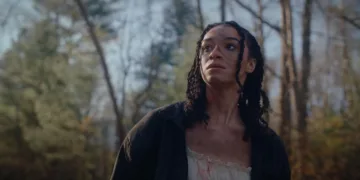
Cast: Susan Sarandon, Everly Carganilla, Aubrey Plaza, Ilia Volok, John Rothman, Helena Howard, Kevyn Morrow
Director of Photography (Cinematographer): Andre Lascaris
Composer: Gavin Bryars, Yuri Bryars
The Review
The Accompanist
The Accompanist is strongest as an intimate two-hander, carried by Susan Sarandon’s bruised eccentricity and Everly Carganilla’s remarkably assured performance. Its foster-care drama has real emotional charge, while its fantasy flourishes can feel strained and tonally uneven. Still, the film’s tenderness, autumnal melancholy, and sharp sense of imperfect caregiving give it a memorable ache.
PROS
- Strong lead performances
- Warm, textured cinematography
- Moving found-family dynamic
- Rich themes of grief and caregiving
CONS
- Uneven magical realism
- Some social-service details feel rushed
- Tonal shifts can distract
- Sylvia’s backstory grows too heavy-handed