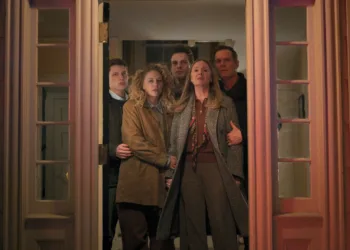












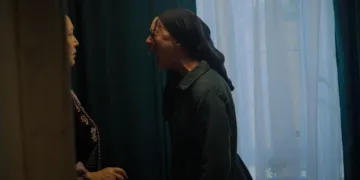











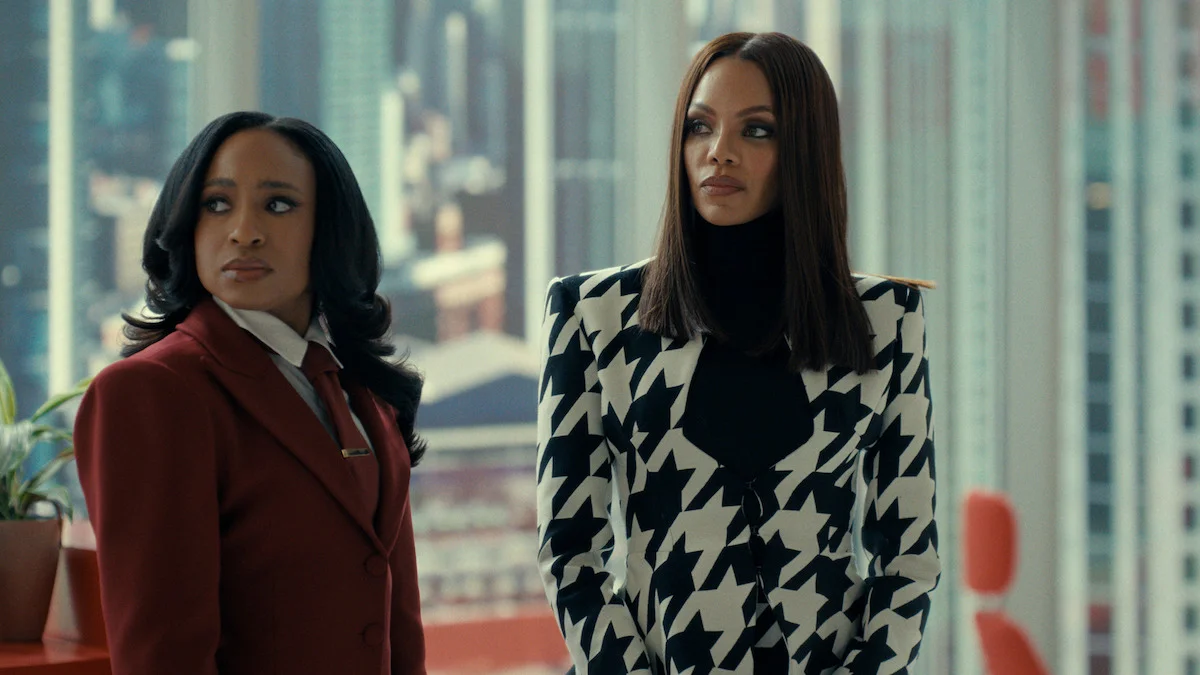

Putting half the Bellarie family in handcuffs should simplify things. Season 3 manages the opposite. Norman, Jules, Roy, and Olivia are hauled away after the FBI operation, Charles remains free, and Kimmie immediately suspects the whole victory has arrived far too easily.
She has a point. Norman has friends in courthouses and police departments, Jules knows where the bodies are buried in every figurative and possibly literal sense, and this family has spent two seasons proving that consequences are usually temporary inconveniences.
That setup gives Beauty in Black a potentially useful reset. Tyler Perry can separate the family, force old alliances to operate under new conditions, and test Kimmie now that she has moved from Delinda’s club into Horace’s world of money and influence.
Instead, much of the first half behaves like a board being arranged for later. Agent Paul tries to turn the imprisoned Bellaries against each other. Roy considers talking. Olivia shouts. Norman schemes. Outside, debts remain unpaid, Varney’s relationship with Charles angers Horace, and Rain begins remaking the club she has bought. Plenty is happening. Very little is landing. That distinction becomes Season 3’s structural problem.
Kimmie Learns the Bellarie Rules
Kimmie has changed most convincingly when the show lets her notice danger before everyone else. Her response to Norman’s arrest is a good example. She does not celebrate. She questions why a man with so many useful connections would suddenly be trapped by an ordinary legal process. Earlier versions of Kimmie reacted to Bellarie power. This Kimmie anticipates it.
Taylor Polidore Williams keeps enough uncertainty in those moments to stop the character becoming Mallory overnight. Kimmie can consider ruthless solutions and still seem disturbed by the fact that she is now capable of considering them. The distinction matters because her rise would mean very little if power simply erased the woman who entered this family from the outside.
Her relationship with Horace is considerably messier. After Horace learns about Charles and Varney, his fury carries the usual Bellarie mixture of control, humiliation, and wounded authority. Kimmie pushes deeper, suggesting that some of his anger comes from jealousy and from freedoms Charles has claimed that Horace never permitted himself. Their subsequent sexual encounter turns that conversation into another deliberately uncomfortable complication. The stronger development arrives with Mallory.
The series once treated Kimmie and Mallory as natural enemies because two women near the same powerful family apparently required a permanent state of war. Season 3 finally gives them something better to do. They recognize that neither is particularly safe inside the Bellarie structure, and cooperation becomes practical.
Their scenes work because trust never becomes complete. Kimmie remembers who Mallory has been. Mallory understands that Kimmie now has access to power she once lacked. Crystle Stewart gets to play the small adjustments inside that relationship rather than another variation on furious confrontation. The friendship develops faster than it should, but at least it changes the geometry of the family. For once, two characters discover that repeating the same feud is optional.
Charles Gets the Story the Season Needed
Charles spends much of Season 3 inside the only plot that consistently understands cause and effect. His relationship with Varney exposes Horace’s hypocrisy first. Horace discovers that the two men have been together and responds with anger toward both of them, particularly Varney, whom he feels has lied to his face for years. Charles tries to explain himself and gets nowhere. Then the story gives Charles something that cannot be solved by another argument.
After killing men who attempt to rob him, he is left with the psychological aftermath and a $250,000 cleanup problem. Olivia is incarcerated. Mallory refuses to rescue him financially. The pressure accumulates until Charles attempts to take his own life in the garage.
The scene matters because the next episode does not magically restore him. Varney intervenes, pushes him toward professional help, and Charles eventually enters treatment. Their goodbye outside the facility, sealed by a kiss, gives the storyline a stopping point without pretending that treatment has repaired years of damage.
Steven G. Norfleet benefits enormously from being allowed to play exhaustion rather than perpetual escalation. The quieter material asks him to show what living under Horace and Olivia has done to Charles, particularly after he begins reassessing his father’s treatment of him.
Seeing Angel dance for Horace sharpens that contradiction. Horace has spent years judging Charles while maintaining desires and relationships he cannot speak about plainly himself. The show leaves Horace’s sexuality undefined, which is one of its smarter decisions. A neat label would solve a character built around refusal. For several episodes, Charles seems to have wandered into a better-written television series.
Prison Schemes and Manufactured Motion
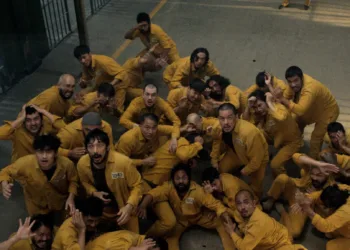
The prison storyline has the opposite problem. It begins with a clear dramatic device: Agent Paul offers Norman, Jules, Roy, and Olivia an exit if one of them talks first. Roy appears ready to take the offer. That should destabilize the whole group immediately. Instead, the story keeps circulating through arguments and threats while waiting for later developments to do the heavy lifting.
Roy’s addiction gives his imprisonment some physical stakes. During withdrawal, he accepts an unknown substance from another inmate, overdoses, and ends up in hospital. Olivia receives considerably less to work with. She spends long stretches functioning as the loudest person in whichever room contains her.
Jules fares better because he eventually acquires a clear objective. After manipulating his way out of custody, he searches for answers about his son Glen’s death. When that search reaches Sylvie, he kills her and moves directly into revenge mode.
From there, his knowledge of the Bellaries becomes useful rather than decorative. He works with Gina and uses his familiarity with the family’s operations against them. The Make It Rain attack finally converts several episodes of plotting into action. Gina signals the shooters, gunfire erupts, and Kimmie and Mallory both go down. The problem is how long the season spends getting there.
Rain’s ownership of the club initially suggests another useful shift in power. She arrives early, announces the changes she intends to make, and immediately faces Gina. Yet the subplot drifts away from the season’s strongest conflicts. The same thing happens with Alex and Trackson. Their elevator fight has a terrific physical wrinkle when the lift suddenly drops during the struggle, but the surrounding feud remains another unresolved thread. Then there are ninjas in the street. At some point, analysis has to respect the evidence.
Beauty in Black has always treated plausibility as a loose recommendation, and that can be part of its appeal. Season 3 gets into trouble because the absurdity once accelerated the plot. Here, it often disguises the fact that the plot is idling.
The Finale Takes Out a Loan
The final stretch finally spends some of the tension the season has been saving. Norman enters Mallory’s home seeking revenge for his wife’s death. Mallory shoots him and leaves him bleeding on the kitchen floor. Horace later arrives, only for Norman to summon enough strength to shoot his brother. Security rushes Horace to hospital while Norman remains behind, badly wounded and laughing.
That is strong soap construction. One action produces another, relationships matter to the violence, and the sequence changes the position of several characters at once. Then the finale repeats the trick until suspense starts looking like bookkeeping.
Roy is hospitalized after his overdose. Horace has been shot. Norman has been shot. Kimmie and Mallory are hit during the Make It Rain assault. Olivia remains behind bars. Jules is still pursuing his revenge. One unresolved fate creates anticipation. Five starts resembling an unpaid balance.
The production cannot always support the scale of the chaos either. Long establishing shots linger on locations without adding tension, some interiors reveal the limits of the sets, and the sound mix occasionally leaves supposedly frantic confrontations feeling strangely flat. Compare that with the elevator fight, where the sudden mechanical drop briefly gives the physical danger a sharp jolt. The show can create tension from craft when it chooses to.
The actors fare best whenever the scripts give them something beyond hostility. Williams and Stewart find a wary rhythm in Kimmie and Mallory’s alliance. Norfleet turns Charles’ collapse into the season’s clearest emotional progression. Once the dialogue returns to repeated insults, curses, and accusations, performances become trapped inside the same note.
Season 3 contains several developments worth keeping: Kimmie has learned to read Bellarie power, Mallory has become a plausible ally, Jules finally has a focused vendetta, and Charles has confronted damage the series previously treated as background noise. The difficulty is that the season keeps handing the consequences of those developments to the next one. Television can defer answers. It still has to finish some sentences.
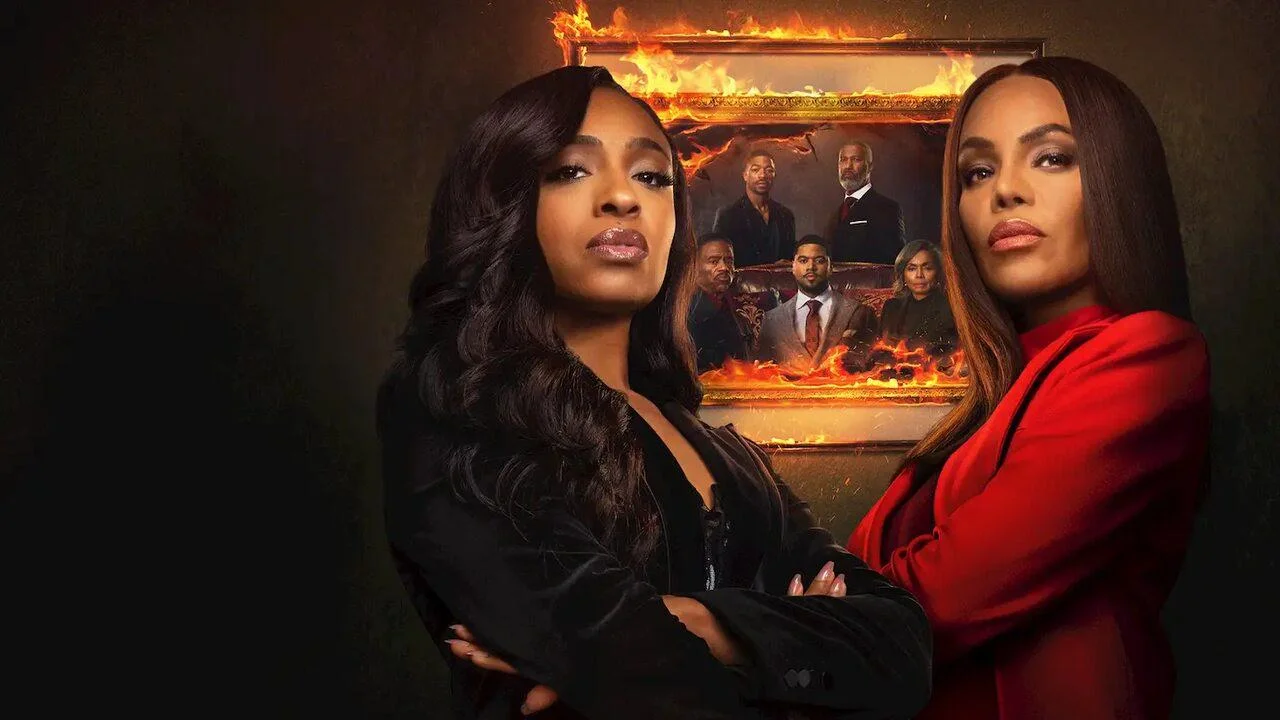
Beauty in Black returned for its third season on Netflix on August 27, 2026. Picking up immediately after the explosive FBI raid on the Bellarie offices, the series plunges back into the high-stakes collision between a wealthy cosmetics dynasty and an exotic dancer fighting for survival.
Where to Watch Beauty in Black Season 3 Online


Full Credits
Title: Beauty in Black Season 3
Distributor: Netflix
Release date: August 27, 2026
Rating: TV-MA
Running time: 50 minutes
Director: Tyler Perry
Writers: Tyler Perry
Producers and Executive Producers: Tyler Perry, Angi Bones, Will Areu
Cast: Taylor Polidore Williams, Crystle Stewart, Amber Reign Smith, Ricco Ross, Debbi Morgan, Richard Lawson, Xavier Smalls
Director of Photography (Cinematographer): Richard Vialet
Editors: Larry Sexton
Composer: Christopher Willis
The Review
Beauty in Black Season 3
Season 3 keeps the Bellaries in motion without giving that motion enough dramatic shape. Charles’ breakdown and treatment provide the rare storyline where action produces lasting consequence, while Kimmie and Mallory develop an unexpectedly effective alliance. Elsewhere, prison schemes, Rain’s detour, repeated confrontations, and late-stage violence feel like pieces being preserved for Season 4. The finale certainly raises the stakes, but leaving Kimmie, Mallory, Horace, Norman, and Roy hanging turns suspense into structural debt.
PROS
- Stronger Charles storyline
- Kimmie and Mallory’s alliance
- Jules’ focused revenge arc
- Several effective late-season shocks
CONS
- Sluggish first half
- Too many unresolved storylines
- Repetitive confrontational dialogue
- Uneven supporting plots
- Weak production polish