














Fifteen years can turn a golf course into a repository of private ghosts. Augusta National offered Rory McIlroy the same fairways every April, the same greens, the same familiar places where ambition had previously curdled into disappointment. Rory McIlroy: The Masters Wait understands that repetition as the defining feature of his relationship with the Masters. Every return carries memory.
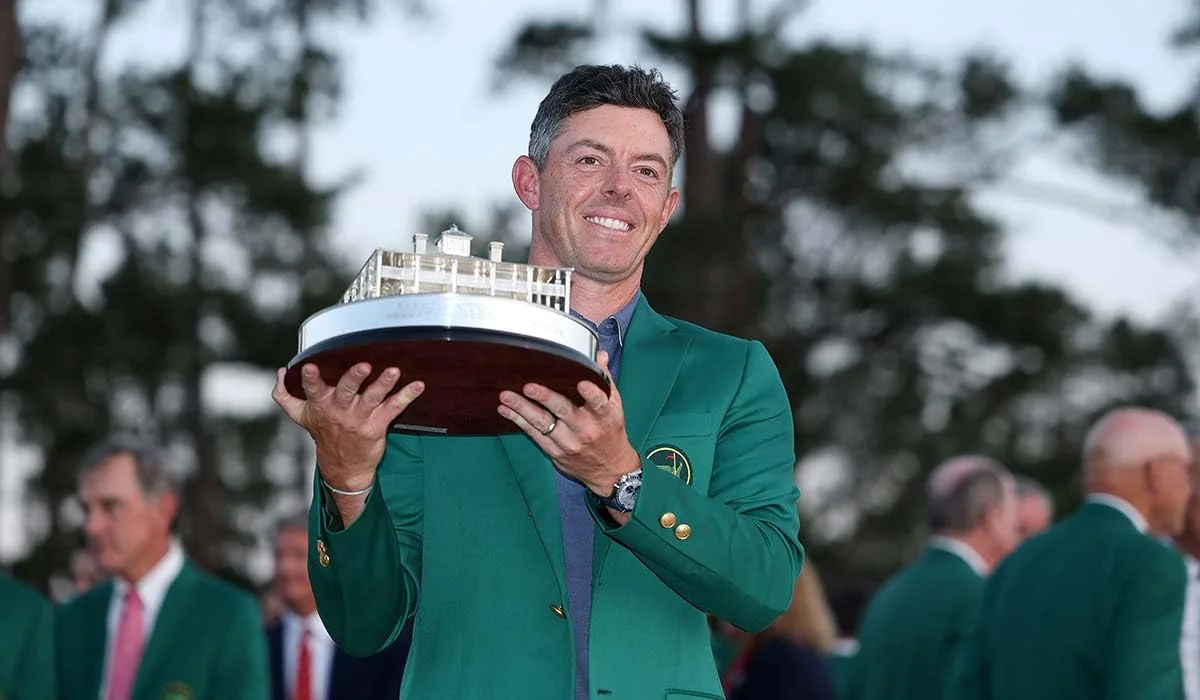
Drea Cooper’s Prime Video documentary, produced with McIlroy’s Firethorn Productions, centers on his 2025 victory, the result that completed the career Grand Slam after victories at the U.S. Open, PGA Championship, and Open Championship. Four majors had arrived between 2011 and 2014. Then came a decade without another.
Augusta made that drought feel especially personal. McIlroy had surrendered a four-shot final-round lead there in 2011, collapsing across the back nine at 21. His later near misses accumulated around that original wound. Cooper consequently treats the 2025 Masters less like the acquisition of another trophy and closer to an argument between a golfer and his own history.
Eighteen Holes of Memory
The documentary’s strongest structural decision is also its simplest: Cooper reconstructs the final round almost hole by hole. The audience knows where the putts eventually lead, yet McIlroy’s Sunday remains tense because control never seems permanent.
The ninth hole supplies one of the film’s best fresh details. After McIlroy and Bryson DeChambeau hit their approaches close, uncertainty arises over whose ball is farther away. DeChambeau suggests flipping a tee to decide who should putt first. McIlroy, apparently bemused by introducing backyard-golf procedure into the final round of the Masters, suggests getting an official measurement. DeChambeau tells him to go ahead. McIlroy makes his putt. DeChambeau misses. Their competitive trajectories begin separating.
Later, McIlroy hooks a long iron around the trees toward the 15th green, a shot Jack Nicklaus describes in the documentary with extraordinary admiration. It embodies the strange texture of McIlroy’s round: moments of almost reckless brilliance arriving beside mistakes that seem ready to awaken every previous Augusta disaster.
Also Read





Cooper recreates several of these shots with McIlroy returning to the course in his Sunday clothing. Dutch angles, blurred figures, tight framing, and heavy blue grading transform Augusta from sporting cathedral into psychological chamber. The idea is clear.
The execution occasionally becomes oppressive. Golf already provides dread through silence, distance, and waiting; it rarely needs to resemble a hospital corridor to prove somebody is anxious. Yet the device reveals something useful about the documentary’s conception of Augusta. The course exists twice, once as physical terrain and once as remembered terrain. McIlroy is playing both.
The People Behind the Jacket
Gerry and Rosie McIlroy give the film the intimacy its famous subject often cannot. Their memories of their son’s childhood at Holywood Golf Club and the work required to sustain his developing career restore ordinary family labor to a sporting story frequently narrated through trophies and rankings. His eventual victory belongs to a professional golfer, yet their interviews make visible the years before anybody knew the investment would pay back.
Rosie’s recollection of crying for over two hours after the winning putt carries greater force than much of the documentary’s polished sports psychology. It is specific, slightly overwhelming, and entirely believable. She has spent years watching her son return to the same place that kept finding new ways to hurt him.
McIlroy offers his clearest insight when distinguishing the victory from events such as his wedding and the birth of his daughter Poppy. Those memories produced happiness. Augusta produced relief. He recalls screaming after winning, releasing something stored through years of Sunday drives away from the course.
That distinction gives The Masters Wait its strongest cultural observation. Elite sport likes to sell winning as fulfillment, yet McIlroy’s reaction suggests something harsher. Some victories arrive carrying so much accumulated expectation that pleasure becomes secondary. First comes release.
The surrounding interview roster includes Nicklaus, coach Michael Bannon, manager Sean O’Flaherty, former caddie JP Fitzgerald, Bob Rotella, and Brad Faxon. They provide useful professional framing, though few penetrate McIlroy’s interior life with the clarity his parents reach almost accidentally. Current caddie Harry Diamond’s absence is conspicuous given his proximity to the turmoil of that final round.
A Film About Waiting That Could Have Waited
There is a productive contradiction buried inside the documentary’s existence. Its entire emotional architecture depends upon delay. McIlroy had to return to Augusta year after year, carrying old failures until the passage of time made the 2025 win enormous. Prime Video then packages that history less than a year later.
The speed matters because the final round remains vivid. For viewers who watched live, much of the sporting material has barely had time to become memory. Cooper can reconstruct tension, but she cannot create historical distance through editing.
Firethorn Productions’ involvement secures remarkable access, including McIlroy’s parents and the Augusta recreations. That closeness carries a cost. McIlroy’s comments about resilience and persistence are sincere, yet the film rarely presses beyond the language elite athletes have learned to use when discussing adversity. The mechanics of his mental recovery, swing decisions, putting adjustments, and changing strategy receive less attention than the emotional narrative surrounding them.
This leaves a curious imbalance. The film spends considerable time telling us how long McIlroy waited while granting little patience to the meaning of the victory itself.
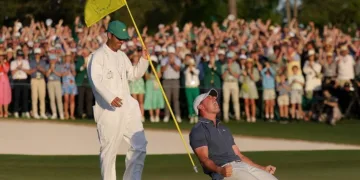
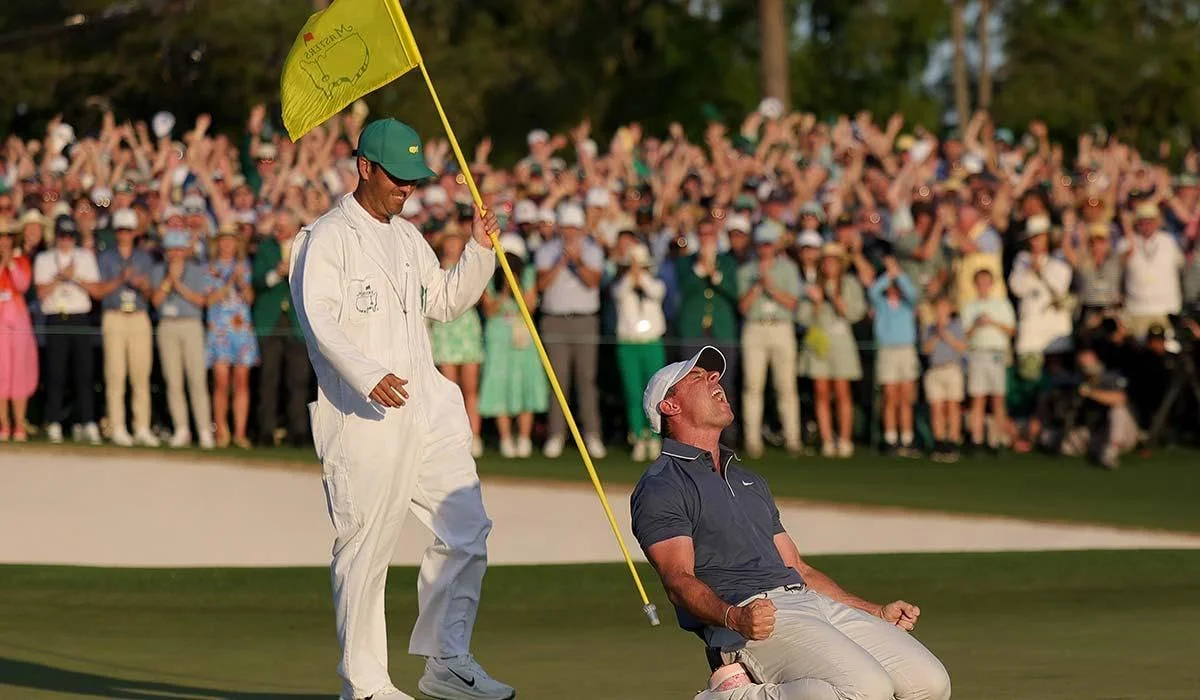
Cooper still lands the image that matters. After the decisive putt, McIlroy drops to his knees. No recreation improves it. No interview explains it better. Years of Augusta disappointment collapse into one involuntary movement, and the body says what the documentary has spent eighty minutes trying to articulate.
Rory McIlroy: The Masters Wait premiered globally on Amazon Prime Video on March 30, 2026. Directed by Drea Cooper, the sports documentary follows professional golfer Rory McIlroy through his emotional, years-long pursuit of the Green Jacket and his quest to complete the career Grand Slam.
Where to Watch Rory McIlroy: The Masters Wait (2026) Online


Full Credits
Title: Rory McIlroy: The Masters Wait
Distributor: Amazon Prime Video
Release date: March 30, 2026
Rating: TV-PG
Running time: 1 hour 21 minutes
Director: Drea Cooper
Cast: Rory McIlroy
The Review
Rory McIlroy: The Masters Wait
Rory McIlroy: The Masters Wait finds its strongest material in the emotional residue surrounding Augusta rather than in fresh revelation. Gerry and Rosie McIlroy give the film its human weight, while Drea Cooper’s hole-by-hole reconstruction restores tension to a result audiences already know. The recreated shots sometimes strain for grandeur, and Firethorn Productions’ proximity to its subject leaves the harder psychological questions only lightly examined. Still, McIlroy falling to his knees after the winning putt carries fifteen years of accumulated failure, expectation, and relief in a single gesture.
PROS
- Powerful parental interviews
- Strong final-round reconstruction
- Genuine emotional payoff
- Effective Augusta access
CONS
- Limited psychological excavation
- Distracting dark grading
- Few genuinely new revelations
- Released too soon