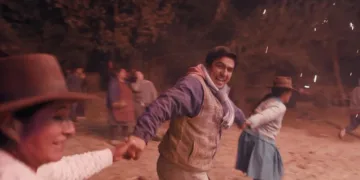













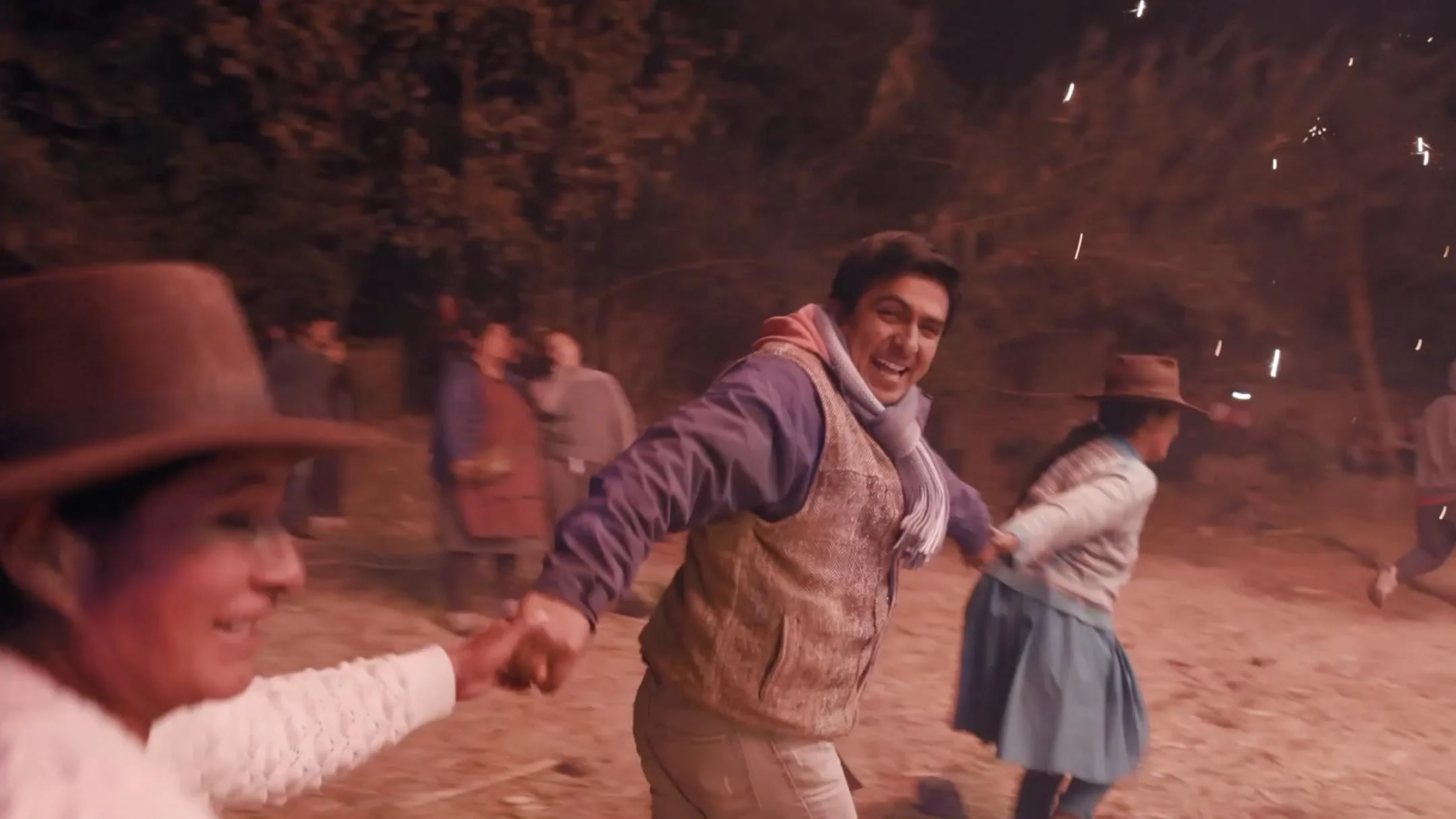

The children do not need Fernando Valencia to explain why his project matters. He presses play on one of his Quechua-dubbed movie clips, familiar Hollywood images fill the screen, and their faces change as soon as the characters speak a language they hear at home. Augusto Zegarra understands the power of that reaction. He keeps the camera with the students long enough for surprise to become delight, giving Runa Simi its clearest expression of what cultural access can feel like.
Fernando has spent years creating these “Quechua Clips” with basic dubbing software, replacing dialogue from popular films and sharing the results online. His ambition eventually fixes on The Lion King, the Disney film he loves enough to attempt in full. That requires a cast, recording facilities, money, and permission from Disney. The last item proves troublesome.
Fernando repeatedly calls, emails, and follows whatever corporate trail he can find. He even reaches The Lion King director Rob Minkoff through social media and speaks with him over Zoom. Minkoff responds warmly, yet Fernando remains no closer to securing official approval. Zegarra lets those dead ends accumulate until the absence of a simple answer starts saying plenty on its own.
Simba in the Spare Room
The film becomes especially affecting once Fernando casts his young son Dylan as Simba. Their improvised recording sessions turn a cultural preservation campaign into something wonderfully ordinary: a father sitting beside his child, listening closely, asking for another take.
Fernando does not treat Dylan as a cute addition to the project. During one session, he works through the emotional meaning of a line, praising what Dylan gets right while gently correcting what still sounds wrong. Dylan responds with the relaxed confidence of someone who trusts the person directing him. His Simba has the brightness Fernando needs, yet the scene matters because the language is passing between generations in real time.
Zegarra quietly builds Fernando’s own history around these sessions. Archival material shows his early talent for voices, while stories about his mother reveal the educational sacrifices behind the man he became. She established the first school in their rural hometown and later worked to give her son opportunities beyond it. Her connection to The Lion King makes Fernando’s fixation on the film feel less like fandom and closer to inheritance.
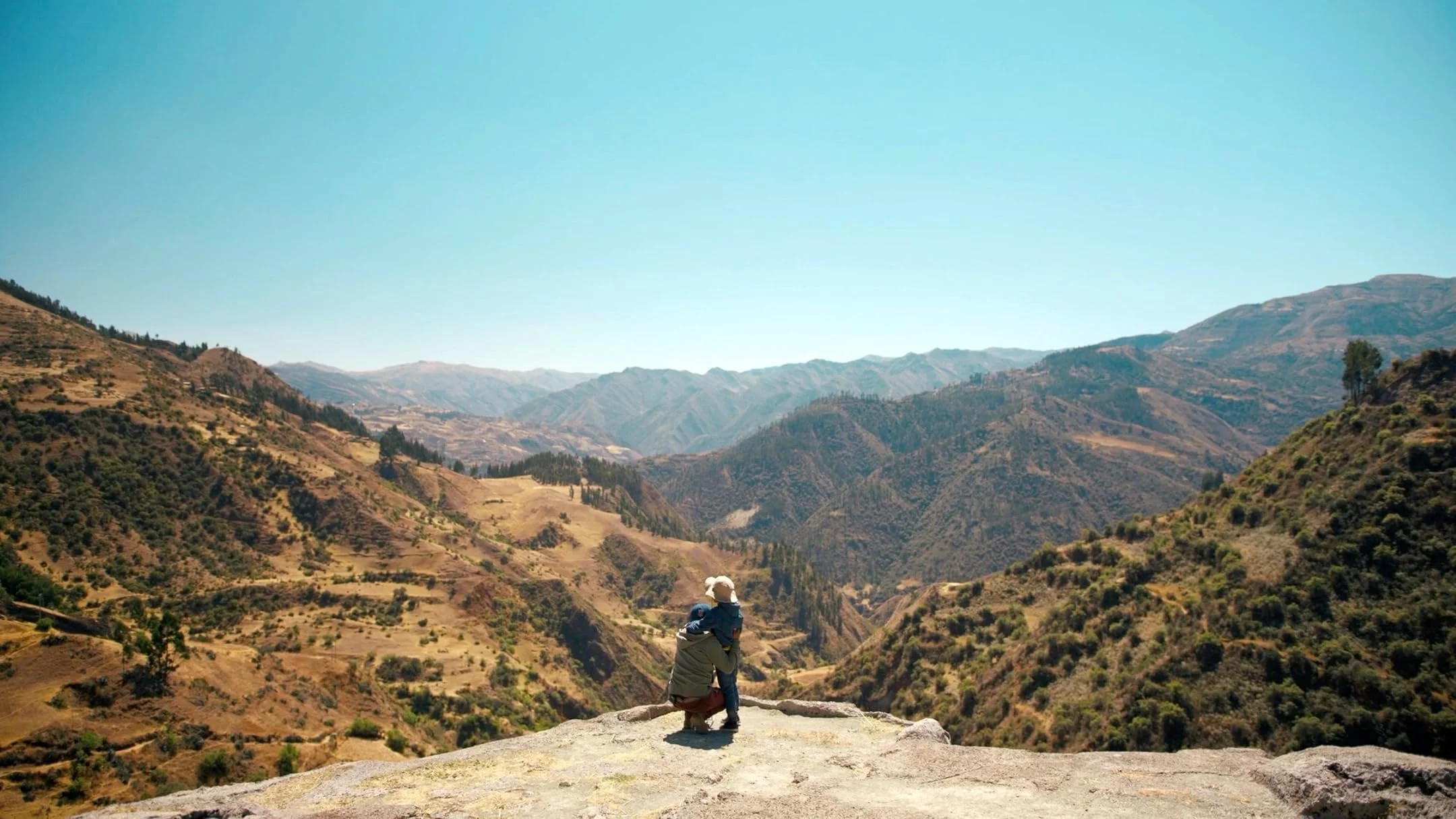
A hillside conversation between Fernando and Dylan pushes the parallel with Simba and Mufasa a little hard. The staging announces its symbolism before the emotion has a chance to arrive naturally. The smaller recording-room exchanges are far stronger because nobody needs to tell us what is being handed down.
Casting a Language Back Into Public Life
Fernando’s open casting call gives Runa Simi room to widen without losing its emotional center. Quechua speakers of different ages audition for the dub, test voices, sing, and talk about what speaking the language has meant in their lives. Suddenly Fernando’s problem with Disney sits beside a deeper problem: people were taught, directly or socially, that their language belonged somewhere private, rural, or inferior.
Zegarra makes that history tangible through performance. An older participant speaks about keeping culture alive through song. Later, hearing a child perform “The Circle of Life” in Quechua turns the audition process into something far richer than a search for suitable voices. A language associated with disappearance fills a song built around continuity.
The Disney question gains emotional weight from these encounters. Fernando wants authorization precisely because he wants his work treated seriously. Yet unanswered messages and institutional referrals keep forcing him toward a strange position where serving a neglected audience risks being treated as infringement.
The film never needs a courtroom argument about copyright. Watching children respond to the clips already establishes the stakes. Popular cinema promises shared experiences, yet those experiences still arrive through decisions about which audiences are commercially worth translating for. Fernando sees a gap and uses the tools he has to fill it.
Persistence on Repeat
Zegarra’s filmmaking stays relatively conventional. Interviews arrive in familiar medium shots and close-ups, while observational footage follows Fernando through schools, auditions, recording sessions, and his attempts to contact Disney. The approach rarely calls attention to itself, which suits a documentary carried by the openness of its subject.
Fernando is extraordinarily easy to follow. He jokes, performs voices, encourages Dylan, accepts another rejection, then tries a different phone number. His optimism could have become sentimental very quickly. Zegarra protects against that by showing the work behind it. Every cheerful interaction sits beside another email, another call, another attempt to find someone willing to listen.
That repetition eventually becomes the film’s main structural weakness. The middle stretch circles through versions of the same obstacle, and at 81 minutes the pattern still begins to drag. Yet each return also makes Fernando’s persistence feel less like a personality trait and closer to a necessary survival skill.
The scenes that remain strongest require no corporate response at all. Fernando watches children hear Quechua through characters they already know. Dylan steps toward the microphone and gives Simba another try. An audition room fills with voices that history has repeatedly tried to quiet. Runa Simi understands exactly where its emotion lives: in the moment someone hears a familiar story and realizes there is space inside it for the sound of home.
Runa Simi premiered at the Tribeca Film Festival in June 2025. The documentary follows a Peruvian radio host and his young son on a quest to dub classic films into Quechua to preserve their indigenous language.
Full Credits
Title: Runa Simi
Release date: June 2025 (Tribeca Film Festival)
Running time: 1 hour 21 minutes
Director: Augusto Zegarra
Producers and Executive Producers: Claudia Chávez Lévano, Paloma Iturriaga
Cast: Fernando Valencia, Dylan Valencia
The Review
Runa Simi
Runa Simi finds its emotional force in the instant Quechua-speaking children hear familiar characters speak their language. Augusto Zegarra keeps Fernando Valencia’s campaign intimate, letting his sessions with son Dylan and his stubborn pursuit of Disney carry the cultural argument. Some repeated attempts to secure permission slow the middle stretch, and a few Lion King parallels feel overly arranged. Yet Fernando’s warmth gives the film something harder to manufacture: the sense that preserving a language can begin with one voice refusing to go quiet.
PROS
- Fernando Valencia’s magnetic presence
- Warm father-son recording sessions
- Powerful school screening reactions
- Thoughtful language-preservation themes
- Strong community casting sequences
CONS
- Repetitive middle stretch
- Conventional documentary presentation
- A few forced Lion King parallels