
























![Kingdom Hearts Collection [I-III] Review](https://gazettely.com/wp-content/uploads/2026/10/Kingdom-Hearts-Collection-I-III-1-360x180.webp "Kingdom Hearts Collection [I-III] Review: KHII Holds Steady as Newer Entries Fluctuate 37")



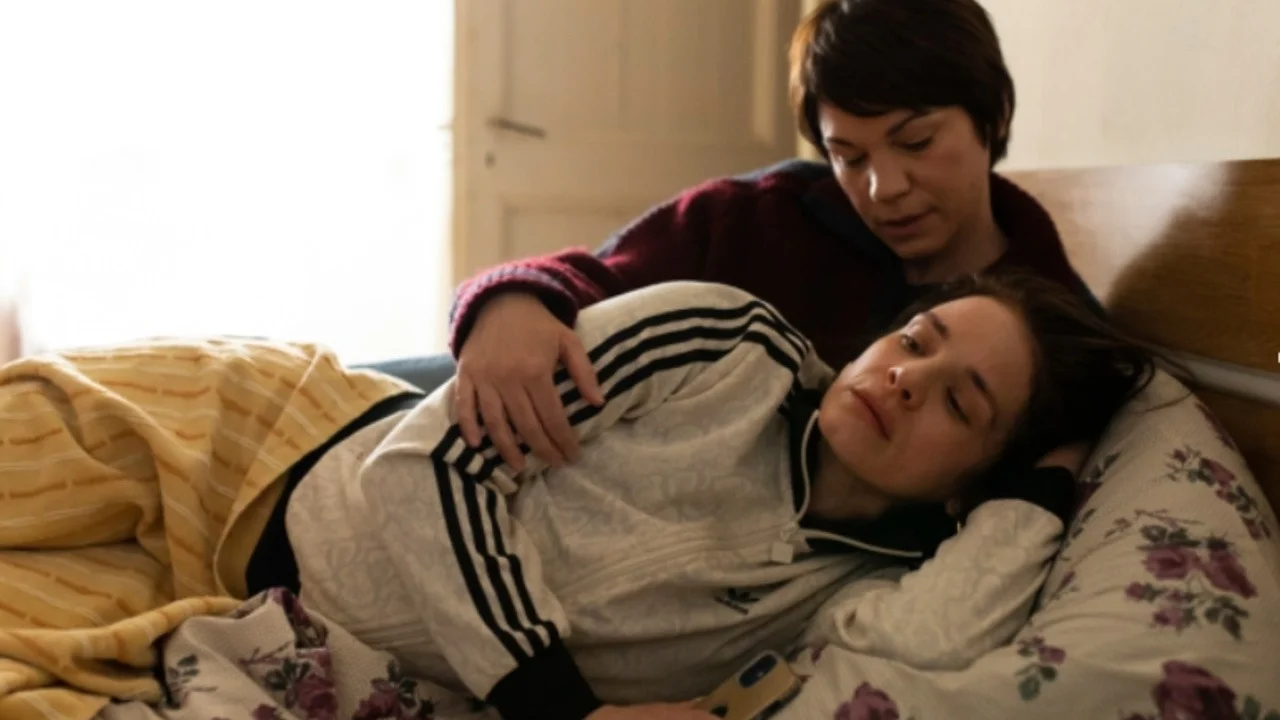

Marko Brdar’s camera rarely needs to move because everyone in Small Things is already trapped exactly where Zvonimir Jurić wants them. The 4:3 frame compresses a weathered island house around Anica, Irena, their aging father, and their withdrawn brother Ivan, turning rooms into emotional compartments. Doors divide relatives who sleep only a few metres apart. Shadows swallow portions of faces. Conversations occur across tables where proximity offers little comfort.
The family has returned because their father intends to sell his orchard and divide the money. That practical decision immediately exposes older fractures. Irena, pregnant and struggling inside a failing marriage, needs financial security. Ivan barely leaves his ground-floor room. Anica, recently bereaved after losing her partner to cancer, quietly assumes responsibility for almost everyone.
Marija Škaričić makes that responsibility visible without advertising it. Anica cooks, checks on her father, supervises children, tends to neighbours, and repeatedly tries to bring Ivan upstairs for a proper meal. Her performance gains force from what she withholds. One hard look at Irena during an argument over Ivan’s inheritance is enough to reduce her sister to tears. Years of judgment have apparently been waiting behind that glance. Jurić understands that family authority rarely announces itself with a speech. Sometimes it simply knows where the clean towels are.
The Man Half Outside the Frame
Juraj Lerotić’s Ivan is the film’s darkest presence, partly because Jurić refuses to explain him into submission. He emerges to go squid fishing, prepares a miserable bowl of instant soup, rejects invitations to sit at the family table, then disappears again. His gaunt stillness suggests depression severe enough that every closed door acquires menace.
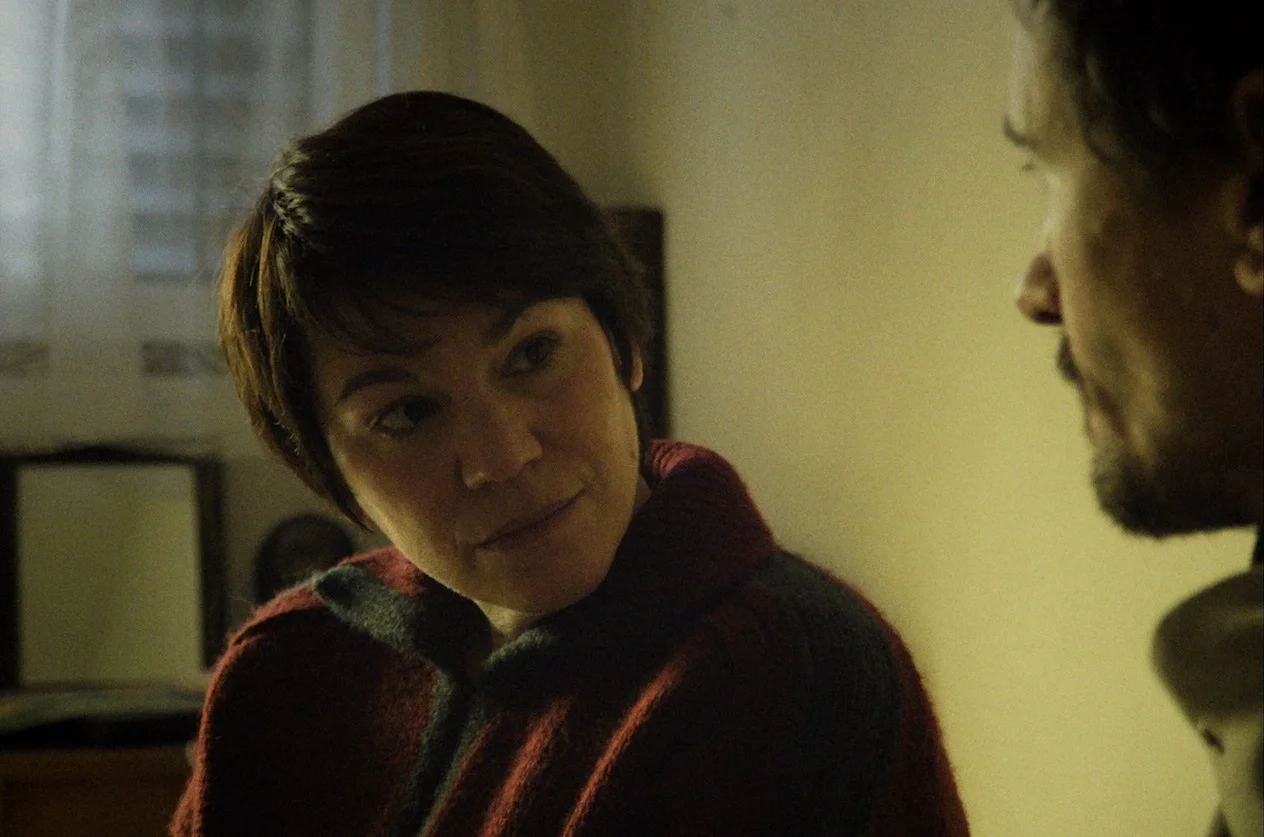
Brdar’s compositions make Anica’s attempts to reach him unusually painful. During their conversations, she is frequently clear and illuminated while Ivan appears in partial profile, shadow, or obstruction. The framing does not merely show a withdrawn man. It stages a failed relationship between two positions in space. Anica keeps offering herself to the image; Ivan keeps slipping out of it.
That arrangement gives the film an ethical tension. Caring for someone can become an act of pressure when the person refuses care, and Small Things never lets Anica’s devotion become uncomplicated sainthood. She wants Ivan to eat, speak, participate, and survive. She also wants him to behave in ways she can understand. The distinction is uncomfortable.
His instant soup becomes one of the film’s sharpest domestic symbols. Anica has prepared food for the household, yet Ivan chooses something nutritionally bleak and emotionally self-contained. A bowl on a table would have been obvious symbolism. A packet emptied into hot water is crueler. It makes isolation look banal.
Wind Instead of Music
Jurić strips away a conventional score, leaving Julij Zornik and Ognjen Popić’s sound design to supply the film’s pulse. Wind pushes against the house. Floorboards creak. Doors scrape. Leaves move outside. Silence settles after questions nobody knows how to answer.
The choice prevents emotional instruction. When Anica visits her mother’s clifftop grave, the landscape does not swell into grief through strings or piano. The exposed island air remains indifferent. That indifference suits a story in which mortality has become ordinary household business: medication, inheritance, food, property, another person failing to come upstairs.
The static photography reinforces that sensation. Natural light often leaves the home dim, with figures receding into rooms that seem older than their arguments. Ana Štulina’s editing gives pauses enough duration to become accusatory. When someone stops talking, the cut rarely rescues them.
Moments involving the grandchildren provide small fractures in the gloom. They teach their grandfather to operate a smartphone, then gather for a game involving names ranging from former Yugoslav performers to Lady Gaga and Paris Hilton. Three generations briefly occupy the same room while speaking different cultural languages. Their grandfather searching for familiar faces through new technology is quietly funny, then oddly sad. Modernity arrives here through a touchscreen, while the family land itself is preparing to disappear into a sale.
What the Small Things Reveal
The title earns its meaning through accumulation. Ivan refusing lunch. Irena needing money. Anica cleaning while grieving. Children speaking in internet slang their grandfather cannot follow. Customers at a local shop still buying on account. None of these moments announces itself as decisive, yet together they form the film’s emotional architecture.
The orchard sale gives that architecture a material foundation. Land is money, memory, security, and evidence that the family once belonged to the same place. Once its value must be divided, old affection acquires percentages. Irena’s financial desperation makes her consideration of Ivan’s share understandable, then morally ugly. Anica’s resistance is protective, then controlling. Jurić keeps both readings alive.
The final image brings the film’s visual logic into painful focus. The children sit beside their dying father, and the frame holds them with the patience previously given to meals, doorways, and silences. There is no grand reconciliation waiting to redeem years of distance. Regret arrives through physical closeness after language has failed. For eighty minutes, Small Things keeps asking how much emotion can fit inside a cramped room before the walls begin speaking for everyone. By the end, they practically do.
Small Things premiered at the Pula Film Festival on July 11, 2026. The drama follows two sisters and their family traveling to an isolated island to confront long-standing tensions.
Full Credits
Title: Small Things
Release date: July 11, 2026 (Pula Film Festival)
Running time: 1 hour 20 minutes
Director: Zvonimir Jurić
Writers: Zvonimir Jurić, Jurica Pavičić
Producers and Executive Producers: Ankica Jurić Tilić
Cast: Marija Škaričić, Izudin Bajrović, Ivana Roščić, Juraj Lerotić, Bepina Baričević, Borna Mihovilović
Director of Photography (Cinematographer): Marko Brdar
Editors: Ana Štulina
The Review
Small Things
Small Things turns a cramped island house into an emotional pressure chamber. Marko Brdar’s static 4:3 compositions keep Anica reaching toward relatives who seem to recede deeper into shadow, while the absence of music leaves wind, floorboards, and unfinished sentences to carry the tension. Marija Škaričić gives caretaking its exhausted moral weight, and Juraj Lerotić makes Ivan’s withdrawal frightening through near-total restraint. Jurić asks patience from his audience, yet the final image earns every quiet minute that precedes it.
PROS
- Exceptional restrained performances
- Expressive 4:3 compositions
- Precise naturalistic dialogue
- Outstanding environmental sound design
- Emotionally devastating final image
CONS
- Extremely measured pacing
- Familiar family-drama territory







