

























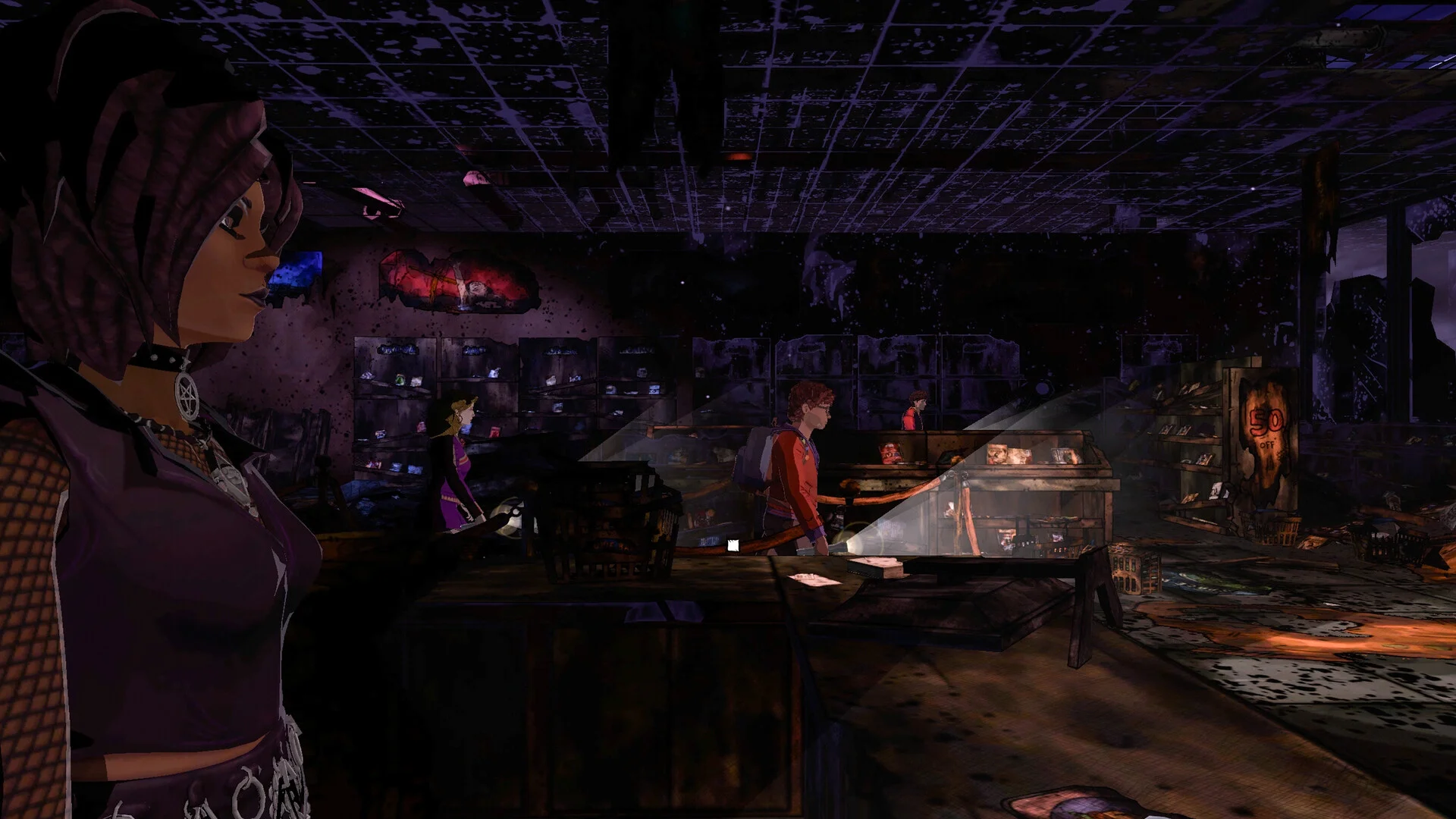

Resident Evil would have been the easy model. Creepshow instead reaches back to Monkey Island. That choice suits a franchise born from George A. Romero and Stephen King’s 1982 anthology film, itself shaped by the lurid morality tales of EC horror comics. PHL Collective treats the game like another issue in that same lineage, building it from short stories, grotesque punchlines, and environments meant to be inspected rather than survived at gunpoint.
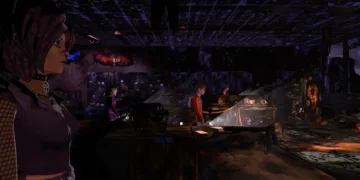
The framing story places Danny, Jack, Liz, and Melody inside an abandoned mall while they investigate the death of Danny’s father. Danny becomes separated from the others and finds an old fortune-telling machine housing the Reader, who promises help if Danny reads from a Creepshow comic. The arrangement leads into two playable stories, Metamorphic Love and The Toll Keeper. It is a clean translation of anthology structure into game form. Instead of selecting episodes from a menu, you effectively turn the pages yourself.
Exploration follows a third-person point-and-click rhythm. You search rooms, inspect highlighted objects, collect items, speak with characters, and figure out where each piece belongs. Anyone raised on Day of the Tentacle or Broken Sword will recognize the logic immediately, though Creepshow keeps its puzzles far simpler.
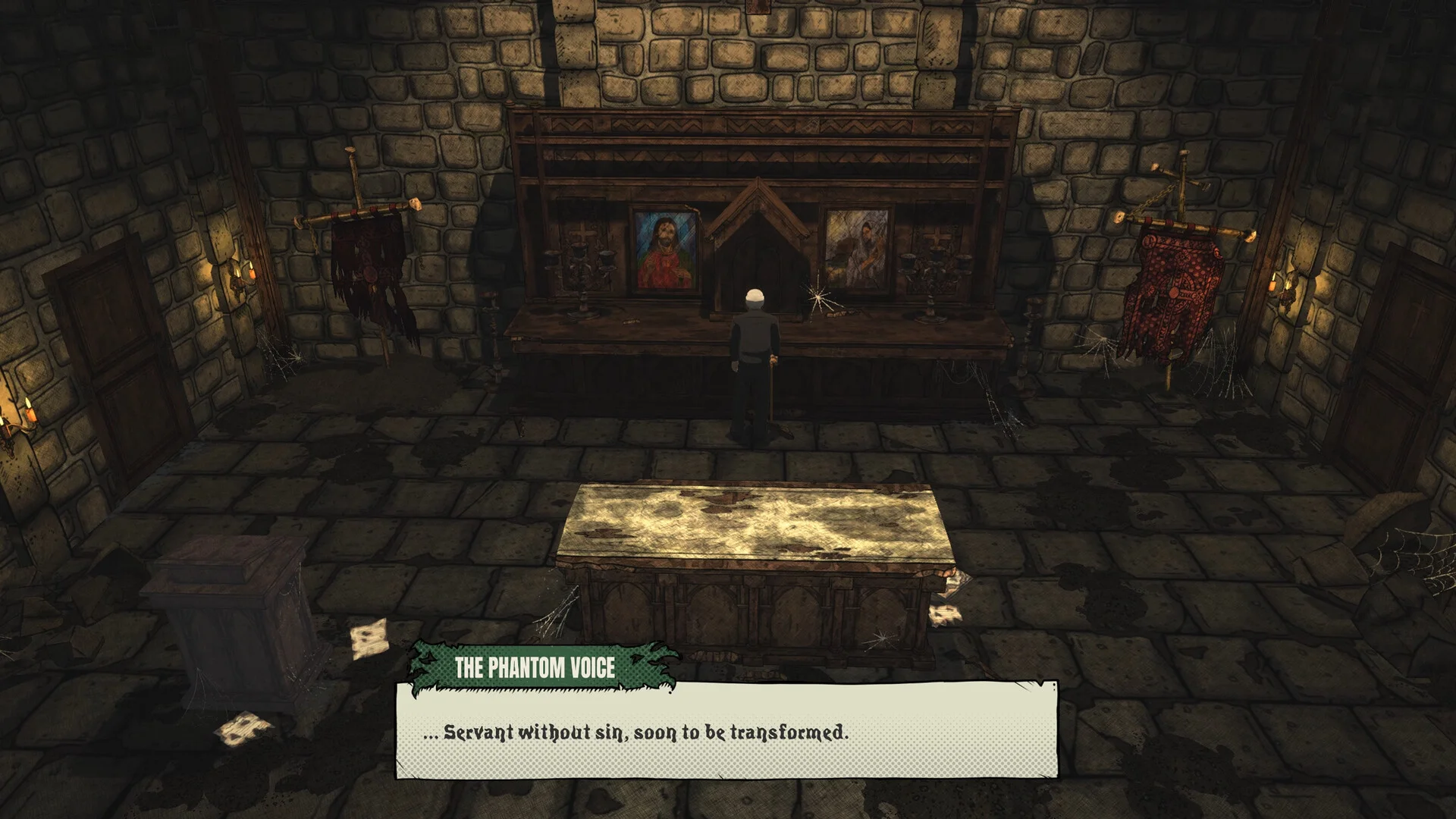
One moment has you preparing burgers. Another asks you to repair a circuit breaker. The Toll Keeper eventually sends you into a church basement to solve an old puzzle box. Most solutions remain close to the problem itself, keeping progress brisk.
That accessibility comes with a cost. Item fetching sometimes replaces deduction, and many environments offer only the interactions required to move the current scene forward. The design rarely gives you the freedom or elaborate chains of logic that made classic adventure games so satisfying.
Controller movement also feels slightly awkward for a game whose interactions seem naturally suited to mouse-driven pointing and clicking. Still, slowing the player down has value here. Creepshow wants you looking at the room long enough to wonder what disgusting thing might happen inside it.
Two Tales, Two Flavors of Creepshow
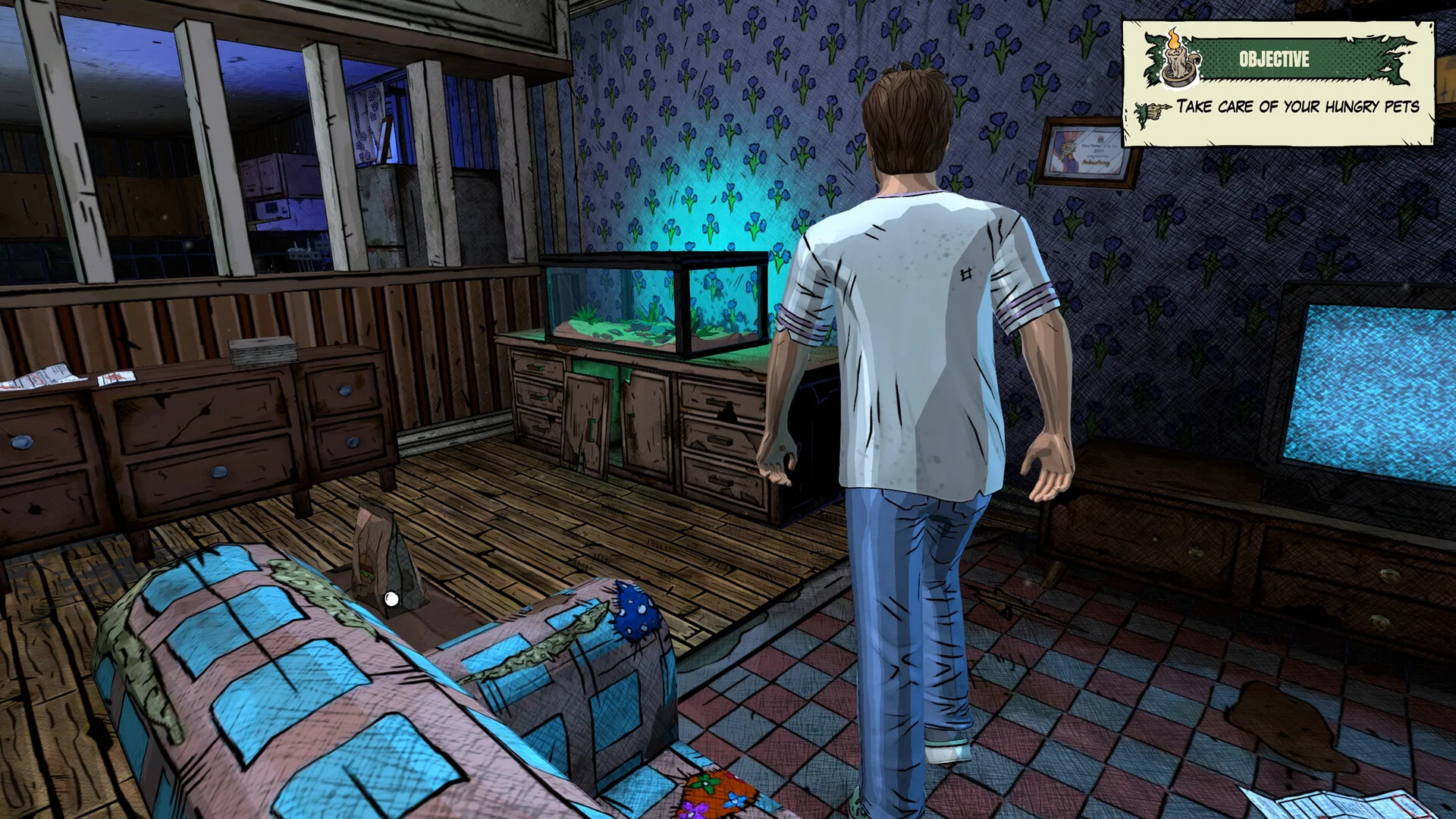
Metamorphic Love and The Toll Keeper understand the franchise far better than the abandoned-mall material surrounding them. Metamorphic Love follows Andrew, an insect enthusiast whose wife dies in an accident. Unable to work and falling behind financially, he begins hearing voices from his collection of insects. The setup draws from Kafka while sliding naturally into Creepshow’s preferred territory, where grief, obsession, and bodily disgust can occupy the same room without becoming solemn.
The Toll Keeper changes both setting and flavor. Disgraced priest Father Torosian is sent to a deteriorating church in Ireland, where ringing the bell begins restoring the building and improving his circumstances. Every improvement carries a price. It is the sort of supernatural bargain that could comfortably have appeared in Romero’s film or the later Shudder series: simple premise, escalating temptation, nasty consequences.
The contrast between these stories matters. Creepshow has always depended on variety. One tale can be psychological, another supernatural, and a third might exist primarily to cover an unpleasant character in something sticky. The game preserves that flexibility.
Its framing story is less successful. Danny’s search for his friends and the truth surrounding his father initially gives the mall some mystery, yet that thread receives little development compared with the two comic stories. The Reader works nicely as a host figure, continuing the franchise tradition of presenting horror as something being told directly to an audience, but the surrounding plot feels like connective tissue awaiting another chapter.
Panels, Squelches, and Unfortunate Faces
Creepshow looks most convincing when it remembers that it came from printed horror. The environments carry exaggerated shapes, drawn textures, lurid lighting, and deliberately artificial scenery. Small touches, such as the hand-drawn appearance of the clouds during the second chapter, make the comic influence feel integrated rather than applied as a filter. Blood and grotesque imagery retain that pulp quality too. The violence can be disgusting without abandoning the playful artificiality that separates Creepshow from straighter horror.
Sound helps sell what the visuals begin. Footsteps echo through empty spaces, while messier scenes come with appropriately wet cracks and squelches. The voice cast tends to embrace the heightened tone, particularly inside the two anthology stories.
Human animation is where the presentation slips. Characters occasionally intersect with walls or scenery, while facial movements and lip synchronization can fall noticeably behind the dialogue. The teenagers suffer most from this. Some lines are delivered with such careful articulation that the mall conversations sound performed rather than spoken. There is something almost fitting about a Creepshow game containing unsettling faces. It would be kinder if all of them were intentional.
Too Few Pages
The strange thing about Creepshow is that its strongest design decision creates its largest weakness. Anthologies thrive on anticipation. Once Metamorphic Love establishes that each story can change characters, setting, and flavor, The Toll Keeper makes you curious about what the third tale might attempt. There is no substantial third tale.
Depending on pace, the game can be finished in roughly two to four hours. Short stories themselves are hardly the problem. The television incarnation of Creepshow regularly proves how efficiently this franchise can operate when episodes are split between compact tales. The issue is quantity. Two central stories leave this collection feeling closer to a pilot issue than a fully stocked anthology.
That shortage becomes harder to ignore because the formula works. Creepshow has found a form that fits its own history: exploratory adventure mechanics, comic-book presentation, self-contained horror stories, and a host guiding us between them. Yet just as the pattern becomes clear, the credits arrive, while Danny’s framing story still feels as if several pages have been torn from the back.
The Review
Creepshow
Creepshow understands the family it comes from. The comic-book presentation, macabre humor, two self-contained horror tales, and simple adventure-game structure translate the anthology format with surprising ease. Metamorphic Love and The Toll Keeper carry the strongest material, while the abandoned-mall frame never earns equal weight. The bigger issue is scale. With only a few hours of content, an adaptation built around variety runs out of stories far too quickly. Technical roughness and lightweight puzzles hurt, yet the franchise identity survives intact.
PROS
- Excellent comic-book art direction
- Two strong anthology stories
- Faithful macabre humor
- Effective sound design
- Accessible puzzle structure
CONS
- Very short campaign
- Underdeveloped framing story
- Shallow item-fetching sections
- Rough facial animation
- Occasional collision problems