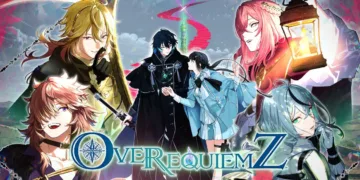


























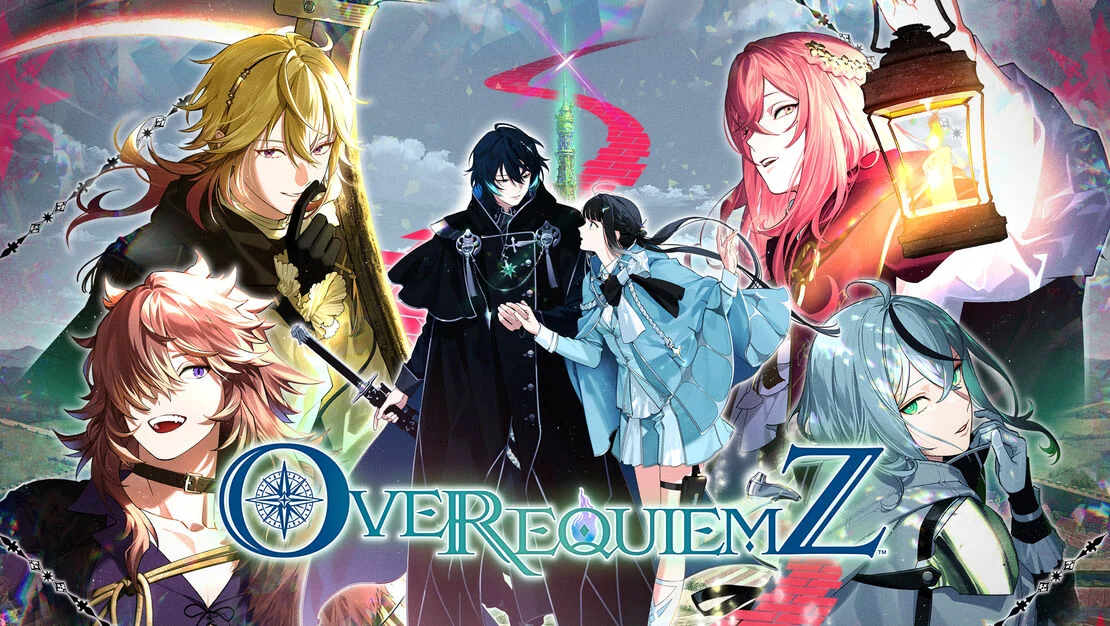

OVER REQUIEMZ wastes little time turning The Wizard of Oz into something hostile. Yuhiru, an ordinary Japanese high school student, is swept away by a storm and deposited in Oz, where her black hair and dark eyes mark her as one of the supposedly cursed “Bedeviled.” Her reward for surviving interdimensional travel is arrest, suspicion, and a death sentence.
Oz periodically receives mysterious ruins from other worlds, including structures connected to modern Japan. These places contain valuable technology, monsters, and perhaps a way home. Since nobody sensible volunteers to explore them, condemned prisoners are sent instead. Yuhiru joins that program alongside several young men with violent histories, hidden motives, and claims of innocence.
That setup gives OVER REQUIEMZ a useful advantage over many route-heavy otome games. The common route is extremely short, so the story commits to a love interest almost immediately. The tradeoff is obvious. There is less time for the entire cast to establish a shared rhythm before the routes separate, but each romance gets far greater control over its own pacing, mystery, and emotional pressure.
Fact and Dark
Five routes frame the experience: Molly, Claude, Noil, Kaize, and Dorothy. Each interprets some part of Oz mythology without reducing the character to a familiar costume. Noil, for example, draws from the Cowardly Lion idea through aggression, pride, and strength rather than simple nervousness. His vulnerabilities are buried beneath behavior that initially suggests the opposite.
Claude is comparatively approachable, which makes his route an easy introduction to the group’s emotional dynamics. Molly carries some of the harsher psychological material behind a cheerful exterior. Kaize’s history leans heavily into trauma, while Dorothy occupies a different position entirely as the authority figure keeping watch over the prisoners.
Dorothy’s route is particularly important because information revealed there recontextualizes pieces of the larger plot. The game lets players choose routes freely, yet playing Kaize before Dorothy creates a cleaner progression through several revelations. This resembles older otome structures where a “final” route quietly held the largest answers, except OVER REQUIEMZ refuses to formally lock the door.
Each romance eventually divides into Fact and Dark branches, with four endings attached to each character. Fact paths usually push toward truth, emotional clarity, and healthier versions of the relationship. Dark paths take whatever weakness already exists and keep applying pressure.
That distinction matters because the darker material rarely feels disconnected from characterization. Obsession, dependency, fear, grief, and manipulation develop from traits established earlier. Molly can become deeply unsettling because the route shows the stages that lead there. The same principle carries across the cast. These characters do not suddenly become different people because the script wants a shocking ending. Their worst outcomes look like warped extensions of who they already were.
The speed of the routes occasionally works against this strength. Some affectionate scenes end before the relationship has time to breathe, while disturbing developments can move from realization to catastrophe with little room for aftermath. A few endings are especially brief considering how much emotional escalation precedes them.
Roleplaying Yuhiru
The choice system is where OVER REQUIEMZ separates itself most clearly from conventional otome design. Many games in the genre quietly turn conversation into an exam. Pick the answer the love interest approves of, gain affection, repeat.
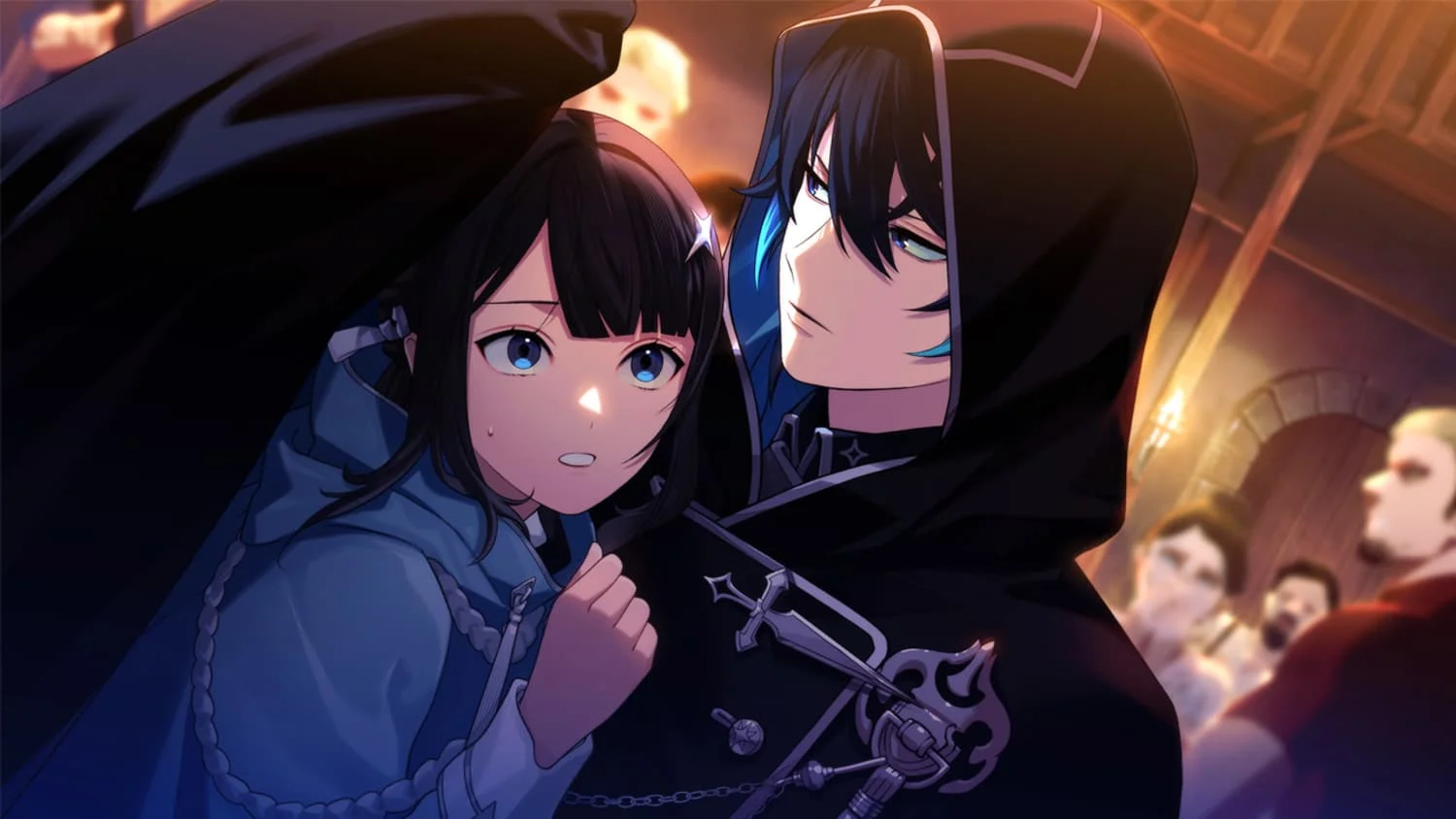
Here, most dialogue options simply change how Yuhiru responds. A serious answer, an absurd answer, or a more confrontational one can produce different reactions without secretly ruining the route. It gives the player room to shape Yuhiru’s personality while allowing her to remain an authored character.
That balance works because Yuhiru already has recognizable traits. She begins naive and understandably overwhelmed, yet she gradually becomes capable of pushing back, supporting others, and reacting to Oz with something beyond passive disbelief. Some optional responses are genuinely funny, and experimenting can unlock bonus voice material in the extras.
Major route decisions are handled differently. The game clearly signals the choices that determine Fact or Dark progression, so players are rarely forced to reverse-engineer hidden affection mathematics. A detailed flowchart, rewind, dialogue log, auto mode, and direct jumps to decision points make repeat playthroughs relatively painless.
The Jump system itself is less elegant than a traditional fast-forward option for already-read text, but the supporting tools keep route cleanup from becoming tedious.
There is no combat system attached to the monster-filled ruins and no dungeon exploration beneath the visual novel presentation. Players read, choose responses, and trace branches. Given how much attention the route structure demands, adding progression systems would likely have diluted what the game does best.
A Fairy Tale Gone Rotten
The visual presentation understands that this version of Oz should feel worn down. Backgrounds, ruins, and muted spaces replace the bright fantasy spectacle usually associated with the setting, while the character artwork carries most of the personality.
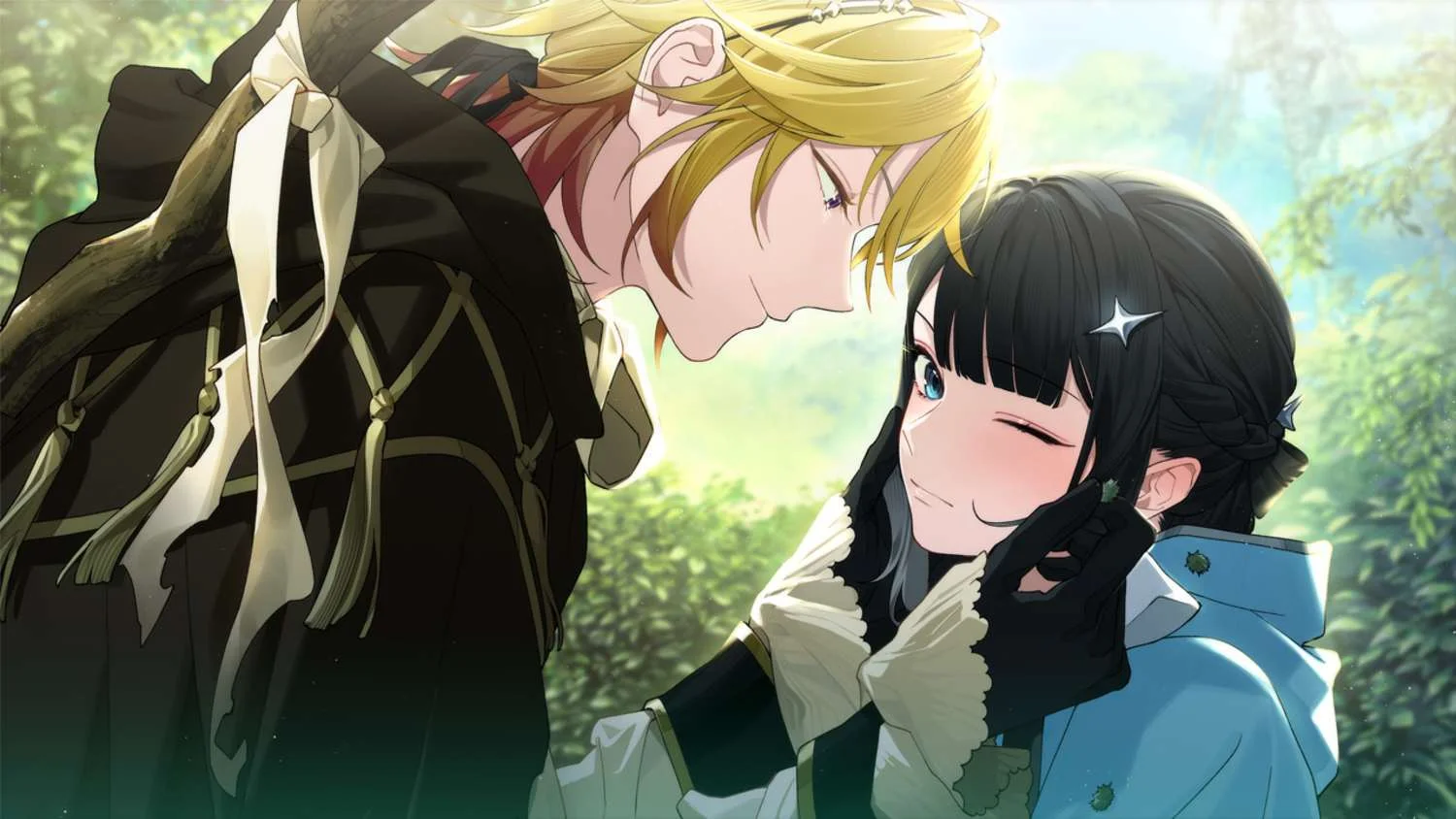
Sprites are especially expressive. Wounds can remain visible after violent scenes, and Yuhiru receives enough portrait variation to make small emotional shifts readable. Event CGs are strongest when a familiar romantic composition starts turning uncomfortable, especially during Dark branches where a smile or posture suddenly carries a different meaning.
The environmental side is thinner. Backgrounds repeat, several secondary characters lack dedicated artwork, and some flashbacks fall back on blank or dark screens accompanied by dialogue. Oz consequently feels less geographically developed than its interdimensional premise suggests.
The Japanese voice cast compensates for some of that limitation. Performances change convincingly between Fact and Dark versions of the same characters, with breakdowns and late-route disclosures demanding very different registers from earlier conversations. Yuhiru remaining unvoiced is noticeable precisely because the rest of the cast receives such careful treatment.
The soundtrack supports sadness, tension, and fantasy without competing with the actors. Character voices do the heavier dramatic work. What remains after all those routes is the sense that this cast could support another game. Give them quieter circumstances, fewer death sentences, fewer monsters, and some room to exist together before everything goes wrong again.
The Review
OVER REQUIEMZ
OVER REQUIEMZ understands what makes its Wizard of Oz reinterpretation work: each familiar archetype becomes a doorway into a different kind of emotional damage. The Fact and Dark branches give its five romances distinct identities, while the choice system wisely separates roleplaying Yuhiru from chasing hidden affection values. Some routes rush through moments that deserve room to linger, repeated backgrounds limit Oz's sense of place, and several endings feel abrupt. Still, the strong cast, excellent voice work, flexible replay tools, and psychologically credible Dark paths make this one of the sharper recent dark-fantasy otome releases.
PROS
- Excellent Fact and Dark route structure
- Strong, distinct love interests
- Flexible dialogue choice system
- Effective Japanese voice performances
- Useful replay and flowchart tools
CONS
- Some emotional beats move too quickly
- Repeated environmental artwork
- Several endings feel too short
- Yuhiru remains unvoiced