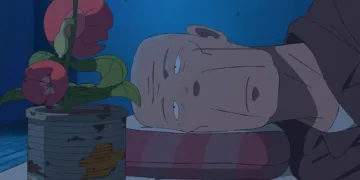





















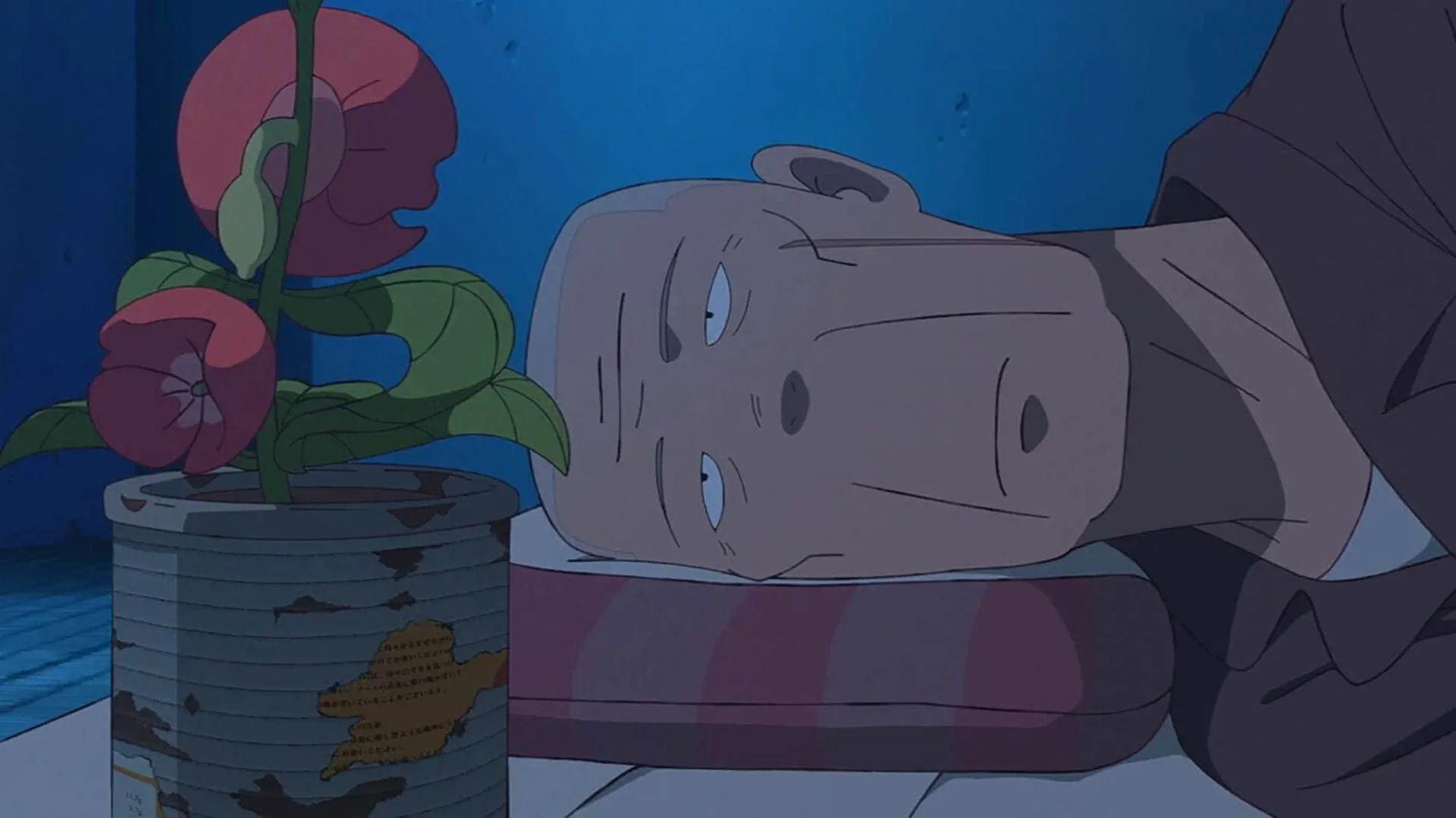

Minoru Akutsu spends his final night with a flower that has already decided what kind of man he was. That judgment gives Baku Kinoshita’s The Last Blossom its first pulse. Akutsu is old, dying, and serving a life sentence after decades connected to the yakuza.
A balsam flower growing from a tin begins speaking to him, insulting him with the casual cruelty of something that has watched human beings repeat the same mistakes for generations. From there, writer Kazuya Konomoto sends Akutsu backward through memory, toward Nana, her infant son Kensuke, and the sequence of choices that eventually sealed the prison door.
The flower is the film’s single break from reality. Everything surrounding it feels tactile and ordinary: cramped rooms, bowls of ramen, neighborhood streets, prison walls, the small domestic habits people mistake for permanence. Akutsu remembers them because permanence was precisely what he never understood.
The Family Without a Name
His life with Nana is built from gestures so modest that their eventual absence becomes painful. They eat together. They play Reversi. Nana waits for him to say what his behavior has already confessed. Akutsu refuses. He knows that marrying her would attach her to his surname and, by extension, to men capable of following that surname long after affection has disappeared. Protection becomes his excuse for emotional retreat.
The contradiction is cruel. He keeps Nana at a distance because he loves her. Akutsu’s relationship with Kensuke develops through action rather than declaration. The child is not his, yet Akutsu gradually assumes the rhythms of fatherhood: sharing the home, providing stability, paying attention. The film never needs a scene where he announces this transformation. His place in the household has already changed before he understands it.
The warmest expression of that fragile family comes when Akutsu and Nana sing “Stand by Me,” turning timers, tape, and household clutter into makeshift percussion. Kinoshita allows the sequence to become playful without abandoning the film’s melancholy. Its happiness hurts because the prison scenes have already told us it cannot last.
The performances follow the same restraint. Akutsu’s silence accumulates through pauses and withheld reactions, while Nana’s impatience appears in the spaces where she waits for emotional clarity that never arrives. Their chemistry depends on incompletion. Every comfortable evening carries the quiet pressure of something neither person can safely name.
Violence Returning Through the Door
Akutsu organizes his surroundings with almost compulsive precision. He draws maps. He speaks of having grid paper inside his head. The habit initially seems like an eccentric detail, then becomes a measure of how desperately he wants life to remain controllable. Crime ruins that fantasy.
Tsutsumi tempts Akutsu toward yakuza money, presenting criminal life through material comfort rather than ideology. The film keeps some of Akutsu’s early activities frustratingly indistinct, which weakens the first act. We understand that he is implicated, yet the exact moral distance between his quiet domestic self and his criminal work stays blurry for too long.
Kensuke’s heart condition changes the shape of that ambiguity. The boy needs expensive surgery, and Akutsu turns toward the world he already knows can produce money quickly. His tenderness and his violence finally occupy the same decision.
The resulting bloodshed feels deliberately ugly beside the earlier ramen dinners and Reversi games. Kinoshita does not transform Akutsu into a heroic gangster. His attempt to save Kensuke emerges from love, but the methods belong to a life that has already harmed others.
That distinction matters. Redemption here does not erase arithmetic. One sacrifice cannot cancel every preceding act. Akutsu can be guilty and still love deeply. He can deserve punishment and still perform an act of extraordinary care. The film lets those truths sit beside each other, uncomfortable and unresolved.
His meticulous habits also prepare the later revelation concerning the money he leaves behind. What first looked like an anxious need for order becomes the mechanism through which Akutsu can finally protect someone from a distance. He plans for a future he knows he will never share.
What the Flower Remembers
The balsam flower is both the film’s strangest invention and its least secure one. Its sarcasm works beautifully against Akutsu’s exhaustion. When it calls his life pathetic, the insult carries the authority of a witness. This flower descends from the one that grew beside Akutsu’s former home, giving it a perspective that stretches beyond his prison cell and across the decades he lost.
At times, the device feels overly functional. Akutsu needs someone to speak to, and the screenplay gives him a supernatural interrogator. The surrounding drama is grounded enough that the conceit can feel imported from another story.
Kinoshita’s visual approach has similar moments of friction. Many male characters are reduced to long faces, small eyes, and simple geometric features, while Nana’s round face and oversized eyes belong to a noticeably different design language. Put them in the same frame and the distinction can distract.
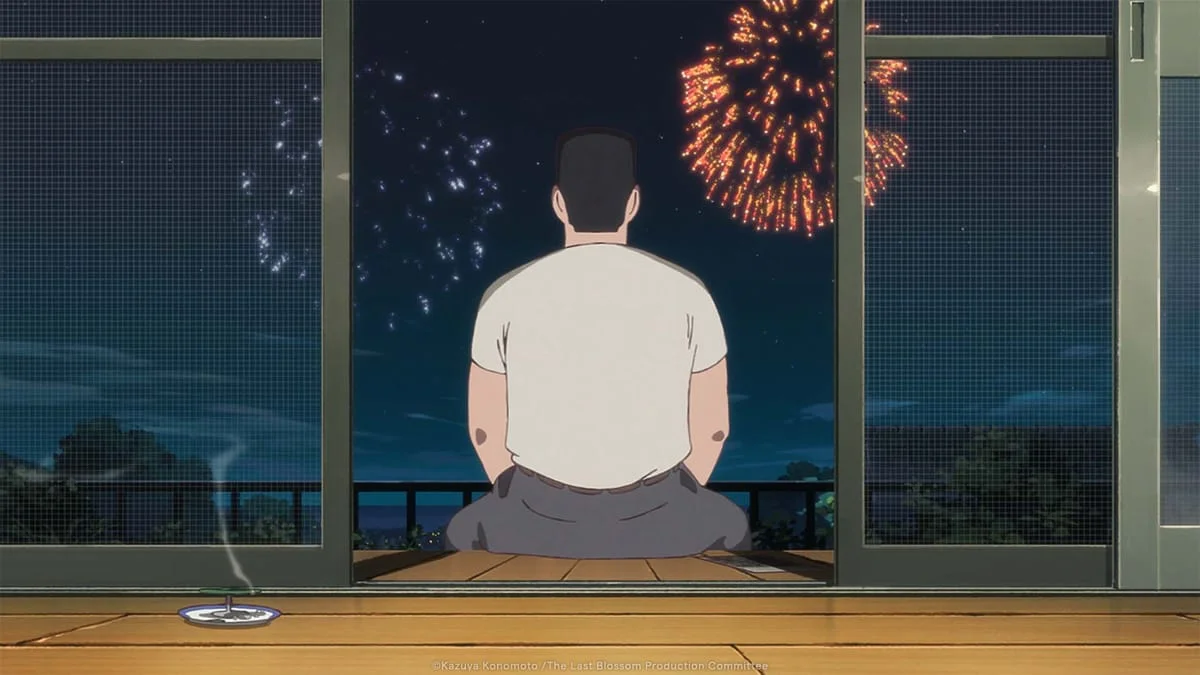
The environments carry greater cohesion. Houses, gardens, streets, fireworks, and dim prison interiors give Akutsu’s memories physical texture, while Cero’s score appears selectively. “Moving Still Life” accompanies fireworks with sudden energy; “Stand by Me” turns domestic noise into music; long passages elsewhere are left nearly bare. Those stretches of silence suit Akutsu. His tragedy was never an inability to feel. It was his belief that feeling could remain unspoken without consequence.
By the time the flower listens to him in the prison cell, everyone Akutsu tried to protect exists somewhere beyond his reach. Memory becomes his final household, populated by people who have stopped waiting for him to speak.
The Last Blossom was released on October 10, 2025, and is available for streaming on Netflix. The anime film follows an aging inmate in a solitary cell who reflects on his past when a balsam flower suddenly speaks to him.
Where to Watch The Last Blossom (2025) Online



Full Credits
Title: The Last Blossom
Distributor: Netflix, Pony Canyon
Release date: October 10, 2025
Running time: 1 hour 31 minutes
Director: Baku Kinoshita
Cast: Kaoru Kobayashi, Junki Tozuka, Hikari Mitsushima, Yoshiko Miyazaki, Pierre Taki, Hideaki Murata, Hiroki Yasumoto, Soma Saito
The Review
The Last Blossom
The Last Blossom finds its deepest ache in all the words Akutsu never says. His prison cell is merely the final room in a life spent mistaking silence for protection, while Nana, Kensuke, and the stubborn balsam flower preserve evidence that love survived his failures. Baku Kinoshita lets ramen dinners, Reversi games, an improvised rendition of “Stand by Me,” and one desperate criminal act carry the weight of decades. The supernatural framing occasionally strains against the grounded drama, yet the human sorrow beneath it remains beautifully intact.
PROS
- Tender Akutsu and Nana relationship
- Powerful domestic details
- Thoughtful treatment of guilt
- Strikingly restrained emotional tone
- Effective sparse musical choices
CONS
- Early criminal plotting feels vague
- Talking flower can feel contrived
- Nana's design clashes visually
- Some supporting relationships need clarity