









• Latest
  • Trending
Agata the Writer Review

Agata the Writer Review: Cultural Theft Becomes a Formal Experiment

Arsa Review

Arsa Review: A Sculptor’s Inheritance Meets a Thin Romance

Traces of Home Review

Traces of Home Review: Reading the Family Videos Again

The Fisherman Review

The Fisherman Review: A Warm Comedy About Losing Your Place

The Smell of Apples Review

The Smell of Apples Review: Courtesy Has Its Limits

The Portuguese House Review

The Portuguese House Review: Quiet Friendship, Difficult Questions

Warcraft III Reforged: Forsaken Kingdom Review

Warcraft III Reforged: Forsaken Kingdom Review: Lordaeron Is Worth Returning To

Child

Child Review: Three Parents and One Unforgivable Trade

Yaga Review

Yaga Review: Carrie-Anne Moss Keeps Everyone Guessing

Jay-Z in 8 Review

Jay-Z in 8 Review: What Remains After the Record Stops

Life of Jorge Luis Borges Review

Life of Jorge Luis Borges Review: Searching for a Writer in Vanished Places

Minecraft Dungeons II Review

Minecraft Dungeons II Review: A Stronger Co-op Adventure

Matt Brittin

BBC Chief Matt Brittin Watched AI-Made “Doctor Who” Episode and Called It “Pretty Good”

17 hours ago
  • Home
  • Privacy Policy
  • Terms and Conditions
  • Gazettely Review Guidelines
Wednesday, September 30, 2026
GAZETTELY
  • Home
  • Movie and TV News
    Matt Brittin

    BBC Chief Matt Brittin Watched AI-Made “Doctor Who” Episode and Called It “Pretty Good”

    Olivia Colman and Alexander Skarsgård

    Olivia Colman and Alexander Skarsgård Defend Raunchy Fantasy “Wicker” in Zurich

    prime video nordic originals emilia widstrand feminine point of view

    Prime Video Plans “More Feminine Point of View” for Nordic Originals

    Jeff Probst

    Jeff Probst Says “Nothing Has Changed” on “Survivor” After Paramount Ends DEI Programs

    Kurosawa Akira

    Tokyo Film Festival Honors Mohammad Rasoulof and Mipo O With Kurosawa Akira Award

    Dennis Haskins

    Dennis Haskins, Principal Belding on “Saved by the Bell,” Dies at 75

    Russo Brothers Hulk

    Russo Brothers Say Hulk Is “Certainly Involved” in “Avengers: Doomsday” Story

    Lioness

    Zoe Saldaña Rules Out Another Taylor Sheridan Show: “Lioness” Is Enough

    Elizabeth Holmes

    Elizabeth Holmes Says She’ll Sign Her Own Posts as Documentary Nears Release

  • Movie and TV Reviews
    Arsa Review

    Arsa Review: A Sculptor’s Inheritance Meets a Thin Romance

    Traces of Home Review

    Traces of Home Review: Reading the Family Videos Again

    The Fisherman Review

    The Fisherman Review: A Warm Comedy About Losing Your Place

    The Smell of Apples Review

    The Smell of Apples Review: Courtesy Has Its Limits

    The Portuguese House Review

    The Portuguese House Review: Quiet Friendship, Difficult Questions

    Child

    Child Review: Three Parents and One Unforgivable Trade

    Yaga Review

    Yaga Review: Carrie-Anne Moss Keeps Everyone Guessing

    Jay-Z in 8 Review

    Jay-Z in 8 Review: What Remains After the Record Stops

    Life of Jorge Luis Borges Review

    Life of Jorge Luis Borges Review: Searching for a Writer in Vanished Places

  • Game Reviews
    Warcraft III Reforged: Forsaken Kingdom Review

    Warcraft III Reforged: Forsaken Kingdom Review: Lordaeron Is Worth Returning To

    Minecraft Dungeons II Review

    Minecraft Dungeons II Review: A Stronger Co-op Adventure

    TOEM 2 Review

    TOEM 2 Review: Another Bus Ride Through a Curious World

    Nighthawks Review

    Nighthawks Review: Vampire Politics in Plain Sight

    Kernel Hearts Review

    Kernel Hearts Review: Racing the Clock to Babel’s Summit

    Transport Fever 3 Review

    Transport Fever 3 Review: Every Delivery Has a Deadline

    Endless Legend 2 Review

    Endless Legend 2 Review: Tidefall Keeps the Map Alive

    Farming Camp Review

    Farming Camp Review: A Pleasant Routine With Rough Edges

    Qliphah in Providence’s Shadow Review

    Qliphah in Providence’s Shadow Review: Boss Fights Worth Learning

  • The Bests
No Result
View All Result
  • Home
  • Movie and TV News
    Matt Brittin

    BBC Chief Matt Brittin Watched AI-Made “Doctor Who” Episode and Called It “Pretty Good”

    Olivia Colman and Alexander Skarsgård

    Olivia Colman and Alexander Skarsgård Defend Raunchy Fantasy “Wicker” in Zurich

    prime video nordic originals emilia widstrand feminine point of view

    Prime Video Plans “More Feminine Point of View” for Nordic Originals

    Jeff Probst

    Jeff Probst Says “Nothing Has Changed” on “Survivor” After Paramount Ends DEI Programs

    Kurosawa Akira

    Tokyo Film Festival Honors Mohammad Rasoulof and Mipo O With Kurosawa Akira Award

    Dennis Haskins

    Dennis Haskins, Principal Belding on “Saved by the Bell,” Dies at 75

    Russo Brothers Hulk

    Russo Brothers Say Hulk Is “Certainly Involved” in “Avengers: Doomsday” Story

    Lioness

    Zoe Saldaña Rules Out Another Taylor Sheridan Show: “Lioness” Is Enough

    Elizabeth Holmes

    Elizabeth Holmes Says She’ll Sign Her Own Posts as Documentary Nears Release

  • Movie and TV Reviews
    Arsa Review

    Arsa Review: A Sculptor’s Inheritance Meets a Thin Romance

    Traces of Home Review

    Traces of Home Review: Reading the Family Videos Again

    The Fisherman Review

    The Fisherman Review: A Warm Comedy About Losing Your Place

    The Smell of Apples Review

    The Smell of Apples Review: Courtesy Has Its Limits

    The Portuguese House Review

    The Portuguese House Review: Quiet Friendship, Difficult Questions

    Child

    Child Review: Three Parents and One Unforgivable Trade

    Yaga Review

    Yaga Review: Carrie-Anne Moss Keeps Everyone Guessing

    Jay-Z in 8 Review

    Jay-Z in 8 Review: What Remains After the Record Stops

    Life of Jorge Luis Borges Review

    Life of Jorge Luis Borges Review: Searching for a Writer in Vanished Places

  • Game Reviews
    Warcraft III Reforged: Forsaken Kingdom Review

    Warcraft III Reforged: Forsaken Kingdom Review: Lordaeron Is Worth Returning To

    Minecraft Dungeons II Review

    Minecraft Dungeons II Review: A Stronger Co-op Adventure

    TOEM 2 Review

    TOEM 2 Review: Another Bus Ride Through a Curious World

    Nighthawks Review

    Nighthawks Review: Vampire Politics in Plain Sight

    Kernel Hearts Review

    Kernel Hearts Review: Racing the Clock to Babel’s Summit

    Transport Fever 3 Review

    Transport Fever 3 Review: Every Delivery Has a Deadline

    Endless Legend 2 Review

    Endless Legend 2 Review: Tidefall Keeps the Map Alive

    Farming Camp Review

    Farming Camp Review: A Pleasant Routine With Rough Edges

    Qliphah in Providence’s Shadow Review

    Qliphah in Providence’s Shadow Review: Boss Fights Worth Learning

  • The Bests
No Result
View All Result
GAZETTELY
No Result
View All Result
Agata the Writer Review

Halloween: The Game Review: Haddonfield Has a Great Idea and Terrible Neighbors

You Can See Everything Review: Three Hours Inside a Manufactured Reality

Home Entertainment Movies

Agata the Writer Review: Cultural Theft Becomes a Formal Experiment

Shahrbanoo Golmohamadi by Shahrbanoo Golmohamadi
3 weeks ago
in Entertainment, Movies, Reviews
Reading Time: 5 mins read
A A
0
Share on FacebookShare on TwitterShare on PinterestShare on WhatsAppShare on TelegramSummarize with ChatGPTSummarize with Perplexity

The central provocation in Agata the Writer is brutally simple: what gives an artist the right to turn someone else’s catastrophe into material? Kuba Dorabialski builds his feature around that question by sending Agata (Mia Wasikowska), a Polish-Australian novelist, from Sydney to Sarajevo.

She has built a career on comic fiction and now wants to write something heavier, a father-daughter story tied to the Bosnian War. Her Polish background lets her understand fragments of the local language, and she carries a faint sense that shared Slavic roots might grant her some cultural proximity.

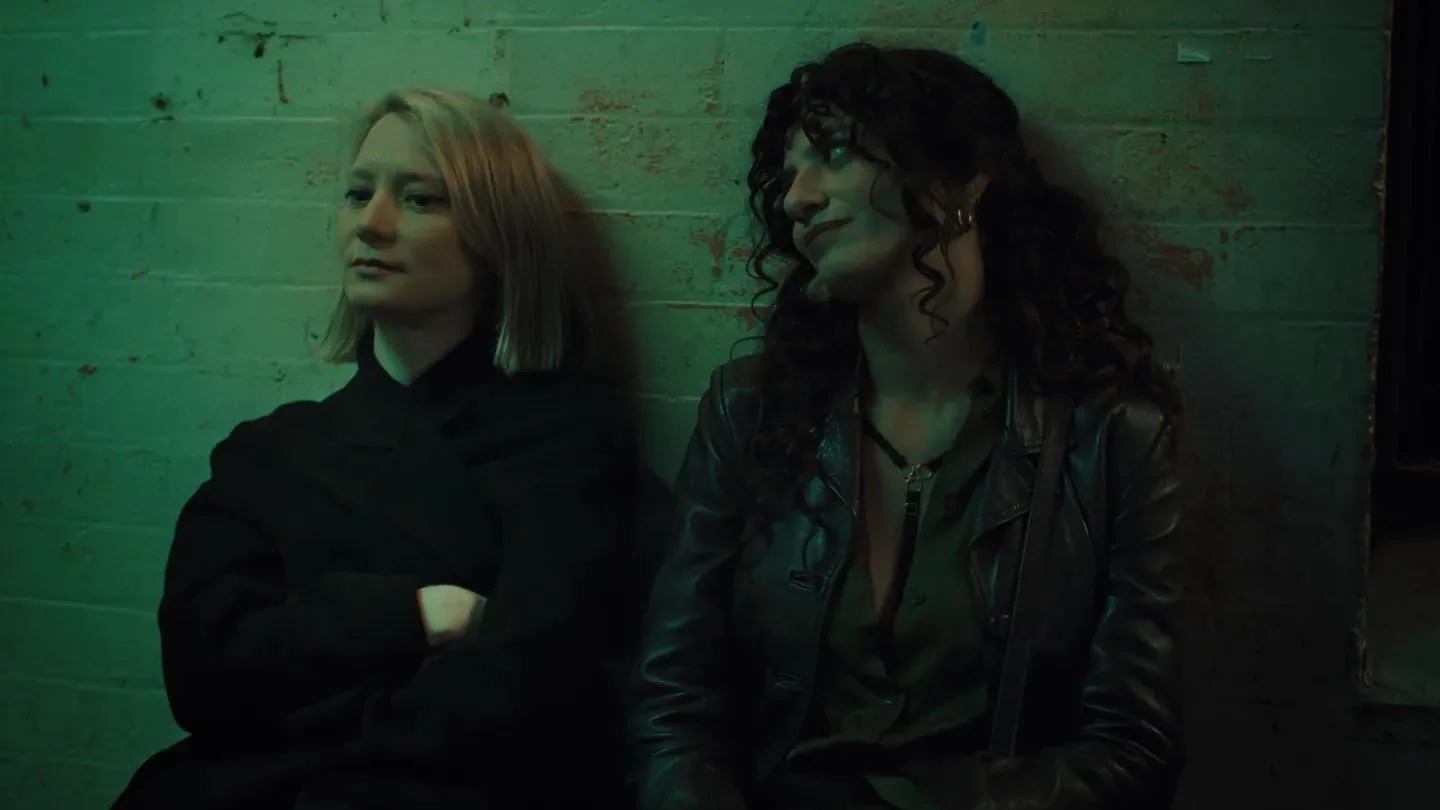
Sarajevo quickly dismantles that assumption.The sharpest challenge comes from Jasmina (Vedrana Božinović), a theater director who treats Agata’s research project with barely concealed contempt. When Agata asks if she “enjoyed” the war years, Jasmina cuts through the phrasing immediately: it was genocide.

Later, she questions why Agata has travelled across Europe to mine Bosnia rather than confront violence closer to her own history. Those conversations make the film far sharper than a standard portrait of writer’s block. Agata is not struggling to find words. She is struggling to justify having them.

Sarajevo Refuses the Role

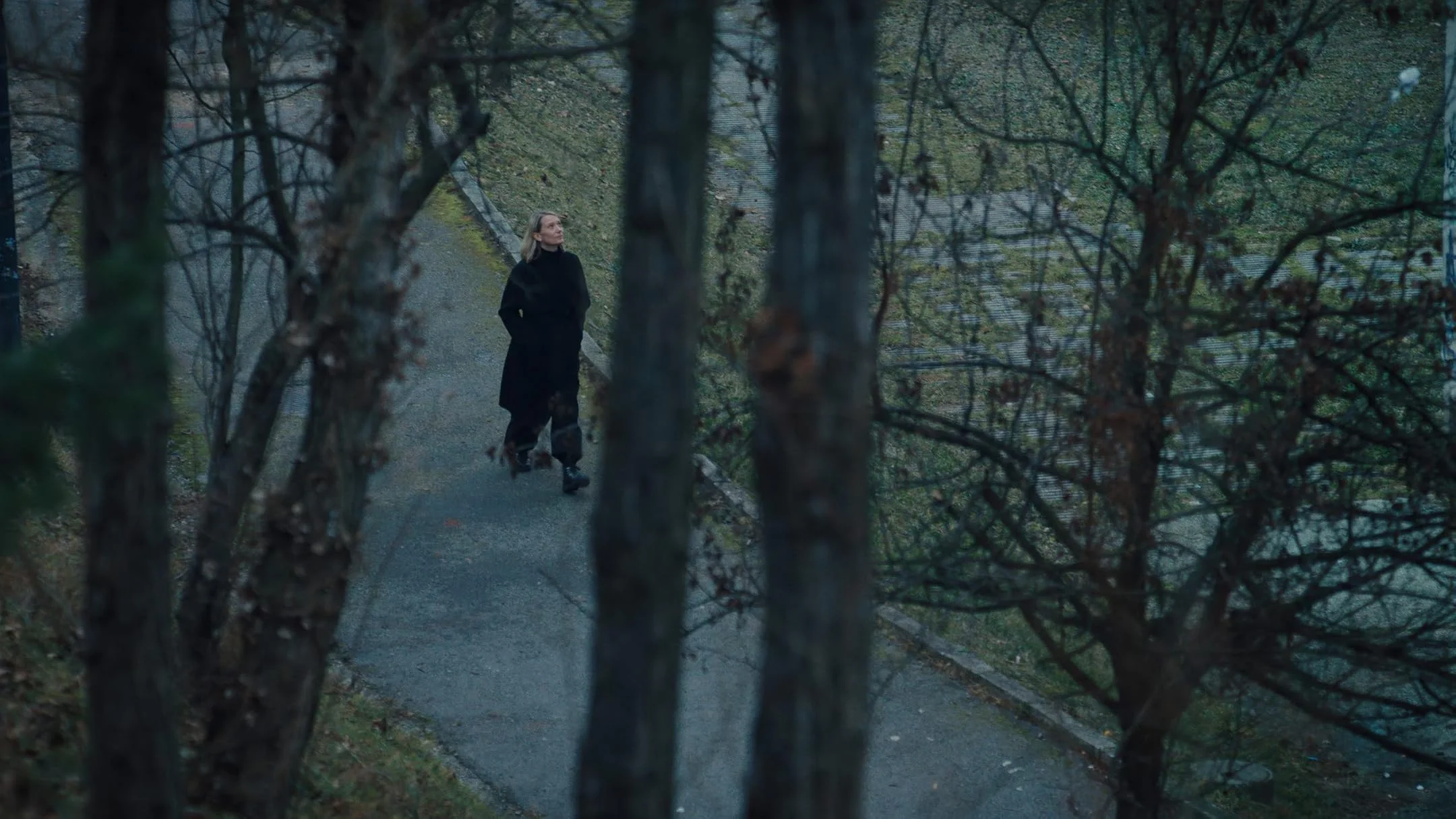
Dorabialski’s Sarajevo is gray, cold, and stubbornly resistant to romanticization. Static compositions frame misty streets, concrete apartment blocks, mountain roads, and half-empty public spaces. Wind seems to persist across scenes like an acoustic residue the city cannot quite shake.
Agata the Writer Review

Agata keeps trying to turn this environment into research, and the people she meets keep refusing the transaction. One interviewee explains that she has recounted her trauma so many times that the performance has become automatic. She knows where to pause. She knows which details produce the expected response. The admission punctures the fantasy that testimony remains untouched every time an outsider arrives with a notebook.

Wasikowska handles Agata’s discomfort through tiny physical shifts. Her speech becomes hesitant. Her posture tightens. She listens with the expression of someone realizing that intellectual curiosity can still produce ethical clumsiness. The performance never begs the audience to excuse her.

Her scenes with Davina (Mia Morrissey), her friend and editor, operate differently. Davina offers encouragement and familiarity, giving Agata relief from the confrontational atmosphere surrounding the interviews. Their warmth also exposes the distance between publishing logic and lived history.

From one side, the book is a promising project. From the other, it is another outsider arriving to extract shape from suffering. That clash gives the film its strongest cultural argument. Representation is treated here as an act with consequences, not an abstract debate about artistic freedom.

Theft and Ownership

A stranger subplot begins quietly inside the house where Agata is staying. Objects disappear. Among them are aggressively obscene artworks, including a large painting of a woman defecating and a vase shaped like feces. The imagery is juvenile enough to be funny and strange enough to become useful.

Someone is literally removing art from the house while Agata worries that her own work may amount to another form of taking. The parallel is not subtle, yet Dorabialski wisely refuses to turn the thefts into a conventional mystery. There are no satisfying clues, no reveal waiting behind a locked door.

The oddness continues during an interview with an elderly widower whose home contains pornographic and scatological imagery. Jasmina leaves furious, concerned that Agata will treat such details as representative of Bosnia. Her anger exposes one of the film’s most difficult questions: a visitor can collect authentic details and still create a false portrait. This is where the film’s humor becomes useful. The ridiculousness of the objects keeps the argument from hardening into a lecture, while Jasmina’s reaction shows how quickly observation can become distortion.

The Book Takes Over

Then Dorabialski makes his most divisive choice. The Sarajevo narrative largely stops. Wasikowska appears in a dark space, facing the camera, and begins reading Agata’s manuscript for an extended stretch. The chapter, titled “The Responsibility,” follows Janek, a widowed boom operator living in France with his daughter. Dorabialski himself plays Janek in the sparse images accompanying the text.

The formal shift is severe. Characters vanish. The thefts remain unresolved. Jasmina and Davina lose the space they had occupied. What had functioned as a conversational drama starts resembling a gallery installation or staged literary reading.

The manuscript itself contains descriptions of cuts, camera positions, locations, and images, so the supposed novel begins to sound suspiciously like cinema. Agata’s book, Dorabialski’s film, and Janek’s story start bleeding into one another.

That move sharpens the film’s argument about authorship. Agata cannot comfortably possess Sarajevo, so her writing drifts away from direct historical reconstruction and toward another mediated story. Dorabialski places himself inside that process too, refusing the convenient fiction that the filmmaker sits outside the ethical problem being examined.

The price is dramatic momentum. Wasikowska’s controlled delivery holds attention, but the extended reading drains energy from relationships the film has spent an hour building. The rupture works better as an idea than as drama.

Still, the awkwardness has purpose. Agata the Writer refuses to provide the clean cultural portrait its protagonist initially seeks. Sarajevo will not become background decoration, its survivors will not become tidy sources, and the film itself eventually stops pretending that observation is innocent. What remains is a work suspicious of the very act that created it.

Agata the Writer had its world premiere at the 83rd Venice International Film Festival on September 6, 2026. The comedy-drama follows an Australian-Polish novelist who travels to Sarajevo to write a war story, only to face heavy scrutiny from local residents questioning her creative motives.

Full Credits

  • Title: Agata the Writer

  • Distributor: Screen Australia, Production Productions, Whitefalk Films

  • Release date: September 6, 2026 (Venice International Film Festival)

  • Running time: 1 hour 35 minutes

  • Director: Kuba Dorabialski

  • Writers: Kuba Dorabialski

  • Producers and Executive Producers: Alex White

  • Cast: Mia Wasikowska, Vedrana Božinović, Selma Alispahić, Mia Morrissey, Admir Glamočak, Zoran Jevtic, Hatidža Ćorić

  • Director of Photography (Cinematographer): Kuba Dorabialski

  • Editors: Kuba Dorabialski

  • Composer: Kuba Dorabialski

The Review

Agata the Writer

7.5 Score

Agata the Writer is most incisive when Sarajevo refuses to become usable material. Jasmina’s hostility, the strained interviews, and Agata’s growing unease turn authorship into a question of cultural ownership rather than creative confidence. Kuba Dorabialski’s final structural rupture carries that argument into the film’s form, though the extended reading sacrifices some of the tension built around Sarajevo and the unexplained thefts. Mia Wasikowska gives the experiment its necessary restraint, making uncertainty visible without asking for sympathy.

PROS

  • Mia Wasikowska’s restrained performance
  • Sharp questions about cultural ownership
  • Strong Sarajevo winter imagery
  • Bold final-act formal experiment
  • Vedrana Božinović’s confrontational presence

CONS

  • Extended reading slows dramatic momentum
  • Theft subplot remains thin
  • Supporting characters lose space late
  • Formal ambition can feel distancing

Review Breakdown

  • Overall 0
Tags: 2026 Venice Film Festival83rd Venice International Film FestivalAdmir GlamočakAgata the WriterComedyDramaFeaturedKuba DorabialskiMia MorrisseyMia WasikowskaMysteryScreen AustraliaSelma AlispahićVedrana BožinovićZoran Jevtic
Previous Post

Halloween: The Game Review: Haddonfield Has a Great Idea and Terrible Neighbors

Next Post

You Can See Everything Review: Three Hours Inside a Manufactured Reality

0 0 votes
Article Rating
Subscribe
Login
Notify of
guest
guest
0 Comments
Oldest
Newest Most Voted

This Week's Top Reads

  • Is This Seat Taken? Review

    Is This Seat Taken? Review: A Satisfying Mental Workout

    1366 shares
    Share 0 Tweet 0
  • Brothers Review: McConaughey and Harrelson Deserve a Stronger Story

    1 shares
    Share 0 Tweet 0
  • Wonka’s the Golden Ticket Review: Netflix Builds Wonka’s World but Forgets the Game

    0 shares
    Share 0 Tweet 0
  • Trust Review: Squandered Potential and an Incoherent Plot

    6 shares
    Share 0 Tweet 0
  • First Look: Rachel Weisz Returns as Evelyn O’Connell on ‘The Mummy 4’ Set

    0 shares
    Share 0 Tweet 0
  • Daniel and the Fiery Furnace Review: Its Quietest Moments Burn Brightest

    0 shares
    Share 0 Tweet 0
  • The Cycle Review: A Forensic Horror Story Where Science Meets the Impossible

    0 shares
    Share 0 Tweet 0

Must Read Articles

Yaga Review
TV Shows

Yaga Review: Carrie-Anne Moss Keeps Everyone Guessing

15 hours ago
The Simpsons Season 38 Review
TV Shows

The Simpsons Season 38 Review: Homer Takes the Responsible Route

21 hours ago
Plastic Beauty Review
TV Shows

Plastic Beauty Review: Who Profits From a New Face?

2 days ago
The Traitors: New Blood Review
TV Shows

The Traitors: New Blood Review: Civilians Bring the Castle to Life

2 days ago
Kill Jackie Review
TV Shows

Kill Jackie Review: Catherine Zeta-Jones Commands a Thriller That Keeps Its Distance

2 days ago
Loading poll ...
Coming Soon
Which of Alfred Hitchcock's 1960s thrillers is your all-time favorite?

Gazettely is your go-to destination for all things gaming, movies, and TV. With fresh reviews, trending articles, and editor picks, we help you stay informed and entertained.

© 2021-2026 All Rights Reserved for Gazettely

What’s Inside

  • Movie & TV Reviews
  • Game Reviews
  • Featured Articles
  • Latest News
  • Editorial Picks

Quick Links

  • Home
  • About US
  • Contact Us
  • Advertise with Us
  • Review Guidelines

Follow Us

Facebook X-twitter Youtube Instagram
No Result
View All Result
  • Gazettely | Movie, TV & Game Reviews, News, and Rankings
  • Movies
  • Entertainment News
  • Movie and TV Reviews
  • TV Shows
  • Game News
  • Game Reviews
  • Contact Us

© 2024 All Rights Reserved for Gazettely

wpDiscuz
0
0
Would love your thoughts, please comment.x