

























![Kingdom Hearts Collection [I-III] Review](https://gazettely.com/wp-content/uploads/2026/10/Kingdom-Hearts-Collection-I-III-1-360x180.webp "Kingdom Hearts Collection [I-III] Review: KHII Holds Steady as Newer Entries Fluctuate 37")



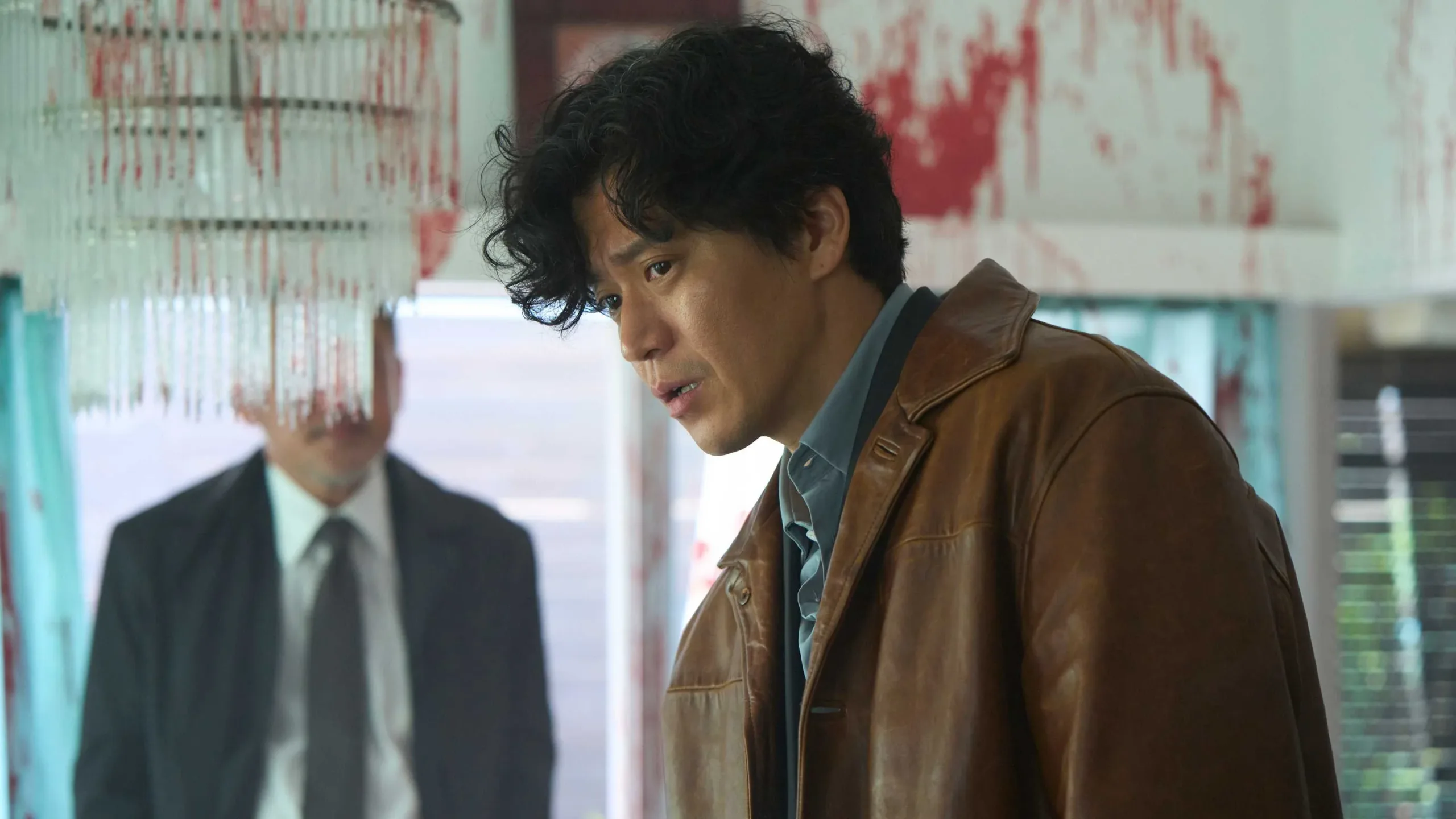

Shun Oguri spends much of Bad Lieutenant: Tokyo looking as if sleep would be a greater temptation than meth. Detective Yabuki is constantly using something, drinking something, owing someone, or chasing a case through the sleepless corners of Tokyo, yet Oguri rarely plays him like a man intoxicated by his own corruption. He looks worn down by it. That distinction gives Takashi Miike’s film its strongest feeling: this is a story about a man living inside the consequences of choices he barely seems to have the energy to regret.
The early school drop-off captures that perfectly. Yabuki says goodbye to his children, immediately snorts drugs in his car, then looks up to find them staring through the window with their friends. Miike does not turn the moment into a punchline.
The embarrassment simply hangs there before the film cuts to a corpse with half its head missing. Domestic shame and grotesque violence arrive almost on the same breath. Yabuki has become so accustomed to both that neither seems capable of shocking him for long.
That emotional numbness makes him a strange fit for the Bad Lieutenant lineage, and that is partly why he works. Harvey Keitel’s lieutenant was terrifying in his self-destruction. Nicolas Cage’s was manic enough to make corruption feel like an altered state.
Oguri gives Yabuki something flatter and sadder. He gambles, smokes meth, carries Yakuza debt, hustles criminals, neglects his family, and keeps moving because stopping would mean looking too closely at what his life has become. Even the guilt attached to his dead partner feels less like a dramatic wound than another weight he has learned to carry badly.
Miike finds small ways to make that exhaustion unexpectedly tender. Yabuki can spend one stretch of the film feeding information into the criminal world while trying to keep his debts from swallowing him, then show up at a school event with one of his prostitute friends and act as a substitute father during a parent-child dance. It would be easy to read that as a redemption beat. It feels stranger than that. Yabuki is capable of usefulness in fragments, usually when nobody is asking him to become a better person. His decency arrives sideways.
For a while, the murder investigation gives those fragments somewhere to go. Yabuki is pulled into a series of killings involving Yakuza figures, including one victim whose remains are minced into meatballs and left out to attract crows. Miike can still stage depravity with a casualness that makes the image linger after the scene has moved on.
The investigation also places Yabuki between the police and a criminal world he understands far too intimately. His compromised position becomes functional. The same moral rot that has wrecked his private life gives him access, instincts, and a willingness to move through places a cleaner detective might not. This is where the film feels most alive, even when Yabuki looks half-dead.
The trouble is that Miike keeps giving him new things to survive. FBI agent Gwen Birgssen arrives and recruits him to find Megan, the missing daughter of an American political figure who has disappeared into Tokyo’s underworld. Megan, played by Liv Morgan, becomes another source of violence, moving through sushi restaurants, drugs, tattooed men, and sudden brutality.
The movie now has Yabuki’s addictions, gambling debts, Yakuza entanglements, the original murder case, Megan’s disappearance, multiple killers, and Gwen’s own story competing for attention. That list sounds energetic. Watching it is oddly tiring.
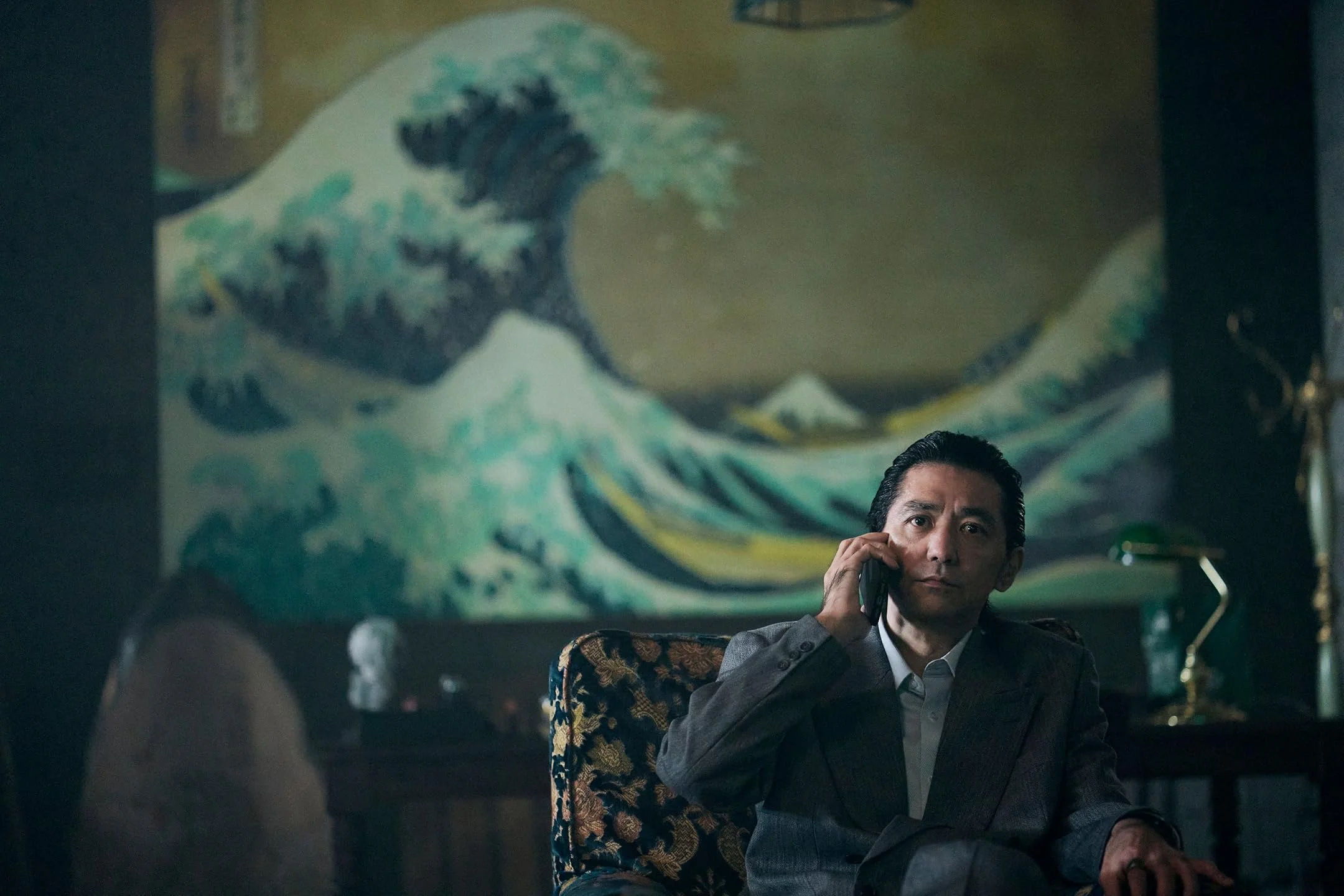
The problem is not excess by itself. Miike has made a career out of piling tones, bodies, jokes, and shocks into the same frame. The problem is that these threads do not all produce the same emotional pressure. The Yakuza murders draw us closer to Yabuki because they turn his corruption into a working method. The Megan plot pulls us away from him, then asks for increasing importance before the film has made us care about it at the same level. When the different crimes begin to connect, the link feels less like revelation than housekeeping.
Lily James becomes the clearest sign of that tonal split. Gwen is meant to be a hard-edged FBI agent who can meet Yabuki on his own compromised ground, but James plays the toughness so visibly that the performance calls attention to itself. The accent, the scowl, the cigarette, the bursts of physical aggression all announce the character before Gwen has a chance to feel lived in. A nightclub melee, complete with a tank top and hair-flipping action, pushes her even further toward a different movie.
There is an argument that this artificiality belongs in a Miike film. Morgan’s Megan works partly because she enters as an eruption, someone whose danger is supposed to disturb the movie’s rhythm. Gwen has a harder job. She needs enough credibility to organize a major investigative thread. Once that slips, the entire subplot loses weight.
The Tokyo setting gives Miike better material. Yabuki drifts through Shinjuku streets, trash-filled alleys, gambling rooms, sex work, and Yakuza circles while the film gestures toward an underworld that has learned to wear a more respectable face. The recurring vision of a peaceful pond, sometimes emerging from the filth of a puddle, gives his exhaustion an image. He does not seem to dream of becoming good. He dreams of rest.
That might be the most affecting idea in the film. Even the crows and meatballs begin to fold into a strange philosophy about purpose, decay, and bodies continuing to matter after the people inside them have failed. Miike reaches for something almost gentle beneath all the mutilation. The movie is funniest and saddest when those two instincts occupy the same space.
Bad Lieutenant: Tokyo loses that fragile balance as its plots multiply. The film grows busier while Yabuki becomes harder to feel, and the chaos that once revealed his condition begins to obscure it. Oguri keeps pulling the movie back toward a tired, oddly sympathetic man who has mistaken endurance for living. Miike keeps finding images that make that exhaustion physical. Those are the moments that stay. The rest keeps moving long after the feeling has already arrived.
Bad Lieutenant: Tokyo had its world premiere at the Toronto International Film Festival on September 14, 2026, ahead of its theatrical release. The crime thriller follows a gambling-addicted Tokyo police officer and an FBI agent who search for a missing politician’s daughter while a mysterious killer watches their every move from the underworld.
Where to Watch Bad Lieutenant: Tokyo (2026) Online
Full Credits
Title: Bad Lieutenant: Tokyo
Distributor: Neon
Release date: September 14, 2026 (Toronto International Film Festival) / October 23, 2026 (Japan)
Running time: 1 hour 48 minutes (108 minutes)
Director: Takashi Miike
Writers: Daisuke Tengan
Producers and Executive Producers: Jeremy Thomas, Sam Pressman, Naoaki Kitajima, Misako Saka
Cast: Shun Oguri, Lily James, Shotaro Mamiya, Liv Morgan, Jun Kunimura, Hiroshi Tachi
The Review
Bad Lieutenant: Tokyo
Bad Lieutenant: Tokyo is strongest when it stays close to Yabuki, letting Shun Oguri turn corruption into exhaustion rather than spectacle. Miike finds striking images in Tokyo’s criminal underworld and an unexpectedly sad idea beneath the grotesque violence. The problem is accumulation. The American subplot, multiple killers, and Lily James’ strained performance pull attention away from the character carrying the film’s emotional weight. What begins as weary moral decay gradually becomes simple narrative fatigue.
PROS
- Shun Oguri’s weary, sympathetic performance
- Strong Yakuza murder investigation
- Memorable Tokyo atmosphere
- Effective imagery around escape and exhaustion
CONS
- Overloaded crime structure
- American subplot weakens the main story
- Lily James feels miscast
- Later connections feel forced







