

























![Kingdom Hearts Collection [I-III] Review](https://gazettely.com/wp-content/uploads/2026/10/Kingdom-Hearts-Collection-I-III-1-360x180.webp "Kingdom Hearts Collection [I-III] Review: KHII Holds Steady as Newer Entries Fluctuate 37")



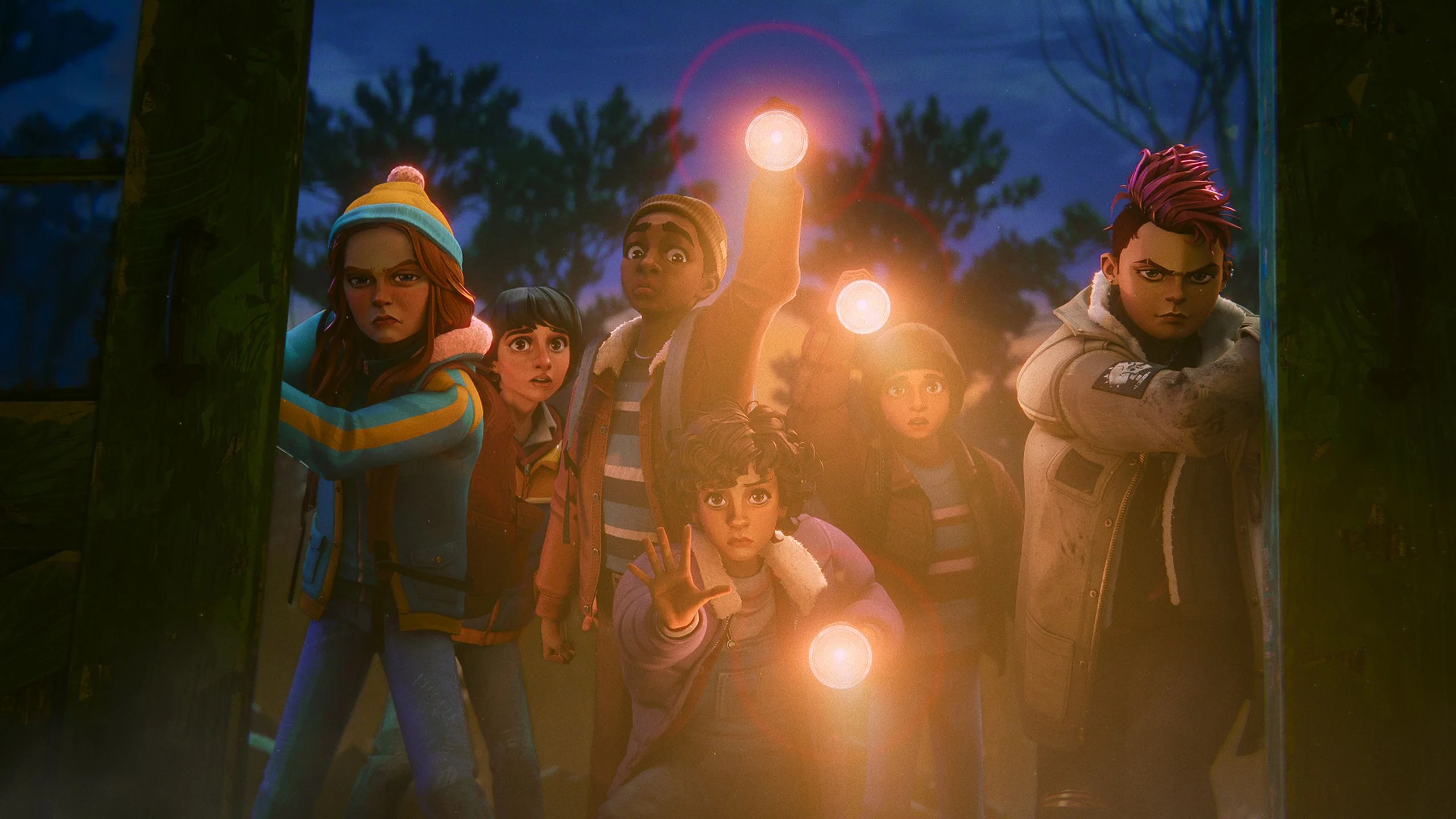

Animation gives Stranger Things: Tales From ’85 permission to make Hawkins stranger than television ever could. Season 2 fills the town with glowing flowers, luminous insects, ghostly apparitions, and creatures whose bodies can ignore the practical limits of live-action effects. The irony is that the story surrounding those images remains unusually restricted. Netflix has given this spinoff a medium built for freedom and placed it inside a timeline where its most recognizable characters cannot change very much.
That tension becomes the season’s defining problem. Set in February 1985, between the second and third seasons of Stranger Things, the eight episodes return to Dustin’s Hawkins Investigators Club as its search for supernatural activity has become embarrassingly uneventful.
Nikki Baxter is now firmly embedded in the group, while Valentine’s Day has Mike, Eleven, Lucas, and Max dealing with young relationships alongside the usual Hawkins anxieties. Quiet does not last. Charlie Dandridge disappears, glowing vegetation starts appearing around town, and strange creatures the kids call hate sprites lead toward a spectral threat connected to Hawkins’ past.
The mystery initially offers a welcome shift from another straightforward variation on the Upside Down. Ghosts give the series a different supernatural vocabulary, while the connection to local history lets Hawkins itself become part of the investigation.
The blue flowers left hanging at the end of Season 1 acquire purpose, the hate sprites provide a memorable visual signature, and the larger creature waiting behind them has the kind of exaggerated physicality that animation can exploit beautifully. Then the season keeps making everybody run.
Chases pile onto fights, which lead into another escape, another creature attack, another frantic regrouping. The issue is less the quantity of action than what the action is being asked to accomplish. Streaming television has spent years treating a season-long mystery as the prestigious default shape for serialized genre storytelling, even when the material underneath it would breathe better in smaller units. Tales From ’85 demonstrates the cost neatly. Once the supernatural puzzle has been established, escalation often means another confrontation rather than a deeper complication.
A case-of-the-week structure begins to look less like a nostalgic throwback and closer to the format this show has been resisting. Different combinations of children could investigate separate Hawkins oddities, while animation could change its visual grammar from episode to episode. The series has built a Saturday-morning-cartoon engine and keeps insisting on driving it like an eight-hour streaming event.
That decision matters because the familiar characters cannot provide unlimited dramatic movement either. Valentine’s Day creates believable friction between Max and Lucas and between Mike and Eleven. Mike carries a private fear, while Max’s anger connects to her absent father and her parents’ divorce.
These are useful pressures, especially because romance at this age is rarely about romance alone. It is also insecurity, status, embarrassment, and the terrifying discovery that another person now has the ability to ruin your afternoon. Yet the franchise timeline is sitting beside every scene with a clipboard.
Max and Lucas can move, but only so far. Mike and Eleven can learn something, but their relationship still has to arrive at the starting position required by Season 3. Prequels can survive that limitation, but they need consequences that survival cannot provide: relationships that genuinely shift, discoveries that alter how we understand somebody, or emotional damage that matters even when audiences know the characters will live.
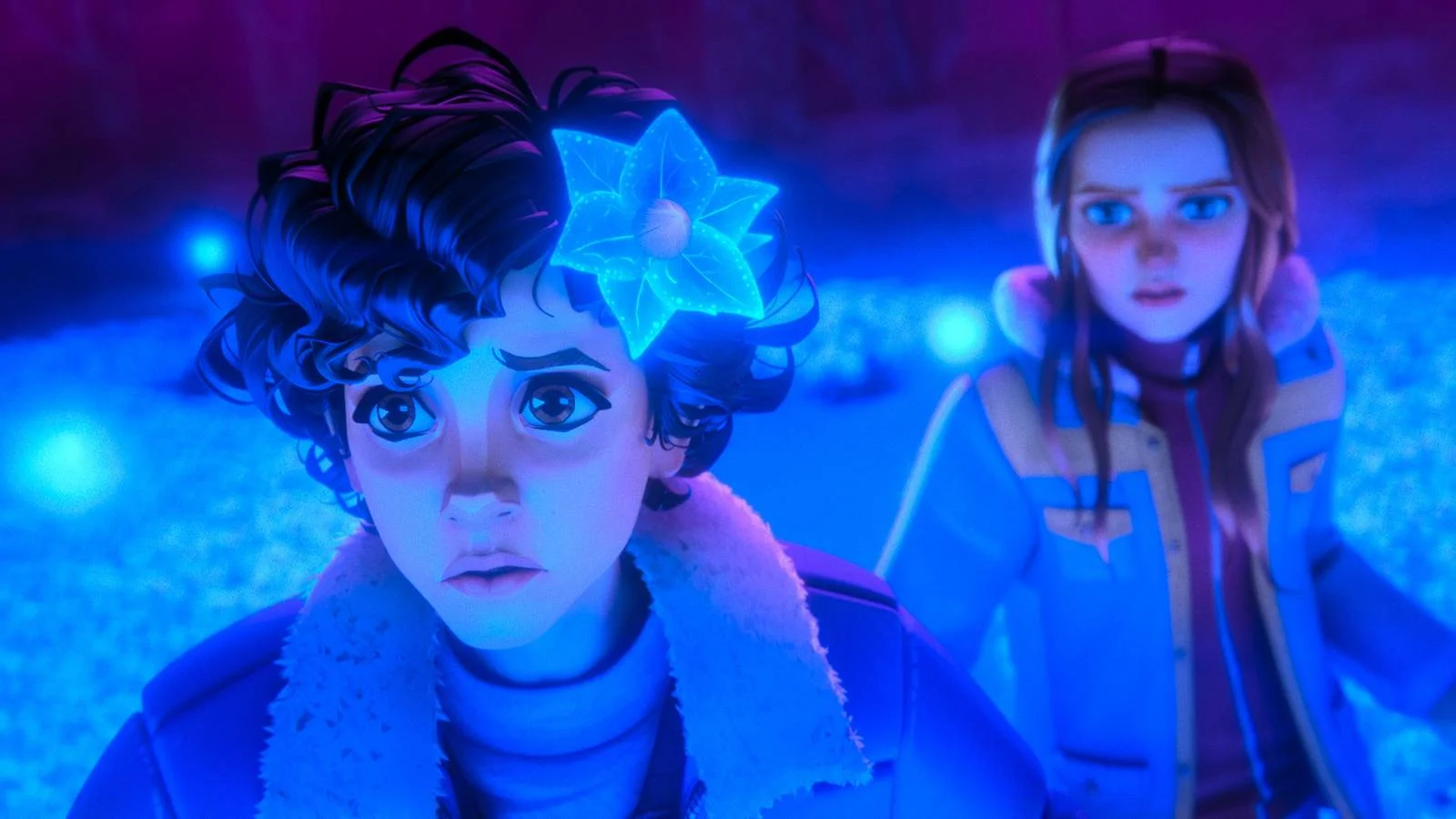
Season 2 reaches for that depth most effectively through Nikki. Her position inside the Hawkins Investigators Club feels much more natural now that the show no longer needs to announce her arrival every few minutes. Her mother’s financial problems give her a fear the other children cannot defeat with improvised weapons: they may have to leave Hawkins. The prospect weighs on Nikki precisely because money should not be a child’s responsibility, yet children notice when adults are scared regardless of how carefully adults try to hide it.
There is also a smart practical consequence. Nikki remains the group’s gadget-maker, but financial pressure reduces the parade of homemade weaponry that made her abilities feel exaggerated during the first season. Her problem changes her behavior rather than existing as a separate character-development assignment.
The frustration is that the supernatural plot eventually takes oxygen from this material too. Nikki has room to develop in ways the established couples do not, yet repeated monster encounters keep pulling the season toward motion, while her relationship with Will receives less attention than it did in Season 1.
Visually, that caution disappears. Flying Bark Productions uses deep orange headlights and flashlights against turquoise and purple backlighting, creating a Hawkins that feels less naturalistic and far more expressive. The supernatural creatures glow, stretch, dart, and lurch with a graphic confidence that distinguishes them from the live-action monsters. One of the larger threats moves with an almost stop-motion quality, a choice that makes its body feel wrong before the story has to explain why it is dangerous.
This is where the franchise logic of the spinoff and the artistic logic of the medium briefly align. The recognizable world supplies continuity; animation supplies an aesthetic reason to revisit it. Tales From ’85 can exaggerate movement, design creatures without a physical effects pipeline, and turn color itself into part of the supernatural atmosphere.
The voice cast helps keep those experiments connected to the people audiences recognize. Braxton Quinney gives Dustin the restless enthusiasm required to make an amateur paranormal club plausible, while Jolie Hoang-Rappaport gives Max enough abrasion to keep the romantic material from becoming syrupy. The ensemble evokes the live-action performances without reducing every scene to an impression contest.
The season becomes most persuasive whenever it stops behaving like an archival extension of Stranger Things and starts behaving like an animated show with its own possibilities. Ghost mythology works. Hawkins history works. The stranger creature designs work. Nikki works best when her problems belong specifically to her rather than filling space beside the established cast.
Yet the series keeps returning to the security of the familiar seasonal formula: one large mystery, escalating attacks, relationship friction, repeated group chases, then restoration before the chronology moves forward. Season 2 ends without another major cliffhanger, which leaves the show at an unusually revealing point. Its animation keeps discovering ways for Hawkins to mutate. Its franchise obligations keep demanding that everybody be ready for summer 1985.
Stranger Things: Tales From ’85 premiered on Netflix on April 23, 2026. The animated science fiction series follows Eleven, Mike, Dustin, Lucas, Will, and Max as they confront new paranormal mysteries and threats in Hawkins during the winter of 1985.
Where to Watch Stranger Things: Tales From ’85 Season 2 Online


Full Credits
Title: Stranger Things: Tales From ’85
Distributor: Netflix
Release date: April 23, 2026
Rating: TV-PG
Running time: 30 minutes
Director: Phil Allora
Writers: Jennifer Muro
Producers and Executive Producers: Matt Duffer, Ross Duffer, Eric Robles, Shawn Levy, Dan Cohen, Hilary Leavitt
Cast: Brooklyn Davey Norstedt, Luca Diaz, Braxton Quinney, Jolie Hoang-Rappaport, Elisha “EJ” Williams, Ben Plessala, Odessa A’zion, Brett Gipson, Janeane Garofalo, Jeremy Jordan
Director of Photography (Cinematographer): Danny Cohen
The Review
Stranger Things: Tales From ’85 Season 2
Stranger Things: Tales From ’85 Season 2 has a medium capable of transforming Hawkins, yet its franchise obligations keep pulling it back toward familiar shapes. The ghost mythology, creature design, expressive color work, and a better-integrated Nikki show what this animated spinoff can do when it trusts its own identity. Repetitive chases and characters trapped by established continuity make the eight-episode mystery feel stretched. Its best ideas keep pointing toward a stranger, freer version of the series that Netflix has not quite allowed to exist.
PROS
- Inventive ghost mythology and creature design
- Expressive, stylized color work
- Nikki fits the ensemble more naturally
- Strong Dustin and Max voice performances
CONS
- Repetitive chases and confrontations
- Familiar characters cannot develop very far
- Season-long mystery feels stretched
- Supernatural action crowds out character material







