



















Michael Dweck and Gregory Kershaw arrive in Burgundy carrying a camera and, perhaps inevitably, a fantasy. Their vineyards glow, their old estates seem preserved outside ordinary time, and their subjects move through rituals of wine, service, tasting, and inheritance with the confidence of people participating in something older than themselves. Then the film quietly begins asking who is actually allowed to inherit that beauty.
That question gives Burgundy its tension. The American filmmakers are openly enamored with the region they spent two years observing, and their opening declaration, “Everything that follows is true. Exactly as we dreamed it,” practically announces the collision between ethnography and mythmaking.
They are documenting a French culture while simultaneously filtering it through the international image of France: old estates, impeccable restaurants, vintage cars, immaculate tailoring, philosophical conversations over glasses of Pinot Noir. The film knows this image is seductive. It also knows seduction can hide the price of admission.
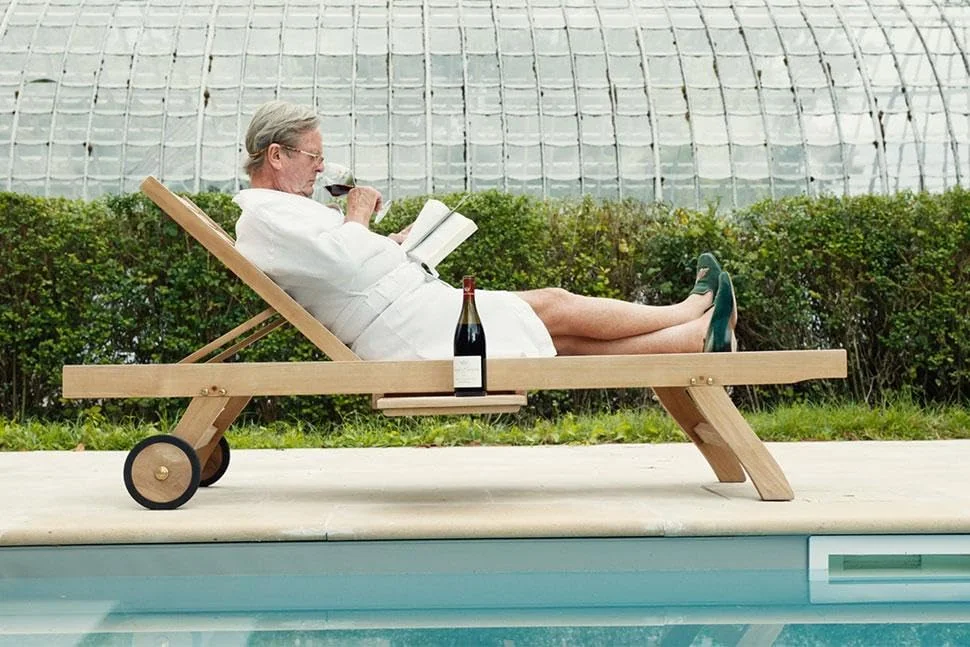
Bertrand represents the most dignified version of continuity. His wine estate has remained within the family for roughly 160 years, and his concern is less about expansion than succession. His grandson Melchior appears reluctant to surrender a faster, more metropolitan life for the slower rhythms of the vineyard. Around Bertrand, Dweck and Kershaw photograph heritage almost as architecture. It exists in rooms, objects, routines, and standards of behavior long before anyone explains it.
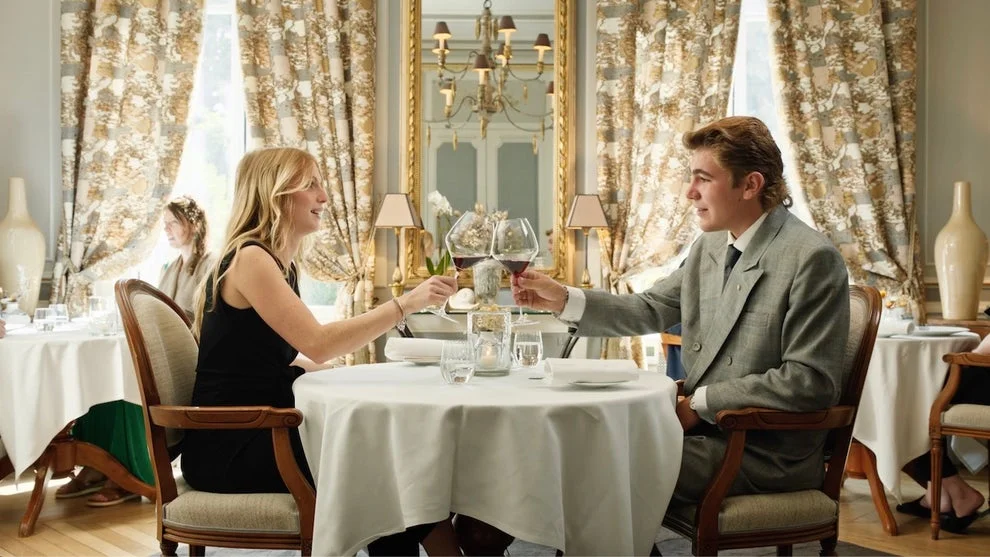
Patrick, the veteran maître d’ at Maison Lameloise, offers a parallel form of inheritance without the land. His obsession with pressed tablecloths, properly arranged cutlery, and exact service might look absurd from outside the profession, and the directors happily let some of that absurdity breathe. Yet his training of apprentice Matteo turns fussiness into knowledge transmission. Someone eventually has to teach the next person how the room is supposed to work.
Enzo complicates that orderly transfer because he has knowledge without lineage. He has worked on Bertrand’s estate since adolescence, cleans vats, harvests grapes, trains his palate, and dreams of possessing a vineyard himself. He even dresses as though history might accept him if he studies the costume closely enough. Jean Gabin becomes a model of masculine style, while his hair, car, and old-fashioned affect make him look like a visitor from the cinema that helped export France’s postwar image around the world.
The problem is that cultural fluency does not buy land. Bertrand’s doubts about Enzo are framed through education, authority, social ease, and the ability to deal with wealthy international buyers. Some of those concerns are practical. Running an estate requires different skills from working one. Yet the financial gulf remains impossible to ignore. Enzo can perform the labor, understand the product, and absorb the rituals surrounding it, while ownership stays connected to inheritance and capital.
That contradiction sharpens the film’s portrait of Burgundy considerably. The bottles travel around the globe as luxury objects, carrying promises of terroir, continuity, and authenticity. The social world producing them feels intensely local and difficult to enter. Global desire feeds the value of a culture whose prestige depends partly on remaining exclusive.
Dweck and Kershaw are too fond of their subjects to reduce this to an indictment, which helps the film. They recognize the beauty produced by exacting traditions even as they reveal the barriers surrounding them. Their best scenes hold admiration and discomfort in the same frame.
Céleste introduces another version of uncertain succession. She is training as a sommelier under Eric Goettelmann, yet one tasting exposes the distance between wanting to belong and possessing the discipline the profession expects. Asked to articulate an exceptional wine, she offers “fruity” and little else. The scene is funny because the gap is so plainly visible. It also mirrors Enzo’s predicament from another direction. Both are young people standing near institutions whose standards were established long before they arrived.
Their romance gives the directors permission to become increasingly playful. Shot on 8mm, the pair drift into retro fantasy, eventually recasting themselves through Bonnie and Clyde. Here the cultural exchange becomes especially curious. American filmmakers borrow an American outlaw romance to stylize a French couple, while Enzo is already fashioning himself through mid-century French cinema. The identities circulate across borders until national style starts resembling a costume box.
Sometimes that conceit works beautifully. Enzo and Céleste seem like young people trying on identities inside a region already filled with inherited roles. Their nostalgia feels slightly comic because neither has actually lived through the eras they imitate.
At other moments, the filmmakers become so enchanted with their own construction that their subjects begin flattening into charming characters. Guillaume, a recently divorced wine critic, fares worst from repetition. His dates, therapy sessions, physical complaints, and refusal to stop talking about wine initially make him an excellent comic figure. Eventually the joke becomes easier to predict.
The same danger appears in the romance. Enzo’s ambitions shift, and he eventually leaves the vineyard path for shellfish farming. Céleste also departs her apprenticeship and heads toward Paris. Their choices expose something useful that the film’s picturesque design cannot fully control: people do not behave like symbols of succession simply because a documentary has photographed them that way.
That disruption gives the final stretch an honesty the polished surfaces occasionally lack. The filmmakers have spent much of Burgundy preserving a world through immaculate compositions, old songs, inherited rituals, and affectionate cinematic reference.
The young people inside that world remain free to leave. Burgundy’s international mythology depends on permanence. The vines return each year. Estates pass down family lines. Bottles carry dates like historical documents. Skills move from master to apprentice, while human desire remains considerably less obedient.
Burgundy had its world premiere out of competition at the 83rd Venice International Film Festival on September 3, 2026. The documentary film explores the renowned region of Burgundy in France, tracking its rich traditions, codes, and people alongside its seductive wine culture.
Full Credits
Title: Burgundy
Distributor: Beautiful Stories, Bayard Productions
Release date: September 3, 2026 (Venice International Film Festival)
Running time: 1 hour 30 minutes (90 minutes)
Director: Michael Dweck, Gregory Kershaw
Producers and Executive Producers: Michael Dweck, Gregory Kershaw
Director of Photography (Cinematographer): Michael Dweck, Gregory Kershaw
Editors: Pauline Gaillard
The Review
Burgundy
Burgundy is most persuasive when its beautiful surfaces expose the difficulty of preserving the lives and traditions they celebrate. Dweck and Kershaw turn inheritance, labor, class, and cultural mythology into a graceful study of a region sold internationally as timeless. Their constructed style occasionally reduces people to charming types, particularly once the romance takes precedence, but Enzo and Céleste’s changing ambitions give the film a useful resistance to its own nostalgia.
PROS
- Gorgeous, expressive visual construction
- Sharp tension between inheritance and access
- Strong use of Enzo’s class position
- Playful cross-cultural cinematic references
CONS
- Guillaume becomes repetitive
- 8mm fantasy can feel overly designed
- Some subjects drift toward caricature
- Romance weakens the regional focus