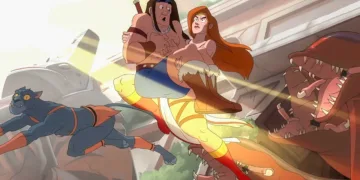

























Turning a 1989 arcade beat ’em up into a self-aware animated comedy sounds suspiciously easy. The original game gives you barbarians, magic, skeletons, monsters, and Death Adder waiting to be hit until he stops moving. There is plenty of room between those pixels for writers to start making jokes. The harder question is what happens after joke number forty.
That is where Golden Axe becomes surprisingly interesting. Mike McMahan and Joe Chandler approach SEGA’s series with the same rapid-fire comic instinct that has shaped plenty of modern adult animation, and the first few episodes occasionally feel trapped by it.
Every name, weapon, monster, and fantasy convention appears to be standing in line for a punchline. Then the show settles down. The characters acquire sharper rhythms, the jokes start growing from the world instead of being fired at it, and a familiar comic formula discovers a property particularly well suited to being lovingly ridiculed.
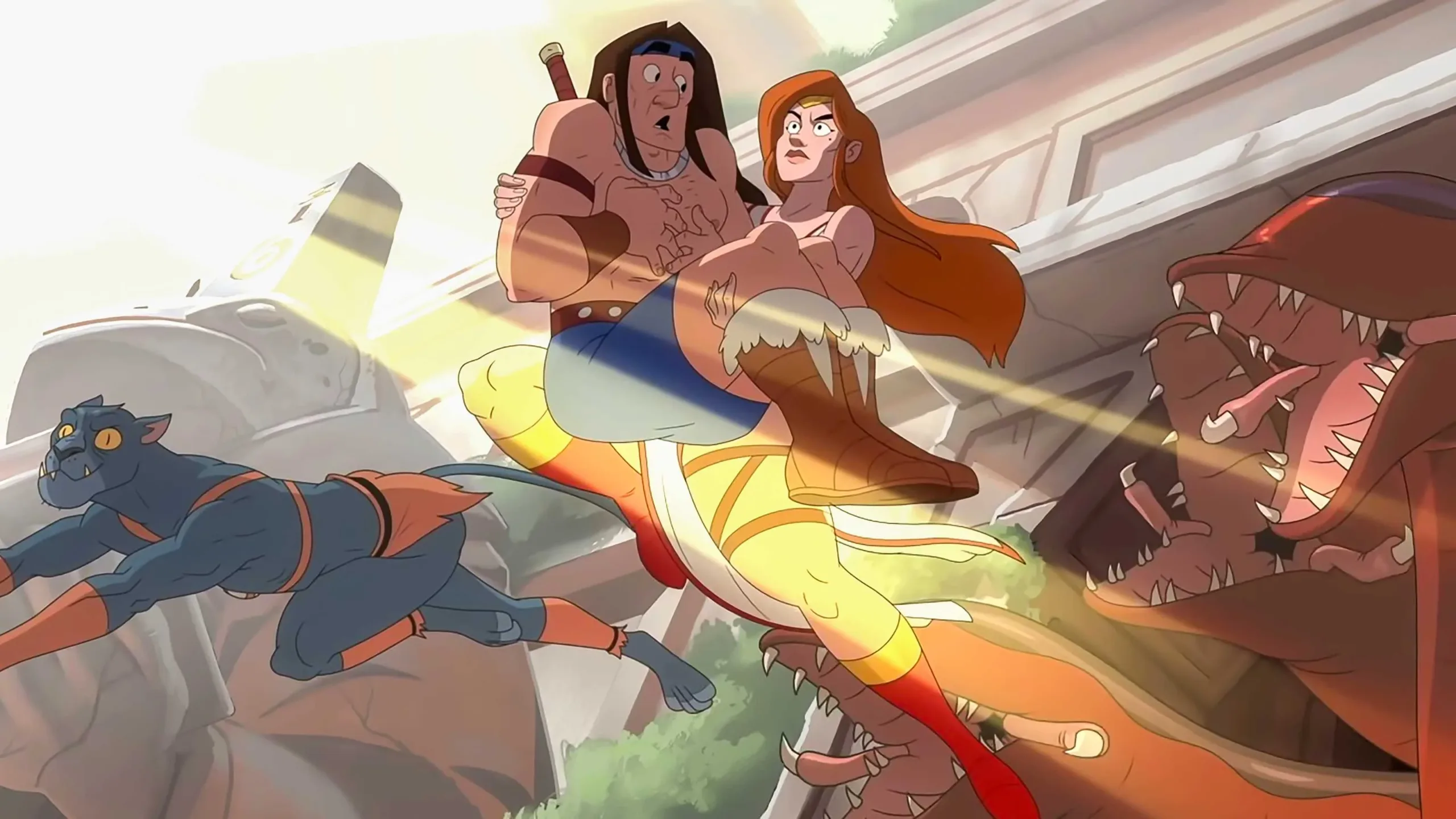
The season separates the original trio early. Gilius Thunderhead heads across Yuria with Hampton Squib, an overeager new adventurer voiced by Danny Pudi, while Ax Battler and Tyris Flare continue their pursuit of Death Adder with Chronos from Golden Axe III.
The structure resembles the games themselves: move forward, reach the next place, encounter something dangerous or ridiculous, keep moving. That simplicity gives the episodes speed, though it also exposes how little dramatic weight some of the character material carries.
Several episodes hint at richer stories before sprinting away from them. Chronos discovers that his supposedly peaceful upbringing may have been considerably uglier than he remembers. Hampton returns home with Gilius and confronts the destruction Death Adder has left behind, including the peculiar condition of his parents. Either development could reshape how those characters see themselves. Instead, the series tends to acknowledge the emotion, extract a joke, and get everyone back on the road. The show wants momentum. Sometimes momentum wins custody of the characters.
Hampton suffers most from this. He begins as the enthusiastic weakling desperate to prove that he belongs among legendary warriors, which gives Pudi plenty of material for nervous optimism while confining Hampton to familiar territory. His strongest function is relational. Put him beside Gilius and the character suddenly makes sense.
Matthew Rhys attacks Gilius with the enthusiasm of a man who has been informed that subtlety is illegal in Yuria. His amplified Welsh delivery fits the dwarf’s stubbornness beautifully, especially when Gilius is terrified, furious, offended, or some combination of the three. Rhys can stretch a reaction past the point where it should stop being funny and somehow locate another laugh on the other side. Pudi provides the counterweight. Hampton admires the world Gilius is tired of surviving, so their conversations naturally produce friction instead of requiring the writers to manufacture it.
The other traveling party is less balanced. Liam McIntyre gives Ax the required heroic-barbarian thunder while leaning happily into the character’s stupidity. Lisa Gilroy plays Tyris with a similarly aggressive confidence. That makes each character funny in isolation, but they can strike the same note when paired together. Carl Tart’s Chronos helps because his stranger, slightly sideways energy gives their scenes another frequency.
Still, the clearest reason Golden Axe works has little to do with plot. It is the writers’ understanding that adapting a video game mechanic can be funnier than referencing one. Ax Battler’s name is addressed, naturally, including the inconvenient fact that Ax does not primarily battle with an axe. Fine. There was no universe in which that joke remained untouched. The better material comes when the series takes something players once accepted without thought and imagines the logistical nightmare of living with it.
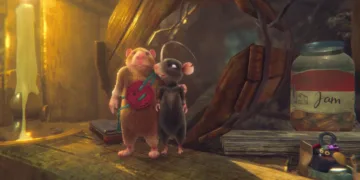
Consider the little creatures players kick to obtain magic potions. The game treats them as walking resource containers. The show asks what kind of creature repeatedly participates in this arrangement, then gives the answer a personality, a home life, and an alarming enthusiasm for being kicked around. That is the adaptation finding comedy inside the mechanic rather than placing a reference on screen and waiting for recognition to do the work.
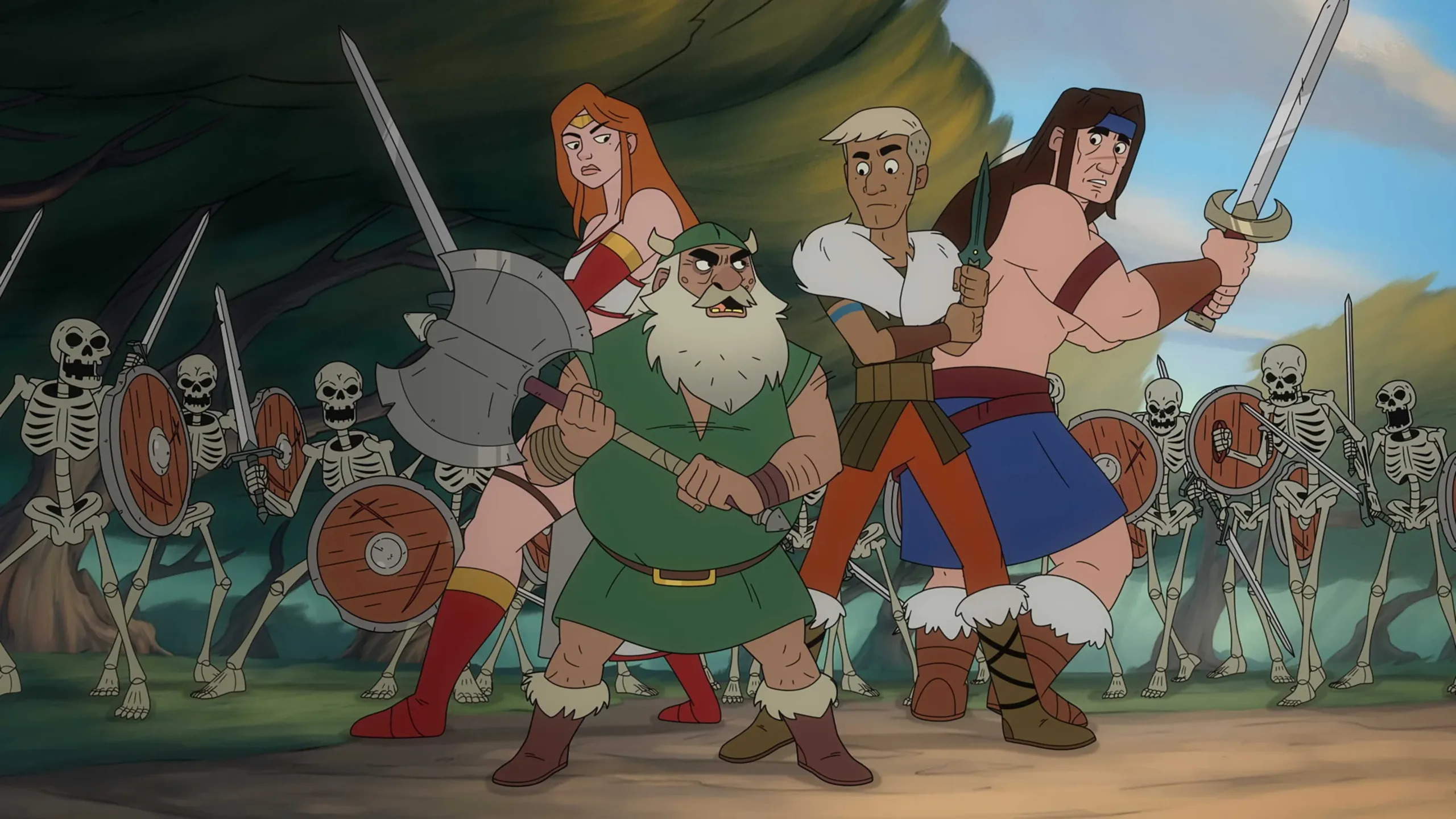
The skeleton warriors receive similar treatment. Disposable enemies become coworkers with petty disputes, social hierarchies, complaints, and the occasional inability to hear an important villainous speech. A near-death experience sends Gilius directly into the visual language of the games, complete with chunky sprites and dialogue stripped of normal vocal performance. Another episode recreates familiar game imagery through its own plot device. Chicken Leg, one of those creatures whose name alone feels like an unfinished meeting note from 1989, gets to be ridiculous and lovable at once.
That affection matters. Golden Axe laughs at the games constantly, yet the comedy rarely feels embarrassed by them. There is a big difference between asking, “Wasn’t this stupid?” and asking, “If this were real, how stupid would daily life become?” The latter question keeps producing the stronger jokes.
The series still has a quantity-control problem. Early episodes push the pace hard enough that some gags arrive already shouting. A joke lands, another begins before the first has cleared the room, and occasionally a third appears to check that nobody missed the first two. The connection to the comic rhythms of Star Trek: Lower Decks and Rick and Morty is easy to see, though Golden Axe improves once it stops treating constant velocity as a personality.
Later episodes give reactions space, let relationships carry scenes, and allow side characters to be funny without immediately transforming them into delivery systems for the next gag. An upbeat skeleton voiced by Stephanie Beatriz fits far better once the season has reached this looser rhythm. Even the gore benefits. Excessive violence works as a visual punchline when the editing allows the absurdity to register instead of racing toward the next decapitation.
The animation supports that Saturday-morning-cartoon energy without pretending this is really Saturday-morning television. Bright fantasy designs, exaggerated action, profanity, innuendo, and fountains of blood place the show somewhere between childhood memory and the version of that memory invented by adults who now realize how weird these games always were.
That may be Golden Axe’s smartest adaptation choice. It does not attempt to manufacture profound mythology from material that never needed it. Instead, it treats the old rules seriously enough to discover their comic possibilities. The season has a weaker grasp on some of its heroes, particularly when emotional material threatens to slow the quest, but it already understands Yuria as a place where video game logic has become everyday bureaucracy, down to the tiny creature whose job is apparently to get kicked for potion bottles.
Golden Axe premieres on Paramount+ on September 16, 2026. Based on the classic SEGA video game franchise, the adult animated fantasy comedy series follows a trio of legendary warriors teaming up with an inexperienced novice to save the realm of Yuria from the villainous Death Adder.
Where to Watch Golden Axe Online







Full Credits
Title: Golden Axe
Distributor: Paramount+
Release date: September 16, 2026
Rating: TV-MA
Running time: 30 minutes
Director: Sarah Partington, Phil Allora, Ben Choi
Writers: Mike McMahan, Joe Chandler, Taylor Cox
Producers and Executive Producers: Mike McMahan, Joe Chandler, Haruki Satomi, Shuji Utsumi, Toru Nakahara, Neal H. Moritz, Pavun Shetty, Toby Ascher, Chris Prynoski, Shannon Prynoski, Antonio Canobbio, Ben Kalina
Cast: Matthew Rhys, Liam McIntyre, Lisa Gilroy, Danny Pudi, Carl Tart
The Review
Golden Axe
Golden Axe works best when it treats old video game logic as the foundation for comedy rather than a museum exhibit. Its relentless early joke rate occasionally crowds out character development, and Ax and Tyris never match the chemistry of Gilius and Hampton. Once the pacing loosens, though, the series becomes much funnier. Matthew Rhys is terrific, the game-specific gags show genuine affection for SEGA’s world, and even disposable skeletons get personalities. Yuria turns out to be a very funny place to have a job.
PROS
- Matthew Rhys is excellent as Gilius
- Game mechanics inspire the best jokes
- Gilius and Hampton have strong chemistry
- Later episodes find a better comic rhythm
- Affectionate use of the source material
CONS
- Early episodes can feel exhausting
- Character development is frequently rushed
- Ax and Tyris occupy similar comic territory
- Hampton follows a familiar underdog arc