











Prestige television has developed a familiar response to a successful first season: enlarge the cast, widen the conspiracy, increase the violence, then hope expansion looks like ambition. MobLand Season 2 takes that route almost immediately, yet its opening episodes are stronger because the expansion has a dramatic purpose. The Harrigans are surrounded by fresh enemies, divided among themselves, and operating inside a criminal hierarchy that suddenly makes their old turf war look provincial. The scale grows because their vulnerability has grown with it.
That distinction matters for a series whose first season often confused movement with momentum. Conrad and Maeve Harrigan could generate a crisis simply by entering a room angry, leaving Harry Da Souza to spend another episode cleaning up the wreckage. Season 2 keeps that combustible arrangement intact.
The early meeting at a dog track still collapses into the sort of violence the series treats as casual punctuation. Yet the chaos now sits inside a clearer design. A Turkish criminal organization deals with opposing sides of the Harrigan family, and Harry realizes the contradiction is deliberate. Someone wants the family fighting itself.
This is where MobLand begins to look less like a collection of expensive gangster set pieces and closer to a television drama with a functioning political system. Kat McAllister now operates above the Harrigans in the criminal hierarchy, while Colin Tattersall’s corruption connects organized crime to institutional power. The family’s problems are no longer confined to people who can be intimidated in a pub or removed with a gun. The series is widening its idea of criminal influence at the same moment it is tightening the mechanics of its plotting.
That shift says something about what contemporary streaming crime dramas increasingly demand from a second season. The local feud is rarely allowed to remain local. Renewal brings enlargement, because enlargement can be sold as progression. MobLand is fortunate that its version of escalation currently changes the pressure on its characters rather than merely adding fresh names to the call sheet.
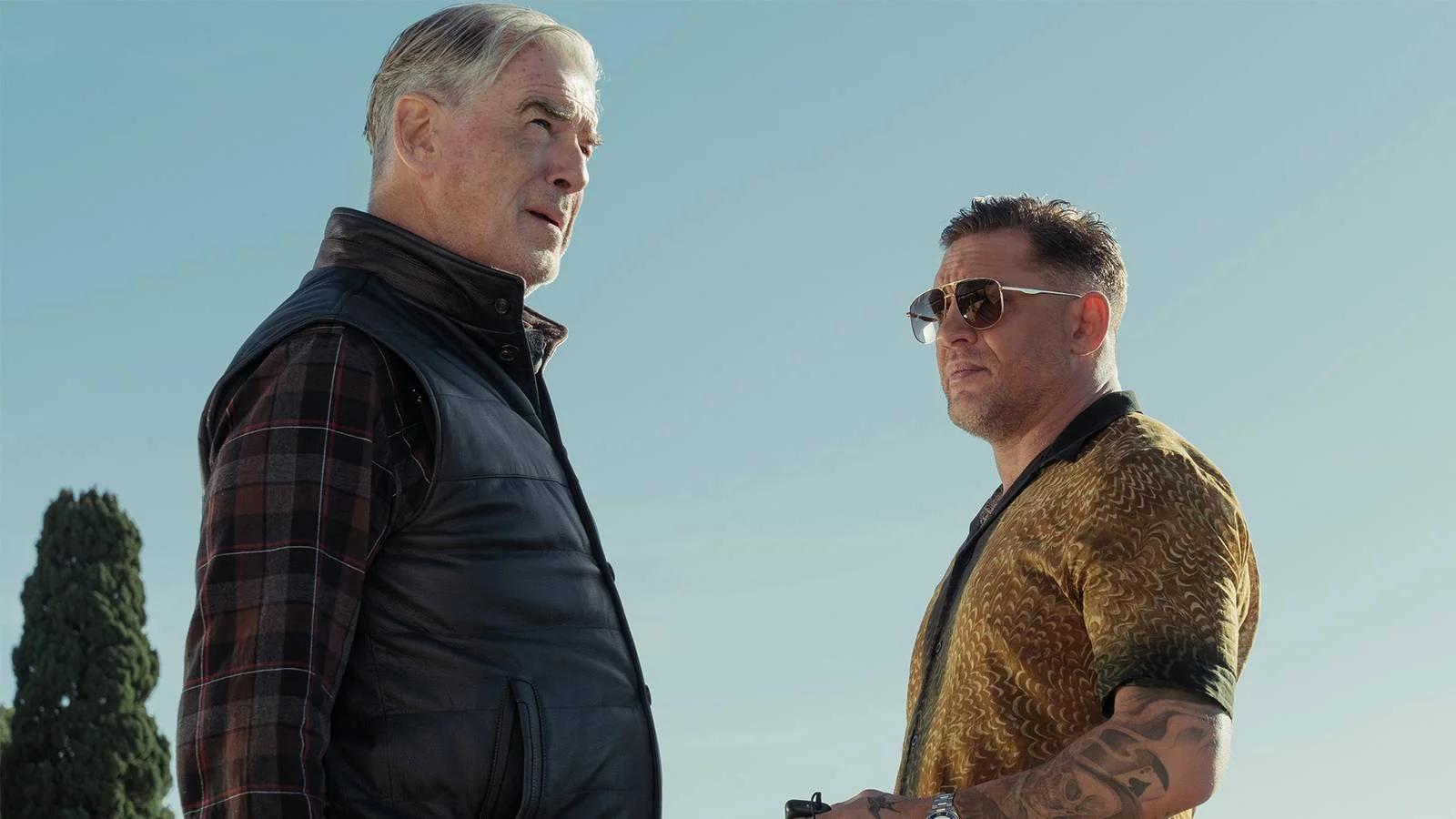
Harry remains the person through whom that pressure becomes readable. Tom Hardy’s performance works through restraint in a show where nearly everyone else seems contractually obliged to lose control. An early scene in which Harry intimidates a witness is effective because Hardy keeps menace, humor and exhaustion within the same narrow register. He does very little, which becomes increasingly expressive beside Pierce Brosnan and Helen Mirren treating self-control as an eccentric lifestyle choice.
Harry’s competence has always made him useful to the Harrigans. Season 2 makes that competence feel closer to entrapment. His marriage to Jan continues to deteriorate, Gina is moving deeper into the world he spends his life managing, and every Harrigan generation seems capable of creating a new emergency before he finishes resolving the previous one. The question hanging over him is becoming less practical than social: what happens to a man whose identity depends on being indispensable to people who destroy everything around them?
Johnny Flynn’s Frankie gives that question its sharpest external form. He is introduced conducting serious criminal business in a nail salon, later arriving for a confrontation on an e-scooter wearing a small white helmet. The joke does not weaken him. It makes him harder to categorize, which is precisely why he works against Harry.
Their contrast is unusually clean. Harry depends on calculation, etiquette and professional discipline. Frankie turns unpredictability into method. He seems to enjoy invading Harry’s psychological space, treating criminal confrontation as performance rather than procedure. Season 1 could give Harry dangerous opponents. Frankie gives him an opponent who attacks the behavior that has always protected him.
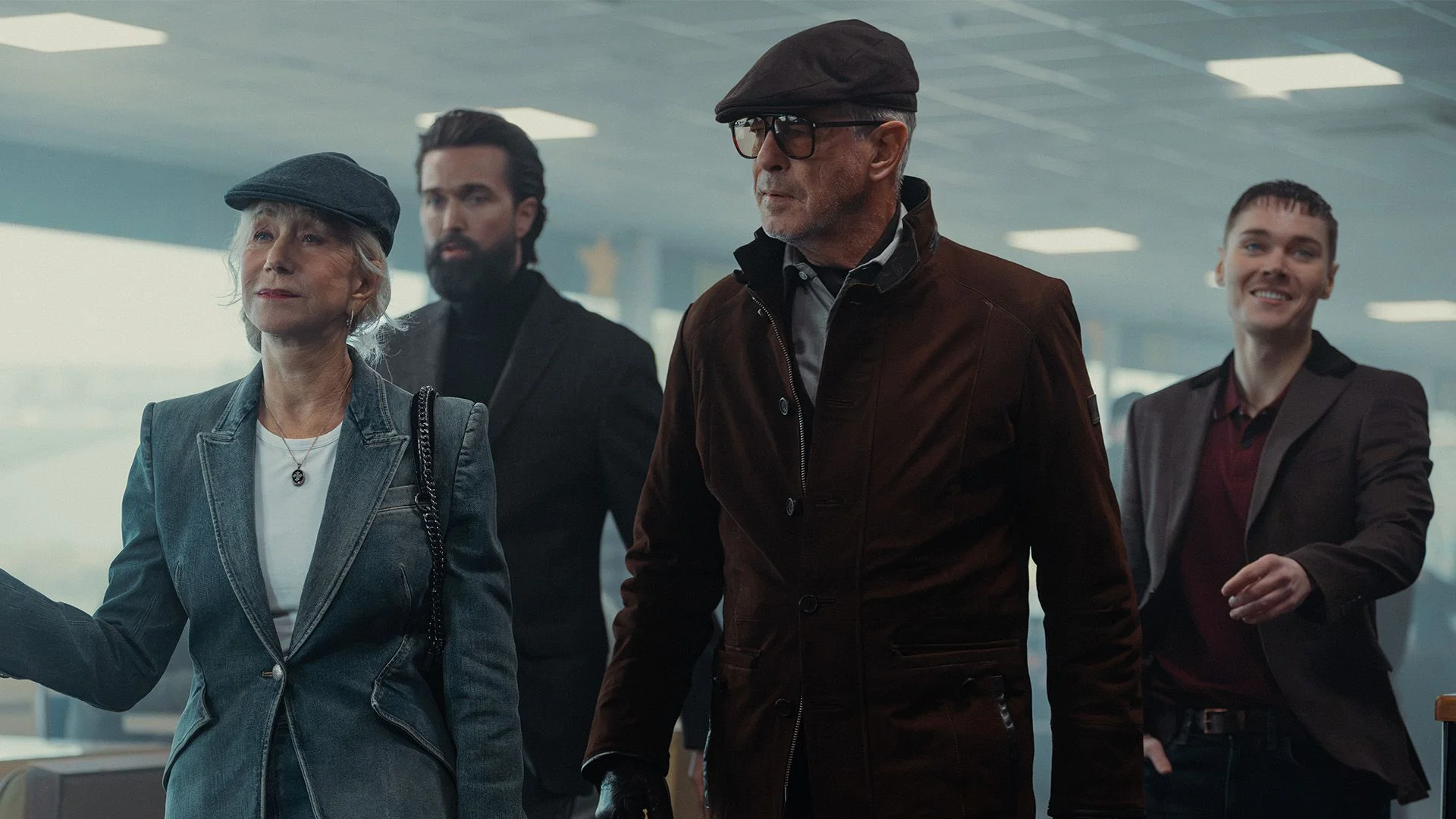
That pairing also shows why casting remains one of the series’ strongest institutional advantages. MobLand has assembled a roster that television usually advertises as proof of seriousness: Hardy, Brosnan, Mirren, Paddy Considine, Toby Jones, Janet McTeer, Joanne Froggatt. The funny thing is that the show often uses this prestige ensemble to stage material of magnificent stupidity. Conrad shoots first and leaves logistics for somebody else. Maeve can contemplate schemes so grotesque that the drama starts edging toward farce. Frankie turns transport choices into psychological warfare. The series has finally stopped pretending that these impulses belong to different shows.
Brosnan and Mirren benefit from that confidence. Conrad and Maeve remain excessive, manipulative and dangerous, but Season 2 gives their behavior clearer consequences within the family’s internal fracture. Paddy Considine’s Kevin is especially useful beside them because his weakness is quieter. He lacks the ruthlessness his family expects, and everyone around him appears painfully aware of it. His failure to embody Harrigan mythology creates a different form of tension from Conrad’s explosions or Maeve’s schemes.
The younger characters matter most as evidence that the family knows how to reproduce its own damage. Eddie continues causing trouble, Seraphina tries to occupy the cleaner side of the business while remaining entangled in its dirt, and Gina’s proximity to Harry’s work turns his professional loyalty into a domestic inheritance. This is where the series could become something richer than a succession of criminal crises. The Harrigans do not simply maintain an empire. They teach each generation the habits required to keep its dysfunction alive.
The danger is that MobLand still loves maximum volume. Shootings, threats, betrayals and spectacularly bad decisions arrive so frequently that quieter character material can struggle for oxygen. One early storyline involving a Harrigan patsy hints at another possibility. He serves his purpose, makes a mistake and accepts a small, miserable death brought about by his own weakness. The sequence carries the fatalism gangster fiction needs when it wants violence to mean something beyond impact.
Those moments make the surrounding excess easier to accept. They also expose the problem whenever the show falls back on sensation alone. A series this interested in family, inheritance and institutional corruption needs occasional silence if those ideas are going to deepen rather than circulate.
The opening stretch of Season 2 suggests that MobLand has learned to organize its appetite rather than cure it. That may be the smarter television decision. The audience is still getting Conrad’s eruptions, Maeve’s schemes, Harry’s cleanup work and escalating criminal spectacle. The difference is that the people causing the chaos now appear trapped inside a system that knows exactly how to use it against them. Frankie gliding into that system on an e-scooter should look ridiculous. Instead, the absurdity becomes part of the threat.
MobLand Season 2 premieres on Paramount+ on September 18, 2026. The crime drama series follows the powerful Harrigan family as their loyal fixer, Harry Da Souza, navigates an escalating underworld war and internal fractures threatening their global empire.
Where to Watch MobLand Season 2 Online










Full Credits
Title: MobLand Season 2
Distributor: Paramount+
Release date: September 18, 2026
Rating: TV-MA
Running time: 45–60 minutes per episode
Director: Guy Ritchie
Writers: Ronan Bennett
Producers and Executive Producers: David Glasser, Kris Thykier, Peter Heslop, Tom Hardy, Ronan Bennett
Cast: Tom Hardy, Pierce Brosnan, Helen Mirren, Paddy Considine, Joanne Froggatt, Lara Pulver, Anson Boon, Mandeep Dhillon
The Review
MobLand Season 2
MobLand Season 2 turns the standard streaming mandate to go bigger into something dramatically useful. Its expanding criminal hierarchy sharpens the Harrigans' internal fractures, while Tom Hardy's restraint and Johnny Flynn's calculated unpredictability give the chaos a stronger center. The series still reaches for gunfire and catastrophe whenever silence might do harder work, but these opening episodes suggest a show increasingly conscious of how its excess functions. The ridiculousness remains. Now it has architecture.
PROS
- Sharper, more coherent plotting
- Hardy anchors the ensemble
- Frankie is an inspired new threat
- Expanded crime hierarchy adds pressure
- Excess and dark comedy work together
CONS
- Violence can crowd out quieter drama
- Some Harrigan behavior still borders on caricature
- Constant escalation risks diminishing impact