





















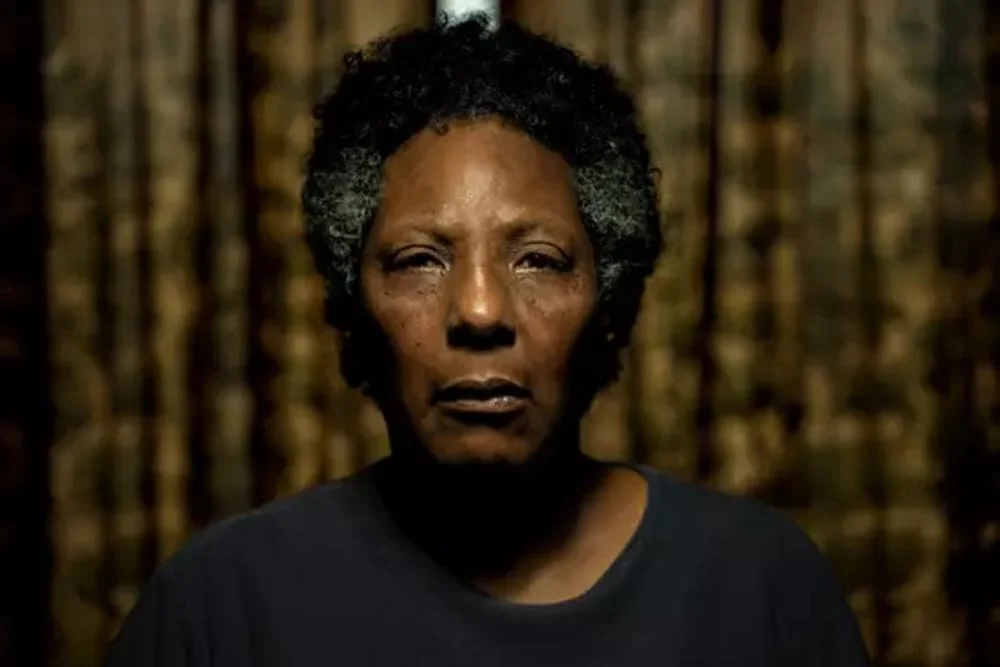

Luiz calls Wesley a murderer and tells Vicentina that she failed as a mother. She has come to apologize, yet there is no answer she can give that would make his anger unreasonable. Rejane Faria holds Vicentina in that terrible position: she can bear the accusation without knowing how much of it belongs to her. The conversation has the discomfort of two people speaking about the same death from places they cannot exchange.
Elsewhere, Isabel and her sister Vera invite Vicentina to a celebration for their mother, who died before her 90th birthday. Their welcome offers a place at the gathering, though the occasion still belongs to the woman who is missing. Gabriel Martins allows these meetings to differ in what the families ask of Vicentina. She repeats her apology; the people receiving it must decide what, if anything, they can do with it.
The catastrophe itself comes with frightening speed. Martins observes the passengers on Wesley’s bus as they travel through Belo Horizonte, giving ordinary faces a little time in the frame before the vehicle falls from an overpass. Wesley dies along with passengers.
At home, Vicentina learns of the crash from her friend Joana, then sits with television reports that carry her son’s name into other households. Speculation about his intent begins almost at once. The film keeps that question open, leaving Vicentina to mourn a man whose final act she cannot explain while strangers speak of him with growing certainty.
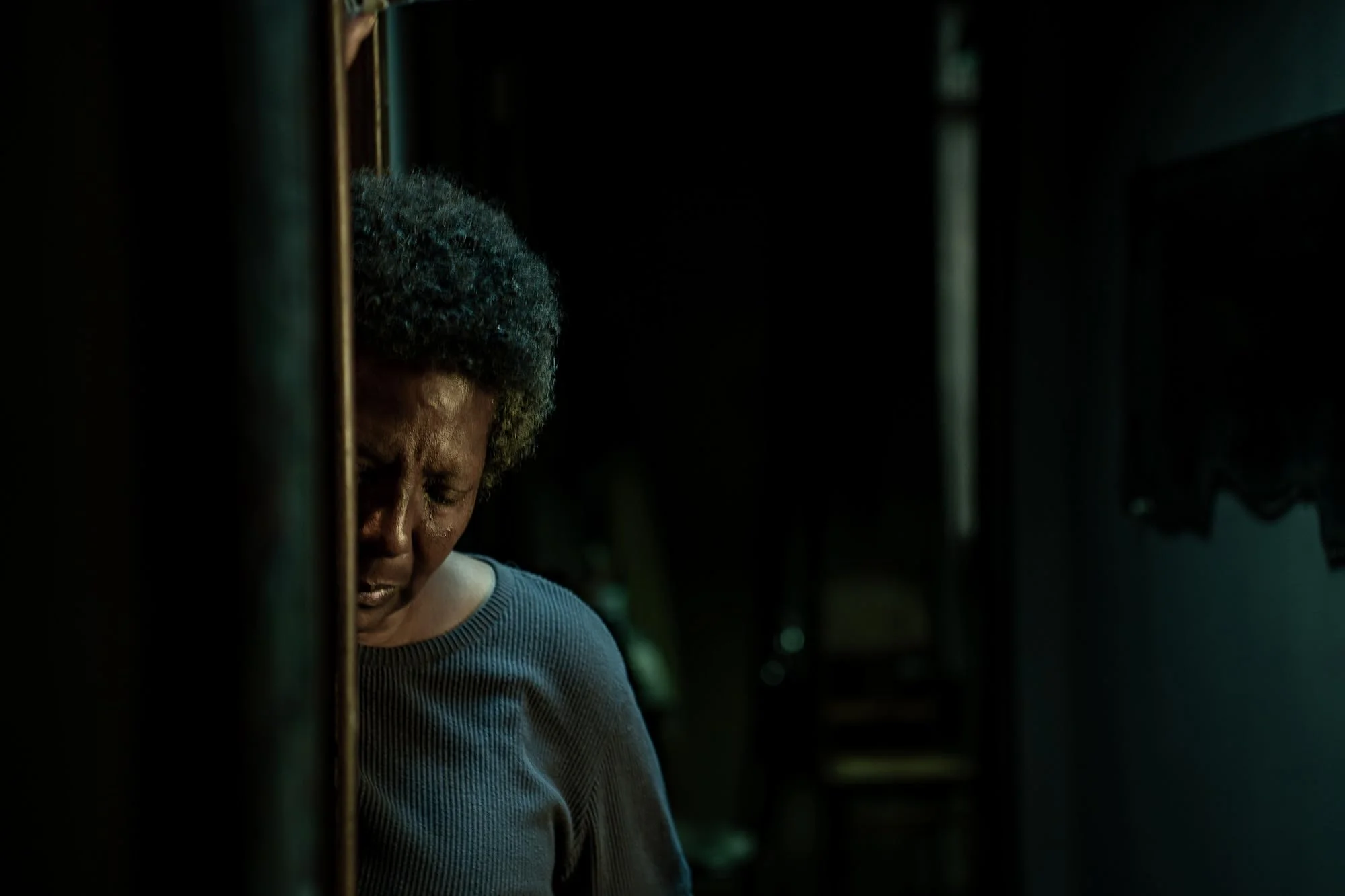
Wesley’s death might have confined her to the house. Instead, Vicentina takes her crutch and crosses the city to meet the victims’ families. Martins watches some of those journeys from a distance, letting her slow progress occupy the same streets as traffic and people going about their work.
The effort gives weight to a visit before she reaches the door. Inside, his camera moves close enough to register pauses that an exchange of apologies and replies could never contain. Each household has its own life, and Vicentina has to enter it knowing she may be unwelcome.
Faria’s performance is strongest in the effort of getting there and remaining present. Vicentina’s careful walk, guarded mouth, and long silences suggest a woman rationing the strength needed for another conversation. Sometimes that reserve becomes difficult to read.
As the visits continue, her expression can feel much the same from one encounter to the next, even as the families’ responses change. Martins seems to want that persistence to accumulate in us, but a film lasting nearly two and a half hours needs each return to the apology to reveal something the previous one could not. Isabel’s invitation and Luiz’s anger do. Other meetings leave less of a mark before Vicentina moves on.
The repetition also exposes a painful limit in her undertaking. Vicentina has chosen an action she can perform again, though no amount of practice will make her competent at it. She cannot offer the families knowledge of Wesley’s intentions, and she has no way to tell them how to receive her. Martins lets people hesitate, sit together, and struggle through the social habits that survive even when ordinary conversation has become impossible. At its best, the film stays in those uneasy intervals long enough for the other person’s grief to exist beyond Vicentina’s need to speak.
Fred, a friend of Wesley’s, unsettles her understanding of her son in a different way. He lingers near the funeral and her home before their contact reveals musical ambitions and parts of Wesley’s life she had not known. A brief visit from Wesley’s twin brother, also played by Renato Novaes, brings a familiar face back into the house without bringing Wesley with it. These appearances do not solve the mystery around the crash. They leave Vicentina with the quieter and perhaps harder discovery that living beside her adult son did not give her full access to him.
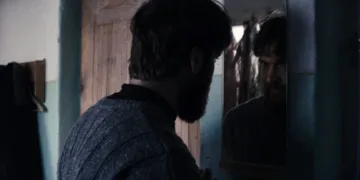
Martins finds a harsh contrast between the noise outside and the attention Vicentina asks of the people she visits. Belo Horizonte’s streets keep moving; inside a home, someone may need a long silence before finding a few words. The film’s patience makes that silence felt, even when its repeated structure grows heavy. An early request for a television interview returns later as Vicentina watches herself pleading publicly for forgiveness and switches the set off. Her reflection appears on the dark screen. Nothing there can tell her how her apology was heard in the homes she visited.
On Behalf of My Son world-premiered at the Toronto International Film Festival on September 12, 2026, ahead of its upcoming global streaming release on Netflix. The compelling Brazilian drama follows a mother fighting for justice and answers after her son is targeted in a violent police operation.
Full Credits
Title: On Behalf of My Son
Distributor: Netflix
Release date: September 12, 2026 (Toronto International Film Festival)
Rating: 12A
Running time: 2 hours 26 minutes (146 minutes)
Director: Gabriel Martins
Writers: Gabriel Martins
Producers and Executive Producers: Thiago Macêdo Correia
Cast: Rejane Faria, Maíra Azevedo, Renato Novaes, Giovanni Venturini, Giovanna Heliodoro, Grace Passô, Marisa Revert, Fernanda Vianna
Director of Photography (Cinematographer): Leonardo Feliciano
Editors: Gabriel Martins, Thiago Ricarte
Composer: Tiganá Santana
The Review
On Behalf of My Son
Gabriel Martins gives grief a physical weight as Vicentina crosses Belo Horizonte to apologize for a son she may never fully understand. Rejane Faria’s careful movement and the contrasting responses of the families make the strongest visits difficult to shake. Across nearly two and a half hours, repeated apologies sometimes lose the force of discovery, and Faria’s reserve can become hard to read. The film is most affecting when it lets an encounter remain unresolved.
PROS
- Faria’s precise physical performance
- Distinctive encounters with Isabel and Luiz
- - Patient use of the city’s movement and noise
CONS
- Some visits repeat an emotional beat
- Vicentina’s expressions can feel too similar
- - The long runtime weakens the accumulation