

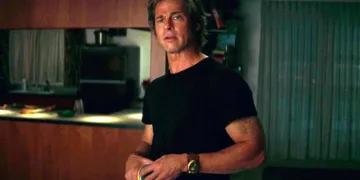
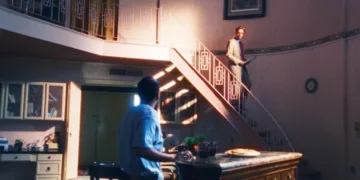





















Diego García frames Leo’s London flat as though every doorway were waiting to testify. Andrea Pallaoro keeps the camera inside this sprawling apartment for nearly the entire 123 minutes of The Echo Chamber, letting bedrooms, glass partitions and long corridors absorb the changing relationship between music producer Leo and Anne, the doctor who first treats his chronic back pain and later becomes his lover.
The film comes from the final screenplay Bernardo Bertolucci worked on with Ilaria Bernardini and Ludovica Rampoldi, and its architecture feels appropriately haunted. Pallaoro and editor Paola Freddi move quietly between stages of the relationship, beginning around Leo’s overdose before slipping backward to his first treatments and forward again to his return from rehab. Temporal markers are deliberately scarce. A room seen moments earlier can belong to another month entirely.
That fractured chronology suits a story about people unable to leave their own emotional past behind. Luca Marinelli’s Leo fills the apartment with records, furniture and expensive objects, while Alicia Vikander’s Anne describes her own home as almost empty. His clutter is autobiography. Her emptiness feels like an absence waiting to attach itself to somebody else.
The Caretaker’s Trap
Anne first tries massage and injections on Leo’s back before reluctantly giving him opioids. That medical gesture becomes the original sin of their relationship. Physical relief, attraction and dependency arrive tangled together, and Pallaoro refuses to separate them neatly.
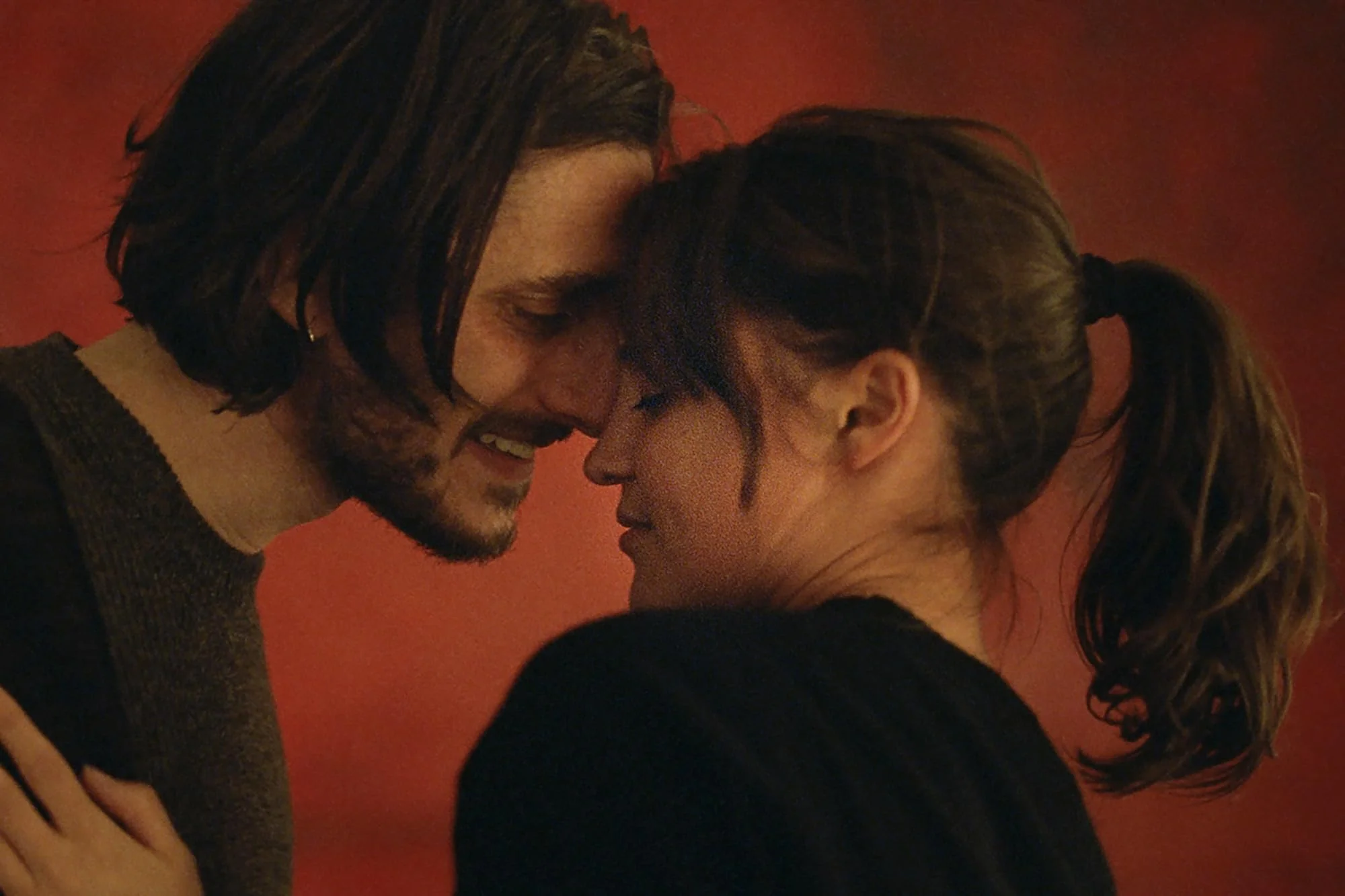
Marinelli gives Leo an unsettling capacity to alternate warmth with indifference. After he and Anne sleep together, he tells her he cannot rest beside another person and sends her away. The cruelty lands because Marinelli barely sharpens his voice. For Leo, the request sounds practical. Vikander lets the rejection settle through a pause and a small retreat in her expression.
Their worst night initially looks euphoric. Leo, intoxicated and dancing to deafening music, pulls Anne into the mood. Later, she wakes on top of him and realizes he is unresponsive. The jump from pleasure to emergency is vicious, and Pallaoro stages it without changing his visual temperament. The camera watches.
After rehab, Leo keeps his distance on his sponsor’s advice. Anne responds by entering his apartment whenever he leaves. She sleeps in his bed, showers, reads his books and searches his cupboards. She blow-dries a towel so Leo cannot detect the moisture. The detail is tiny and damning.
García frequently shoots Anne through door frames or behind reflective surfaces during these visits. The compositions turn caretaking into surveillance. Vikander keeps Anne tender enough that the intrusion remains emotionally legible, yet the geometry of the images makes its moral character harder to excuse.
Her impulse to repair reaches its clearest symbol when she gathers fragments of Leo’s broken mug and restores it with kintsugi. Repair here carries possession inside it. Anne does not merely want Leo healed. She needs to remain part of the healing.
Songs Behind Closed Doors
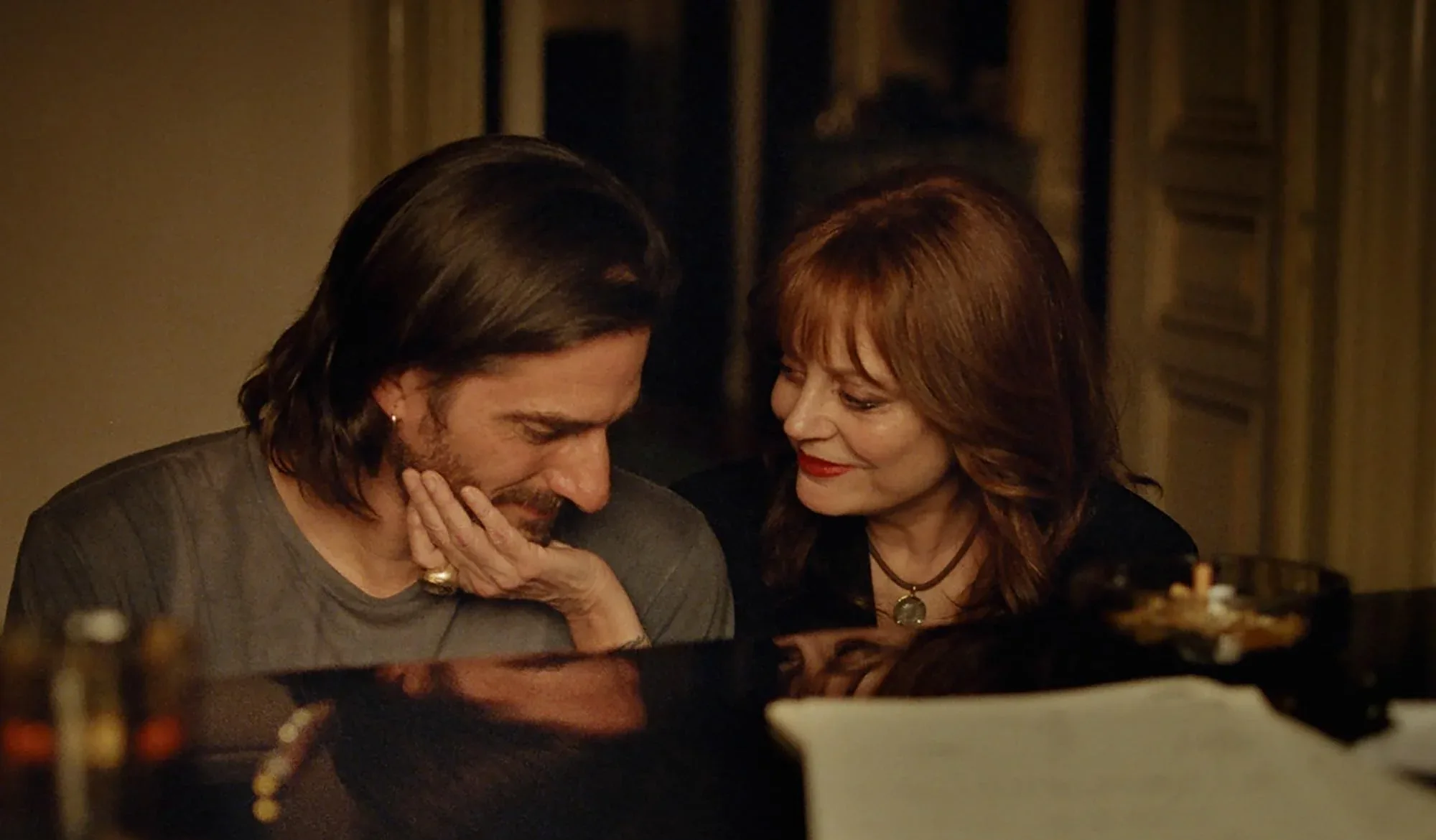
Susan Sarandon’s Ava May changes the temperature whenever she enters. A faded music icon coaxed back into recording by Leo, Ava speaks with the authority of someone who has survived enough damage to recognize it in other people.
Her best scene may be nearly silent. Leo plays one of her old records, and Sarandon allows pride, embarrassment and grief to cross her face without declaring which feeling has won. The moment contains richer history than several longer conversations elsewhere.
Ava also sees Anne with fewer illusions than Leo does. When Leo calls Anne an angel, Ava dryly questions the appeal of angels. It is a small line, but Sarandon gives it the quality of a warning issued by someone who has learned to distrust purity.
Clément Ducol’s music and the songs performed during Leo and Ava’s sessions offer brief openings inside the film’s suffocating atmosphere. Some passages remain so restrained that they never acquire the force the narrative seems to promise. Pallaoro repeatedly cuts away before performance can become release.
The apartment itself carries stronger musical rhythm. Gaspare De Pascali fills it with deep reds, browns, fabric, glass and polished surfaces, while García’s Academy-ratio compositions compress that richness into narrow vertical frames. Characters often appear surrounded by luxury with little visual room to escape it. Elegant prisons are still prisons.
When Restraint Breaks
Pallaoro asks for unusual patience. Showers, shaving, walking between rooms and silent waiting unfold at length, sometimes giving physical form to loneliness and sometimes merely extending it. The distinction becomes increasingly difficult to ignore.
Anne’s secret visits eventually acquire greater dramatic charge once she starts leaving evidence behind. Leo notices small disruptions, and the apartment becomes a primitive correspondence system. Objects take the place of conversation. Their relationship survives through displaced pillows, altered rooms and traces that one person knows the other will read.
Leo eventually answers with music, arranging for an Ava May song connected to Anne’s childhood to be playing when she enters. It is one of the film’s sharpest uses of space. He communicates without being present, turning the apartment itself into messenger, witness and accomplice.
Then the film changes register.
The final stretch moves toward severe melodrama, altering the balance of power between Leo and Anne through tragedy. Pallaoro has spent most of the picture keeping emotion under glass, so the sudden escalation carries an almost operatic violence. For some viewers, that rupture will give the film the force its earlier restraint has withheld. For others, the shift will expose how little narrative pressure those long silences accumulated.
Marinelli and Vikander keep the transition from collapsing completely. Their final interactions retain the same disturbing question that has followed them from Anne’s first prescription: where does care end once the person giving it needs the dependence as badly as the person receiving it?
The Echo Chamber had its world premiere in competition at the 83rd Venice International Film Festival on September 6, 2026, ahead of an Italian theatrical release. Based on the final screenplay by the late Bernardo Bertolucci, the romantic drama follows a struggling music producer who forms an intense emotional bond with his physiotherapist.
Full Credits
Title: The Echo Chamber
Distributor: 01 Distribution
Release date: September 6, 2026 (Venice International Film Festival)
Rating: Not Rated
Running time: 2 hours
Director: Andrea Pallaoro
Writers: Bernardo Bertolucci, Ilaria Bernardini, Ludovica Rampoldi
Producers and Executive Producers: Nicola Giuliano, Francesca Cima, Carlotta Calori, Viola Prestieri, Jacques-Henri Bronckart, Tatjana Kozar
Cast: Luca Marinelli, Alicia Vikander, Susan Sarandon
Director of Photography (Cinematographer): Paola Freddi
Composer: Clément Ducol
The Review
The Echo Chamber
The Echo Chamber turns Leo’s apartment into an ethical trap, with Diego García’s constricted framing making every doorway, reflection, and shadow carry the pressure of dependency. Luca Marinelli and Alicia Vikander sustain that tension beautifully, especially when Anne’s care begins resembling surveillance and Leo mistakes need for intimacy. Pallaoro’s long takes sometimes preserve silence past the point of discovery, while the late melodramatic rupture strains a visual language built on restraint. Susan Sarandon cuts through the gloom with welcome steel.
PROS
- Marinelli and Vikander’s layered performances
- García’s claustrophobic Academy framing
- Rich, psychologically loaded production design
- Anne’s unsettling caretaker dynamic
- Sarandon’s sharp supporting performance
CONS
- Repetitive stretches of domestic observation
- Uneven musical passages
- Ava remains underused
- Abrupt late tonal escalation
- Ambiguity sometimes becomes inertia