

























![Kingdom Hearts Collection [I-III] Review](https://gazettely.com/wp-content/uploads/2026/10/Kingdom-Hearts-Collection-I-III-1-360x180.webp "Kingdom Hearts Collection [I-III] Review: KHII Holds Steady as Newer Entries Fluctuate 37")



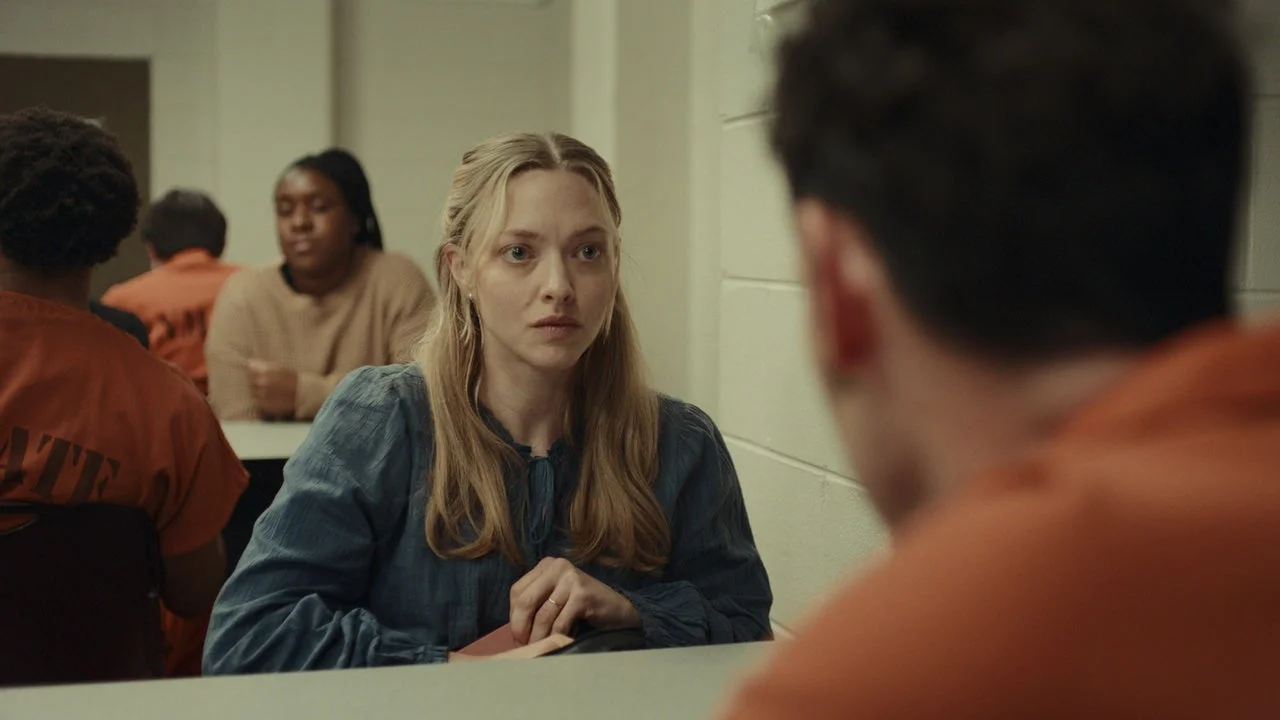

Tim Blake Nelson builds The Life and Deaths of Wilson Shedd around a structural gamble: he tells us early that Wilson Shedd is going to escape from prison, and soon after that he is going to die. The suspense has almost nothing to do with either event. What matters is how the film rearranges everything between them, allowing sympathy, disgust, fear, and pity to keep interrupting one another. It is an intelligent design, sometimes an overworked one, and its best passages arrive when the screenplay stops managing our response quite so visibly.
Amanda Seyfried plays Karen, a teacher who takes a creative-writing job at a maximum-security prison while her home life deteriorates under an abusive husband, Kenneth. Her classroom gives Nelson an efficient way to complicate Wilson before the story asks us to confront what he has done. Played by Scoot McNairy, he is observant, serious about literature, and eager to write. When another inmate harasses Karen, Wilson intervenes. He seems protective. He may also be establishing himself as the safest man in a room where safety is relative enough to deserve quotation marks.
That uncertainty is where McNairy is especially effective. He never plays Wilson as a secret innocent waiting for someone to recognize his goodness. His restraint has menace inside it. Even when Wilson discusses writing or responds to Karen with apparent sincerity, McNairy keeps enough distance between expression and intention that the character remains difficult to read. Karen sees sensitivity. The audience has reason to see calculation. The film gradually makes room for both.
Nelson complicates that relationship by refusing chronological order. He abruptly cuts from the prison classroom to Wilson and fellow inmates James and Earl outside in orange jumpsuits, breaking into a building after an escape we have not yet seen. Elsewhere, John and Jane Lawson watch their children perform at school, seemingly disconnected from Karen and Wilson. Another strand follows prison official Joan Gardner as she prepares for an execution. The pieces initially look like separate stories. They are really consequences waiting for their causes.
The device works because each timeline changes the meaning of another. Karen’s growing attachment to Wilson becomes harder to accept once we have seen what freedom will lead to. The escape gains additional tension because we know Karen must somehow become involved. Wilson’s eventual execution hangs over his classroom scenes before the film has fully explained why his sentence reaches that point. Nelson is constantly withholding one piece of information while revealing another.
That is elegant storytelling up to a point. The difficulty is that the mechanism becomes increasingly visible. Every time Wilson begins to look humane, the film can counter with violence. Every time his crimes threaten to settle the audience’s judgment, Nelson returns to his writing, childhood, fear, or approaching death. The structure keeps the moral argument active, but it occasionally feels as though the screenplay is moving weights around a scale rather than allowing character to generate the uncertainty naturally.
Karen exposes this problem most clearly. Seyfried gives her exhaustion without making passivity her defining feature. Her marriage to Kenneth is violently abusive, and the classroom offers something she has been missing at home: respect, intellectual engagement, and the feeling that her attention matters. Her imprisoned brother also means she does not enter the prison carrying the clean social distance that might separate another teacher from the men in front of her. Those details make her attraction to Wilson understandable. They do not make every later choice equally convincing.
Their relationship develops through writing assignments and increasingly personal exchanges. Karen starts responding to Wilson as a man rather than solely as a student, and Wilson understands the importance of that shift. The film leaves useful uncertainty around his intentions. He can care for Karen and exploit her at the same time. People are rarely considerate enough to choose one motive for the convenience of a screenplay. The weaker element is the speed with which Karen crosses from emotional investment into decisions that help enable Wilson’s escape. Seyfried supplies psychological continuity that the writing occasionally skips.
Once Wilson is free, Nelson removes any possibility that humanizing him will turn into absolution. The Lawson family, played by William Jackson Harper and Devyn Tyler as parents John and Jane, receives its own pocket of ordinary life before encountering the fugitives. We see the children perform. We hear the parents discuss forgiveness. The attention is deliberate because Nelson wants their later terror to register as the destruction of a family, rather than as another violent beat in an escape narrative.
The result is horrifying, and structurally revealing. Nelson returns to the confrontation repeatedly, drawing out the inevitability of what is coming. His direction avoids the slickness of a conventional thriller, which gives the violence a grim practical quality. Yet the sequence creates another problem for a film already obsessed with manipulating perspective. The Lawsons are granted specificity, then their suffering becomes a means of recalibrating how we think about Wilson. The movie understands the danger in reducing murder victims to narrative evidence, but understanding the problem does not entirely solve it.
This tension becomes especially important when the story reaches Wilson’s execution. Nelson has done everything possible to deny himself the easy version of this argument. Wilson is guilty. His crimes are appalling. His capacity for tenderness does not erase them. By the time Missi Pyle’s Joan Gardner oversees the preparations for lethal injection, the question has shifted away from Wilson’s guilt and toward what changes when killing becomes procedure.
Here Nelson’s approach gains force because the narrative grows less fragmented. The machinery of execution requires preparation, schedules, witnesses, officials, and bodies performing assigned tasks. McNairy becomes increasingly affecting as Wilson loses the control that made him difficult to read earlier. Pyle is equally valuable because Joan does not need to function as a speech-delivering representative of the state.
Her role places institutional responsibility beside individual violence without pretending the two are identical. The title’s plural “deaths” fits that design: Wilson has already destroyed lives before the state prepares to destroy his, and his imprisonment, escape, recapture, and execution create several endings inside one life without requiring a tidy symbolic answer.
The Life and Deaths of Wilson Shedd is strongest when it accepts the mess inside its own premise. Wilson can be sincere and manipulative. Karen can be perceptive and disastrously mistaken. A murderer can remain human without becoming forgivable. The film weakens when its nonlinear construction appears to arrange those contradictions too carefully, especially when the Lawson family’s suffering becomes another instrument in Wilson’s moral framing.
Yet the final stretch strips away much of that engineering. Nelson places a guilty man inside an execution procedure and lets the physical fact of what is about to happen carry the argument. By then, the story has stopped asking us to solve Wilson. It has made the harder choice of showing what happens after judgment has already been made.
The Life and Deaths of Wilson Shedd had its world premiere at the Toronto International Film Festival in September 2026. The prison drama follows a troubled English teacher in an Oklahoma prison who develops a complex, intense bond with an incarcerated inmate.
Where to Watch The Life and Deaths of Wilson Shedd (2026) Online
Full Credits
Title: The Life and Deaths of Wilson Shedd
Distributor: QWGmire, Co Created Media, V42, Red Barn Films (Independent)
Release date: September 2026 (Toronto International Film Festival)
Running time: 2 hours 1 minute (121 minutes)
Director: Tim Blake Nelson
Writers: Tim Blake Nelson
Producers and Executive Producers: Julie Buck, Tim Blake Nelson, Ryan Bartecki, Miles David Romney, Billy Hines
Cast: Amanda Seyfried, Scoot McNairy, Missi Pyle, William Jackson Harper, Elizabeth Marvel, Grant Harvey, Devyn Tyler, Wunmi Mosaku, Tim Blake Nelson
Director of Photography (Cinematographer): Benoit Soler
Editors: Luke Ciarrocchi
Composer: Henry Nelson, Will Curry
The Review
The Life and Deaths of Wilson Shedd
Tim Blake Nelson’s fractured structure gives The Life and Deaths of Wilson Shedd its strongest tension and its clearest weakness. Scoot McNairy and Amanda Seyfried keep Wilson and Karen psychologically credible even when the screenplay occasionally moves them faster than their characterization can support. The Lawson sequence strains the film’s moral balancing act, yet the execution passages recover its force by abandoning much of the structural manipulation and confronting the state’s violence directly. The film never makes Wilson easy to forgive, which is precisely why its final argument carries weight.
PROS
- McNairy’s controlled, ambiguous performance
- Seyfried gives Karen emotional continuity
- Nonlinear structure creates genuine tension
- Execution sequence sharpens the moral argument
- Violence is staged without thriller gloss
CONS
- Karen’s later choices develop too quickly
- Structural manipulation sometimes becomes visible
- Lawson family can feel instrumentalized
- Moral contrasts are occasionally over-engineered







