

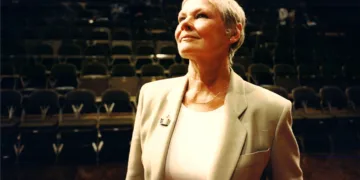







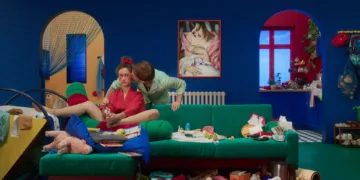



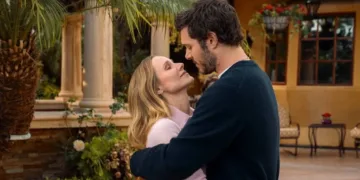












Shuko has left a marriage of roughly fifty years and found a Korean pop star worth getting excited about. Across the restaurant table, her daughter Satomi listens with the reserve of someone whose pleasures rarely demand an audience. Eri Watanabe gives the mother’s talk an expansive, unapologetic energy: she has reasons for leaving, interests to pursue, and little inclination to make her freedom sound respectable. Maha Harada’s In My Father’s Room places this noisy appetite beside the quieter pursuits of Shuko’s late husband, Yuichi, a poet devoted to pottery and tea ceremony.
These attachments map a contemporary Japanese household through cultural forms that travel at different speeds. Korean pop offers Shuko anticipation and public excitement; Yuichi’s rituals reward repetition and private absorption. Satomi spends her working days guarding paintings by the American artist Mark Rothko. Imported culture belongs to ordinary life here, sitting comfortably beside inherited practice. The distinction that matters is the seriousness granted to each pleasure. Shuko receives the liveliest comic treatment, while Yuichi’s devotion invites contemplation. Her eventual admission that his poetry first attracted her makes this unequal treatment harder to accept without question.
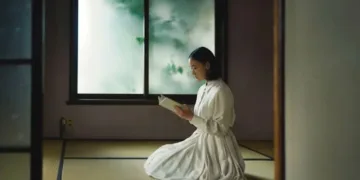
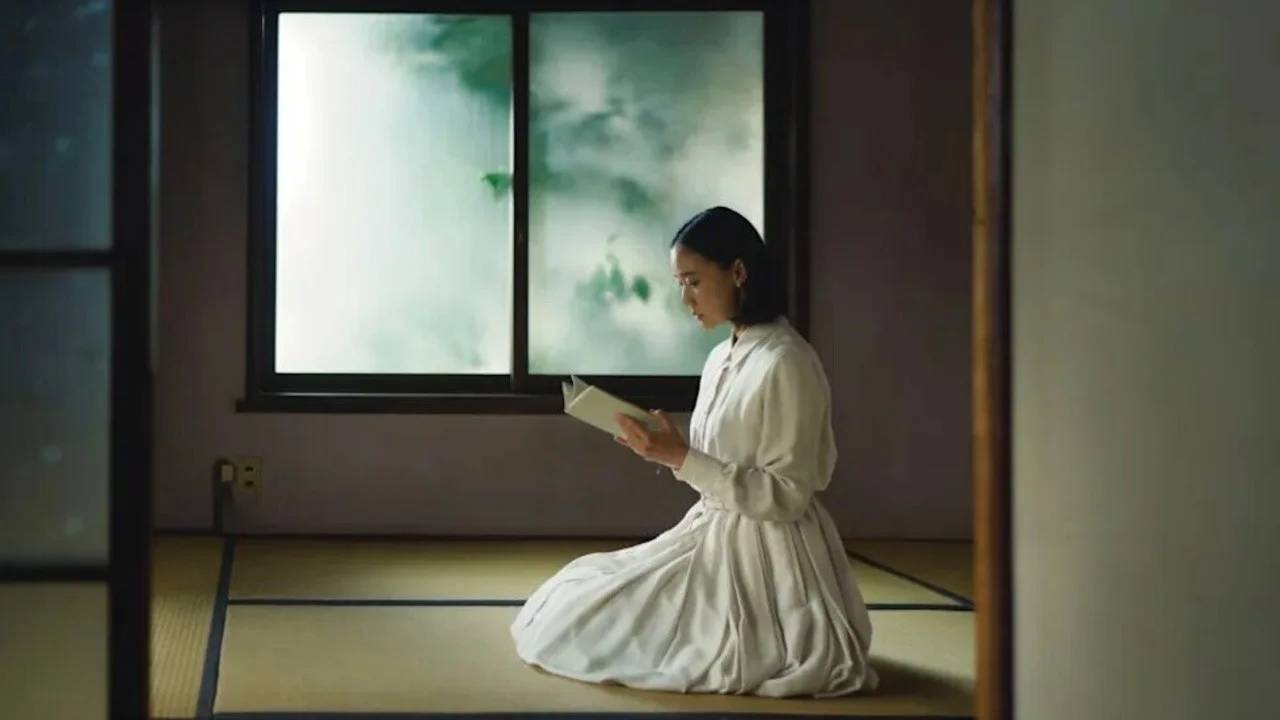
Satomi, played by Yu Aoi, is forty and has become distant from her father. A mysterious key received after his death sends her through the places and relationships that occupied his later life. Harada, a novelist and former museum curator adapting her own short story An Unnecessary Man, gives this inquiry the habits of an attentive visitor. Satomi reads Yuichi’s poems, encounters objects he valued, and listens to someone who knew him differently. Discovery proceeds through the correction of a familiar description: the father dismissed at home had an existence that remained largely invisible there.
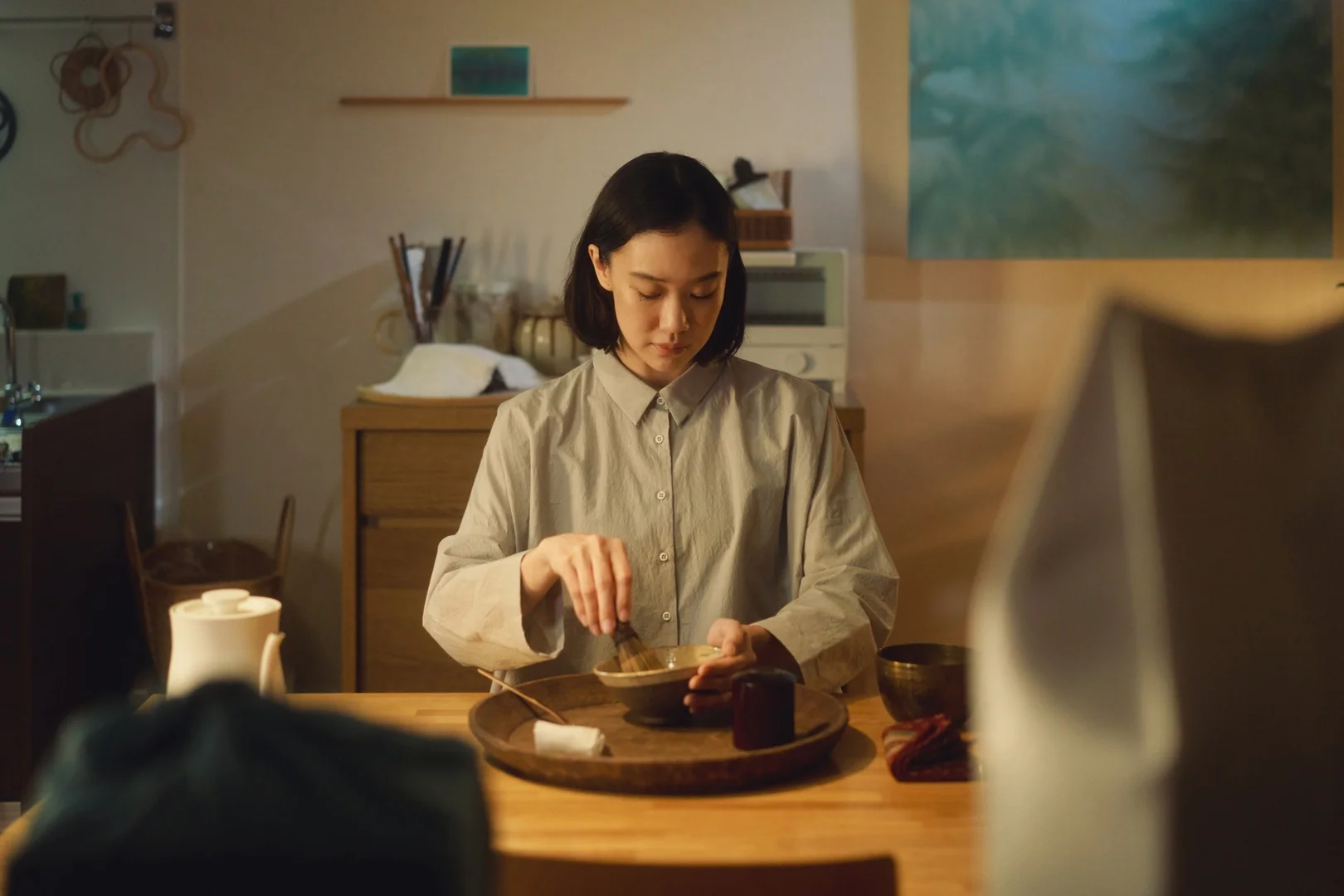
The most persuasive correction occurs in the pottery shop run by Taku, played by Eita Nagayama. In his recollections, Yuichi becomes attached to an earthenware bowl that Taku refuses to sell. Permission to use it is enough. Yuichi performs a tea ceremony without water or tea, preserving the gestures after their practical purpose has been removed. Issey Ogata makes the sequence intelligible through his body.
His precise movements sit alongside a disheveled bearing and searching facial expressions, allowing devotion to retain something awkward and fallible. The man handling the bowl remains a person, rather than becoming an emblem of spiritual refinement.
The ceremony also gives Harada a specific connection between Japanese ritual and American abstraction. A bowl emptied of its usual contents and Rothko’s dark rectangles both invite attention without supplying an obvious event to watch.
Their histories and meanings remain distinct, but the film brings them together through the behavior they encourage. Ogata’s performance makes that invitation tangible: concentration becomes an action we can observe. The museum passages are less consistently persuasive. When characters describe profound encounters with Rothko, their testimony sometimes supplies an experience the drama has yet to communicate.
Yoshio Kitagawa’s photography does considerable work toward closing that gap. Subtle differences of black and deep red prevent the canvases from becoming the blank surfaces a hurried glance might register. Light reflected on pottery similarly makes small changes worth noticing.
The opening image, a dark green surface revealed as matcha, briefly postpones recognition so that looking precedes naming. This is an apt visual method for Satomi’s inquiry. Her father, too, has been assigned a description before she has learned how to see him. White interiors, dark frames, glass, and green foliage give her investigation an ordered environment, while moving water and branches keep that order from feeling entirely sealed.
Satomi’s museum employment makes patient observation a credible habit rather than a sudden response to bereavement. Watching an artwork, listening to visitors, and remaining unobtrusive prepare her to receive Taku’s account. His memories reveal affinities between father and daughter that neither had made into a shared life. Her friendship with him gives the investigation a present-tense human connection, and changes at work disturb the security of her familiar routine. These developments matter because recognizing Yuichi’s private fulfillment could otherwise leave Satomi simply inheriting his isolation.
Aoi’s restraint suits a woman accustomed to witnessing rather than declaring. It becomes limiting when discoveries accumulate without sufficiently distinct reactions. Reading her father’s poetry and finding their shared attraction to tea and pottery establish kinship, but the emotional differences between those encounters remain faint. Ogata’s gestures give Yuichi an idiosyncratic presence; Satomi’s quietness provides fewer comparable points of access. Harada respects her inwardness, yet respect alone cannot make its changing contents visible. The difficulty lies in how softly the film differentiates recognition, grief, and the possibility of choosing another way to live.
That lack of differentiation also affects the contemplative rhythm. The empty-bowl ceremony earns time by showing the precision of Yuichi’s attachment, then continues beyond the discovery that gives it dramatic force. Repeated returns to Rothko reinforce the value of attentive looking without always altering what that attention reveals. The piano-led score, including a slowed rendition of Bizet’s “L’Amour est un oiseau rebelle,” sustains the measured pace. Harada’s confidence in these forms is sincere, but their recurrence can leave the relationships waiting while the film renews its appreciation of art.
Shuko’s memory of falling in love with Yuichi through his words opens a question the posthumous portrait cannot settle. She once recognized the sensitivity Satomi is now discovering, and still decided she could no longer stay. Her departure cannot be explained away by a failure to appreciate poetry. A capacity for private wonder tells us little about how someone shared a household across decades. Satomi gains access to the father who found satisfaction in a bowl, a poem, or a painting; the man her mother lived beside remains less available, even after the tenderness of that early courtship returns to the conversation.
In My Father’s Room made its festival debut in September 2026 at the San Sebastian International Film Festival before heading toward a wider theatrical rollout. The slow-burning Japanese drama serves as a poetic exploration of family, tracing the emotional depths and difficult paths required to confront the ghosts of the past.
Full Credits
Title: In My Father’s Room
Distributor: Toho, Mirrorliar Films
Release date: September 2026 (San Sebastian International Film Festival) / January 29, 2027 (Japan)
Running time: 1 hour 49 minutes (109 minutes)
Director: Maha Harada
Writers: Maha Harada
Producers and Executive Producers: Not publicly specified
Cast: Yu Aoi, Eita Nagayama, Eri Watanabe, Kami
The Review
In My Father's Room
In My Father’s Room finds a thoughtful connection between Japanese tea practice and American abstraction, with Issey Ogata giving private devotion a tangible human presence. Its patient photography makes small pleasures visible, but repeated rituals and declarations about art leave Satomi’s emotional changes faint. Harada restores dignity to a misunderstood father without fully examining the husband his wife chose to leave. The sensitivity is genuine; the family portrait remains incomplete.
PROS
- Ogata’s precise, fallible portrayal of Yuichi.
- Photography that rewards close attention to paintings and pottery.
- - Thoughtful connections between Japanese ritual and American abstraction.
CONS
- Satomi’s discoveries produce insufficiently distinct emotional responses.
- Extended rituals and repeated painting passages lose dramatic force.
- - Dialogue sometimes asserts spiritual experiences the drama struggles to communicate.







