





























Switching from xylophone swords to a saxophone blade changes what keeping time means in Alpha Nomos. The starting swords ask players to leave pauses inside their combos; the saxophone blade favors held inputs and heavier blows. Both demand precision, but their patterns require different habits.
Someone struggling with the first weapon can find a workable rhythm with the second without suddenly becoming an expert musician. RibCage Games gives weapon selection a valuable function here: it changes how the player participates in the combat, including which parts of the beat they must resist filling.
That distinction becomes richer once upgrades start interacting with those patterns. One perk makes held attacks attach a bomb to an enemy, then lets subsequent strikes strengthen the explosion. Holding an input now establishes something that the following attacks develop.
It can give an awkward weapon a useful place in a build, rather than leave the player waiting for a replacement. With two attack inputs supporting regular strikes, specials, pauses, and holds, the interesting decisions concern the spacing and duration of actions. A combo has a shape the player must understand, and a perk can change the reason for executing it.
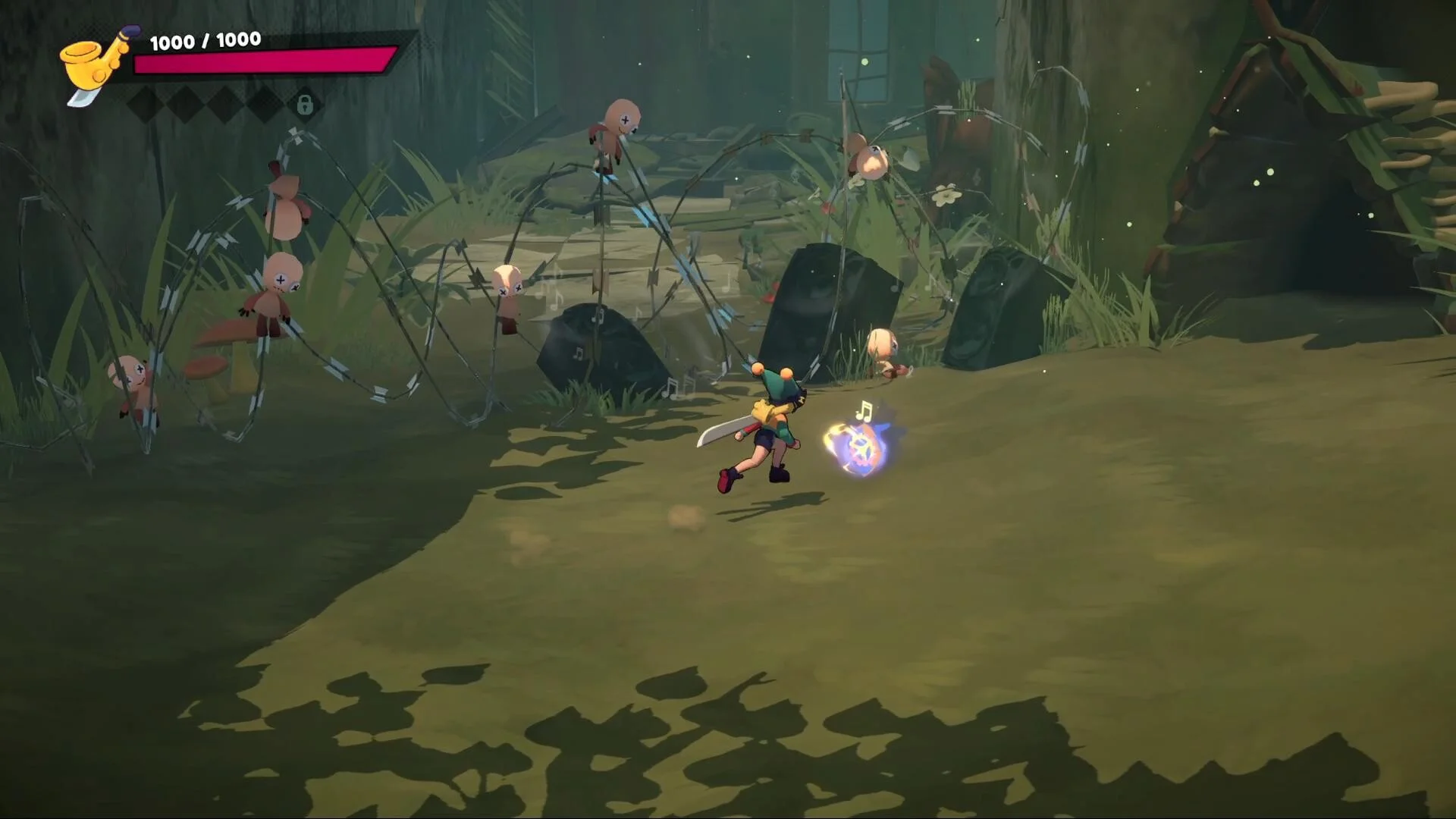
Cello, the clownlike puppet wielding these instruments, is searching for missing friends in a damaged world inhabited by hostile dolls. Enclosed arenas turn that search into repeated waves of combat, while defeat returns Cello to a clearing shared with other stranded residents. The story supplies a reason to continue, but the music gives each encounter its immediate purpose.
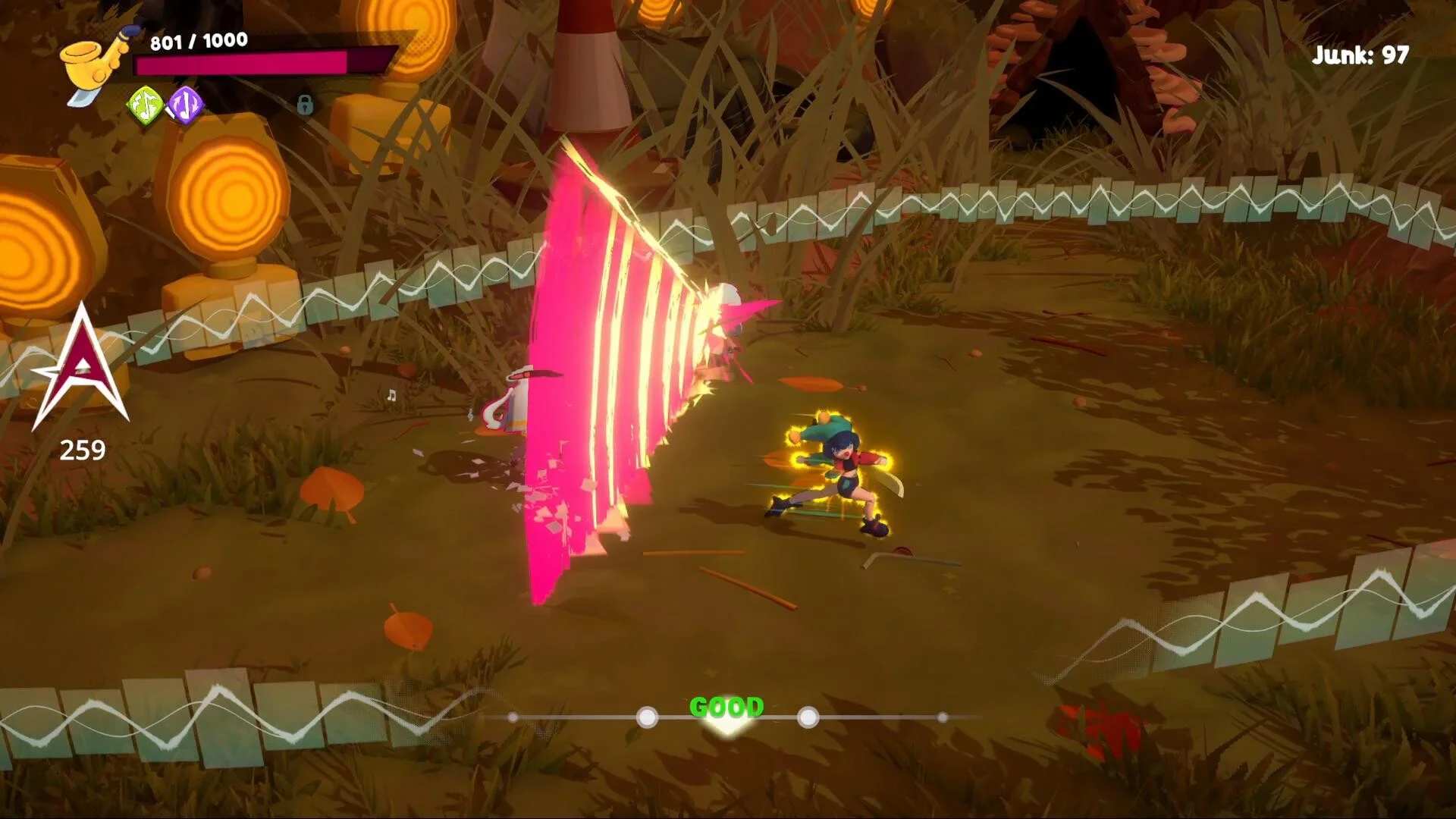
Totem Warriors’ soundtrack establishes the beat; attacks performed in time deliver effective damage, while mistimed strikes are severely weakened. Mixing regular attacks with specials matters too. Successful fighting requires learning a sequence and making it useful against an enemy, rather than simply pressing whenever the music supplies a cue.
The audio-themed upgrades make that process unusually tangible. Reverb, Flanger, and Delay alter the sound of Cello’s strikes alongside changes to combat, allowing a build to announce itself during use. Mistiming produces dissonance, so errors enter the music the player is helping to shape.
This creates satisfaction beyond watching a damage number rise: an adjustment can be heard as well as felt through the attacks it supports. The system offers a bounded set of effects, but that is enough to give progression an audible identity. Choosing an upgrade changes part of the performance that accompanies the next fight.
The surrounding world reinforces this connection. Scenery moves with the rhythm, and DualSense vibration and lighting provide further beat cues on that controller. These details help keep musical timing present while attention shifts toward enemies and positioning.
The stitched toys, buttons, faded clown faces, and corrupted circus imagery give the world a recognizable character, with an uneasy contrast between soft materials and aggressive behavior. Its strongest integration comes through movement: the environment participates in the same pulse governing Cello’s actions. Looking away from a timing indicator does not mean leaving every reminder of the beat behind.
Defense places a harder demand on that shared pulse. Enemy attacks mark their affected areas with red lines, and a correctly timed dodge provides invulnerability. Some enemies can redirect their markers, requiring another evasion after the player has already moved.
This makes positioning an ongoing negotiation rather than a single response to a warning. During crowded encounters, however, the player must maintain attack sequences while correcting position and finding the next safe beat. Weak attacks extend the fight, exposing Cello to further defensive demands. Repeated evasion can then consume the attention needed to restore effective offense, making a lost rhythm difficult to recover.
Audio calibration, adjustable timing offset, metronomes, and customizable visual indicators offer useful assistance. They help players align inputs with their setup and perceive the beat through different channels. Their presence does not remove the execution demands of a pause-heavy combo or a redirected attack. Weapon alternatives provide another route toward improvement, but every route still requires rhythmic accuracy.
That requirement is a legitimate design commitment. It becomes frustrating when feedback grows uncertain, as animation and beat alignment can do under heavy enemy pressure. A practice challenge that sometimes fails to accept its final combo input is especially damaging: the exercise meant to teach a pattern leaves the player unsure what needs correcting.
Other faults threaten the run itself. Being knocked outside an arena can return Cello to the beginning of the segment while leaving its entrance closed, forcing a restart. Selecting the return-to-menu option from settings can discard current progress without confirmation.
These failures have a different cost from missing a beat. A defeat can identify something to practice or a build to reconsider; an inaccessible arena erases those accumulated decisions without testing them. The distinction matters in a game that already asks players to repeat substantial stretches while improving their execution.
The roguelite structure offers rewards for clearing arenas, followed by another door and another encounter. Perks, weapon upgrades, health increases, gifts, and shop currency provide competing reasons to select a route. These choices can change the build, but the situations receiving that build vary less convincingly.
Environments recur, layouts receive limited rearrangement, and familiar melee attackers, eye-laser enemies, and elites return in recognizable combinations. Their different attacks create tactical demands within a room. Across repeated runs, the same arrangements gradually make discovery depend heavily on what Cello brings back into them.
The first-world progression makes that repetition particularly visible. Three different boss victories are required before access to the second world becomes available, followed by another passage through the first world to reach it. Changing the boss gives each return a distinct destination, yet the arenas on the way remain familiar.
This can supply practice time for a newly unlocked weapon, but it also delays access to fresh situations after the player has demonstrated competence. The gate asks the combat system to sustain interest through repeated successful traversal, not merely repeated attempts to overcome one difficult encounter.
Hub relationships give those returns another purpose. Gifts raise friendship levels and can open missions, weapons, combos, or additional shop stock. Residents have personality and humor, although brief conversations and sparse answers about Cello’s friends give the search limited momentum. Friendship has clearer mechanical consequences than dramatic development.
That makes selecting a gift an interesting sacrifice: immediate help in combat is exchanged for future access through another character. Early shop stock is limited and random, and funding a purchase can require choosing junk currency or surrendering other rewards. A player trying to open new possibilities may therefore spend several runs passing up the upgrades that would make the familiar arenas easier to clear.
The Review
Alpha Nomos
Alpha Nomos gives weapon choice real rhythmic consequences, while perks and audio effects make builds satisfying to use and hear. Its combat supports experimentation, but repeated arenas and slow access to fresh situations weaken that incentive. Uncertain timing feedback and faults that erase runs further undermine the learning process. Players willing to master its musical demands will find expressive fighting, though the surrounding progression asks for patience without consistently rewarding it.
PROS
- Weapons offer distinct rhythmic play styles.
- Perks change the purpose of attacks.
- Build choices audibly reshape combat.
- Environmental movement and DualSense cues reinforce timing.
CONS
- Repeated arenas and progression gates limit discovery.
- Timing inconsistencies obstruct learning.
- Arena and menu faults can erase runs.
- Sparse storytelling gives the search limited momentum.







