



























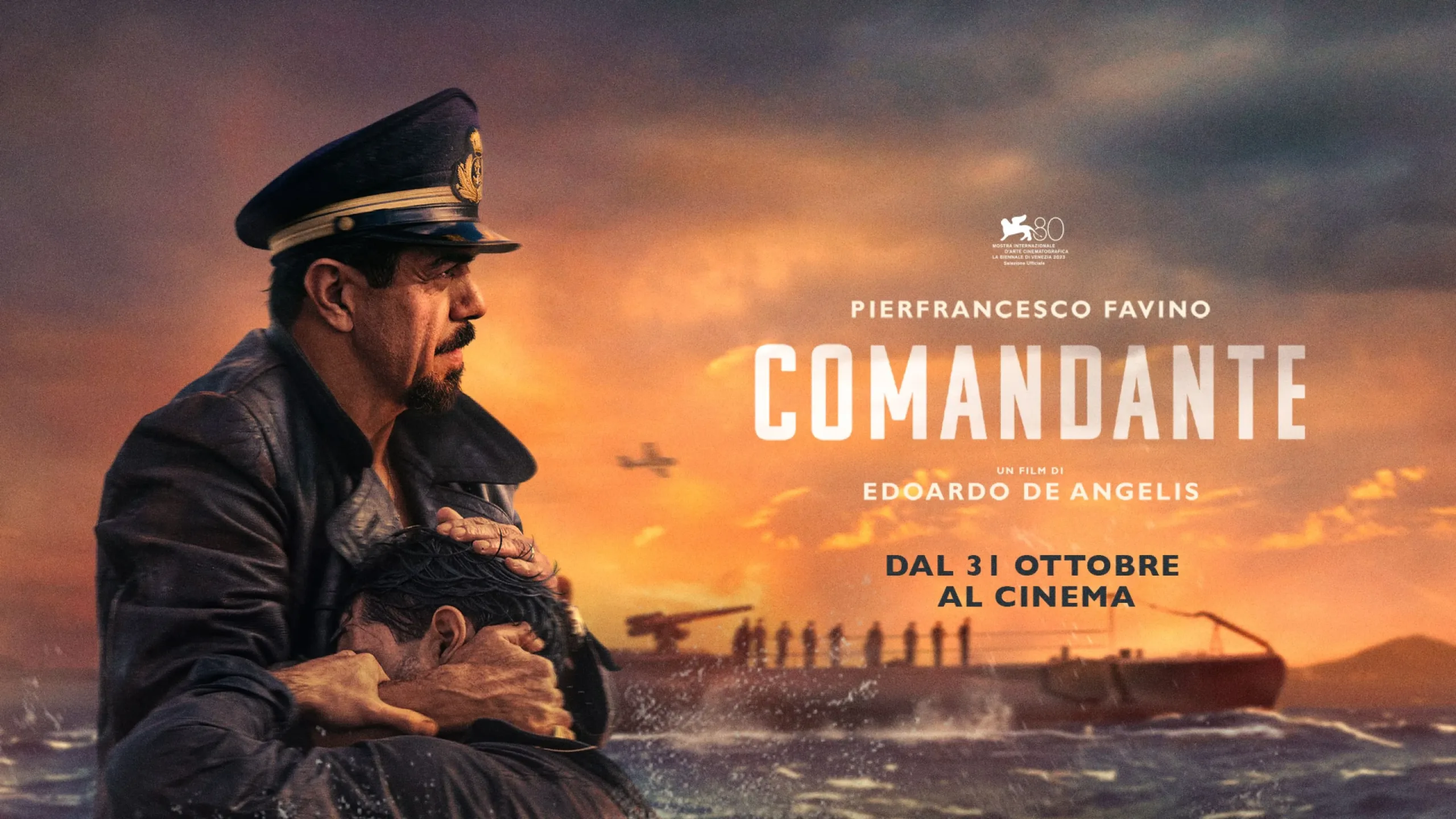

The early days of World War II were fraught with ideological fervor and unstable alliances, and Italy saw this as an opportunity to project its power in the global arena. The Italian Royal Navy, under Mussolini’s Fascist regime, was torn between grandiose propaganda and the hard realities of war.
Comandante is set in this tension, dramatizing the true story of Salvatore Todaro, a submarine captain who defied expectations by saving Belgian sailors after destroying their ship, the Kabalo, in 1940.
This act of wartime kindness is both captivating and loaded. Todaro’s decision to save enemy sailors while serving a Fascist government raises troubling questions: Was this a display of personal morality or an attempt to portray Italy as the “civilized” component of the Axis?
The film portrays him as a paradoxical figure—a humanitarian in uniform—but avoids the underlying problems of combining such heroism with a regime that thrived on persecution.
The Enigmatic Commander: Salvatore Todaro’s Character Analysis
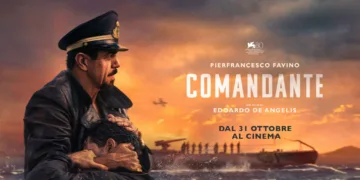
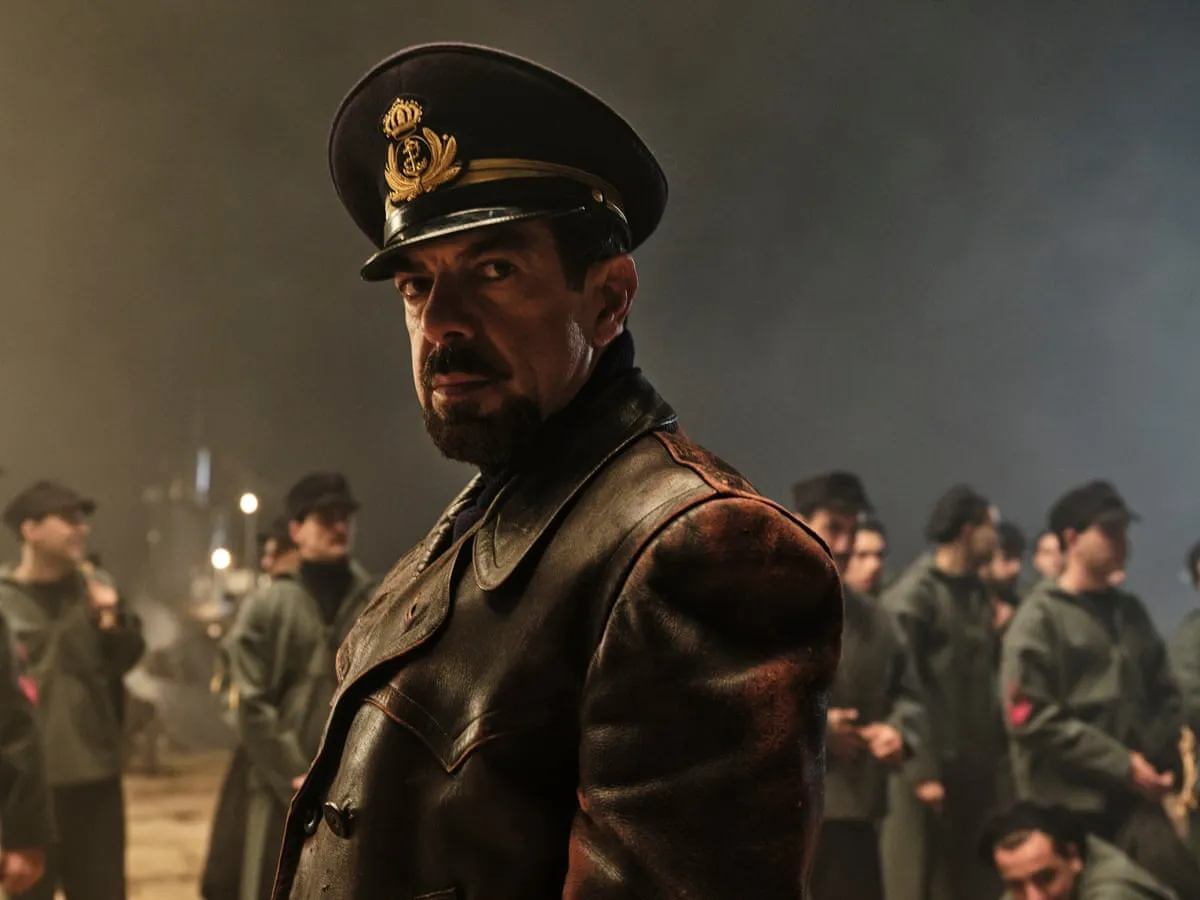
Pierfrancesco Salvatore Todaro, played by Favino, is more of a walking conundrum than a character. With Favino’s intimidating presence—his piercing gaze framed by a thick goatee and a leather coat that seemed to bear the weight of the entire Axis—it’s clear why the film relies so heavily on his performance.
Favino portrays Todaro as a man of contradictions: a stoic commander with moments of sensitivity, a warrior with the heart of a poet, and a Fascist officer who, strangely, refuses to play by Fascist standards. He goes from yelling orders to launch torpedoes to sewing a wounded soldier’s head or waxing philosophical about humanity’s higher principles.
This dichotomy is central to the film’s portrayal of Todaro, who is both romantic and pragmatic. Despite the significant personal and professional risk, his decision to rescue Belgian sailors feels more like an expression of his moral code, one that persistently refuses to conform to Mussolini’s militarism, than like an act of rebellion.
(If Fascism is pain, as one doctor puts it, Todaro is determined to rebrand it as ethical agony.) His dialogue highlights this contradiction: his remarks to the crew are fiery and romantic, but his quieter moments—practicing yoga and lovingly leading his men—show a man struggling with the weight of his decisions.
Favino’s depiction strikes a delicate balance between solemnity and theatricality, giving Todaro the aspect of a tragic hero. But one can’t help but ask if his contradictions make him noble or merely convenient—a person created to elevate Italy’s wartime narrative. The film never makes a firm decision, and this ambiguity may be intentional.
Drifting and Diving: The Narrative Rhythm of Comandante
Comandante’s narrative structure unfolds like the submarine it depicts—slowly submerging, almost aimless, before reaching depth and intensity in its final sections. The film’s episodic opening hour takes us through life onboard the Cappellini, delivering a collage of dirty friendship and subaquatic monotony.
While evocative (and occasionally smelly enough to make you want to crack a window), these scenes frequently feel like a series of loosely connected vignettes rather than a continuous arc. It’s film as drift, with tension simmering beneath the surface but never breaking through.
This changes in the second half as the narrative strengthens its grip. The rescue effort serves as the film’s emotional and moral fulcrum, bringing urgency to what had previously been a leisurely character study.
The decision to center the story around Todaro’s act of mercy is dramatic. Still, the buildup to it occasionally feels indulgent. Did we need to spend so much time watching the crew argue over dialects or slouch naked in confined quarters? (Probably not; however, it emphasizes the claustrophobia.)
De Angelis creates genuine tension, notably in the awkward encounters between the Italians and their hesitant Belgian guests. Still, the build-up to these moments could have been more intentional.
The film appears to be divided between a slow-burn meditation and an episodic war drama, resulting in a cadence that sometimes feels more like a series of missteps than a steady march. It is unclear whether the film’s uneven pacing is purposeful or results from its ambitious goals.
Between Depth Charges and Deep Questions: Humanism, Identity, and Morality in Comandante
Comandante mostly reflects humanism under hardship rather than a war film. By centering the story on Salvatore Todaro’s moral compass, the film asks viewers to consider the fragility of ethics during combat. Todaro’s decision to save the Belgian sailors—technically enemies, but not morally—feels like a daring act of mercy.
However, it poses difficult considerations, such as whether a single act of mercy can atone for a regime’s larger misdeeds. To put it another way, does saving lives erase the fact that Todaro served in the Fascist navy? These are difficult problems, and the film reveals their obscurity. However, it occasionally descends into self-congratulatory mythmaking (as if to indicate that being “Italian” necessarily entails a higher moral standard).
The issue of Italian identity is particularly contentious here. Todaro’s claim that his actions are inspired by “2,000 years of civilization” feels both noble and burdened. It portrays Italy as the Axis forces’ beneficent philosopher-king, which is an odd feat of narrative gymnastics considering Mussolini’s regime’s historical reality. The film’s failure to engage deeply with these nuances (apart from a few symbolic winks at anti-Fascism) risks turning Todaro’s heroism into a form of nationalist public relations, albeit one disguised in humanist values.
Then there’s the submarine, a claustrophobic crucible where morality meets survival. The crew’s moral difficulties are exacerbated by the cramped quarters: should they risk their lives for the Belgian sailors? Should they prioritize their duty to humanity over their duty to the state?
The explanations are as oppressive as the air inside the Cappellini. Nonetheless, Todaro’s ability to keep his humanity in such a context feels almost mythic—a reminder that, even in war, there are moments of grace. However, perhaps the more important question is whether this grace is personal or performative. The film wisely leaves this up to us.
Submerged Aesthetics: Crafting Atmosphere Through Design, Cinematography, and Sound
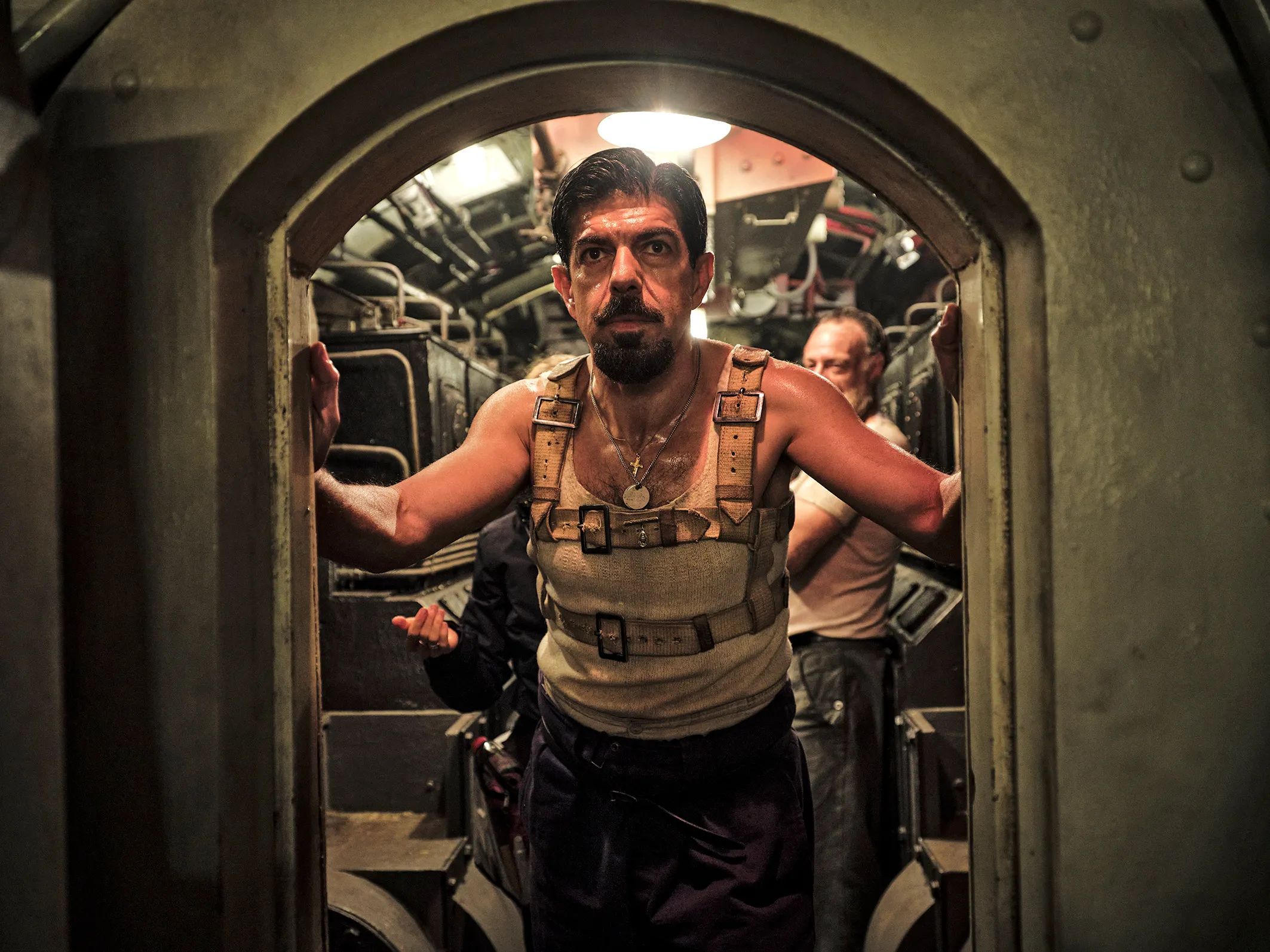
One of Comandante’s unquestionable accomplishments is its detailed production design, particularly the full-scale replica of the Cappellini submarine. This is more than just a set; it’s an iron-walled maze of sweat, smoke, and clanging machinery that feels as alive as the crew.

The submarine’s oppressive, almost tangible realism serves as a physical and psychological space—part tomb, half womb—where the film’s moral quandaries are hatched under enormous pressure. Every rivet, every water-stained bulkhead appears to whisper the weight of history, even as the men inside alternate between masculinity and vulnerability. (It’s like being trapped in a floating time capsule with a slight odor of rust and regret.
This claustrophobia is heightened by cinematographer Ferran Paredes Rubio’s camera, which stalks the submarine’s tiny rooms, frequently lingering on sweat-slicked faces and the dull glow of gauges. The use of light is particularly striking: bright hues illuminate moments of friendship, while shadows isolate moral struggle. When the submarine surfaced, the camera briefly escaped its prison, recording the vast, indifferent expanse of the ocean—a reminder of how insignificant these guys and their judgments truly are.
Massive Attack’s Robert Del Naja and Euan Dickinson composed the score, which gives the wartime drama an unorthodox edge. Its somber, improvisational tones reject loud patriotism instead of a nearly meditative discomfort. The music does not tell us how to feel; it only implies something profound is seething beneath the surface, much like the submarine. It is evocative without being overbearing, with a subtle undertone that reflects the narrative’s moral uncertainty.
Heroism or Hindsight? Cultural Significance and the Shadows of Bias
Comandante is expected to be a powerful reminder of the country’s potential for grace, even in the darkest moments of its history. Salvatore Todaro’s actions—a bold act of humanity in the middle of a war—offer a moral, high-ground narrative that feels tailor-made to heal the collective memory of a society still coping with the legacy of Fascism.

It’s a story about “good Italians” (a term that feels almost too comfortable in this context) who are proud of a civilization that claims two millennia of moral authority. However, one cannot help but wonder whether the film’s humanism serves to face or detract from history.
The film plays with the unsettling notion of cleaning Italy’s wartime identity. While Todaro’s altruism is unquestionably moving, his heroism is depicted in isolation, disconnected from the larger context of Mussolini’s regime. The infrequent references to Fascism—Todaro criticizing a doctor’s “Fascism is pain” remark, for example—feel more like casual disclaimers than substantive attacks.
The film risks absolving the systems he served by portraying Todaro as a “maverick” who transcends his era. It’s a slippery slope: does applauding one man’s defiance conceal the system’s complicity?
The film’s participation with the Italian Navy, which raises suspicions about its agenda, complicates matters even more. Is this a genuine examination of historical subtlety, or is it a cinematic public relations operation designed to boost Italy’s image among home and foreign audiences? The patriotic framing—Todaro’s insistence that his actions are motivated by his “Italian” identity—suggests the latter. It’s a film that urges us to praise its hero while avoiding looking too closely at the waters in which he sailed.
Between National Pride and Narrative Depth: Assessing Comandante’s Reach
Comandante is a film that sails confidently on the basis of its craft and central performance, but periodically springs leaks due to the weight of its ambition. Its strengths are evident. Pierfrancesco Favino’s mesmerizing performance as Salvatore Todaro provides emotional weight to the film.

At the same time, the submarine’s cramped set design and gloomy score create a palpable tension. The story’s pivotal act of wartime mercy—a rare glimpse of humanity among the machinery of destruction—provides a compelling moral compass. Nonetheless, for all of its merits, the film struggles to reconcile its lofty humanist aspirations with the unsettling reality of Italy’s Fascist past, frequently choosing sentimentality over serious reflection.
Comandante is likely to be embraced by Italian viewers as a patriotic tribute to courage and morality—a feel-good reaffirmation of national identity wrapped in historical trappings. Todaro’s repeated claim that his activities are motivated by his Italian heritage will undoubtedly resonate locally, even if it borders on self-congratulatory mythmaking.
On the other hand, international viewers may find the film’s moral message overly simplistic and its historical context unnecessarily sterilized. (One can envision certain audiences replying, “Yes, but what about the rest of the war?”)
Comandante flirts with greatness as a historical drama while remaining linked to its yearning for pleasure. It is a genuine celebration of humanity and a meticulously controlled narrative, leaving us wondering if its ultimate aim was to illuminate or polish history. In any case, it’s a seaworthy effort, even if its compass periodically sways.
The Review
Comandante
Comandante is an evocative but complicated wartime drama aided by Pierfrancesco Favino's captivating performance and excellent production design. While the film's investigation of humanism and morality is intriguing, its refusal to delve fully into Italy's Fascist past diminishes its historical weight. For Italian viewers, it's a moving story of national pride; for others, it may feel too sanitized and narratively inconsistent. Ultimately, Comandante treads a narrow line between deep contemplation and mythmaking, attaining moments of genius but frequently playing it too safe.
PROS
- Pierfrancesco Favino’s commanding and nuanced performance.
- Immersive production design, especially the full-scale submarine set.
- Atmospheric cinematography and unconventional score by Robert Del Naja.
- Compelling moral centerpiece rooted in humanism.
CONS
- Simplistic handling of Italy’s Fascist past, avoiding deeper critique.
- Uneven pacing, with a meandering first act.
- Overly sentimental and occasionally heavy-handed moral messaging.
- Limited international resonance due to its culturally specific framing.