




















Kath Ward cleans the house she is preparing to abandon. Her husband, Matthew, sells the last of their cattle. John Carlin gives these preparations time in Lie of the Land, allowing the work of leaving to register before anyone starts fighting to stay alive.
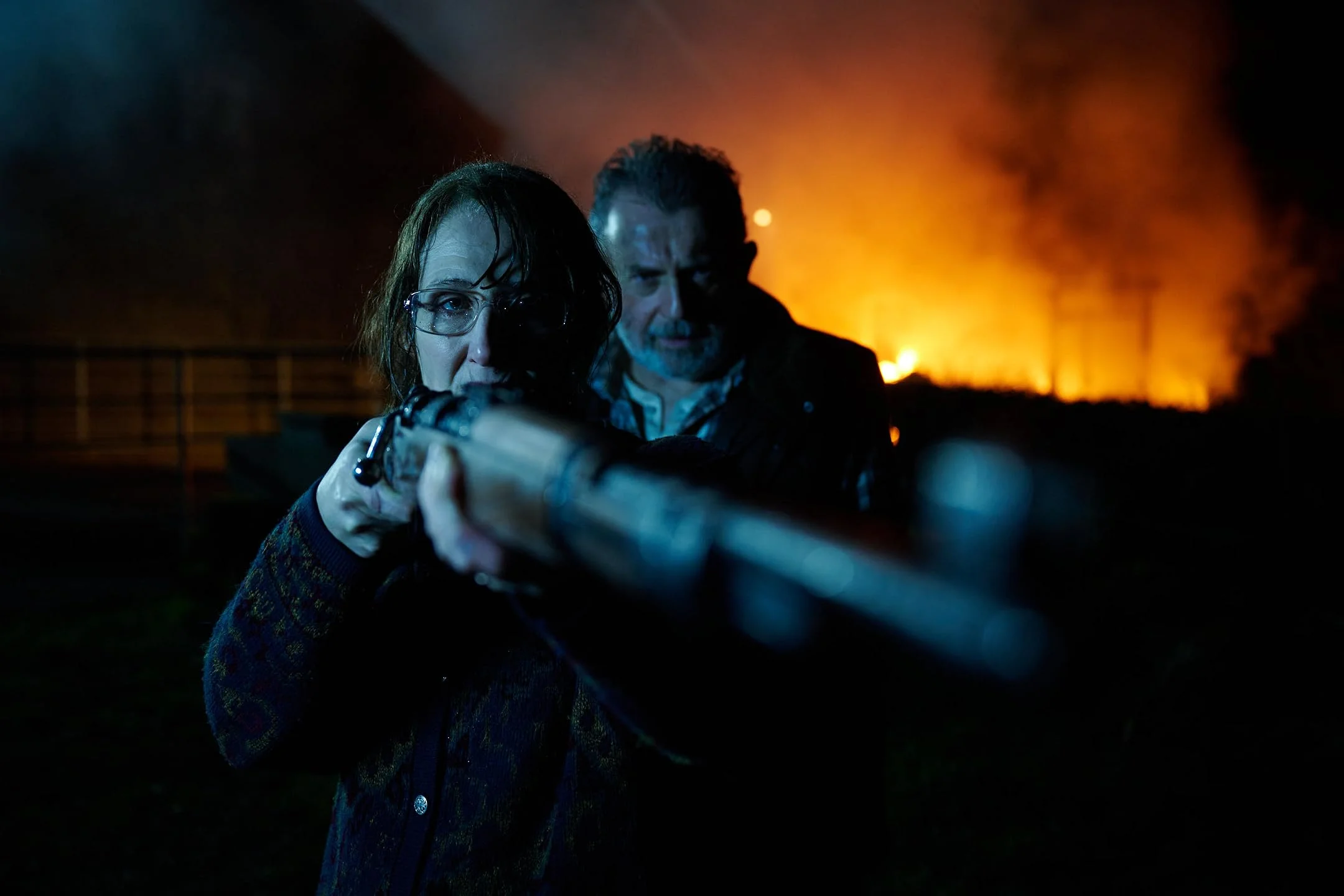
The predawn light drains the County Antrim farm of pastoral comfort, while an apprehensive score makes an ordinary task feel like a countdown. Kath has kept her late mother’s room pristine after caring for her through Alzheimer’s disease. Packing up this household means interrupting habits that have survived the person who required them.
Matthew can imagine something waiting beyond the farm. Played by Nigel O’Neill, he carries the disappointment of a working life that has left little room for pleasure, with trips postponed and possibilities allowed to expire. Ali White’s Kath has stronger reasons to remain attached to the property, which has belonged to her family for generations. Their disagreement gives the departure an emotional complication: the same place can represent continuity to one partner and lost opportunities to the other. Carlin lets that difference sit inside their familiar irritation with each other.
Debt has made leaving urgent, and Gabriel Shepherd offers a solution. For a fee, he will arrange new identities and a life abroad beyond their creditors’ reach. Barry John Kinsella gives his reassurance a useful slipperiness. He can make a dubious transaction sound orderly, until the Wards question his demand to take their money before collecting them. Once they withdraw, his manners give way to force. The switch works because the terms of the arrangement already grant him authority over their future. Violence becomes another means of insisting that they comply.
The scam’s physical simplicity suits the film. Cash, a visitor, and a promise make financial exploitation something that can occupy a room. The Wards’ flip phone and CD stereo suggest lives with little dependence on contemporary technology, but their vulnerability comes from pressure and hope. Kath’s resistance to charity is especially telling beside her willingness to consider fraud. A paid arrangement allows her to imagine that she is still directing events. Accepting a neighbor’s help would require acknowledging a dependence she finds harder to tolerate.
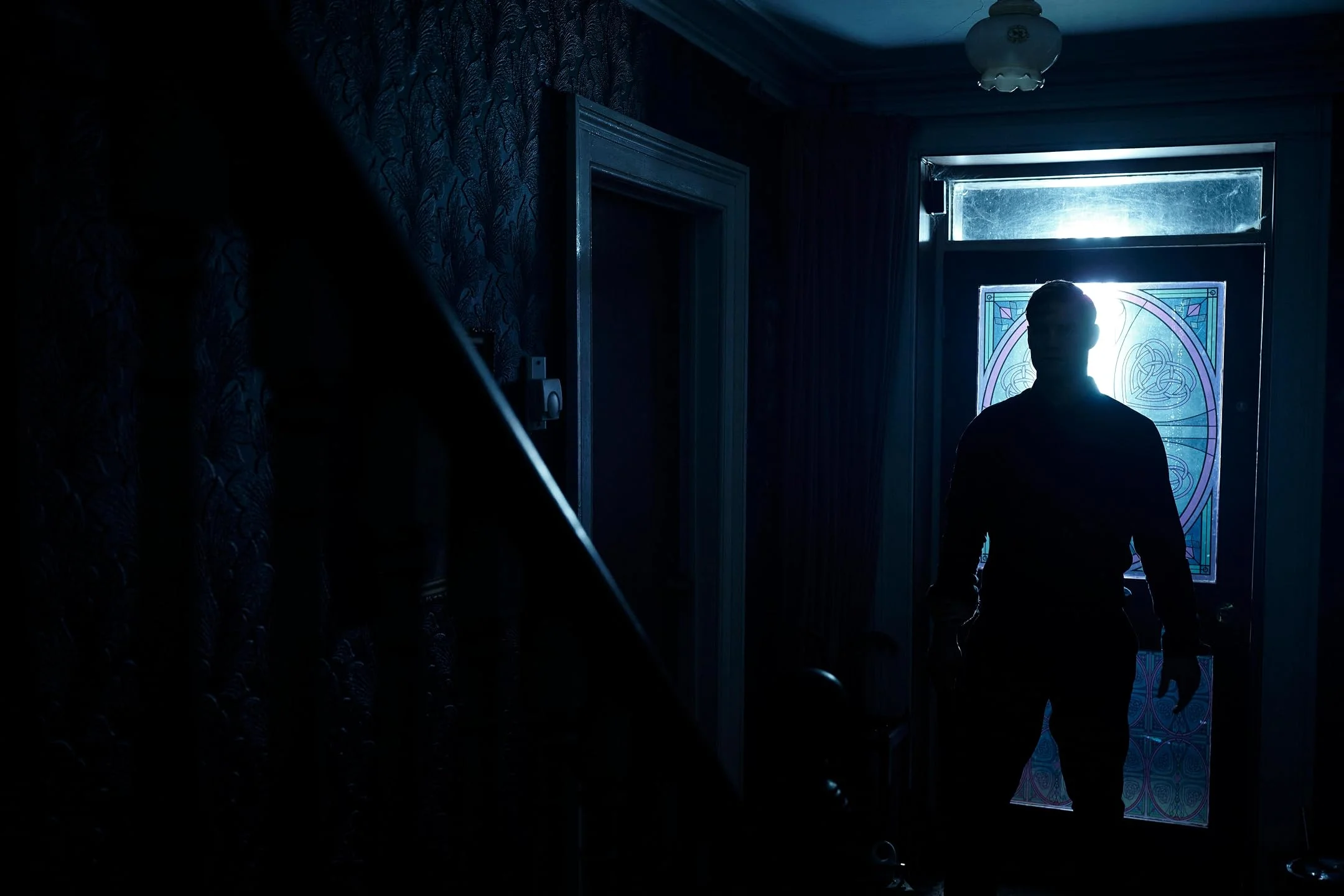
Once Shepherd begins hunting them, Carlin makes effective use of information within the frame. During one search, his intended victim is visible in a doorway behind him. We can see what he cannot, and suspense develops from waiting for that unequal knowledge to change. It is a straightforward device, but it gives the hunted person a temporary advantage without making them physically stronger.
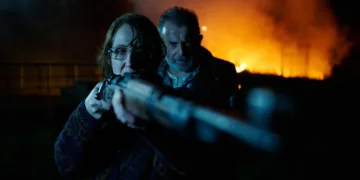
The shadowed interiors help figures retreat into silhouette, while the surrounding barns and fields offer escape routes that also carry the couple farther from help. Exterior night lighting is less consistent, shifting from deep darkness to a conspicuous blue glow that makes the same grounds feel unevenly exposed.
I particularly liked how domestic familiarity enters the action through a faulty tap. After Shepherd is hit with a caustic substance, his attempt to wash it away meets the sort of plumbing problem the residents already know how to manage. The accompanying observation is funny because an everyday irritation has acquired an entirely different urgency. A house that seemed to contain nothing except obligations suddenly holds knowledge the intruder lacks. The joke briefly changes the balance between them, allowing humor and suspense to operate through the same detail.
O’Neill and White keep that humor connected to the effort of resisting. Concerns about poor eyesight complicate the usefulness of weapons; a field becomes an exhausting distance to cross. Their bickering carries on under circumstances that might have turned another screen couple into interchangeable action survivors. These complaints preserve recognizable people inside the genre machinery. The affection between them is persuasive because cooperation has to coexist with annoyance, physical limitations, and years of knowing exactly how the other person will respond.
The action becomes harder to accept when practical limitations stop applying consistently. Shepherd repeatedly treats locked doors and windows as decisive barriers, even where breaking glass appears an obvious option. This changes how we watch the house. Earlier, a doorway creates tension through the possibility of discovery; later, an intact window draws attention to an opportunity the attacker declines to take. His menace suffers because the film keeps asking us to overlook the ease with which he could improve his position.
The Wards receive similarly convenient reprieves. After Shepherd loses his gun and is stabbed in the foot, retreat allows another pursuit to begin instead of letting the couple secure the weapon. Panic can account for an imperfect decision, particularly from people whose first wish is to get away.
Repetition makes that explanation less convincing. Searches lead to discoveries, discoveries to brief struggles, and struggles to renewed hiding, with too little alteration in the danger. Serious injuries also fail to impose lasting restrictions on movement. The jokes about age invite us to notice bodily limits, making the later endurance especially difficult to ignore.
The eventual destruction of the property gives the Wards’ attachment a violent resolution. Kath can no longer maintain the rooms that have kept her looking backward, and Matthew’s imagined departure has become irreversible. Yet the opening established their predicament in stubbornly practical detail: cattle sold, money scarce, a working life unable to support its workers. Fire can end their obligation to preserve the house. The film leaves them with little indication of how they will afford the freedom that follows.
Lie of the Land was released across North America on Digital HD, DVD, cable, and satellite platforms by Freestyle Digital Media on October 23, 2026. Directed by John Carlin and written by Tara Hegarty, this tense Irish thriller follows an aging farming couple facing financial ruin who hire a charismatic stranger to help them secretly escape their debts, only to discover too late that their arrangement is a deadly trap.
Where to Watch Lie of the Land (2023) Online





Full Credits
Title: Lie of the Land
Distributor: Freestyle Digital Media
Release date: October 23, 2026
Rating: R
Running time: 1 hour 20 minutes (80 minutes)
Director: John Carlin
Writers: Tara Hegarty
Producers and Executive Producers: Margaret McGoldrick, Chris Patterson, Ursula Devine, Greg Darby, Helen Sheridan
Cast: Ali White, Nigel O’Neill, Barry John Kinsella, Abe Smyth, Paddy Jenkins
Director of Photography (Cinematographer): Jennifer Atcheson
Editors: Kate McAuley
Composer: James Everett
The Review
Lie of the Land
Lie of the Land makes its threatened farmhouse feel inhabited before turning it into a battleground. Nigel O’Neill and Ali White give the marriage warmth and friction, while Carlin finds suspense in doorways, shadows, and the couple’s knowledge of their home. I enjoyed the humor most when household inconveniences became tactical advantages. Repeated escapes and conveniently survivable injuries weaken the siege, leaving the couple’s emotional predicament better developed than the action built around it.
PROS
- O’Neill and White’s affectionate, irritable partnership.
- Suspenseful use of doorways and shadowed interiors.
- Humor rooted in domestic familiarity.
- Financial desperation gives the scam emotional credibility.
CONS
- Implausible decisions prolong repetitive confrontations.
- Serious injuries impose few lasting physical limits.
- Inconsistent exterior night lighting.