

















Lemohang Mosese explores exile, identity, and the quest for belonging in “Ancestral Visions of the Future.” The film examines the filmmaker’s disconnection from his homeland and mother, tracing a journey of displacement that transcends physical boundaries and reaches spiritual depths.
Mosese’s voiceover provides an introspective reflection on his fractured self, influenced by his mother’s absence and the colonial struggles of Lesotho. Themes of displacement echo the tension between personal memories and collective experiences of dislocation within a land grappling with its historical wounds.
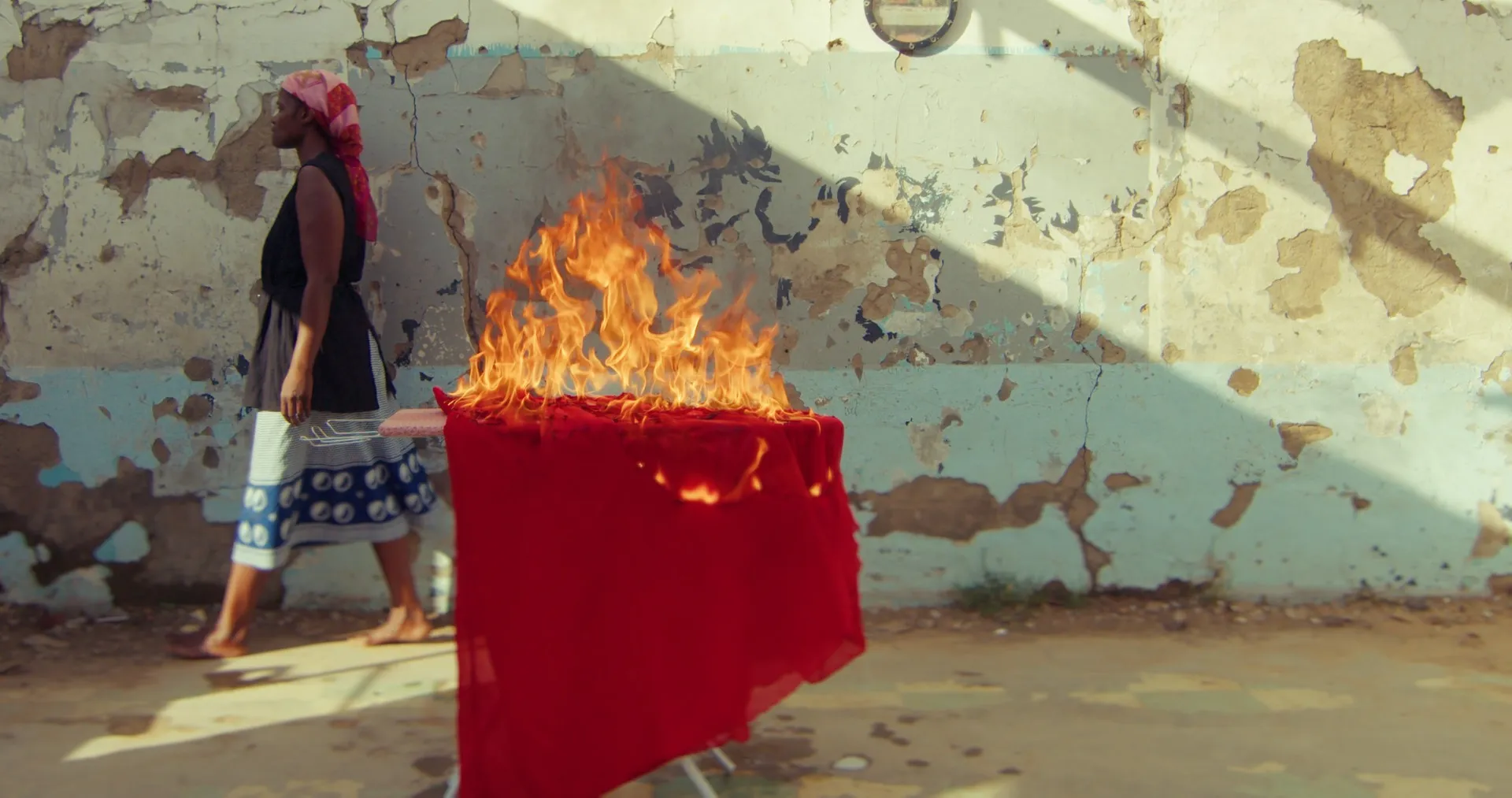
The crimson fabric traversing the film serves as a poignant symbol of violence and unhealed scars in Lesotho’s past. Spread across the landscape, the fabric reveals the bloodshed and persistent pain etched into the country’s narrative.
It weaves through scenes of loss, from memories of a murdered woman to the remnants of destroyed lives, embodying a shared trauma that remains unresolved. This visual element intertwines personal and national stories, creating a tapestry of collective suffering.
Mosese’s Personal Journey: A Wounded Reflection
Lemohang Mosese’s narration in Ancestral Visions of the Future weaves a delicate connection between past and present through memories, regrets, and reflections. His autobiographical storytelling provides an intimate glimpse into his childhood, characterized by a profound separation from his mother, who was drawn to Europe while he remained in Lesotho.
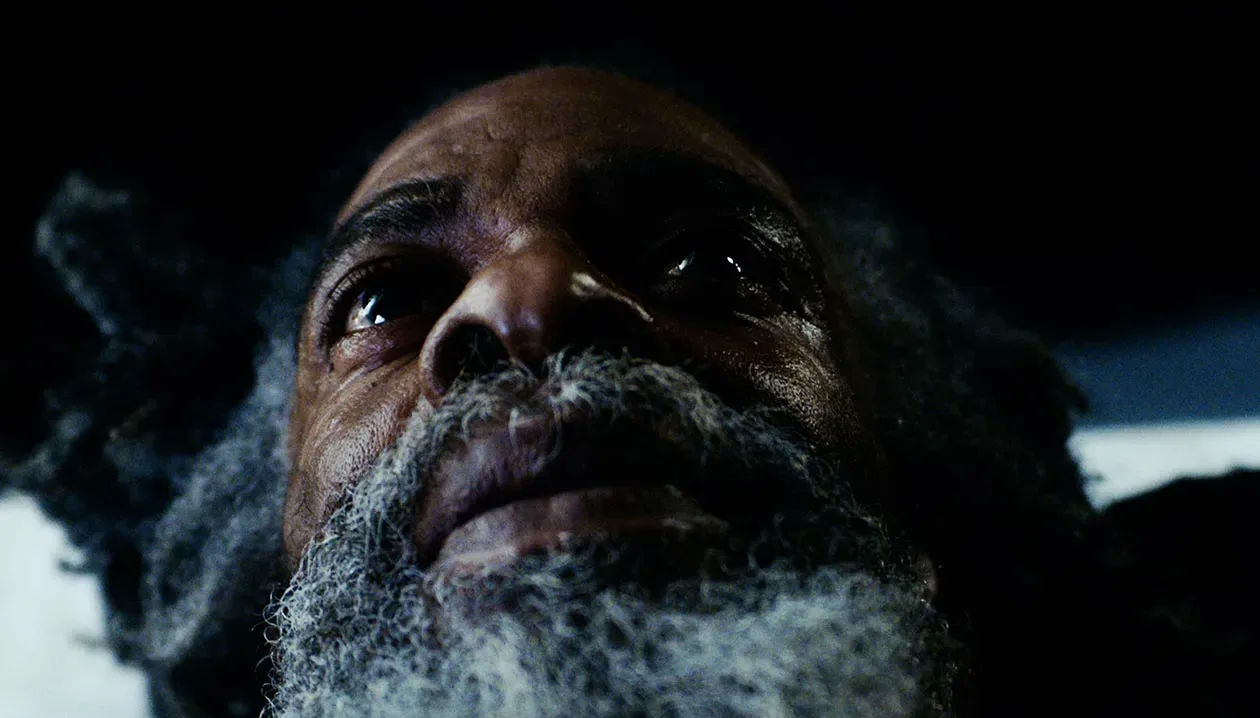
The yearning for this absent maternal figure pulses quietly throughout the film, echoing in Mosese’s voice, which wavers between nostalgia and pain. Separation from his homeland emerges as a poignant undercurrent, suggesting he exists in a perpetual state of distance from his original home.
His words do not simply recount events—they trace the scars of displacement, exploring the fragile boundary between belonging and estrangement.
Mosese does not attempt to clarify or resolve the emotional complexity of his experiences. Instead, he allows them to exist within a liminal space filled with contradictions and unspoken truths. The film becomes an exploration of Mosese’s identity as an artist in exile, disconnected from his past yet tethered to it by an intense desire to understand his place within his homeland’s history.
The emotion flowing through Mosese’s narration carries deep trauma—an ache that shapes his identity. His nostalgia does not recall an idealized past, but a moment permanently fractured by displacement. This trauma speaks beyond personal loss, resonating with the collective suffering of Lesotho, marked by violence, colonial oppression, and the gradual disintegration of social structures.
An unspoken guilt permeates Mosese’s reflections—an awareness of how exile has separated him from his roots and transformed him into a distant observer of his own culture. His storytelling, deeply personal and politically charged, offers a meditation on exile’s impact on individual and collective memory. It is a narrative saturated with uncertainty, suggesting Mosese continues searching for answers that remain elusive.
Lesotho’s Wounded Legacy: The Ghosts of Colonialism
In Ancestral Visions of the Future, Lemohang Mosese explores a world intertwining personal and communal experiences—a landscape where history breathes through the soil and air, saturated with unresolved traumas.
Lesotho’s colonial background emerges as a haunting presence shaping characters, terrain, and Mosese’s inner world. His voice-over recounts a history steeped in subjugation, where a small kingdom squeezed between apartheid-era South Africa and British imperialism experienced fractured identity and undermined sovereignty.
Mosese’s narrative reveals how colonial echoes continue to resonate, creating a persistent, gnawing experience. The colonial scars, subtle yet profound, have interwoven themselves into Lesotho’s contemporary challenges.
Mosese’s reflections expose a national mourning for a country whose identity struggle remains entangled with its violent origins. The film portrays Lesotho as suspended between past and present, with colonial experiences acting as an invisible weight constraining potential growth and self-understanding.
Lesotho’s historical brutality seeps into its current reality through recurring violent imagery. The past’s violence, embedded in the landscape like an invisible wound, permeates societal structures. Mosese’s red fabric symbolism creates a visceral connection between historical and contemporary violence.
Stretching across scenes, the fabric represents an unbroken cycle of suffering, binding different moments of pain into a single, continuous narrative.
The red fabric traverses scenes of current violence: mob justice, criminality, and systemic violence against women. Mosese connects colonial brutality with present-day struggles, revealing how historical wounds transform but never truly heal.
This symbolic image communicates a stark message about a society where survival demands constant confrontation with deeply rooted violent patterns.
Cinematography as a Dream of Exile: Landscapes and Contradictions
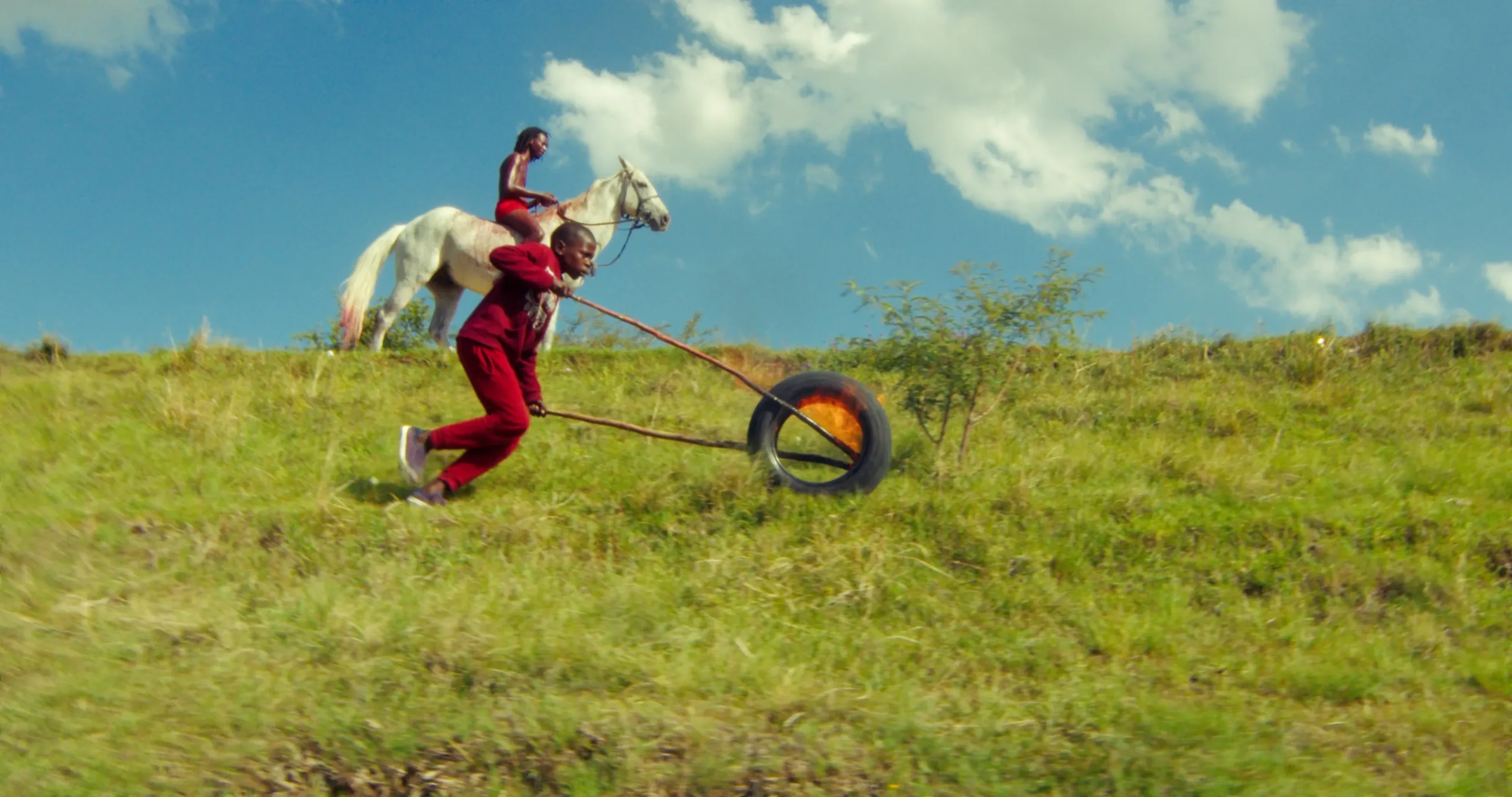
The cinematography of Ancestral Visions of the Future explores the separation between self and place through Mosese and Phillip Leteka’s lens. The landscapes emerge as living entities—rugged, expansive, and unforgiving. Stark contrasts between rural and urban environments reveal the tension of belonging and estrangement.
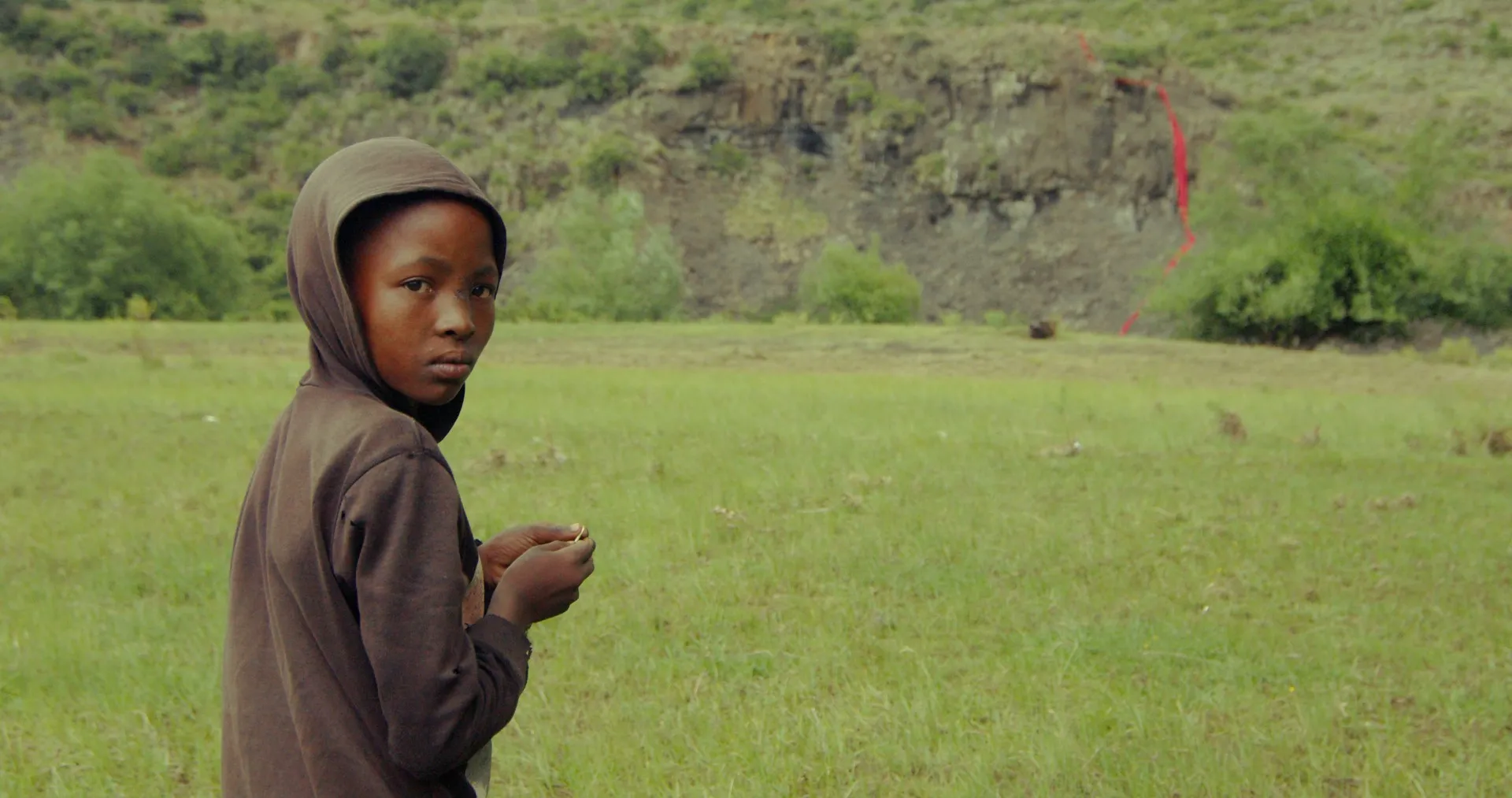
Lesotho’s countryside stretches wide yet feels oppressive, with history and trauma embedded in the earth. Urban spaces appear chaotic, fragmented, and desolate—mirroring Mosese’s disconnection between past and present. The camera observes these spaces unflinchingly, revealing their emotional weight and discomforting emptiness.
Contrasting landscapes illuminate themes of displacement: the open yet unwelcoming rural terrain battling against the constricting urban environment. These settings become narrative participants, embodying struggles between an persistent past and uncertain future.
The crimson fabric moves across the screen like a sinister blood trail. Wrapped around characters and landscapes, it connects moments of suffering and violence.
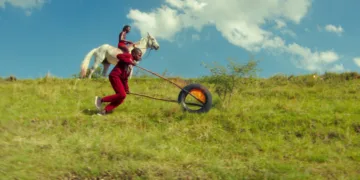
The fabric transforms from physical object to metaphysical force—linking personal and collective experiences. Cinematography captures its movement through sun-drenched plains and cracked city streets, creating an sense of inevitable darkness.
Mosese and Leteka create a visual language merging abstraction with raw reality. Each frame becomes a fragile, fleeting vision. Landscape realism breaks through surreal moments—figures bathed in strange light, scenes suspended between time and memory.
This dreamlike approach invites viewers into a space where meaning sits just beyond clear understanding, felt deeply beneath surface perceptions. The cinematography reflects mental fragmentation and a land’s ongoing emotional destruction.
Sobo and Manthabiseng: Living Symbols of Loss and Legacy
In Ancestral Visions of the Future, Sobo and Manthabiseng emerge as complex representations of Mosese’s connection to his homeland. Sobo, a puppeteer and healer, connects ancestral spirits with present experiences, embodying Lesotho’s traditional essence in a fractured world.
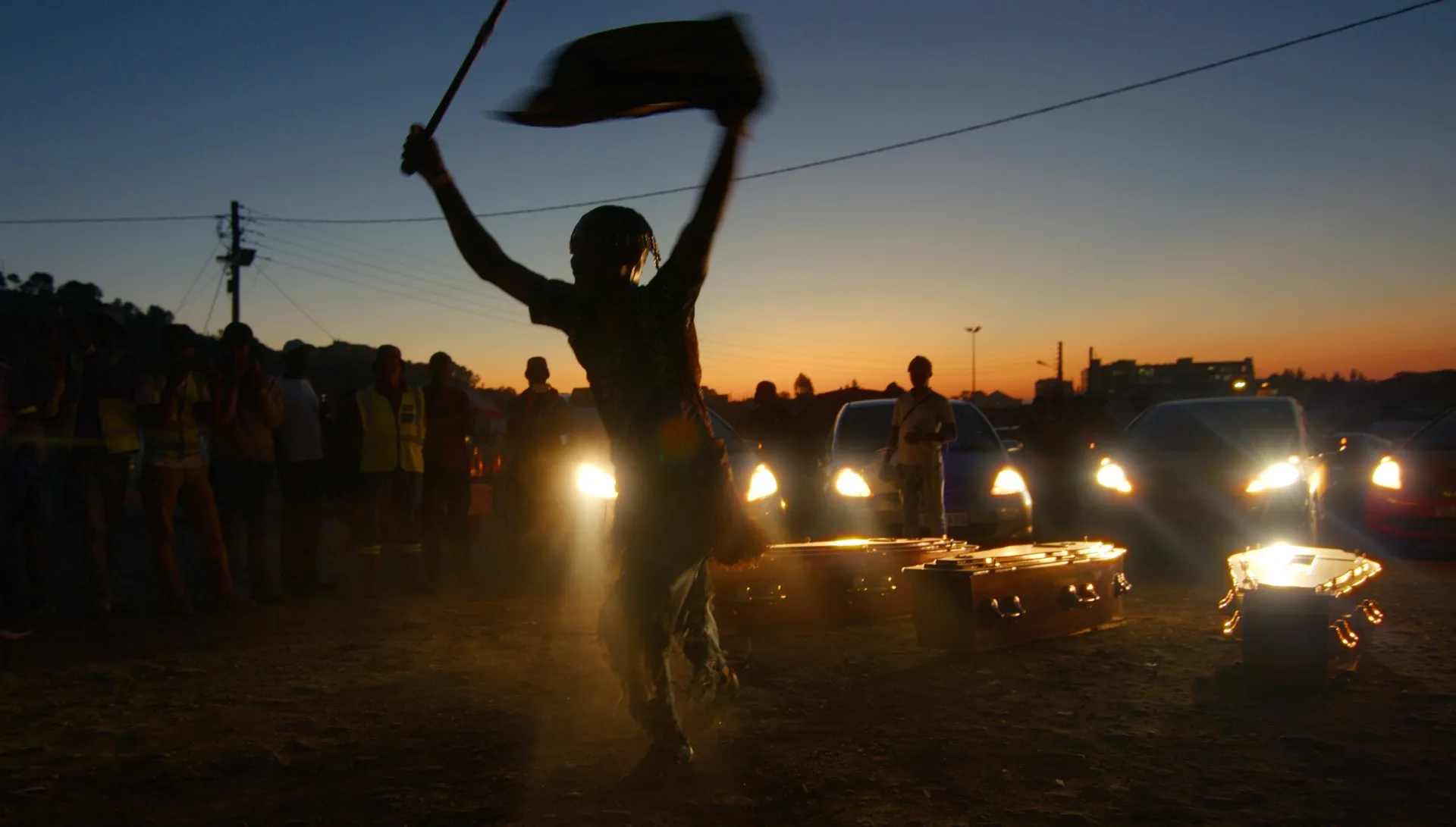
His performance blends art and ritual, revealing life’s theatrical nature while uncovering deep truths. As a healing figure, Sobo represents Mosese’s emotional link to roots he cannot fully reclaim. His presence oscillates between hope and impossibility—a living symbol of attachment and separation.
Through Sobo, Mosese explores the tension between homeland longing and the painful realities of contemporary existence.
Manthabiseng represents the unspoken violence permeating Lesotho’s social structures. Her story, grounded in a real event, depicts a woman killed by a vengeful community mob. Her death transcends individual tragedy, exposing systemic brutality embedded within social interactions.
Mosese uses her narrative to illuminate connections between historical trauma and current violence. Manthabiseng’s fate reveals how unresolved historical wounds continue affecting social dynamics.
Her silent suffering mirrors Mosese’s internal struggle, suggesting a shared experience of pain and disconnection. She becomes a powerful symbol of collective grief, representing those silenced by societal violence and historical oppression.
Sound as a Shifting Landscape: Music and Voice in Motion
Diego Noguera’s soundscape in Ancestral Visions of the Future emerges as a haunting presence that animates the film’s existential questions. Metallic, atonal textures twist through scenes like an invisible spirit.
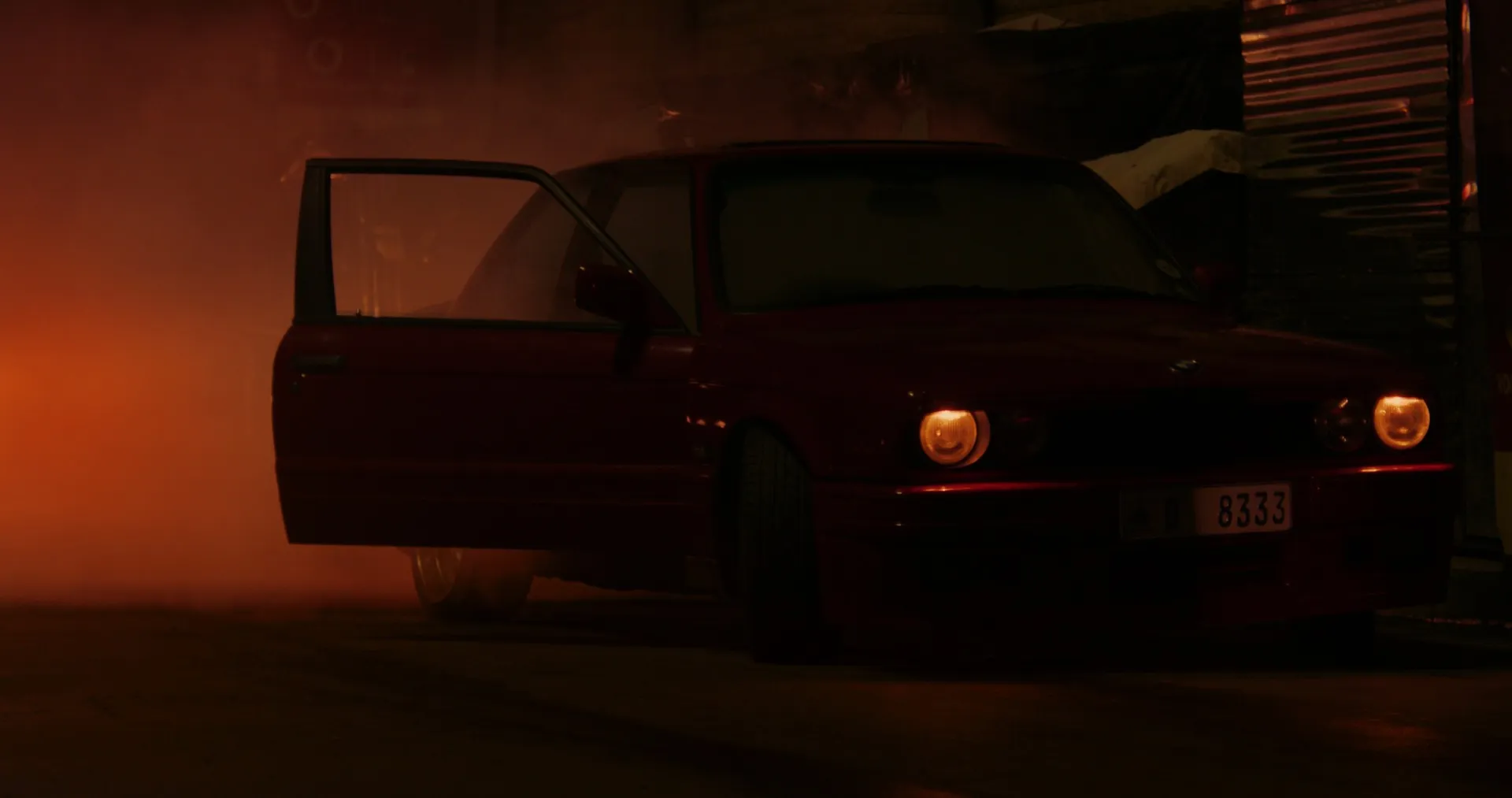
Sharp, jangling sounds create a skeletal atmosphere, injecting dread and unease into Mosese’s fragmented world. Noguera’s audio design contrasts dramatically with expansive landscapes and serene imagery. While visuals stretch across peaceful scenes, the score scratches at their edges, preventing any sense of comfort.
Sonic dissonance heightens feelings of displacement, creating an intense sensory experience. Fragmented music reflects Mosese’s broken contemplations about his homeland—unresolved and constantly shifting.
Mosese’s voice-over narration weaves through the film as a philosophical and emotional connector. His voice carries historical weight, personal grief, and questions of identity for those living in exile.
The narration transcends mere information, becoming an immersive presence guiding viewers through symbolic and abstract imagery. Mosese’s voice colors scenes with deeper meanings, inviting listeners to feel and reflect on uncomfortable truths embedded within visual and sonic elements of the film.
Fragmented Time: A Meditation in Motion
Ancestral Visions of the Future rejects traditional storytelling, presenting a broken, non-sequential structure that echoes the disorienting experience of exile and memory. The narrative unfolds as an abstract exploration, with each segment simultaneously connected and disconnected.
This fragmented approach reflects the creator’s splintered identity—an exile attempting to reconstruct life, homeland, and belonging from scattered memories. The film embraces uncertainty as its core artistic statement.
Rejecting clear explanations or comfortable endings, it suspends viewers in a state of continuous questioning. Removing traditional narrative constraints allows themes of displacement, longing, and trauma to resonate with deeper emotional intensity.
Mosese’s voice-over narration serves as a philosophical guide through this disjointed experience. His words do not seek to explain, but to evoke emotional landscapes. Speaking less like a traditional narrator and more like a philosophical wanderer, he invites audiences into complex emotional territories.
The narration challenges listeners, encouraging them to inhabit uncomfortable spaces of unknowing. Words become a pathway through emotional wilderness, creating an experience that disturbs, challenges, and haunts long after the screen fades to black.
The Rhythm of Displacement: Pacing and Engagement
Ancestral Visions of the Future moves like memory’s unpredictable current—sometimes intense, sometimes suspended, as if hesitating to continue. The film alternates between urgent narrative moments and deep contemplative silence, where time stretches and warps.
This shifting rhythm exposes the fractured existence Mosese explores—a life trapped between past and present, exile and return. Each forward movement carries the weight of previous experiences. The film resists smooth storytelling, presenting itself as an incomplete puzzle, an impossible landscape, a meditation constantly threatening to dissolve into pure abstraction.
Some viewers might find this approach challenging. The lack of traditional narrative structure, its disconnected scenes, and fragmented imagery could feel like wandering without direction. Viewers willing to surrender to its rhythm discover a deeper experience.
Silent moments between narrative segments become spaces for personal reflection. The film demands engagement with displacement’s emotional terrain, inviting audiences to sit with uncertainty, to find meaning within unresolved tensions and quiet spaces.
The Review
Ancestral Visions of the Future
Ancestral Visions of the Future is a haunting, fragmented exploration of exile, identity, and the unresolved traumas of a colonial past. Mosese’s poetic, non-linear storytelling and striking imagery create a deeply immersive experience that challenges conventional narrative forms. Its pacing, at times erratic and abstract, may alienate some viewers, but for those willing to embrace its philosophical depth, the film offers a profound meditation on belonging and the weight of history. It is a work that lingers, unsettling in its beauty and complexity.
PROS
- Deeply philosophical exploration of exile, identity, and colonial history.
- Striking cinematography and symbolic imagery that enhance the thematic weight.
- Unique, non-linear storytelling that invites introspection and engagement.
- Powerful use of sound and music to create an immersive atmosphere.
CONS
- Fragmented structure may be disorienting and alienating for some viewers.
- Slow pacing and abstract moments could frustrate those expecting a traditional narrative.