























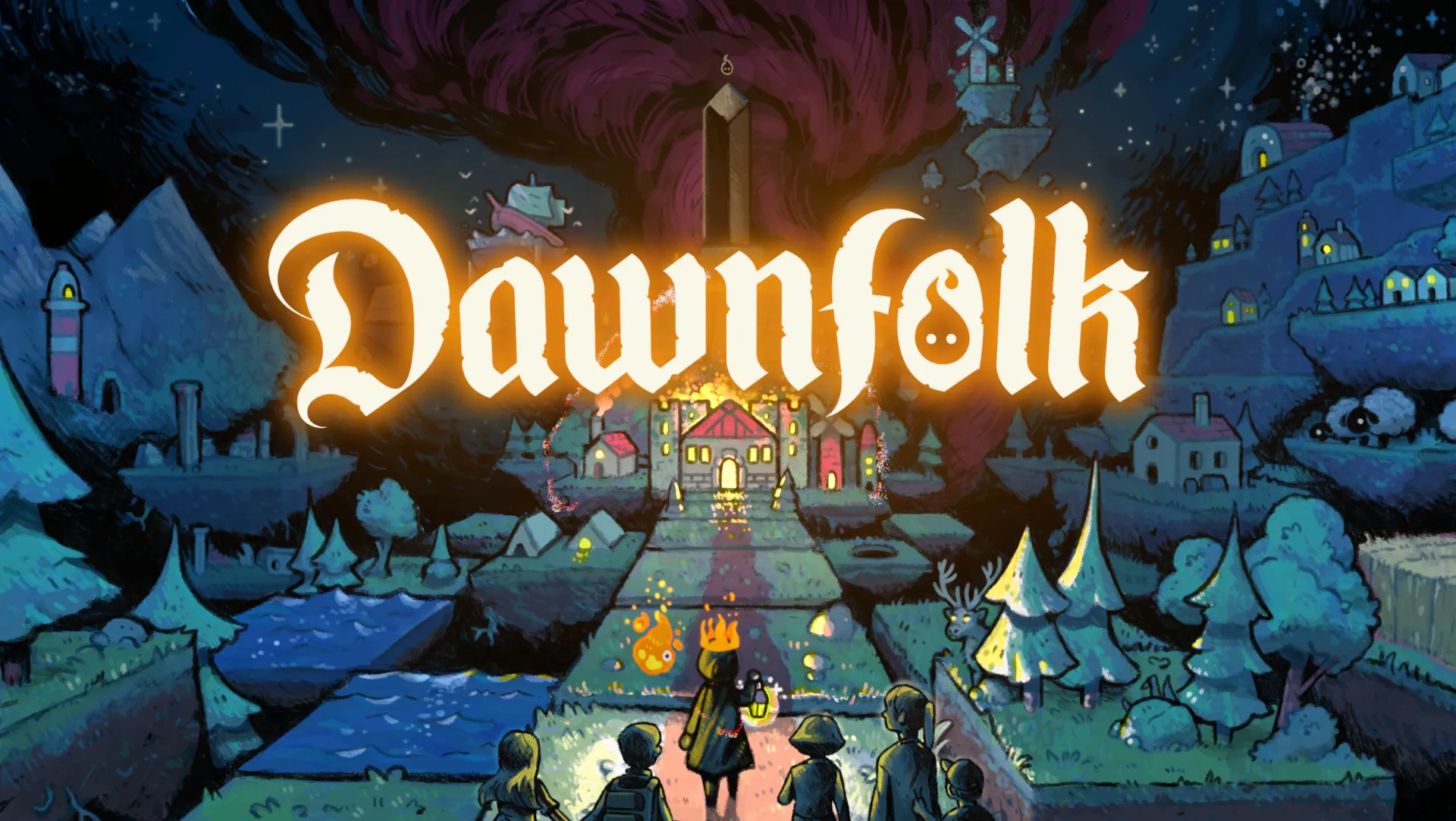

Step into a land swathed in unending twilight, where every tile you claim pushes back an all‑consuming darkness. In Dawnfolk, you assume the mantle of a newly awakened sovereign charged with rekindling hope and rebuilding a shattered realm. Your mission unfolds one illuminated square at a time, as you guide dispossessed survivors back from the brink of oblivion.
This project springs from the singular vision of Darenn Keller, whose solo development effort shines through in Dawnfolk’s polished presentation and focused scope. Without the weight of a large team, Keller has distilled the city‑building experience into its most essential elements—no sprawling menus or hidden mechanics here, just a concise toolkit that feels surprisingly refined for an indie title.
At its heart, Dawnfolk operates as a minimalist survival city‑builder. Each mission plays out on a strictly grid‑based map, inviting comparisons to both the methodical tile placement of Townscaper and the strategic tension of Frostpunk, yet delivered in bite‑sized chapters rather than marathon sessions. Light becomes your most precious resource: use it to clear darkness, fend off creeping storms, and reveal new opportunities.
What sets Dawnfolk apart is its blend of approachability and depth. Beginners can grasp core loops in minutes, while veterans will appreciate the tight resource puzzles that demand careful balance. Self‑contained scenarios reward quick thinking, and the ever‑present companion Lueur adds warmth and personality to every decision.
Gameplay & Core Mechanics
Dawnfolk’s foundation is its strict grid design, where each square hosts exactly one structure or function. This tile‑based approach recalls the satisfying simplicity of Townscaper, yet it channels the strategic depth of Frostpunk by forcing you to weigh every placement. Even the main menu adheres to the grid motif, reinforcing the game’s identity and immediately immersing you in its mechanics.
Resources in Dawnfolk split into four essentials—people, light, food, and materials—with a fifth, science, unlocking in later stages. Every action carries a clear cost‑benefit: erecting a tent consumes food but yields a new worker; building a woodcutter’s cabin costs a person but generates materials each turn. The game’s visual language excels here, displaying projected gains and losses in crisp color‑coded overlays that accelerate decision‑making without sacrificing detail.
Also Read






Darkness itself functions as both obstacle and resource gauge. Light acts as a finite commodity used to cleanse shadowed tiles and stave off creeping storms. These ominous swirls spawn at your settlement’s periphery and advance inward unless you allocate enough reserves, introducing a push‑and‑pull tension reminiscent of They Are Billions—but played out in compact, discrete scenarios rather than sprawling maps. The subtle horror of watching a storm edge closer injects urgency into what might otherwise feel leisurely.
Interspersed with city‑building are brief minigames—archery targets slide across the bottom of the screen, falling icons demand quick catches and shadowy foes require timed button presses. Each segment lasts about ten seconds, providing a tactile break from planning. If you prefer pure strategy, an upgrade can automate these sequences or disable them entirely, echoing the optional micro‑management settings in Anno 1800.
Difficulty unfolds naturally: opening scenarios tutor core loops, then ramp up with harder and impossible modes. For players seeking low‑pressure sessions, puzzle and endless modes offer alternative goals without narrative constraints. Controls feel most at home on a gamepad—cursor hops tile to tile with satisfying rumble cues—though post‑launch updates added mouse support and arrow‑key navigation to accommodate PC purists. This blend of accessibility and depth ensures Dawnfolk welcomes newcomers while still rewarding tactical finesse.
Story & World Building
Dawnfolk drops you into a mystery: a realm consumed by an unnamable darkness. From the outset, the game hints at its origins through scattered journals, half‑buried notes, and whispers from isolated survivors—an approach that feels as quietly compelling as the environmental storytelling in Eastshade. You piece together lore one illuminated tile at a time, guided by Lueur, a playful orb of light whose commentary morphs from friendly banter into grave warnings as you delve deeper.
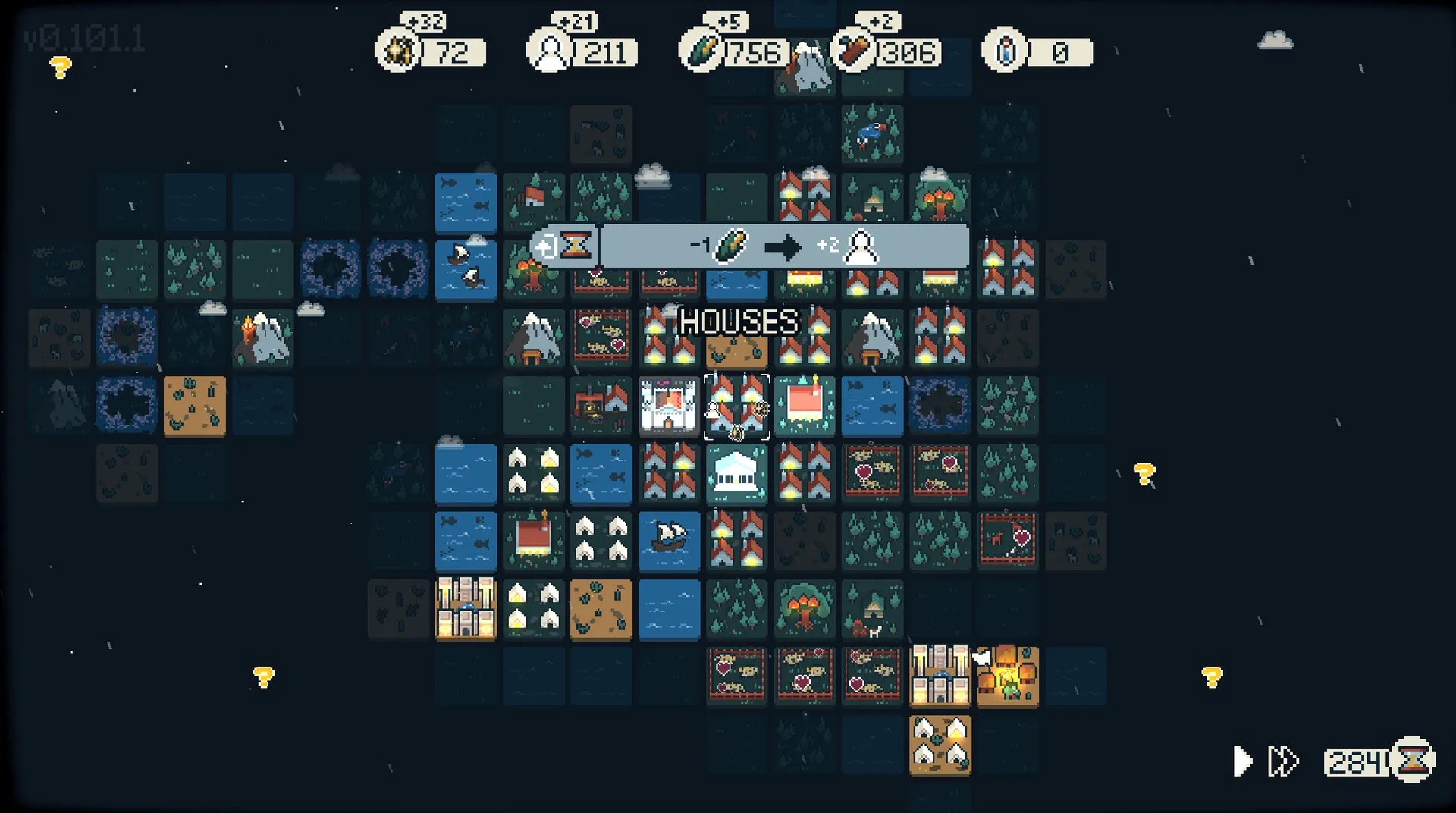
Each mission in the story campaign stands alone with its own objective—whether erecting a grand castle atop ruined battlements or harvesting a critical quota of resources before a storm overwhelms you. These self‑contained scenarios echo the structure of Civilization VI’s “Scenarios” mode, focusing on clear goals and distinct maps rather than an open‑ended sandbox. Along the way, shadowy antagonists briefly materialize at the fringes, reinforcing the sense that you’re wrestling against an intelligent force rather than random weather events.
The cast extends beyond Lueur to include local factions: the aloof elves of the enchanted forest, a stranded band of fishermen, even chance encounters with wandering traders and zombies. Each vignette offers choices—rescue a lost fisherman or conserve light for your settlement—that carry mild resource implications but deepen your connection to the world.
Visually and tonally, Dawnfolk balances upbeat charm with creeping dread. Bright yellows punctuate dark greens and purples, and while the art style evokes cozy pixel‑art classics, the ever‑looming storms inject a pulse of tension reminiscent of Darkest Dungeon’s atmospheric dread. Random ‘80s‑style adventure encounters—befriend the elves or face down a zombie horde—lend a charming retro flair to the strategic core.
Resource Management & Strategic Depth
Dawnfolk’s core tension lies in its relentless trade‑offs: every new worker you generate depletes your workforce, while each building you place siphons off people or food. Placing a tent, for example, consumes food but returns a steady stream of workers—an exchange that echoes the delicate balancing act found in Anno 1800.

The game’s strength is its transparent visual feedback: color‑coded arrows and numeric overlays show exactly how a new structure will affect your people, light, food, and materials before you commit, allowing split‑second yet informed choices.
Terrain adds another strategic layer. Deserts remain off‑limits until later upgrades, forests reward you with abundant materials via woodcutters, and water tiles support fishing cabins. This echoes the land‑type bonuses in Civilization VI, where smart placement of farms next to rivers amplifies yields.
In Dawnfolk, situating tents adjacent to a church boosts light income—a small adjacency bonus that can tip the balance during a critical turn, reinforcing the need to survey your map for positioning synergies rather than merely filling gaps.
Yet expansion itself carries risks. Spreading outward pushes back the storm’s edge, buying more time to grow, but it offers no genuine fortifications. You can’t erect defensive light towers or barriers; instead, you must outrun the storm by lighting fresh tiles.
This absence feels like a missing chapter in tower‑defense hybrids such as They Are Billions, where barricades hold the line. Introducing a high‑cost “light bastion” could have introduced an intriguing strategic choice between offense, defense, and expansion.
Complexity ramps up gracefully. Early levels stick to four resources, but as science becomes available, you unlock advanced buildings and technology. Upgrades let you automate minigames or tweak storm behavior, catering to different playstyles. Each scenario offers main objectives plus optional side goals: meet them all to earn currency that unlocks new modes, difficulties, and challenges. This meta‑progression encourages revisiting missions with fresh constraints, much like Frostpunk’s New Game+ content, ensuring your strategic skills remain sharp.
Levels, Modes & Replayability
Dawnfolk’s main campaign is broken into bite‑sized story scenarios, each wrapping up in about an hour to 90 minutes. Whether you’re purifying an enchanted forest beset by elves, carving out an oasis in a desert wasteland, or reclaiming a scattered archipelago, every map presents distinct terrain challenges and resource layouts. This episodic structure feels tighter than the sprawling campaigns of Cities: Skylines, but still delivers varied settings that demand fresh strategic approaches each time.
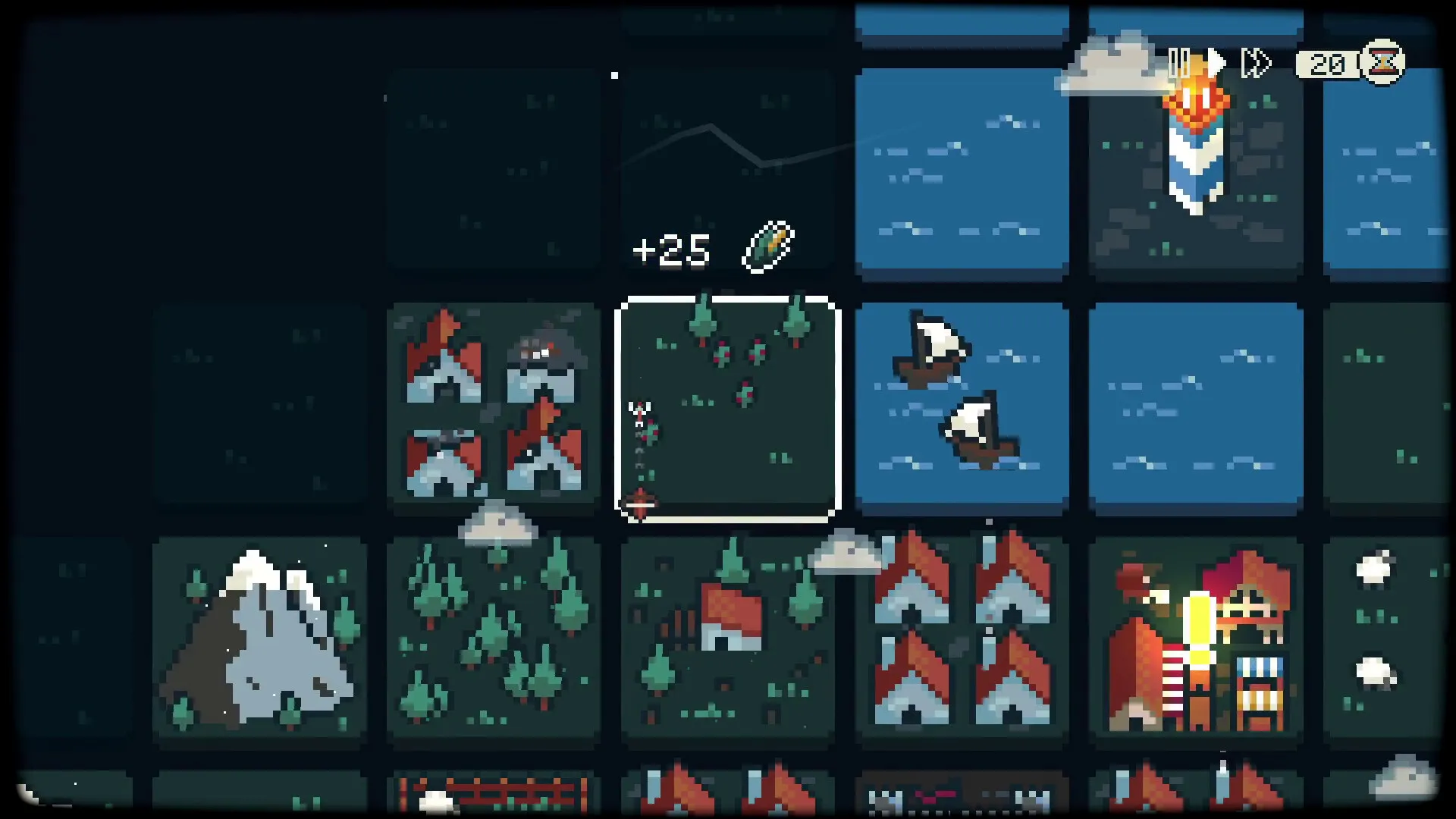
Beyond the story, Endless and Sandbox modes invite you to grow your kingdom with no scripted objectives. Endless mode mirrors the open‑ended pace of Banished, letting you chase personal milestones—be it a sprawling workforce or a fortress of light towers—while Sandbox removes threat mechanics altogether for pure creativity. These modes shift focus from beating scenarios to exploring “what if” strategies, rewarding players who enjoy setting their own targets rather than following a predetermined path.
For puzzle enthusiasts, Dawnfolk offers fixed‑resource challenges and a daily puzzle akin to the rotating challenges in Into the Breach. Each puzzle level dictates your starting resources and map layout, tasking you to meet specific milestones within a set number of turns. Leaderboards for the daily puzzle foster friendly competition, encouraging repeated attempts to optimize every placement and resource exchange.
Curious Expedition mode blends narrative vignettes with lighter objectives—rescue a stranded trader, navigate a zombie horde, or decide the fate of a mysterious island. These whimsical excursions recall the event‑driven moments in FTL: Faster Than Light, emphasizing split‑second choices that ripple through your resource pool rather than through space.
A steady trickle of meta‑progression keeps the experience fresh: completing main and side objectives earns a currency that unlocks harder difficulties, new modes, and cosmetic extras. This sense of ongoing discovery drives replayability, ensuring that even familiar maps feel new once you chase every achievement and secret upgrade.
Controls & User Interface
Dawnfolk feels most at home with a gamepad in hand. Navigating tile by tile is smooth and intuitive, with each cursor hop punctuated by a playful “bloop” animation and satisfying rumble feedback—an immediacy that recalls the tactile precision of Stardew Valley’s controller support. Button presses deliver crisp responses, making building placement and map scrolling feel weightless yet deliberate.
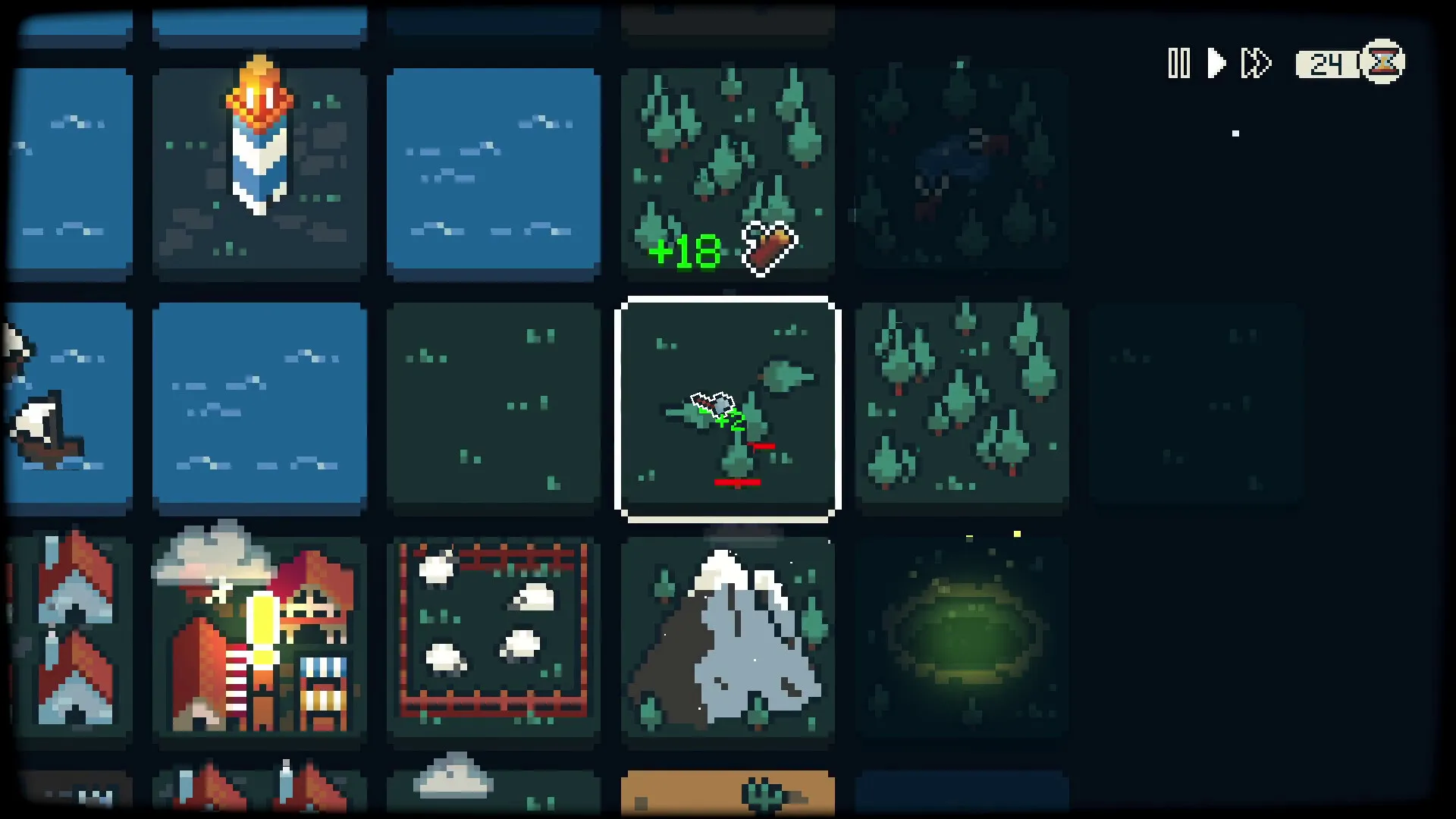
For those preferring traditional PC inputs, post-launch updates introduced full mouse compatibility alongside arrow‑key and spacebar navigation. Menus are streamlined into concise grids, so toggling options or swapping between scenarios never feels cluttered. Tooltips appear on hover to explain building effects in clear language, much like the contextual pop‑ups in Anno 1800, ensuring newcomers aren’t left guessing.
The HUD remains minimalist, displaying only core resource counts and the encroaching storm timer, which keeps your focus on strategy rather than interface. A rare annoyance emerges during multi‑option event prompts: the joystick can overshoot choices when three or more options are present. A sensitivity slider or segmented cursor movement could remedy this small friction point without diluting the overall polish.
Audio & Visual Presentation
Dawnfolk’s visuals marry simplicity with atmosphere. A palette of dark greens and blues dominates the map under the ever‑present gloom, while spots of bright yellow light leap off the screen as you reclaim tiles. As you expand, the land visibly brightens—yet retains its deep tones—evoking the gradual illumination seen in titles like Monument Valley, where color shifts mirror player progression.
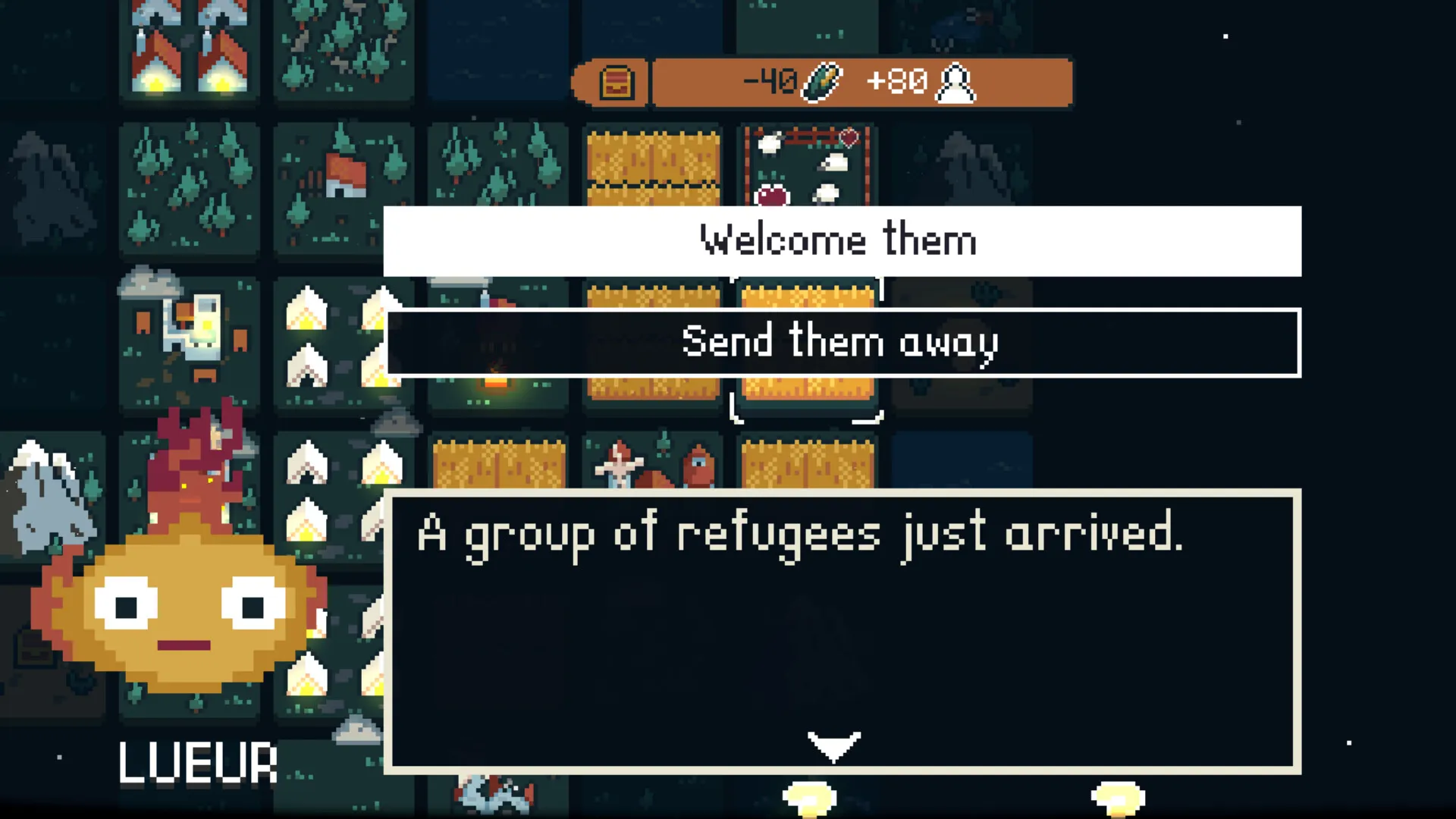
Animations are delightfully restrained: tiles give a subtle bounce on selection, buildings slide into place with a gentle pop, and dark storms swirl in ominous black and purple vortices that feel almost corporeal beside your settlements. These micro‑animations reinforce every action without overwhelming the eye.
On the audio side, Dawnfolk leans into charm. Each cursor hop emits a playful “bloop,” construction events punctuate with soft SFX, and Lueur’s babbling interjections add personality. Ambient sounds—whistling wind through forest tiles or distant thunder rolling over encroaching storms—heighten immersion much like Darkest Dungeon’s environmental cues.
Underpinning it all is an understated soundtrack that swells during tense moments and retreats during calm, with dynamic audio triggers tied to resource thresholds and storm proximity, ensuring you always feel the pulse of your kingdom.
The Review
Dawnfolk
Dawnfolk distills city‑building into bite‑sized, engaging scenarios without sacrificing strategic depth. Its polished tile‑based mechanics and dynamic light‑versus‑darkness tension are enhanced by satisfying animations, a charming companion, and a versatile soundtrack. The variety of modes—from story missions to puzzles and endless play—ensures lasting appeal, though occasional control overshoots in event menus hold it back slightly.
PROS
- Intuitive tile‑based mechanics with clear visual feedback
- Balanced tension between expansion and darkness management
- Bite‑sized scenarios ideal for quick sessions
- Charming companion Lueur adds personality
- Multiple modes (endless, puzzle, expedition) boost replayability
- Polished art style and dynamic soundtrack
CONS
- No dedicated defensive structures against storms
- Occasional joystick overshoot when selecting event options
- Story beats can feel light between scenarios
- Limited long‑form campaign depth for some players