
























![Kingdom Hearts Collection [I-III] Review](https://gazettely.com/wp-content/uploads/2026/10/Kingdom-Hearts-Collection-I-III-1-360x180.webp "Kingdom Hearts Collection [I-III] Review: KHII Holds Steady as Newer Entries Fluctuate 37")



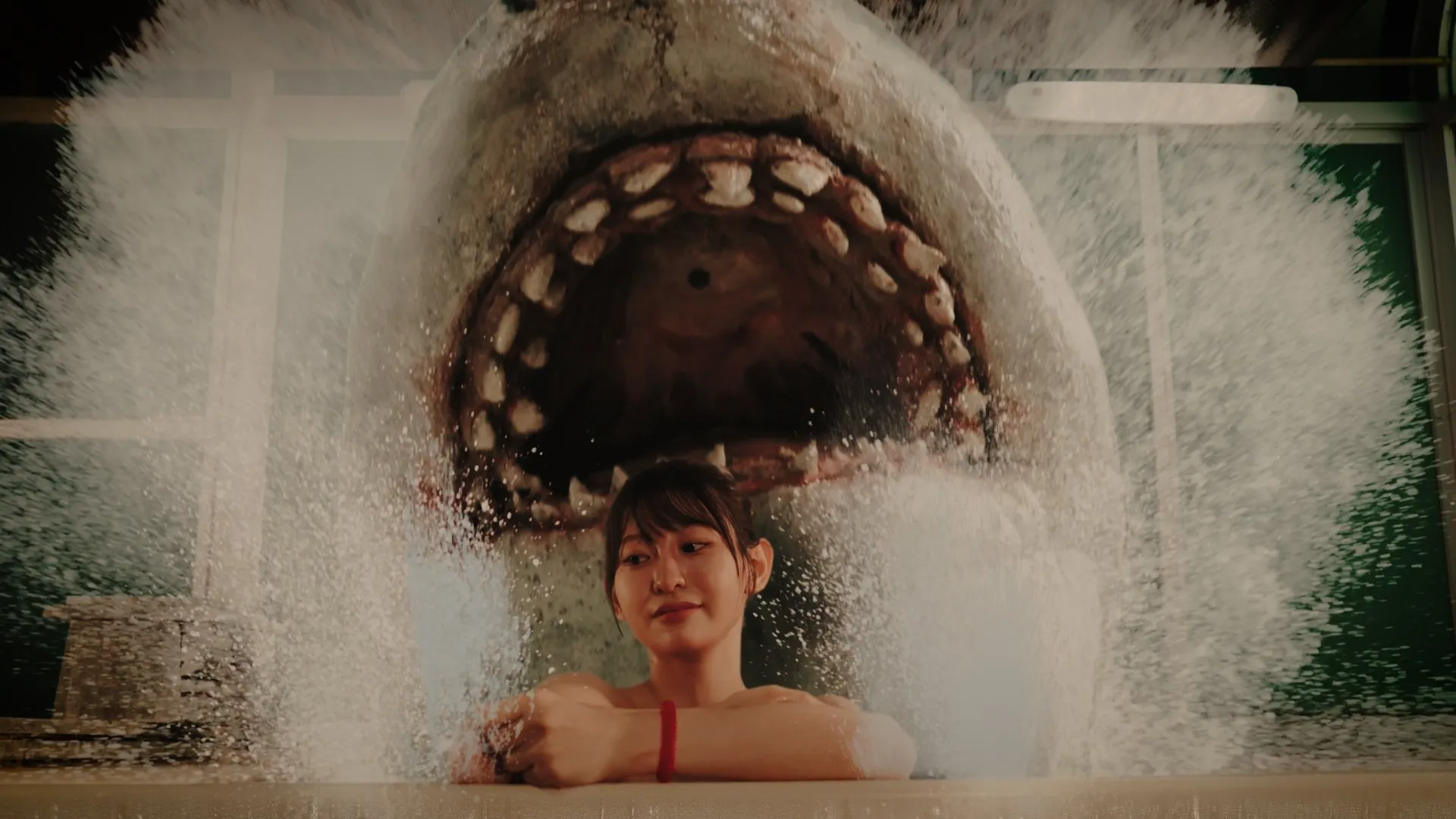

The serene steam of a Japanese hot spring meets the gnashing teeth of a prehistoric predator in Hot Spring Shark Attack. In the coastal tourist town of Atsumi, a series of bizarre deaths threatens the community’s livelihood. The culprits are not ordinary sharks, but an ancient species reawakened, possessing bodies so pliable they can navigate the complex plumbing of the entire city.
Every rooftop spa, private bathtub, and even stray puddle on the pavement becomes a potential portal for aquatic doom. From its opening moments, the film makes its intentions clear: this is not a work of genuine terror, but a gleeful exercise in the comedic and the absurd. The objective is not to make you scream, but to make you laugh at the sheer audacity of its concept.
Schlock by Design: The Visual and Technical Style
The film wears its minuscule budget as a badge of honor, transforming financial limitations into a core part of its aesthetic. This is not merely inept filmmaking; it is a declaration of principles, a rebellion against the polished sterility of mainstream blockbusters.
The visual presentation is a deliberate, joyful celebration of cheapness. Computer-generated sharks appear as flat as cardboard cutouts, gliding through scenes with a weightless, two-dimensional quality that defies physics.
These digital ghosts are intercut with practical effects that feel pulled from a child’s toy box: rubbery puppets visibly shaken by an off-screen hand, clumsy models that wobble on their way to attack, and brief, startling flashes of Claymation.
When violence occurs, it is with splashes of bright orange fluid that has more in common with tomato sauce than blood, a choice that underlines the film’s complete disinterest in realism. Exposition is often delivered through diagrams that possess the charming simplicity of early-era internet clip art, grounding the outlandish science in a familiar, low-fi visual language.
This visual chaos is matched by the film’s technical construction. A cacophonous score lurches from grand orchestral strings to upbeat disco, a form of tonal sabotage that prevents the viewer from ever feeling settled. The editing is equally disruptive, with abrupt, hard cuts that shatter any sense of conventional cinematic time or space, yanking the audience from one ludicrous scenario to the next without a moment for recovery.
What is one to make of a film where a shark literally rasps its own name while on the attack? It is a production that has consciously chosen amateurism as its style, finding more truth in a visible seam than a seamless illusion.
A Cast of Caricatures and a Preposterous Plot
The narrative is populated not by characters, but by walking archetypes pulled from the monster movie playbook, each a loving parody of a Jaws staple. There is the cynical Chief of Police, a man who practices for his future career as a novelist by shooting words on targets with a pistol that sounds suspiciously like a cap gun.
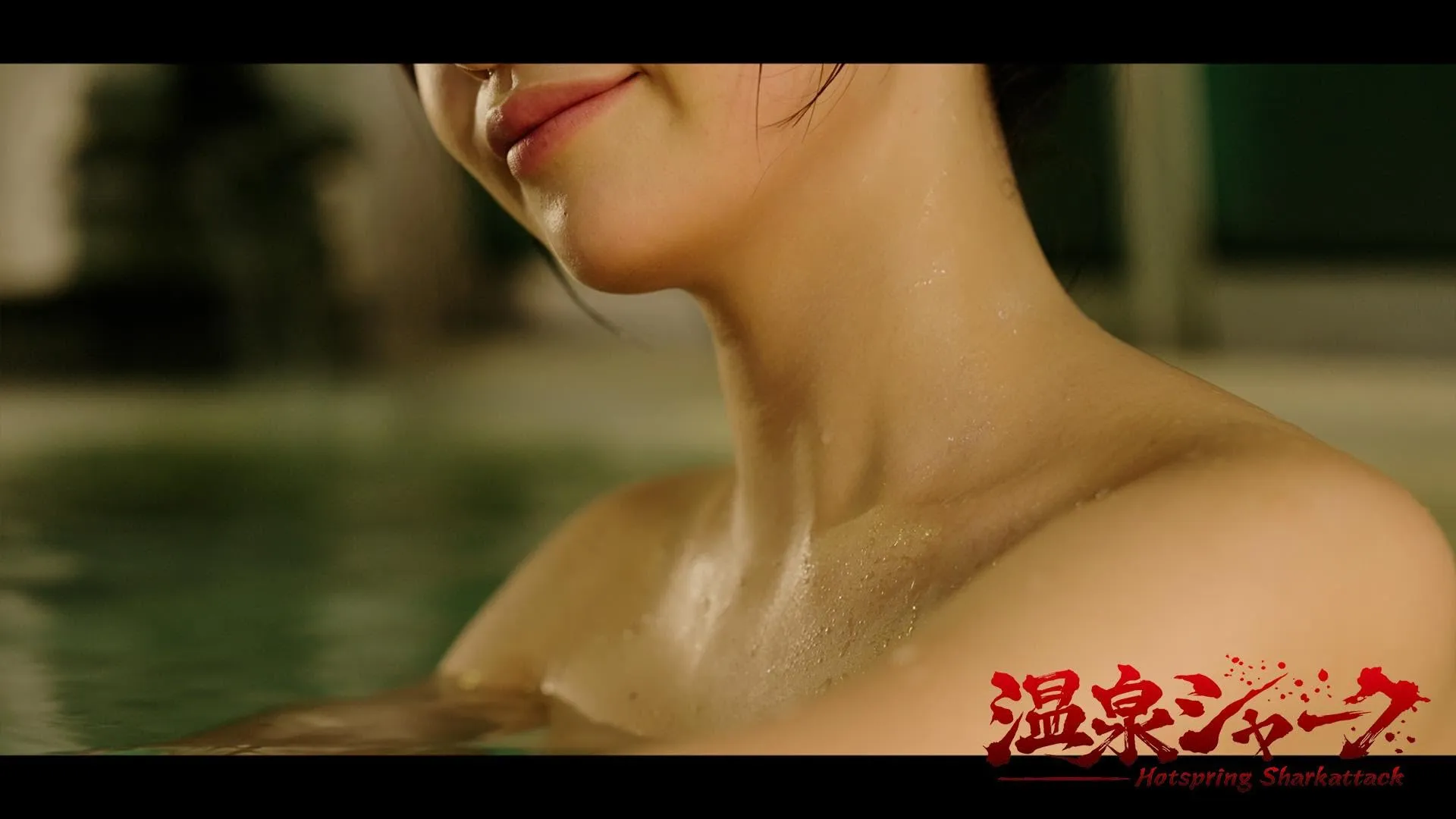
He is matched by the Mayor, a manic caricature of an influencer whose obsession with tourism and a new 3D-printed hotel blinds him to the escalating body count. The dedicated female marine biologist dutifully appears to explain the impossible science with a straight face, providing the pseudo-logic the film needs to justify its next leap into madness.
Then there is Macho, a silent, impossibly muscular figure in a Speedo who is less a character and more an elemental force. He materializes simply to punch sharks into submission before vanishing again without a word, the physical embodiment of the genre’s id.
The plot begins with sharks in the pipes and escalates with relentless, joyful abandon. Soon, the creatures are creating “shark traps” out of puddles on the street and swimming just beneath the pavement, causing the asphalt to ripple like water.
The conflict swells to Kaiju proportions, prompting military involvement and the hasty construction of a submarine with a giant 3D printer—a wonderful set piece accomplished with a clever forced-perspective camera trick.
This narrative beat is a perfect satire of tech-solutionism, the absurd notion that any problem, no matter how bizarre, can be solved with a new gadget. The story is a steady, giddy climb into pure pandemonium, mocking the very structure of heroic narratives along the way.
The Takeaway: Is the Fun Contagious?
The film’s relentless commitment to its own absurdity is both its greatest strength and its potential downfall. It asks not to be judged by standards of realism or dramatic depth, but by its capacity to generate bewildered joy. For some, the one-note joke may wear thin long before the credits roll.
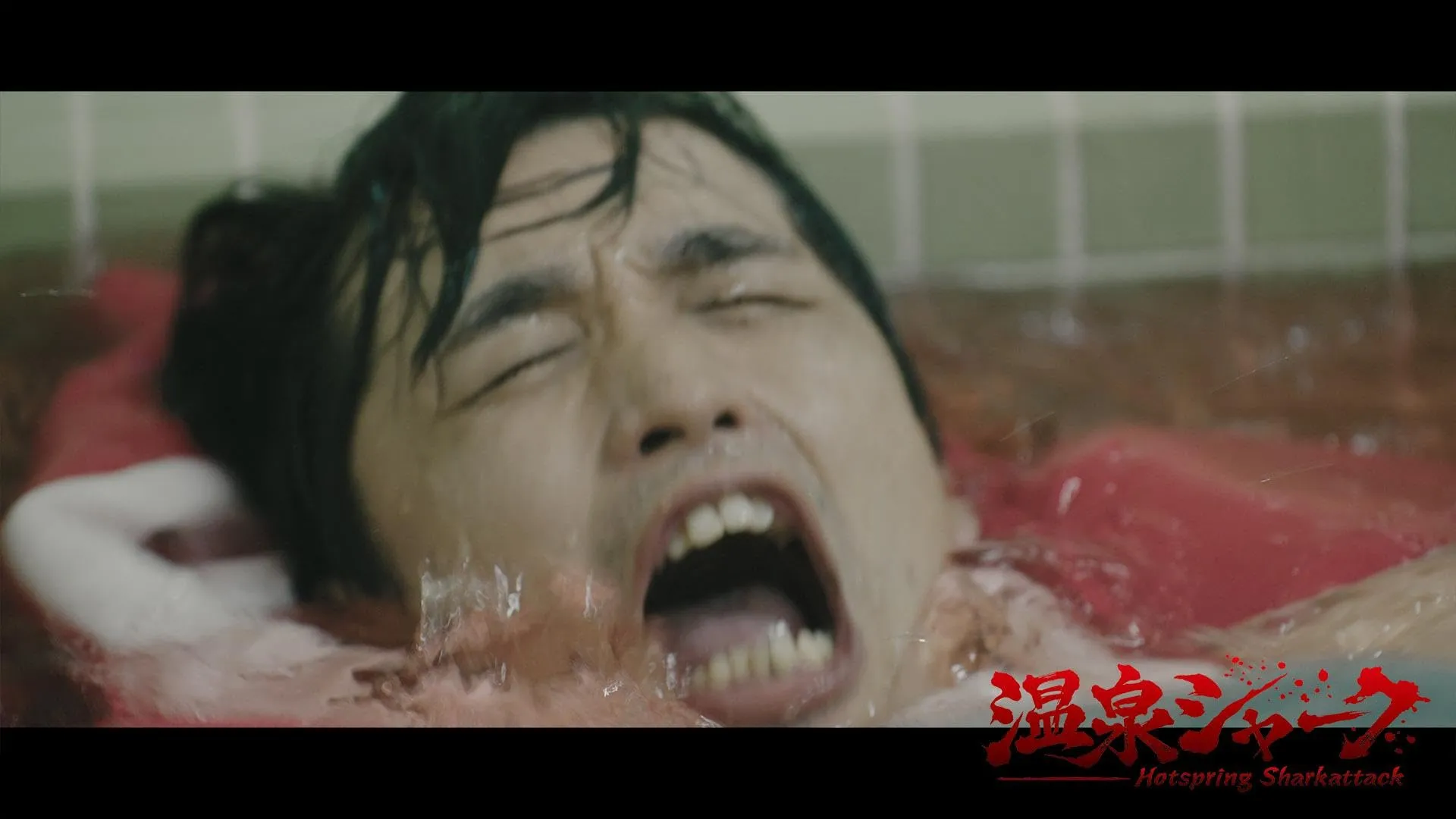
The spectacle consistently overshadows the human element; these are not people to root for but props in an elaborate, often chaotic gag. This choice keeps the viewer at an intellectual distance, making the film an object of observation rather than an immersive experience.
Yet, what the film lacks in emotional depth, it makes up for with sheer, unbridled creative glee. Its passion is visible in the tiny details: the specific absurdity of a shark rasping its name, the unwavering commitment to a terrible puppet effect. This is the crucial difference between cynical, lazy filmmaking and passionate, inept filmmaking; the latter has an undeniable soul.
The film’s success lies in its unapologetic execution, culminating in a climax that rewards the patient viewer with its magnificent silliness. This is cinema for the connoisseur of schlock, a midnight-movie offering for an audience that finds beauty in the seams and appreciates the human hand in the art, even when that hand is clumsy. It is a work of pure, uncynical energy, a memorable example of what happens when a filmmaker throws logic to the wind and simply decides to have fun.
Hot Spring Shark Attack (aka Onsen Shâku) is a horror-comedy film that premiered in Japan at the 2024 Tokyo International Shark Film Festival, winning the Audience Award.
Full Credits
Director: Morihito Inoue
Writers: Morihito Inoue
Cast: Takuya Fujimura, Daniel Aguilar, Shôichirô Akaboshi, Masaki Naito, Koichi Makigami, Kiyobumi Kaneko, Mio Takaki
The Review
Hot Spring Shark Attack
While it fails every conventional metric of filmmaking, Hot Spring Shark Attack is a resounding success as a work of intentional, joyous schlock. Its relentless creativity and commitment to its own ludicrous premise make it an unforgettable, hilarious experience for those who appreciate B-movie artistry. It is a triumphant celebration of passion over polish, delivering a spectacle so absurd and energetic that its flaws become its greatest features. A must-see for the right audience.
PROS
- Unrelenting, creative absurdity.
- Gleefully embraces its low-budget, schlock aesthetic.
- Memorable, bizarre set pieces and characters.
- An ideal and highly entertaining group-watch film
CONS
- Paper-thin characters with no emotional depth.
- The central joke may become repetitive for some viewers.
- The plot is completely incoherent by design.
- Technically clumsy editing and sound design.