





















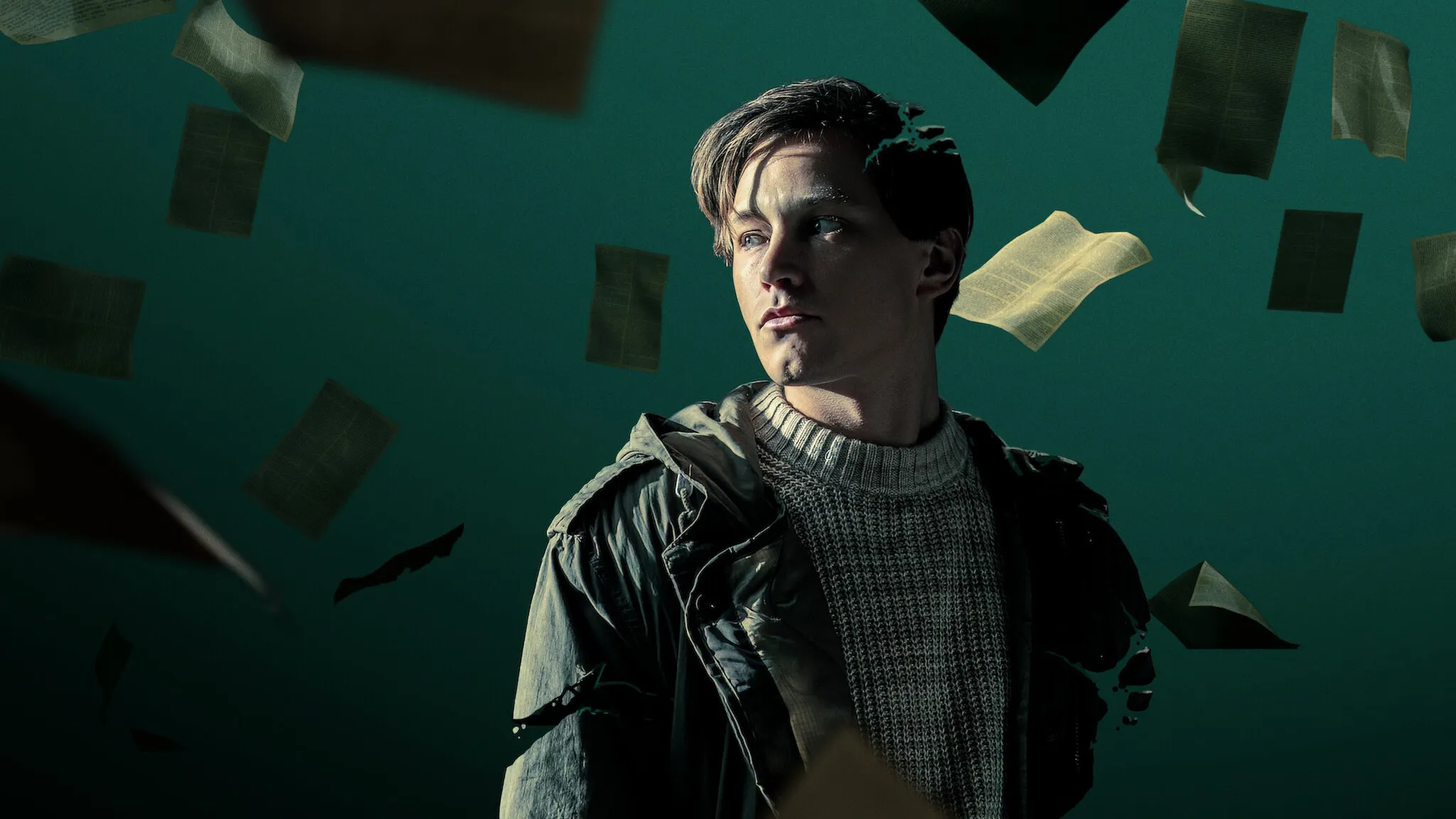

Simon arrives in the university town of Lund a young man defined by a quiet void. He is a law student by pragmatism but a writer by soul, possessed of an ambition that is hampered by a life devoid of things worth writing about. His journey into the mundane is immediately fractured.
He walks straight from the train station into the fury of a street protest, a chaotic clash where he has a brief, disorienting encounter with a masked anarchist. This moment is the first fissure in the predictable life he had planned. From here, his world splits into two opposing poles. On one side stands the sterile luxury of his new apartment, a space he shares with wealthy, arrogant law students who treat him with a casual disdain reserved for the help.
On the other is the magnetic pull of his masked savior, a young woman named Max who represents a seductive, dangerous escape from the stifling world of academia. Simon wanted material for his stories, and the film seems ready to provide a brutal education, forcing a choice between a hollow existence of conformity and a perilous one outside the lines.
The Man in the Middle
At the film’s center, Simon exists as a curious and frustratingly passive figure. He isn’t a character who acts but one who is acted upon, a human pinball ricocheting between forces larger than himself. This “blank slate” quality feels deliberate, turning him into a screen onto which the film projects its anxieties about class and identity.
Yet, it’s a risky gambit that leaves the narrative without a compelling anchor. His motivations remain a murky soup of adolescent discontent; is he truly seeking an authentic life, or is he merely susceptible to the first person who shows him attention? Is his attraction to Max a romantic impulse or a moth-like pull towards a dangerous flame that promises to end his boredom? The film refuses to commit, leaving him emotionally illegible.
The well-worn trope of the aspiring writer who lacks life experience is used as the primary justification for his choices. His journal and the accompanying voiceover are meant to provide a window into his soul, but they function more as a clunky narrative shortcut, telling us what the performance cannot show.
We are told he is a writer, but we see little evidence of a creative mind at work, only a reactive youth swept up in events. This indecisiveness becomes his defining trait. He is a tourist in the world of the rich and an uncommitted visitor in the anarchist commune, never planting his flag in either territory. He hovers in a permanent state of in-betweenness, a gray zone that makes him a detached observer of his own life, and ultimately, an unsatisfying protagonist.
A Critique of Two Houses
The film stages a war between two ideologies, yet it launches its critique with such broad strokes that both sides crumble into caricature. The world of the elite is embodied by Simon’s roommates, Victor and Ludvig. They are symbols of hereditary privilege, rendered with zero nuance.
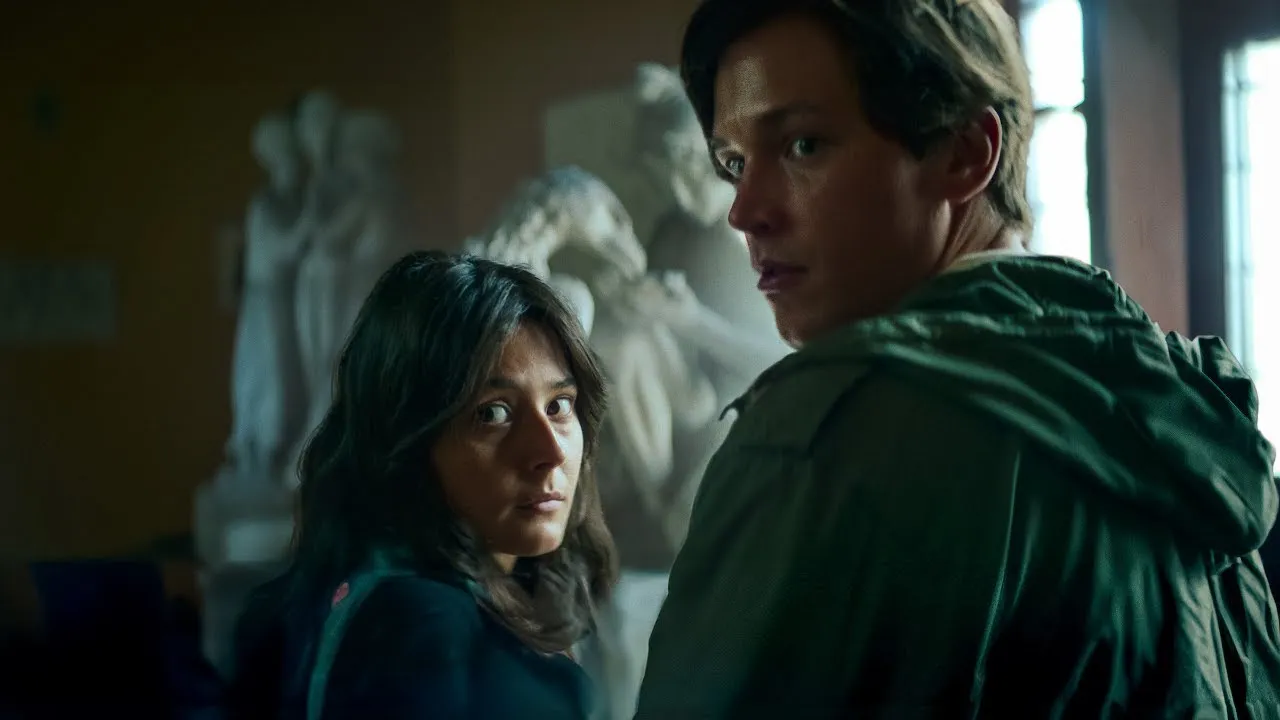
Their cruelty is almost cartoonish, from their snide remarks about Simon’s watch to the humiliating party scene where they functionally demote him to a servant in his own home. They represent a hollow, decadent capitalism, so overtly vile that they cease to be characters and become mere thematic punching bags.
On the other side of the spectrum is the anarchist collective, a band of self-proclaimed revolutionaries living in a dilapidated mansion. Led by the charismatic professor Charles, they preach an ideology of liberation and wealth redistribution. In practice, they are a chaotic, self-serving cult whose bohemian lifestyle is funded by crimes that have real victims.
Their rebellion is a performance, a philosophical veneer for drug use and theft. The film presents their anti-capitalist rhetoric as just another form of toxic self-interest, making them not a righteous alternative but a mirror image of the selfishness they claim to oppose. Driving the plot is Max, a magnetic femme fatale who uses her radical politics and sexuality as tools of manipulation.
She is the story’s true force, yet even she is trapped, a product of a system she purports to fight. The film’s ultimate statement is one of deep cynicism; it presents a world where the establishment is corrupt and the revolution is a sham, leaving no room for hope and offering a politically inert, muddled message.
Moody Visuals and Hollow Feelings
Director Mikael Marcimain demonstrates a masterful command of atmosphere. The film is a visually hypnotic experience, steeped in a cool, grainy aesthetic that perfectly captures a world of moral decay and urban unease.
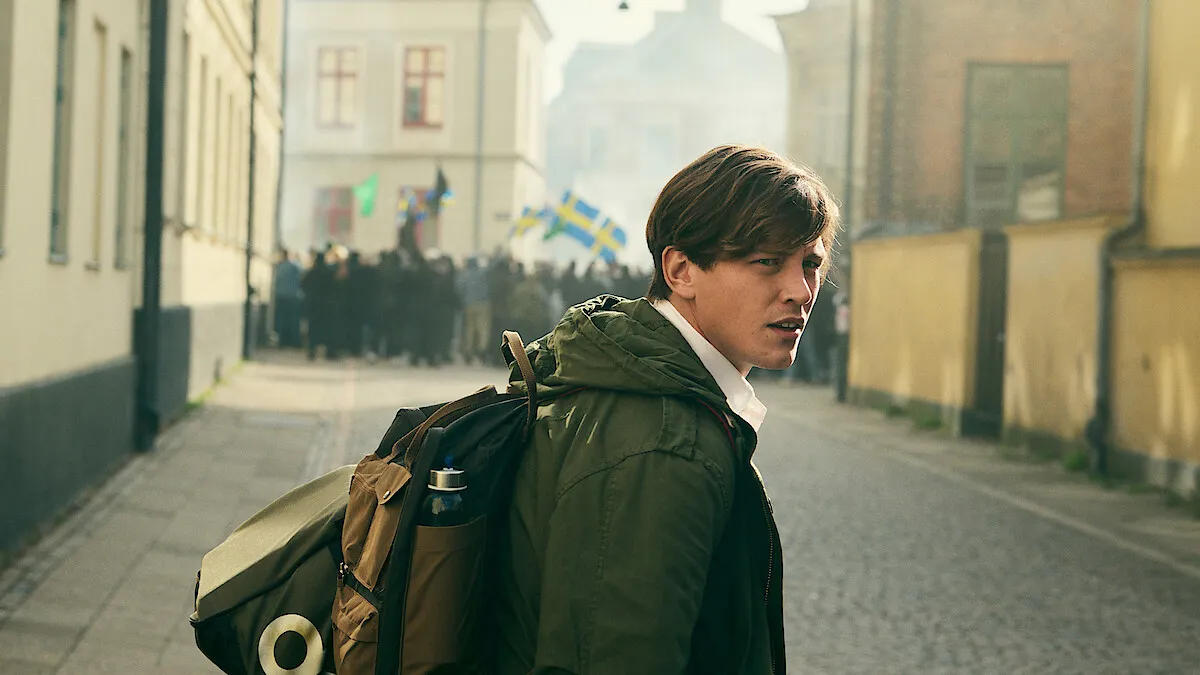
The camera work is alive and restless, especially in tense sequences where the unstable power dynamics between characters are rendered with palpable anxiety. Every shadow seems to hold a threat, and the desaturated color palette paints a world leached of warmth and certainty. This potent style creates a powerful mood, drawing the viewer into its disorienting reality.
However, this stylistic prowess isn’t enough to salvage a story that feels fundamentally underdeveloped. The confident direction is constantly at odds with a script that plods along, where the deliberate pacing often curdles into narrative drag, failing to build suspense. The editing can feel choppy and disorienting, further fracturing an already fragile plot.
The film prioritizes mood over momentum, and this choice comes at a steep cost to character development and narrative coherence. This flaw is most glaring in the film’s unresolved conclusion. It simply stops, offering no closure for Simon’s journey or thematic resolution. We are left adrift, with no sense of what he has learned or what becomes of him.
This ambiguity doesn’t feel profound, like a deliberate artistic choice about the nature of life, but rather hollow, like a story that ran out of things to say. The result is a film that is beautiful to look at but leaves you feeling empty, a testament to the fact that style, no matter how compelling, cannot fill a void where a meaningful story should be.
Full Credits
Director: Mikael Marcimain
Writers: Linn Gottfridsson, Joakim Zander
Producers and Executive Producers: Anna Anthony, Pontus Edgren, Joshua Mehr, Astri von Arbin Ahlander, Joakim Zander, Tina Bergström, Martin Cronström
Cast: Simon Lööf, Nora Rios, Peter Andersson, Nathalie Merchant, Willy Ramnek Petri, Arvid von Heland, Christoffer Rigeblad, Fabian Hedlund, Lucas Grimstedt, Alice Andersson
Director of Photography (Cinematographer): Joe Maples
Editors: Kristofer Nordin
The Review
An Honest Life
An Honest Life is a triumph of mood over meaning. Director Mikael Marcimain crafts a visually stunning and deeply atmospheric world, but this stylish surface cannot hide the hollow core. The film is fatally undermined by a passive, illegible protagonist and a cynical social critique that attacks all sides without offering any insight. While its hypnotic visuals create a potent sense of unease, the story drifts towards an unresolved conclusion that leaves the viewer feeling empty. It is a frustrating film: a beautiful shell that lacks a compelling narrative or emotional substance.
PROS
- Strong, atmospheric direction that creates a palpable sense of tension.
- Visually hypnotic cinematography with a distinct, grainy style.
- Successfully builds a moody and unsettling world.
CONS
- A passive and underdeveloped protagonist who is difficult to connect with.
- Muddled social commentary that feels cynical and lacks nuance.
- The plot suffers from slow pacing and a lack of momentum.
- An unsatisfying and abrupt ending that offers no resolution.