





















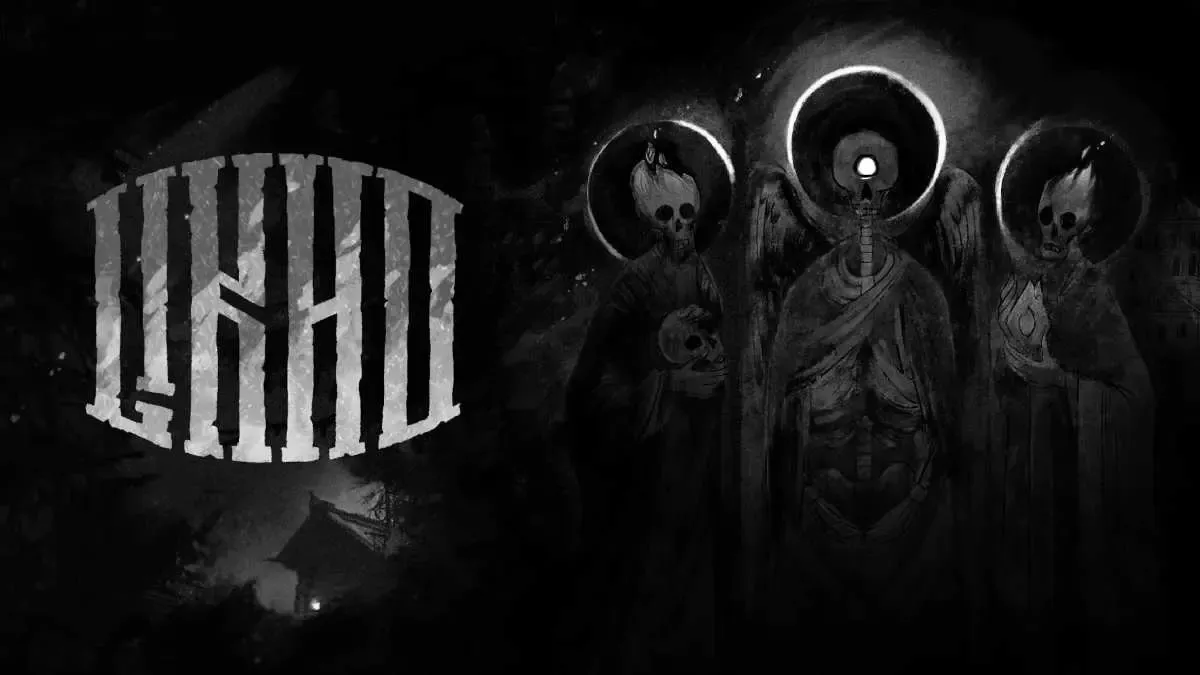

Most games cast you as a hero fighting to escape a terrible evil. One-Eyed Likho asks what happens when someone foolishly goes looking for it. The story follows a blacksmith, simply named Smith, who has grown tired of his quiet life. Fueled by drink and a desire for adventure, he ventures into a dark forest to find the titular Likho, a fearsome one-eyed entity from Slavic folklore.
His friend, the Tailor, comes along on this ill-advised quest. This first-person adventure, set in 19th-century Russia, quickly sees the duo find a mysterious cabin. Stepping inside, they are trapped, pulled into a series of surreal, nightmarish worlds where the evil they sought is now something they must survive.
Drawn in Charcoal and Dread
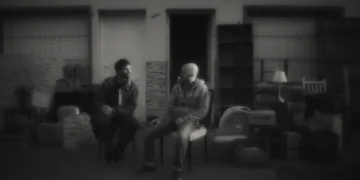
The game’s most potent feature is its powerful artistic direction, a visual statement that dictates the entire player experience. The world is rendered entirely in a grainy, high-contrast monochrome, recalling the stark and unsettling imagery of early German Expressionist cinema or the oppressive shadows of film noir.
This is not simply a visual filter; it is the foundation of the game’s atmosphere, a deliberate choice that forces the player to interpret the world differently. Color is a source of information and comfort, and its absence creates a deeply eerie and dreamlike mood that permeates every moment. You learn to read the environment through texture, shape, and the subtle gradations of grey.
Light and shadow become the primary characters in every scene, a technique that turns simple exploration into a tense negotiation with the unknown. This aesthetic choice directly supports the narrative’s folkloric roots, making the world feel ancient, unknowable, and stripped of modern sensibilities.
Within this stark world, the design of the Likho creature is a nightmarish focal point. She is a tall, skeletal figure with wild, stringy hair and a single, piercing eye set in the center of her face. Her design is a masterclass in distilled horror, avoiding complex monstrosity for a form that feels both humanoid and deeply wrong. Her power comes from her animation.
Her unnatural, spasmodic movements are genuinely unsettling, suggesting a body not governed by the laws of biology. She twitches and jerks, her limbs moving with a puppet-like quality that is profoundly disturbing. This approach to creature design evokes the symbolic horror seen in titles like Silent Hill 2, where the monster is a physical manifestation of a theme, in this case, a malevolent, ancient evil.
The game leans on this potent atmosphere to tell its story. Environments shift with a jarring, dreamlike logic, taking the player from the mundane interior of a wooden cabin to impossible ancient temples and a desolate “Isle of the Dead” lapped by an underground ocean. The transitions are abrupt, reinforcing the feeling that you are not moving through a physical space but through the chapters of a dark fable.
This method of environmental storytelling, where the world itself is the primary narrative device, is handled with confidence. The strength of the experience is not in a complex plot with twists and turns, but in the unsettling feeling of being trapped within a story that operates on its own ancient and cruel rules.
A Spark in the Gloom
Gameplay in One-Eyed Likho centers on a single, elegant mechanic: an infinite supply of matches. This tool is not a weapon but the player’s primary verb for interacting with the world, a unifying action that is both practical and deeply symbolic. On a functional level, you use matches to light darkened corridors, creating small, flickering pockets of safety.
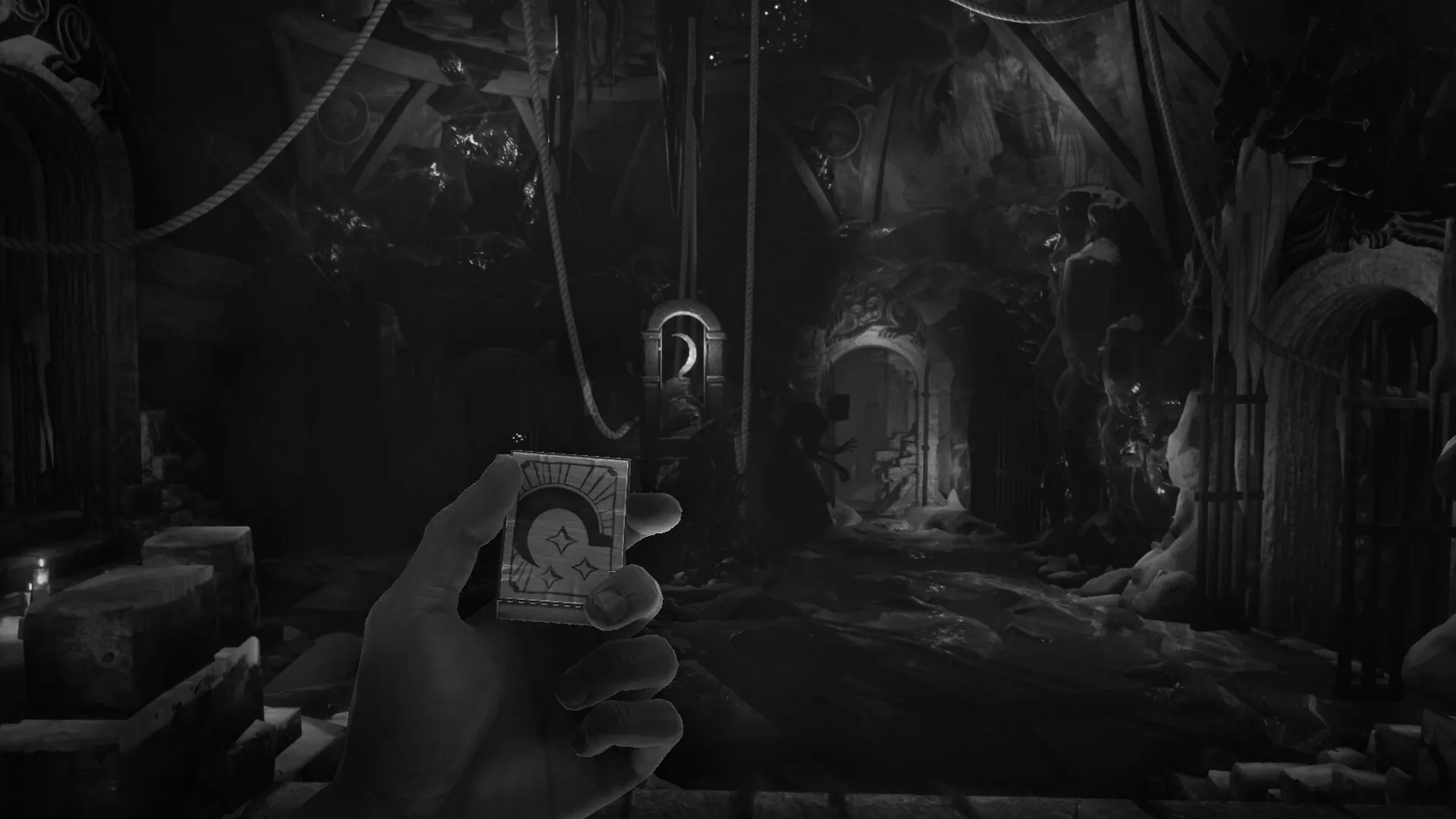
This simple act is layered with tension; the sound of the strike, the flare of initial light, and the slow, inevitable consumption of the matchstick create a satisfying and suspenseful loop. This tension is amplified by environmental details, like cobwebs that can extinguish a lit match, plunging you back into darkness at a critical moment. Fire is also a tool of progress. You burn away flammable obstacles like hay bales or broken furniture to clear a path, an act of minor destruction that feels empowering in a world where you are otherwise helpless.
Symbolically, the match represents knowledge against ignorance, a tiny flame of human will against an oppressive, dark world. The choice to give the player an infinite supply is interesting. While it removes any resource management pressure, it ludonarratively reinforces the protagonist’s core motivation. His desire to seek out “what’s in the dark” is a fire that cannot be extinguished, an endless and perhaps foolish impulse. This small design choice harmonizes perfectly with the game’s narrative premise.
The puzzle design reflects this philosophy of focused simplicity. The puzzles required to advance the main story are straightforward. Their solutions are often found in the immediate vicinity, presented as clear visual cues on a nearby wall or a simple pattern to be replicated. This design choice makes the game highly accessible, ensuring the narrative flow is rarely interrupted by a frustrating roadblock.
The game does not want you to be stuck; it wants you to keep moving through its dark fairytale. However, for players who wish to dig deeper into the world’s lore, the game provides a second layer of challenge. Optional locked chests are hidden throughout the levels, each containing a collectible story—a dark folktale that enriches the central myth.
Opening these chests requires more careful observation, asking the player to find clues hidden in the environment to decipher a four-digit code. This system elegantly handles player choice. The decision to seek out these chests is entirely your own, rewarding curiosity and exploration with a deeper understanding of the world, a technique used effectively in narrative-driven games like What Remains of Edith Finch. It allows players to set their own level of engagement, a smart design for a game focused on atmosphere above all else.
When Tension Stumbles
While the atmosphere is thick with a palpable sense of dread, One-Eyed Likho is more unsettling than it is actively scary. Its brand of horror is atmospheric, prioritizing a sustained feeling of unease over the adrenaline spikes of jump scares or the desperate struggle of survival horror. The horror is derived from the strange visuals, the oppressive soundscape, and the unnerving design of Likho herself.
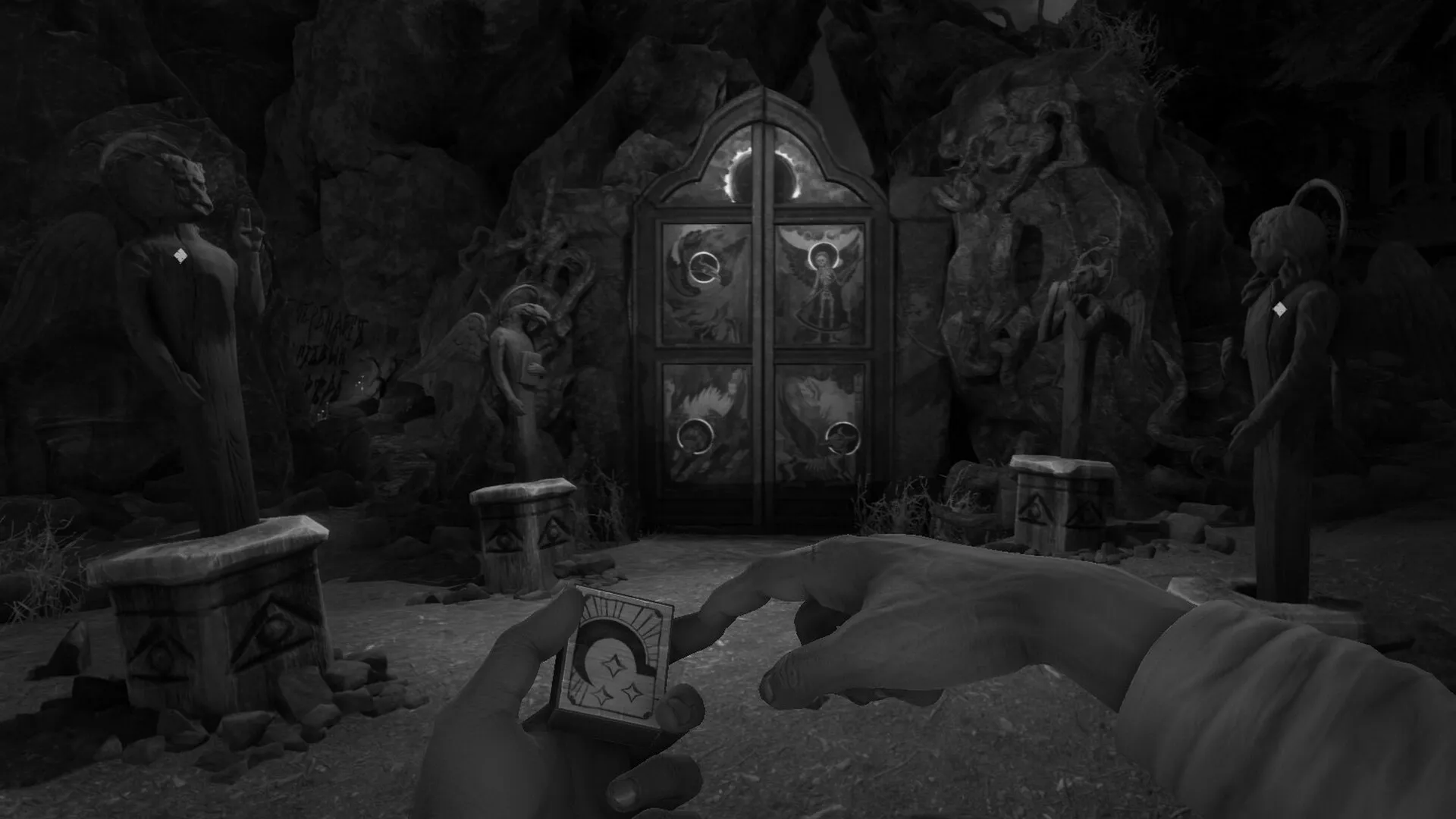
The game is content to let you soak in this mood, to feel the isolation and the strangeness of its world. This approach can be highly effective, creating a lasting psychological impact that outlives a simple scare.
Direct encounters with the monster are infrequent, presented as punctuation marks in the exploratory gameplay rather than a constant threat. These moments take the form of brief stealth or chase sequences where the only goal is to hide or run away. In theory, these sections should be terrifying peaks in the game’s tension.
In practice, however, they are hampered by a couple of frustrating design choices that undermine their intent. The most significant issue is the player’s movement speed, which is incredibly slow, even when sprinting. Instead of a heart-pounding dash for safety, chases often feel like an awkward and sluggish scramble. This mechanical imbalance transforms intended panic into methodical frustration, a critical failure where the gameplay systems work directly against the desired emotional response.
A second, more nuanced issue is the lack of English voice acting. While the original Russian voice work is evocative and well performed, the reliance on subtitles becomes a significant problem during the game’s few hectic moments. It is functionally impossible to evade a pursuing monster while simultaneously trying to read text at the bottom of the screen.
This forces the player into a difficult position: do you focus on the subtitles to understand what is happening in the story, or do you focus on the gameplay to survive? This dilemma breaks immersion at the most critical times, pulling you out of the experience to contend with the game’s interface. It is a classic conflict between artistic purity and player accessibility, and in a game that is so reliant on its narrative, it feels like a significant oversight that detracts from an otherwise carefully crafted experience.
For Lovers of Folklore
One-Eyed Likho is a short game, and its roughly three-to-five-hour runtime is one of its greatest strengths. In a market saturated with sprawling open worlds and hundred-hour campaigns, its brevity allows it to function as a concentrated dose of interactive art. It does not overstay its welcome or dilute its potent atmosphere with filler.
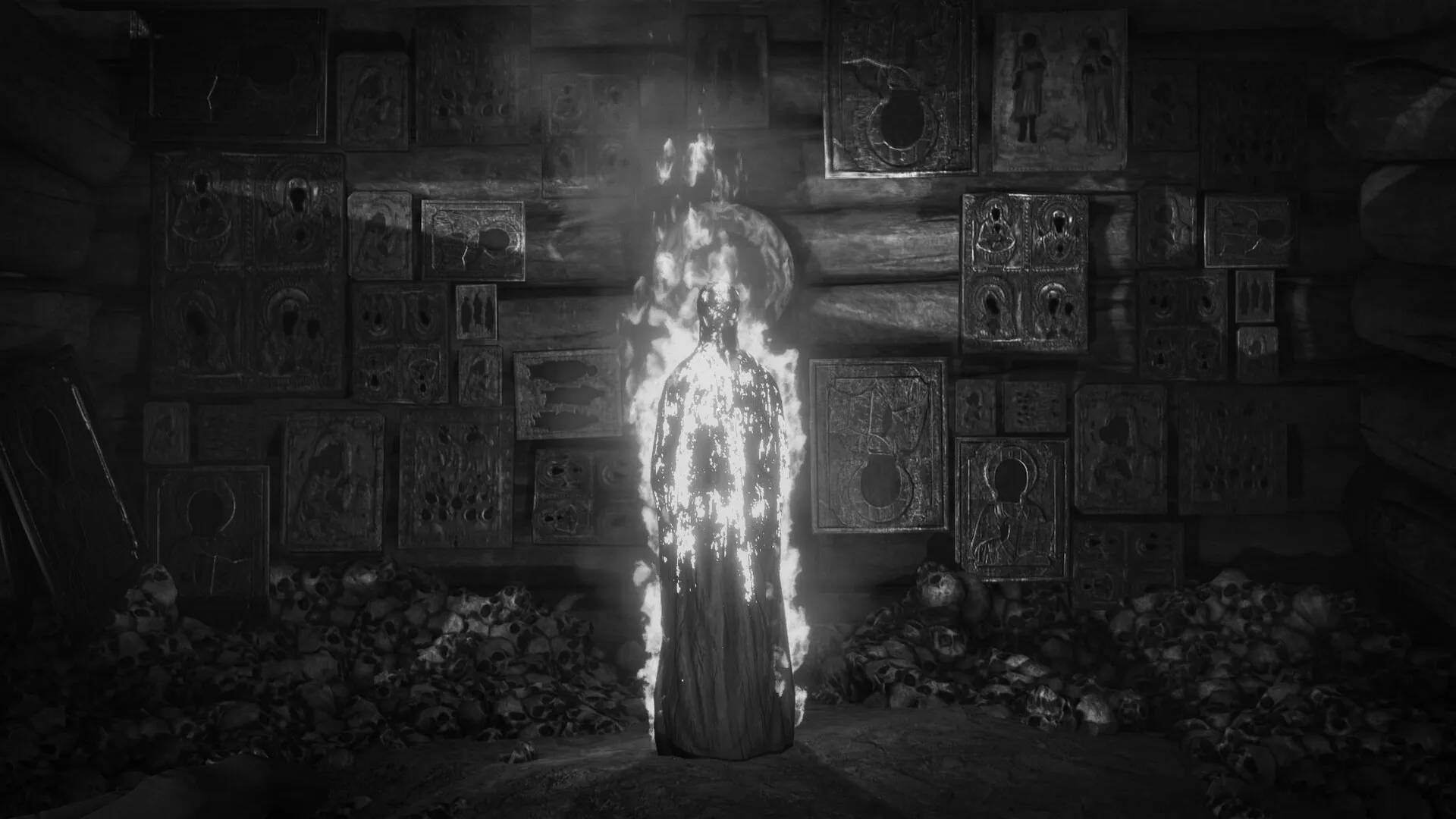
It is a focused, self-contained interactive folktale, and it should be approached as such. Its appeal is squarely aimed at a specific type of player. The “narrative tourist,” who wishes to visit a strange new world and experience its story without significant gameplay friction, will find a beautiful and haunting trip. Likewise, the “aesthete,” the player who prioritizes art direction and mood, will discover a visual masterpiece.
Conversely, it is important to define who this game is not for. Players who seek deep mechanical challenge, complex systems, or intricate puzzles will likely leave disappointed. The “hardcore puzzle solver,” who delights in cracking complex logical conundrums, will find the main path too simple. The “adrenaline junkie,” looking for the constant threat and action of mainstream horror, will find the experience too quiet and slow.
The game’s greatest accomplishments are its striking aesthetic and its unwavering commitment to bringing a dark piece of Slavic folklore to life. The gameplay mechanics are light, but this feels less like a failure and more like a deliberate choice.
The systems are subservient to the vision. The puzzles, the exploration, and the simple act of lighting a match are all designed to do one thing: move you forward through the gorgeous and unsettling dream the developers have constructed. It succeeds not as a complex game, but as a memorable journey into a surreal world inspired by myth. The experience is about the strange beauty of the walk, not the challenge of the destination.
The Review
One-Eyed Likho
One-Eyed Likho is a stunning piece of interactive art that successfully translates a dark Slavic fable into a deeply atmospheric experience. Its masterful monochrome visuals and unsettling creature design create a world that is a joy to behold. However, as a game, it falters with overly simplistic puzzles and frustrating mechanics that undermine its few moments of genuine horror. It is a memorable, beautiful walk through a nightmare, but one where the gameplay feels like an afterthought to the artistry.
PROS
- Stunning and unique monochrome art style.
- Incredibly effective, eerie atmosphere.
- Unsettling and memorable creature design.
- A focused, concise narrative experience.
CONS
- Gameplay mechanics are shallow and overly simple.
- Slow player movement makes chase sequences frustrating.
- Lack of English voice acting creates friction during tense moments.
- Horror elements are infrequent and lack significant impact.