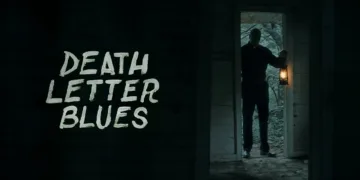






















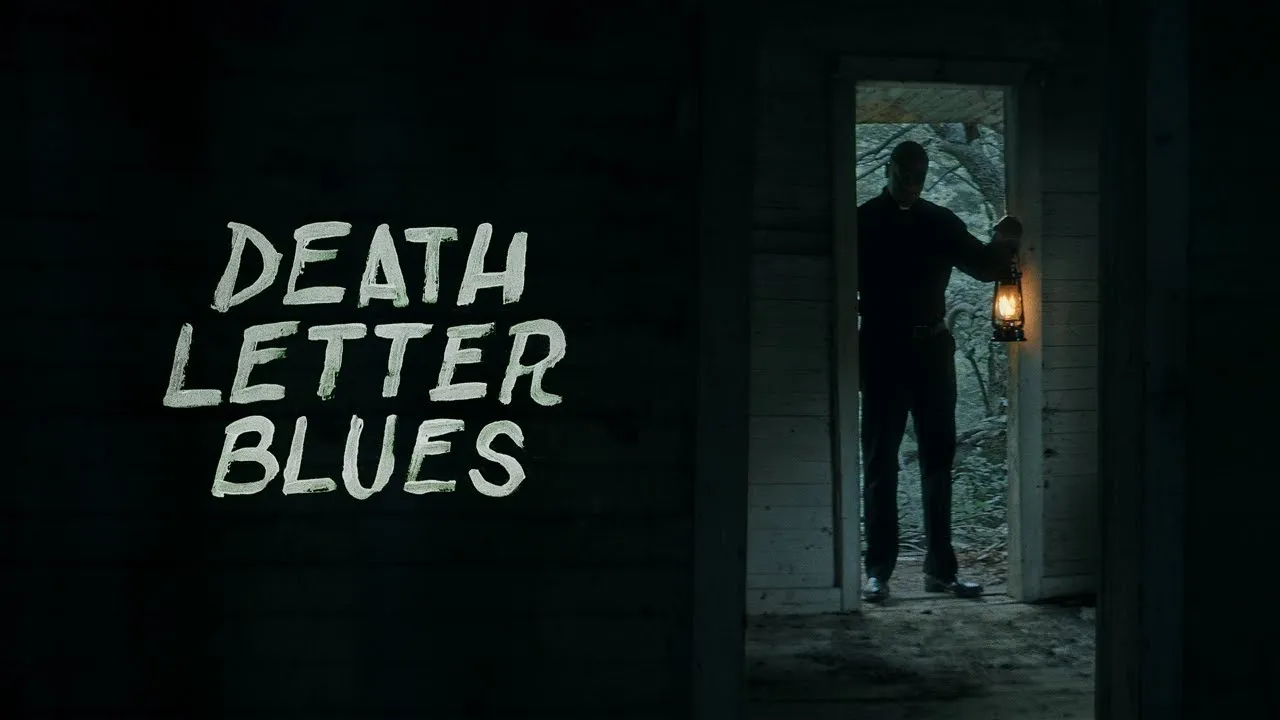

The air in Death Letter Blues is thick enough to be tasted, a humid mixture of Mississippi soil, unspoken history, and impending rain. In this small town, where time moves like molasses, the past is never buried deep enough.
The oppressive quiet is broken by the appearance of a boy, a feral creature who wanders from the woods without a name or a history. He is a disruption, a question made flesh in a place that prefers comfortable silence. At the center of this disturbance is Father Moss, the local clergyman. He is a man already wrestling with his own faith, his body and spirit marked by decay.
He becomes the town’s unwilling conscience, a figure tasked with finding meaning in an event that seems to defy it. The film immediately poses its fundamental questions: what is the nature of sin in a fallen world, and can justice ever truly be found?
An Old Crime, A New Grave
The story rejects a simple path. Father Moss arranges for the feral child to be taken in by Ed and Marcy, a local childless couple whose quiet life is changed by his presence. The racial dynamics of this new family, with a white father and a Black mother, add another line of silent tension in the community. A decade passes in a single cut.
The boy is now a teenager, a part of a family yet still a piece of living folklore to the town, a constant reminder of the woods and the unknown. His life ends abruptly after a party, a suspicious death that the community seems content to leave as an unsolved tragedy. This fresh wound unlocks a second, older secret. Father Moss receives a letter from a dying parishioner, a confession to a heinous crime committed fifty years earlier.
The film presents these two events not as procedural clues, but as parallel weights on a scale of moral reckoning. Its narrative is a slow, methodical current, more interested in the spiritual rot the mysteries expose than in their resolution.
The contrast between the two deaths is stark. One is a raw, immediate injustice against an innocent. The other is a foundational sin of the town, a poison that has seeped into the ground for generations. The film interlaces these threads to ask what accountability means when faced with a new grief and an ancient evil.
The Shepherd’s Doubt
Father Moss is the film’s fractured heart. His personal afflictions are numerous: a body marked by a cancerous tumor that claimed his eye, a faith that offers few comforts, and a secret affair that provides a fleeting escape from his clerical collar.
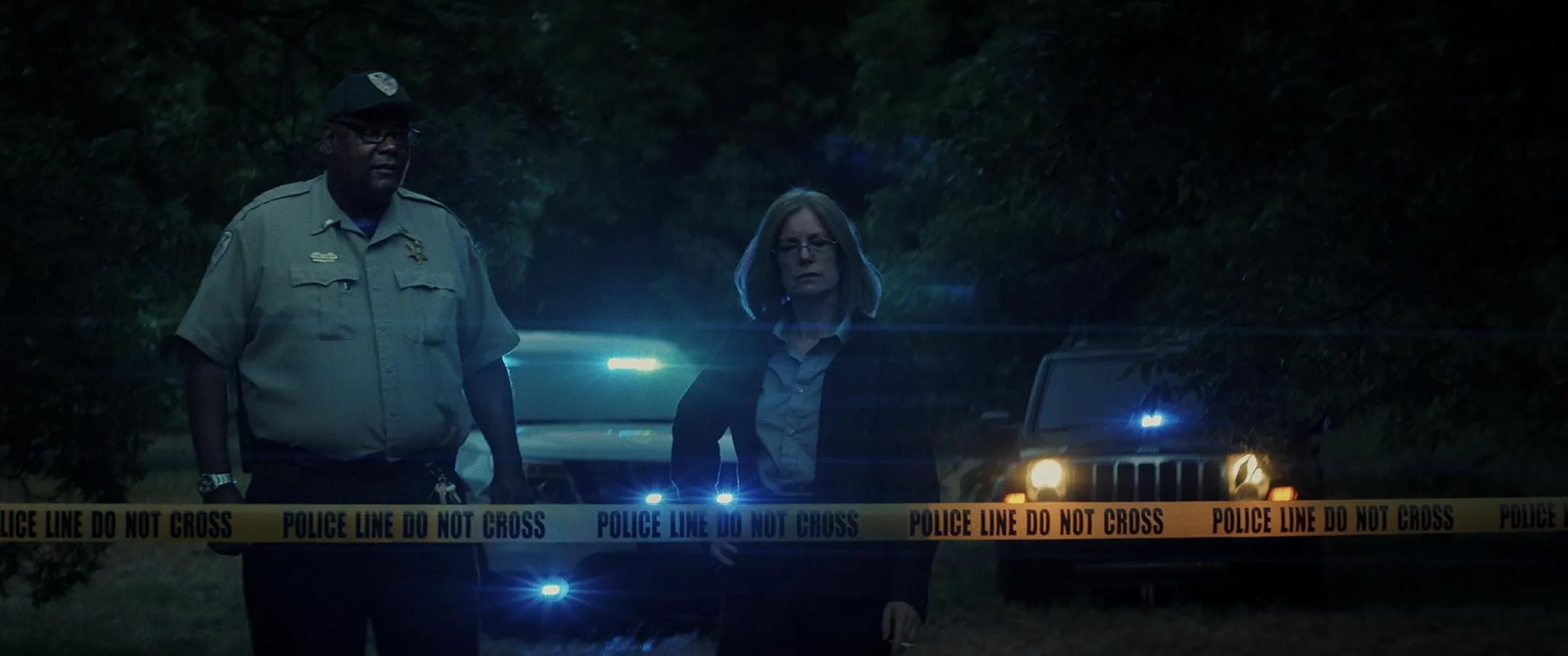
The loss of his eye becomes a potent symbol of his compromised vision, his inability to see the full truth of his own role in the town’s affairs. His relationship with Jo, the local waitress, is a grasp for something earthly and real, a counterpoint to the failing, abstract tenets of his spiritual life.
He carries the weight of his decision to place the boy with the adoptive family, viewing the child’s death as a direct consequence of his own prideful intervention. This is not simple guilt; it is a profound theological crisis that forces him to question the very nature of divine will.
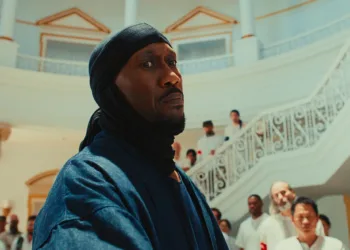
Sherman Augustus delivers a potent performance, inhabiting the priest’s spiritual torment with a heavy stillness. The weariness in his posture and the deep doubt in his gaze convey a long history of struggle. Through his character, the film gives its abstract questions a human form. He must balance the immediate injustice of the boy’s death against the distant echo of a half-century-old sin, looking for a form of grace in a world that offers little evidence of it.
Language of the Landscape
The film’s power is rooted in its potent aesthetic. The direction favors a contemplative, unhurried pace, building a sense of dread in the long, quiet moments where characters simply exist in the oppressive atmosphere. The cinematography is rich and deliberate, its style reminiscent of an American realist painting left to fade in the sun.
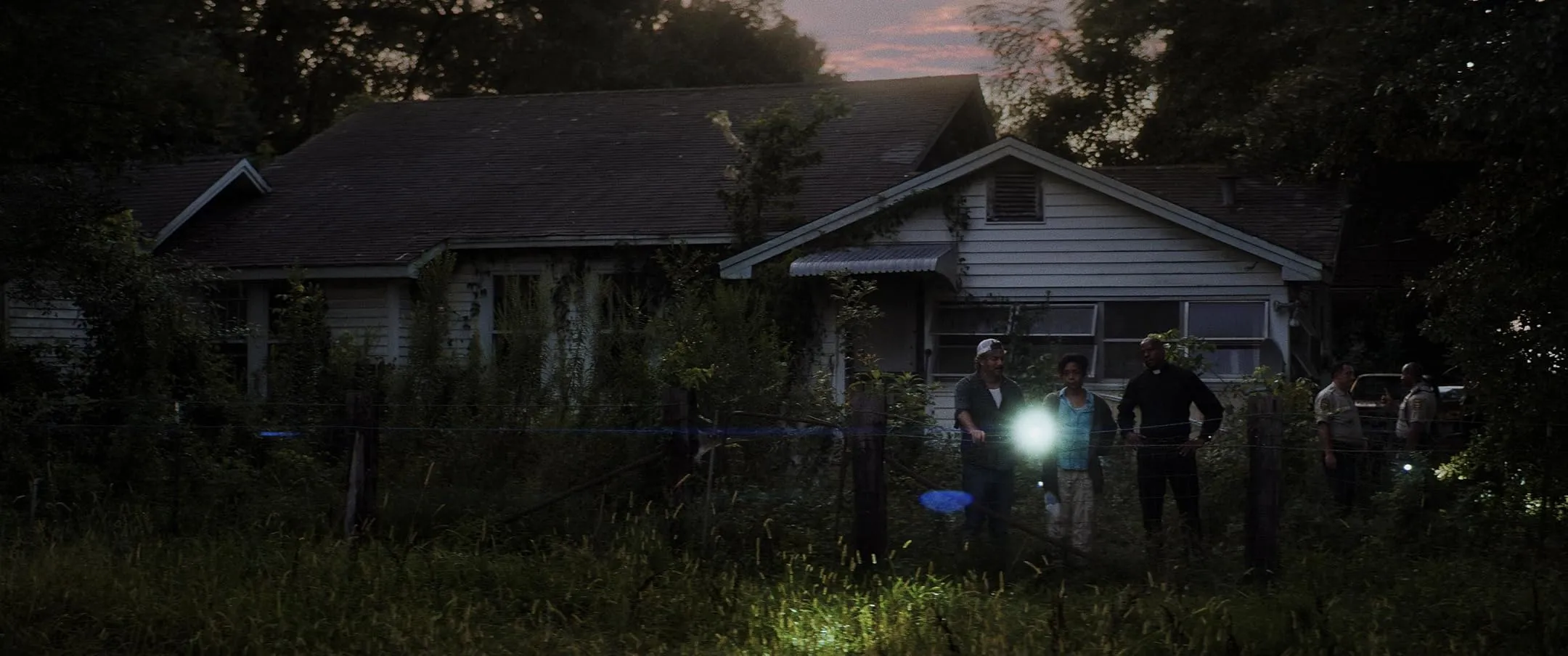
It captures the decay of the Mississippi setting with painterly shots of light cutting through dusty rooms and bruised, stormy skies. The film also touches on a kind of magical realism, blurring the line between the physical world and a metaphysical dread. Nightmares and waking visions suggest that divine wrath is not a distant threat but an active presence.
The sound design is a constant hum of authenticity. The drone of cicadas is not background noise but a sound of rising pressure, an agitating presence that mirrors the town’s anxiety. The sparse roots music provides a mournful, timeless quality.
The environment itself functions as a key character. The woods are a primal space of origin and destruction, existing outside the town’s control. The suffocating humidity and the dark clouds gathering on the horizon are the physical manifestation of the community’s moral sickness, reflecting its decay back at its inhabitants.
Full Credits
Director: Michael Stevantoni, Strack Azar
Writers: Michael Stevantoni
Producers: Michael Stevantoni, Strack Azar
Cast: Sherman Augustus, Karole Foreman, Ramsay Midwood, Keylor Leigh, Arianna Ngnomire, Justin Robinson, Diana Stevan, Woodrow Wilkins, Michael Stevantoni
Director of Photography (Cinematographer): Michael Stevantoni
Editors: Michael Stevantoni, Strack Azar
The Review
Death Letter Blues
Death Letter Blues is a demanding, atmospheric piece of Southern Gothic cinema. It forgoes the mechanics of a conventional mystery for a deep immersion into a world of moral decay. Anchored by a powerful lead performance from Sherman Augustus and a masterful command of mood, the film is a slow, contemplative meditation on faith, sin, and the possibility of grace. It offers no easy answers, instead leaving its disquieting questions to linger long after the credits roll. A rewarding watch for viewers who appreciate patient, philosophical filmmaking.
PROS
- A thick, potent Southern Gothic atmosphere.
- A strong, nuanced lead performance from Sherman Augustus.
- Rich, deliberate cinematography that captures the setting's oppressive beauty.
- A thoughtful exploration of complex themes like faith, justice, and accountability.
- Effective use of landscape and sound design to build mood.
CONS
- The very slow, methodical pacing may alienate some viewers.
- It deliberately avoids a conventional plot resolution, leaving mysteries ambiguous.
- Its contemplative nature may feel inert to those seeking a more direct thriller.