




















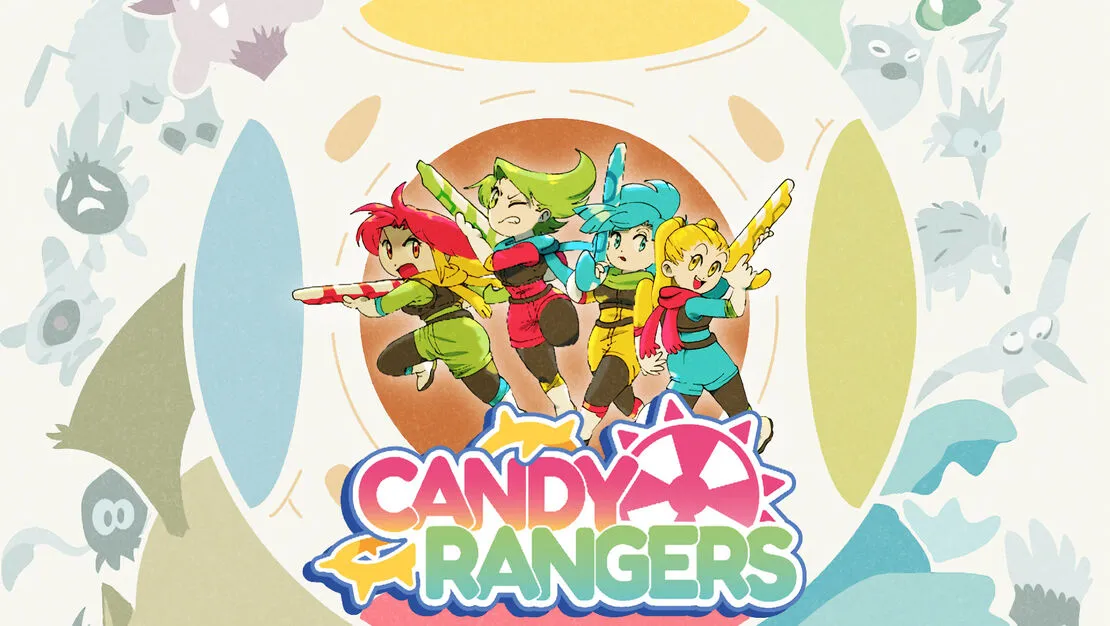

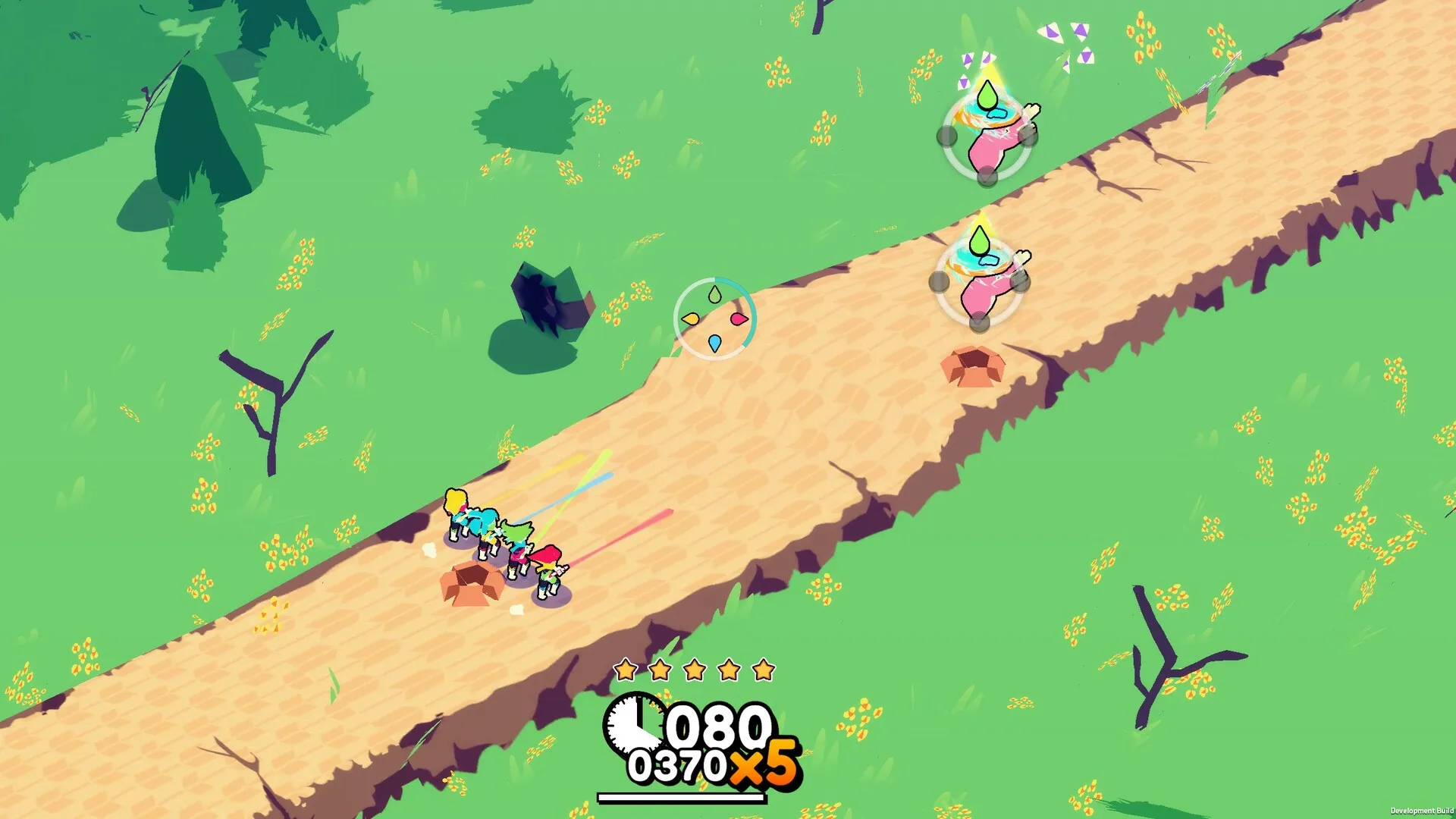
Candy Rangers, developed by Mechano and published by JanduSoft, arrives as a curious artifact in the on-rails shooter genre. The game asks players to control four characters simultaneously: Candy shoots sideways, Mint fires upward, Plum handles front and rear attacks, and Lemon clears diagonal formations.
Each character wields a candy cane-shaped weapon that doubles as a melee tool and grappling hook. This setup transforms what could be a straightforward rail shooter into something closer to a rhythm game’s demand for split-second pattern recognition.
The premise centers on fighting corrupted creatures called Unna, though the narrative framework feels secondary to the mechanical challenge. With 20 main stages, secret paths, and four boss encounters, the game operates firmly within arcade sensibilities. The color-coding system ties each character to a specific controller button, creating a visual language that recalls the deliberate clarity of Japanese arcade cabinets from the 1990s.
This design philosophy prioritizes legibility during chaos, a principle that has migrated from Taito and Cave shooters into this contemporary indie space. The multitasking demand here represents less an evolution of the genre and something closer to a lateral experiment, testing whether players can maintain four simultaneous threads of action without collapsing into confusion.
The Semiotics of Color and the Politics of Attention
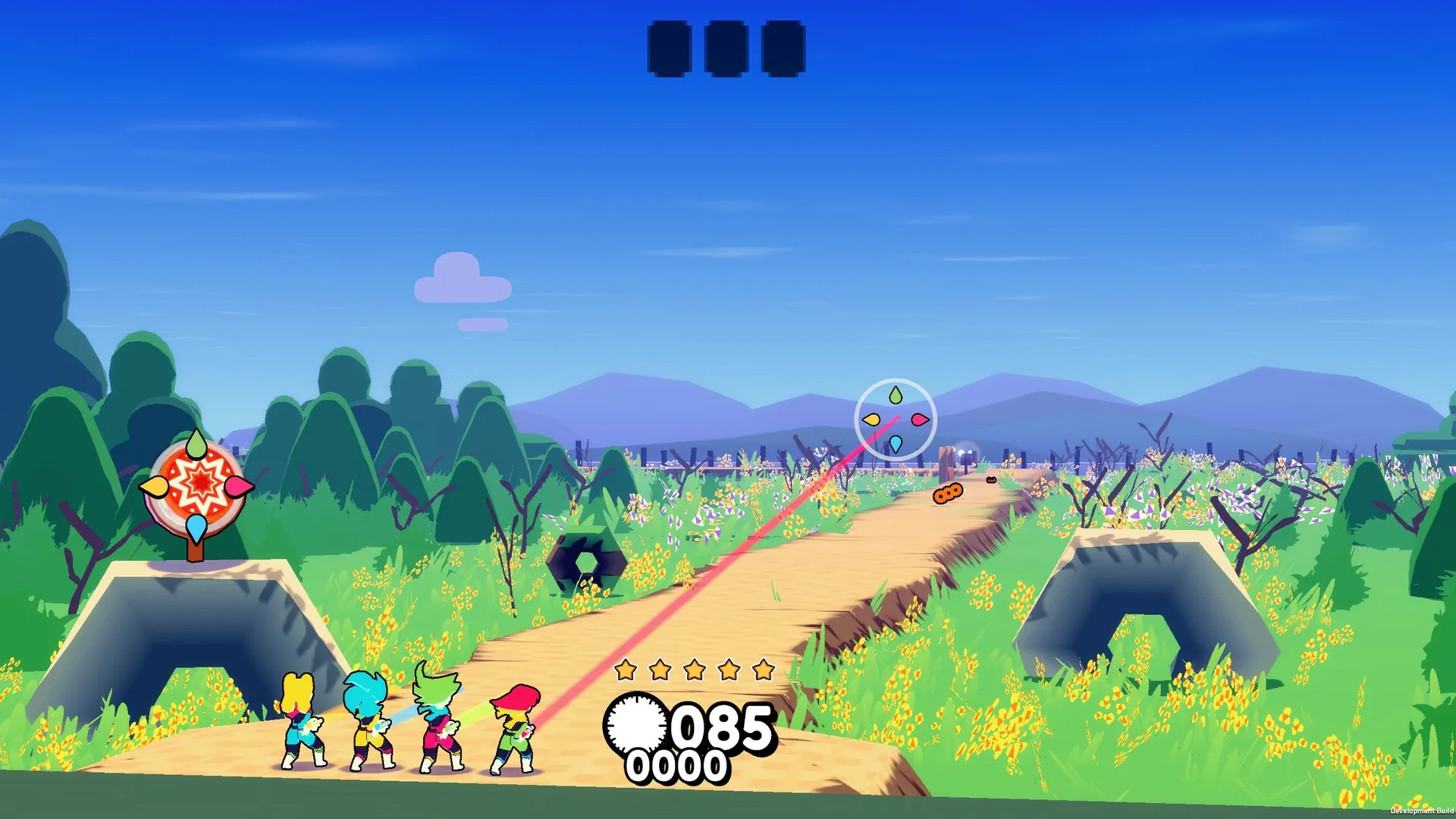
The control scheme functions as the game’s central thesis. Each character maps to a face button or D-pad direction, and enemies arrive marked with colored indicators showing which ranger should engage them. Matching character to target builds combo chains; mismatches eliminate threats but shatter the rhythm. This system borrows from both bullet hell shooters and music games, creating a hybrid that demands cognitive flexibility. The crosshair aiming adds a layer of precision that feels at odds with the fast decision-making elsewhere, suggesting a tension between Western shooter conventions and Eastern arcade design.
Also Read


Time management here carries ideological weight. Each stage imposes a countdown, typically 90 seconds, and damage subtracts five seconds per hit. Clock items scattered through levels restore 15 seconds, turning resource collection into a survival mechanic. The innovation lies in collapsing health and time into a single system. This design choice rewards aggressive play while punishing recklessness, creating what game theorists might call a “risk-compressed” environment. The player must constantly negotiate between caution and speed, a dialectic that feels particularly resonant given the game’s Japanese arcade heritage, where time pressure has historically functioned as both challenge and economic incentive.
The mechanical vocabulary expands beyond shooting. Melee attacks parry enemies, grappling hooks enable traversal, and jumping (including double jumps) navigates terrain. Dash and brake abilities offer movement control, though the jumping sequences sometimes cause characters to separate unpredictably. This inconsistency disrupts the rhythm the game otherwise establishes, introducing friction that feels less like intentional difficulty and something closer to systemic instability.
Progression relies on ranger medals, with over 50 hidden across stages. Players need approximately 50 to reach the ending, creating a collection mandate that gates forward momentum. Some medals sit visibly in paths, others hide in destructible containers, and certain ones require defeating specific enemies. The star ranking system (up to five stars) judges combo maintenance and clean execution. High scores unlock memory photos, artwork that gestures toward character interiority without fully developing it. This structure mirrors the arcade era’s attract-mode philosophy, where visual rewards substitute for narrative depth.
The learning curve demands patience. The first 30 minutes force players to rewire their response patterns, building muscle memory for color recognition and button mapping. Enemy patterns remain consistent across attempts, which aligns with the arcade tradition of mastery through repetition. This design philosophy assumes players will internalize spatial and temporal rhythms, transforming conscious decision-making into something closer to bodily reflex.
Visual Nostalgia and Sonic Repetition
The aesthetic channels 1980s and 90s anime, particularly the character design vocabularies of Sailor Moon and early Dragon Ball. Large expressive eyes, vibrant hair colors, and simplified body proportions situate the game within a specific strand of Japanese visual culture. Each ranger features distinct coloring for quick identification during action, while black outlines around characters and enemies create figure-ground separation against deliberately sparse environments. This minimalism serves functional purposes, preventing visual noise from interfering with split-second decisions.
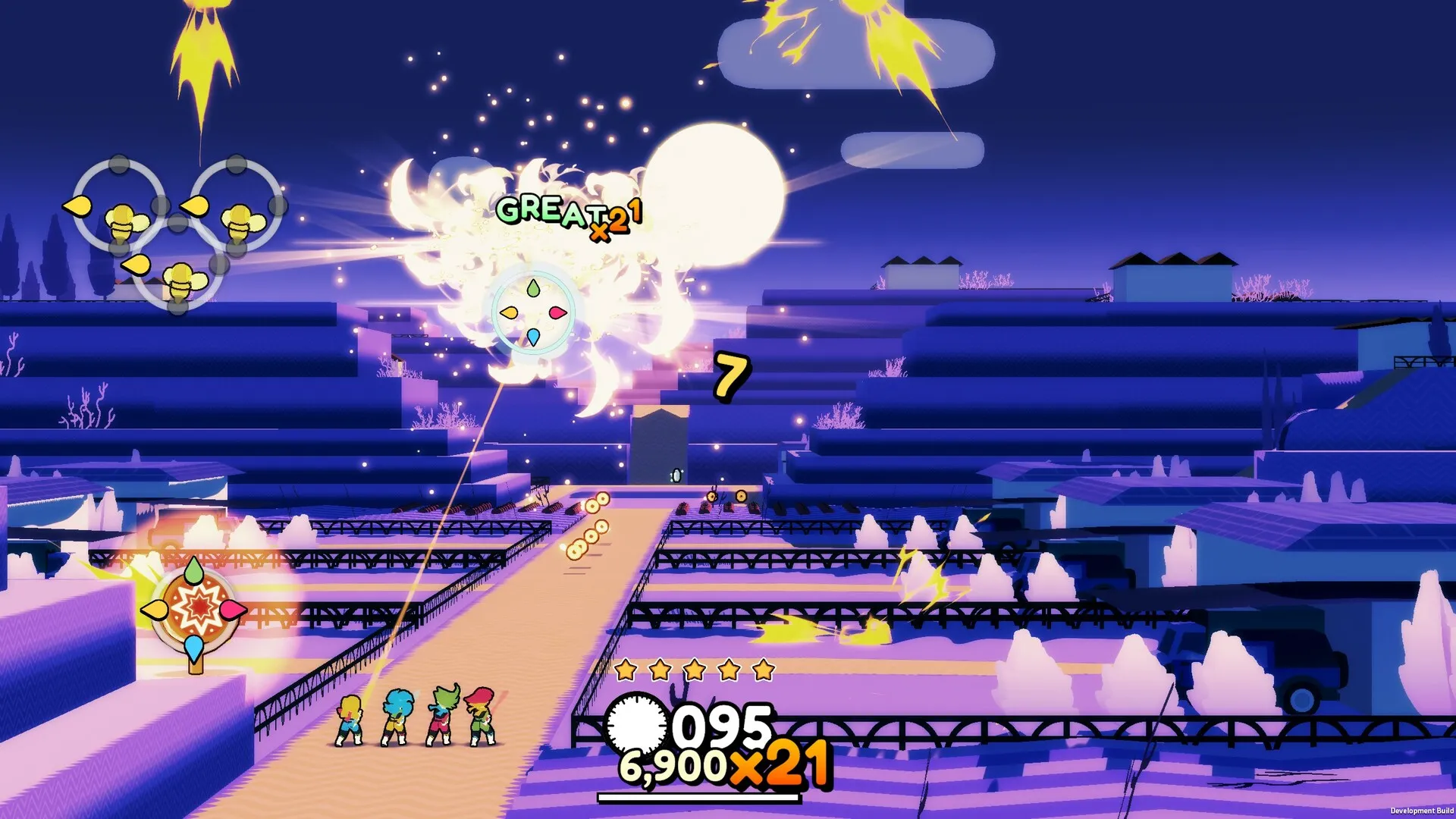
The memory photo artwork demonstrates stronger craft than the in-game visuals, offering glimpses of character backstory through static illustrations. These images hint at a narrative complexity the game never fully explores, functioning as paratextual supplements rather than integrated storytelling. The blurriness plaguing the graphics, particularly visible in timer displays and UI text, undermines the clarity the design otherwise seeks. This lack of crispness suggests either technical limitations or insufficient optimization, both of which compromise the arcade precision the game aspires toward.
The retro aesthetic reads differently depending on viewer positioning. For audiences familiar with 1990s anime OVAs and arcade culture, the style may evoke genuine nostalgia. For those without that reference frame, the presentation risks appearing cheap or dated, a common fate for works that traffic in pastiche without sufficient self-awareness. The line between homage and imitation remains uncomfortably thin here.
Musically, the game opts for upbeat, cutesy compositions that mirror the visual brightness. The score adapts to narrative moments, shifting to darker tones during serious encounters, though these modulations feel perfunctory rather than emotionally resonant. The limited track selection becomes apparent during extended sessions, revealing the repetition that plagues many small-budget productions. The sound design fits arcade conventions adequately, prioritizing functional clarity over atmospheric richness.
Technical performance introduces friction. Controller support exists for Xbox peripherals, though some configurations trigger remapping warnings and minor input lag. Keyboard and mouse controls function as viable alternatives, though the game feels conceptually designed for gamepad input. The unlockable character Inky reportedly causes crashes when loading certain levels, suggesting insufficient testing across all content. These issues, while not catastrophic, chip away at the polish required for precise arcade-style play.
Structural Contradictions and Cultural Gatekeeping
The game’s structure reveals conflicting design philosophies. Progression follows a map where players select stages at designated stopping points. The first world enforces punishing medal requirements, offering minimal margin for error. Reaching the initial boss demands near-perfect collection, and defeating that boss is mandatory for progression. This gating occurs precisely when the learning curve peaks, forcing players to replay the opening four or five levels extensively while still mastering the core mechanics.
Later worlds relax these restrictions dramatically. Medal requirements become lenient, stages become skippable, and even boss fights turn optional. This shift suggests the developers recognized the value of player agency but implemented it inconsistently. The early game’s rigidity reflects a particular strain of Japanese game design that prizes mastery through adversity, while the later flexibility aligns with contemporary Western preferences for accessibility and choice. The tension between these approaches never resolves, leaving the experience feeling structurally bifurcated.
The challenge, once players internalize the controls, proves surprisingly fair. Trial-and-error feels minimal, and stages can be completed without prior knowledge if approached cautiously. The time-as-health system creates meaningful risk-reward calculations, allowing players to choose aggressive or defensive strategies based on their skill confidence. This respect for player agency stands in productive tension with the early game’s restrictiveness, suggesting Mechano understood the importance of fair challenge even while stumbling on implementation.
The narrative framework involves Unna creatures and corporate automation threatening the rangers’ jobs. The story positions players as trainees proving their worth to a CEO who plans replacement via machines. This premise taps into contemporary anxieties about technological displacement, though the game never develops these themes beyond surface gestures. The final encounter pits players against the replacement machine, and the conclusion sees the rangers establishing their own system. This resolution feels perfunctory, a narrative closure that doesn’t emerge organically from the preceding events. The story reads as an afterthought, grafted onto a mechanical foundation that needed no narrative justification.
Arcade mode unlocks post-campaign, and hard difficulty sits available in the extras menu. Inky, the unlockable character who shoots omnidirectionally, theoretically eases completionist pursuits, though technical issues limit her utility. These additions feel like standard genre conventions rather than meaningful expansions of the core concept.
The game’s cultural positioning remains ambiguous. The anime aesthetics and arcade design principles signal Japanese influence, yet the execution feels divorced from the elegance of landmark titles in those traditions. Mechano appears caught between honoring genre conventions and innovating within them, achieving neither goal completely. The simultaneous four-character control scheme represents genuine experimentation, yet the surrounding systems feel derivative. This contradiction defines the experience: a fresh mechanical idea wrapped in overly familiar packaging.
Candy Rangers demands patience from players willing to push through a hostile first impression. The opening hours gate aggressively, pile on mechanical complexity rapidly, and offer little encouragement. Those who persist discover a game with clever level design and satisfying mastery curves. The control scheme, initially overwhelming, becomes intuitive through repetition. The experience transforms from frustrating to gratifying, though this transformation requires trust that many players may not extend.
The game appeals to a specific audience: fans of challenging, mechanically creative shooters who value skill expression over immediate accessibility. The visual presentation will alienate some while charming others, depending on their relationship to 1990s anime culture. The blurry graphics and technical hiccups prevent the game from achieving the polish its mechanical foundation deserves. Candy Rangers functions as a hidden gem in the literal sense, requiring excavation work that reveals something genuinely interesting beneath accumulated sediment. Whether that discovery justifies the dig depends entirely on individual tolerance for friction and faith in delayed gratification.
The Review
Candy Rangers
Candy Rangers houses a genuinely inventive control scheme within a package that actively resists discovery. The simultaneous four-character mechanic transforms into something elegant once mastered, yet the brutal early gating and visual blur undermine that potential. Mechano created a mechanically sound arcade experience hampered by structural contradictions and technical roughness. The game rewards persistence with satisfying skill expression, though asking players to endure harsh opening hours remains a significant ask. A flawed gem that could have shined brighter with better pacing and polish.
PROS
- Innovative four-character control scheme that becomes intuitive with practice
- Fair challenge design with meaningful risk-reward decisions
- Time-as-health system creates engaging tension
- Later levels respect player agency and choice
CONS
- Punishing early medal requirements create artificial barriers
- Blurry visuals compromise the clarity arcade gameplay demands
- Technical issues including controller lag and character-specific crashes
- Repetitive music and underdeveloped narrative
- Inconsistent jumping mechanics disrupt rhythm