


























Memory is rarely a faithful record. It is a haunting, a persistent ghost that shapes the present with the weight of what has been. Elaine Del Valle’s Brownsville Bred understands this spectral quality of the past, presenting not a straightforward memoir but a cinematic séance. The film summons the spirits of 1980s Brooklyn, a place of profound hardship and fierce vitality, to tell the story of a family defined by a love as potent as it is destructive.
At its center is the relationship between a young Puerto Rican girl, Elaine, and her father, Manny, a musician whose charisma is a blinding light and whose addiction is the encroaching darkness. The film is an exercise in emotional archaeology, digging through layers of pain and pride to uncover the difficult truths that lie beneath a daughter’s fractured adoration. It is a story about the ghosts we inherit and the ones we choose to live with.
The Heartbeat of the Film: A Fractured Father-Daughter Bond
Manny is a figure of dazzling, tragic complexity, a walking embodiment of the ethical gray zone. In the hands of Javier Muñoz, he is far more than a simple archetype of the flawed patriarch. He is the sun in young Elaine’s solar system, the source of all warmth, the man who fills their cramped apartment with the lifeblood of salsa and teaches her that their heritage is a thing of beauty.
Muñoz’s performance captures the profound appeal of a man who lives through music and affection, his smile a disarming weapon. This vibrant portrayal makes his descent into the shadows of addiction all the more harrowing. The film refuses to judge him outright, instead asking a more difficult philosophical question: to what extent can a person’s goodness coexist with the devastation they cause? Manny is a man whose love is authentic, yet his actions are poison. He is a ghost in his own life, present in form but absent in reliability, a constant source of both comfort and catastrophe.
Elaine’s emotional trajectory is a meticulous study in disillusionment. The film traces her journey from the pure, uncomplicated adoration of childhood to the bitter knowledge that shatters that innocence. The narrative’s pivotal act—sending a teenage Elaine to Puerto Rico for a forced reconciliation—functions as a symbolic voyage. It is a physical displacement that mirrors her internal exile, a journey not toward a sunny paradise but into the humid, complicated heart of her family’s pain.
The island, rendered in warm, saturated hues, stands in stark visual opposition to the cold, blue-gray palette of the Brooklyn projects. This contrast underscores Elaine’s dilemma, pitting the idealized warmth of her heritage against the hard reality of her upbringing. The trip becomes a crucible, forcing a confrontation that redefines their bond not as a simple healing but as a tense, ongoing negotiation with an unforgivable past. True reconciliation remains elusive, replaced by the pragmatic acceptance of a wound that will never fully close.
A Portrait of a Place, a Time, and a Culture
The film renders 1980s Brownsville not merely as a backdrop but as a living, breathing character. It is a crucible of brick and concrete, a place where the air is thick with the sounds of struggle and survival. Del Valle’s direction sidesteps the clichés of urban decay, instead finding a raw, unsentimental beauty in the textures of the community. The visual strategy is key.
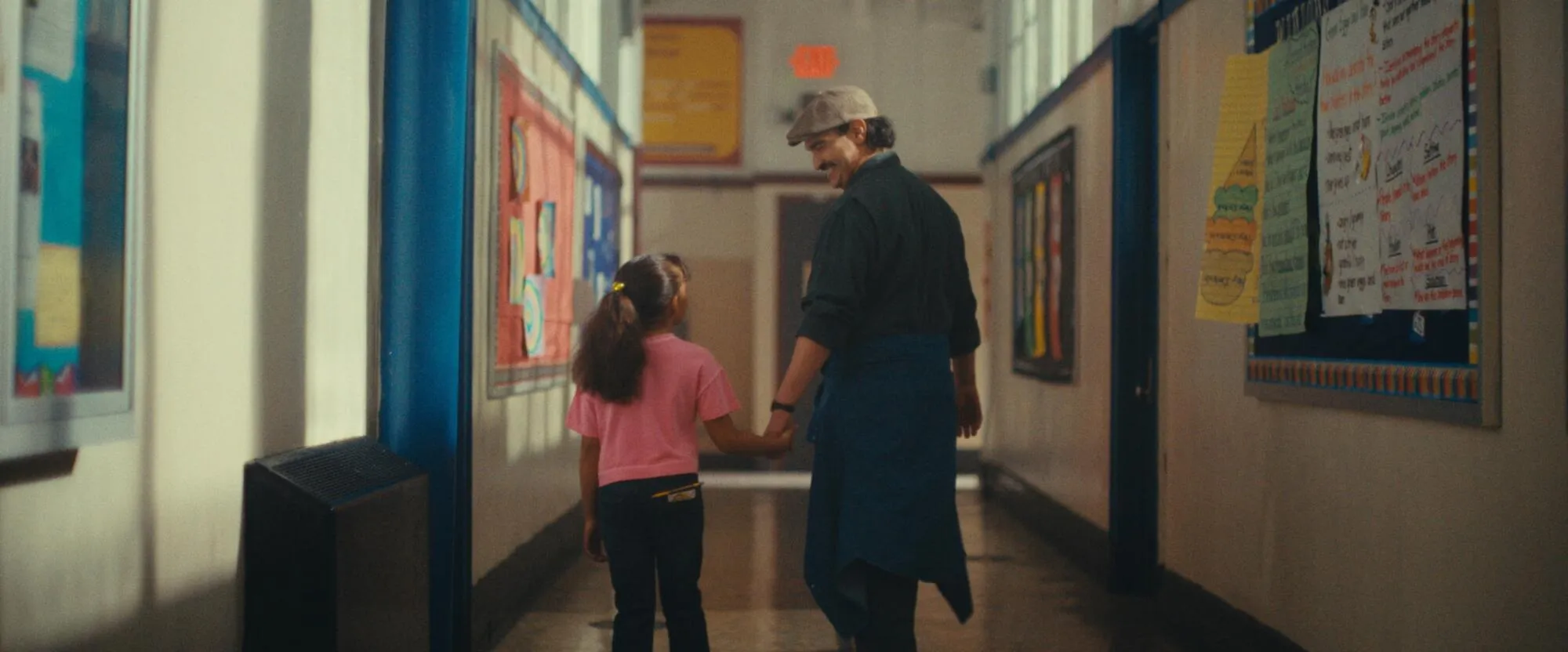
An agitated, handheld camera follows the characters through crowded hallways and chaotic streets, creating a sense of vérité immediacy. This technique denies the audience the comfort of objective distance, trapping us within Elaine’s claustrophobic, often frightening, point of view. The composition frequently uses door frames and barred windows to create expressionistic frames within the frame, underscoring a feeling of both physical and psychological entrapment. Brownsville is simultaneously a prison and a sanctuary, a landscape that confines its residents while forging in them an unbreakable resilience.
The film’s power is rooted in its profound cultural specificity. It is an unapologetic assertion of a working-class Puerto Rican identity, a story told from within, for which it makes no apologies. Music becomes the primary language of this identity. The vibrant rhythms of salsa are the sound of Manny’s spirit, a link to the homeland and a source of communal joy.
In contrast, the emergent beats of early hip-hop on the streets represent Elaine’s world, the sound of a new generation forging its identity in the American inner city. This sonic counterpoint articulates the generational and cultural tensions that simmer beneath the surface of the family’s drama. By focusing so intently on these details, the film becomes an act of narrative reclamation. It refuses the generic, homogenized representation of Latinx life so common in cinema and instead offers a portrait that is intricate, specific, and alive with its own undeniable truth.
Narrative Choices and Emotional Resonance
The script’s decision to remain almost exclusively within Elaine’s perspective is both its greatest strength and its most notable limitation. This tight focus creates an intense, subjective experience, forcing us to see the world through the narrow aperture of a child’s understanding and a teenager’s wounded pride. The result is a powerful emotional core.

However, it also populates the film’s periphery with ghosts. Supporting characters, most notably Elaine’s stoic, endlessly resilient mother, are rendered as figures of immense importance but are viewed only from a distance. We observe her strength and her pain, but we are never granted access to her interior world. This choice leaves the narrative landscape feeling somewhat incomplete, a world of planets orbiting a single, blazing sun. The film sacrifices a wider, more populated universe for a deeper dive into one specific psychological bond.
This subjective lens may also explain the film’s sometimes-uneven emotional tenor. For a story built on such volatile material, some of its most critical moments are delivered with a strange, almost clinical calm. A devastating revelation lands not as a dramatic explosion but as a quiet, matter-of-fact statement. This could be seen as a dramatic misstep, a failure to fully capitalize on the scene’s potential.
Alternatively, it can be interpreted as a psychologically astute choice. It reflects the way memory often works, particularly when processing trauma. The mind sometimes strips a catastrophic event of its emotional weight to make it bearable. What feels like a muted delivery might be an honest depiction of dissociation, a quiet horror that is more chilling than any overt display of anguish would be.
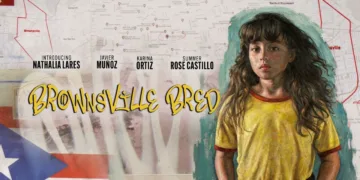
Brownsville Bred is a coming-of-age drama set in the 1980s in the titular neighborhood of Brooklyn, New York. The film is an autobiographical story by director Elaine Del Valle, centered on the main character, Elaine, a spunky and imaginative Puerto Rican girl on the cusp of her teenage years. She must navigate the challenges of her underprivileged and often chaotic neighborhood, her family’s resilience, and the process of discovering her Puerto Rican roots. The feature film had a US theatrical release date of September 19, 2025, and was distributed by Viva Pictures/Viva Entertainment, following earlier successful iterations as a stage show and short film.
Full Credits
The Review
Brownsville Bred
A raw and deeply personal cinematic séance, Brownsville Bred is a haunting examination of a fractured paternal bond. Anchored by a masterful performance from Javier Muñoz, the film's strength is its unflinching, subjective focus. This intimacy, however, comes at a cost, rendering its supporting characters as faint specters in a world defined by a single, searing relationship. It is a powerful, if narratively constrained, piece of filmmaking that resonates with the uncomfortable honesty of a half-remembered wound.
PROS
- A complex, magnetic, and deeply human central performance by Javier Muñoz.
- An authentic and culturally specific portrait of 1980s Brownsville and its Puerto Rican community.
- The intense and emotionally honest focus on the father-daughter relationship serves as a powerful anchor.
- Effective visual storytelling creates an immediate and subjective viewer experience.
CONS
- Supporting characters are significantly underdeveloped, existing only on the periphery of the main story.
- The tight narrative focus makes the film's world feel small and at times incomplete.
- The emotional impact of several key dramatic scenes feels muted or inconsistent.
- Interesting subplots are introduced but are ultimately left unexplored.