











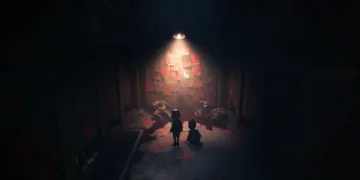










The act of turning a camera on one’s own family is a dangerous form of prayer. It is a plea for understanding addressed to a silent witness, a hope that the mechanical eye might capture a truth that human eyes, clouded by love and resentment, can no longer see. Such an act risks transforming memory into evidence and turning a home into a set.
Myrid Carten’s A Want in Her is a film that lives entirely within this perilous space, a document born from the filmmaker’s descent into the maelstrom of her mother Nuala’s existence. Here, the camera is not a tool for objective record but a shield, a probe, and a final, desperate form of connection.
Carten films her mother’s life, a life fractured by bipolar disorder and alcoholism, and in doing so, she charts the desolate territory where the duties of a daughter bleed into the demands of an artist. The result is a work of raw, confrontational intimacy, a portrait of a family in Ireland where the roles of caregiver and cared-for have become a ruinous inversion, leaving only the question of what can be salvaged from the wreckage.
Ghosts in Every Corner
Nuala exists as a living paradox, a woman haunted by the person she once was. The film offers glimpses of this former self through archival footage, a composed and capable social worker whose articulate presence makes her current state all the more tragic. This ghost of competence lingers, surfacing in flashes of lucidity and sharp insight even as she is consumed by the cyclical fog of her afflictions. She is both the intelligent woman who understands her condition and the person powerless to escape it.
This is not a solitary decline. The decay is familial, a contagion that has settled deep into the household’s bones. Her brother Kevin embodies the profound exhaustion of the reluctant guardian, his anxiety a constant, low hum beneath the film’s surface. Another brother, Danny, has retreated so completely into himself that he appears as a mere lump beneath duvets, a figure of near total surrender. The family home they share is less a setting than a tomb.
Carten’s camera glides through its corridors with a spectral slowness, tracing the architecture of sorrow. It lingers on stained wallpaper and cluttered surfaces, treating the house as a physical archive of unspoken grief and a temporal trap from which no one can fully escape. Within these walls, conversations about the past become claustrophobic loops, psychic dead ends where the air grows thin with unspoken histories and the palpable weight of Nuala’s unpredictable presence.
Also Read





Performing the Wound
To capture a life so splintered, Carten rejects linear narrative for a form that is itself broken. The film’s structure reflects the disorienting logic of trauma, shifting between past and present without warning and denying the viewer a stable footing. Old home videos appear not as sentimental relics but as scenes of psychic conditioning. We witness a young Myrid performing sketches of adult dysfunction, a child’s chilling attempt to master a chaotic world by rehearsing its pains.

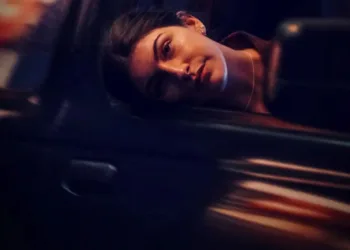
This impulse to perform finds its most disturbing expression in Nuala herself. In a moment of unsettling complicity, she agrees to re-enact her own collapse for the camera, lying in a road at night as if a character in her own tragedy. The scene interrogates the very nature of documentary truth, blurring the line between authentic suffering and its conscious representation. Is this an act of agency or a deeper form of submission to her own story?
Carten pushes this formal exploration further with auditory devices that challenge our sense of selfhood. She lip-syncs to recordings of her mother’s voice, a daughter’s unsettling attempt at radical empathy, a desire to understand a mind by speaking its words. Her own visibility in the film, a fleeting image at an editing desk, serves as a crucial confession: there is no objective position here, only the unflinching perspective of someone inside the storm.
A Foundation of Shards
The film’s moral weight is anchored by a significant refusal. Carten chooses not to film her mother while inebriated, a decision that elevates the project beyond exploitation. This is not a failure of journalistic nerve but a conscious choice to define the work by what it will not show. By prioritizing a daughter’s duty over a director’s impulse for spectacle, she offers a different kind of truth, one that finds its power in restraint and its honesty in the delineation of boundaries.
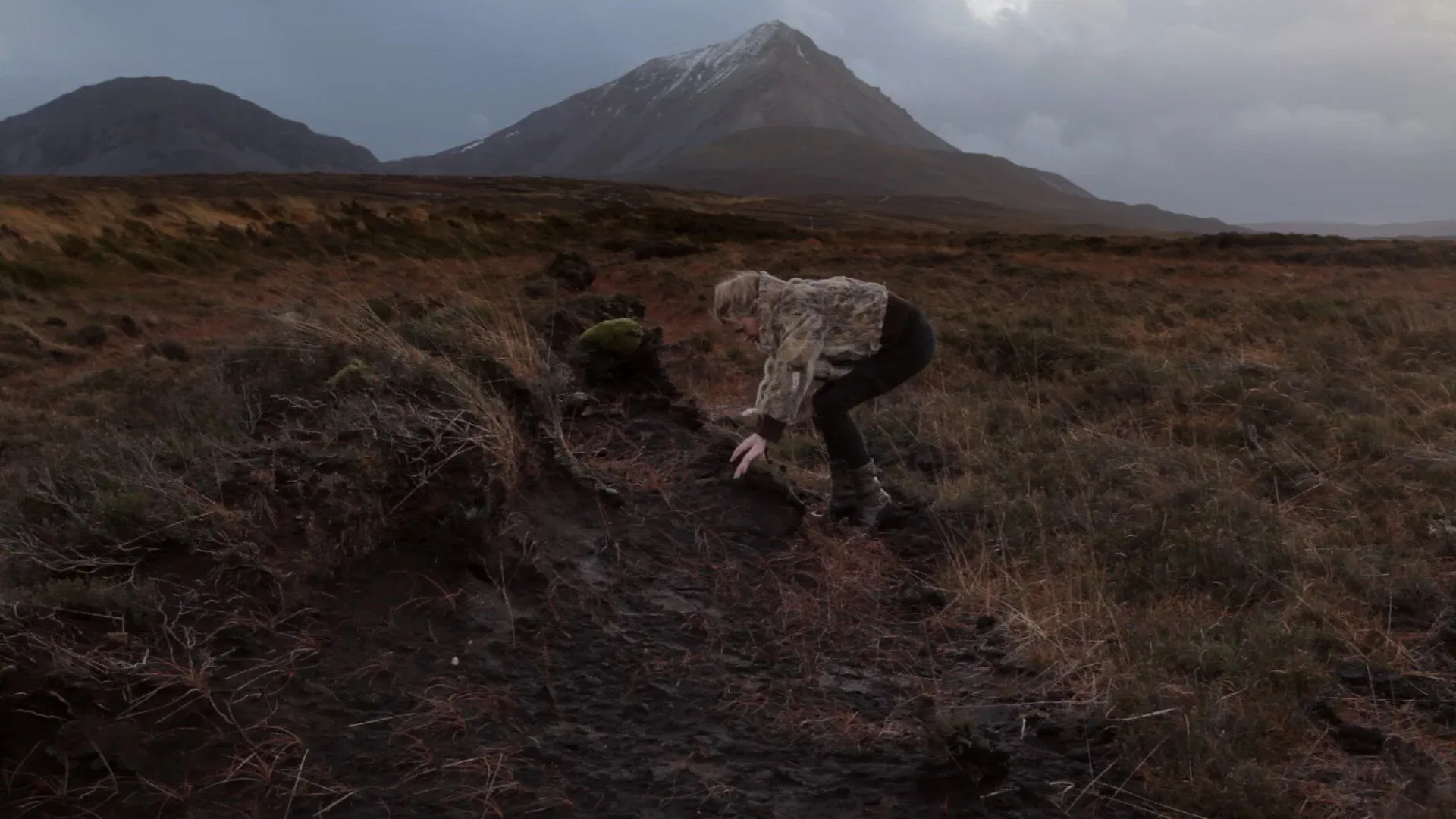
Consequently, the film presents no clear path to recovery, no comforting narrative of redemption. Its strength is in its commitment to the messy, unresolved state of being that defines chronic illness and addiction. It offers presence instead of a solution. The story’s arc bends toward the difficult recognition of limits, highlighting the preservation of the self as a necessary, if painful, act.
The conclusion is not a reconciliation but the quiet aftermath of a difficult choice. It is a hard-won stillness, a space cleared by a necessary departure. The final shot suggests no clean resolution, only the possibility of a new foundation, a ground cleared of rubble from which something else might have a chance to grow.
A Want in Her is a 2024 documentary film that had its world premiere at the International Documentary Film Festival Amsterdam (IDFA) on November 15, 2024. The film follows Irish filmmaker Myrid Carten as she returns home after receiving unsettling news that her mother, Nuala, an alcoholic, has disappeared. It is an immersive, first-person account of their complex mother-daughter relationship, trauma, and addiction, incorporating intimate phone recordings, home movies, and performative elements. The film is an Irish-British-Dutch co-production. It is scheduled for a theatrical release in Ireland on October 10, 2025. For viewers in the United Kingdom, it has been screened at film festivals like the Sheffield Doc/Fest and the Glasgow Film Theatre. Streaming availability has not yet been announced as of the film’s initial festival run.
Full Credits
Director: Myrid Carten
Writers: Myrid Carten
Producers and Executive Producers: Roisín Geraghty, Kat Mansoor, Tadhg O’Sullivan, Eline van Wees
Cast: Myrid Carten, Nuala (Carten’s mother)
Director of Photography (Cinematographer): Myrid Carten, Donna Wade, Sean Mullan
Editors: Karen Harley
Composer: Clarice Jensen
The Review
A Want in Her
A Want in Her is a raw, unflinching descent into the complexities of familial duty and addiction. Myrid Carten rejects simple narratives for a formally daring, emotionally brutal kind of filmmaking that is both confession and document. Its fragmented nature and refusal of a clear resolution will challenge viewers, but its profound honesty and the difficult beauty of its composition mark it as a significant, unforgettable work. It is a powerful meditation on survival and the painful necessity of looking away in order to finally see.
PROS
- The film presents a raw and unfiltered look at the reality of addiction and mental illness without sentimentality.
- Its use of fragmented editing, re-enactments, and archival footage creates a powerful subjective experience that mirrors its subject's fractured reality.
- It masterfully explores the contradictory feelings of love, resentment, duty, and the need for self-preservation.
- The film thoughtfully engages with the complex moral questions of a filmmaker documenting their own vulnerable family member.
CONS
- The non-linear and sometimes circular narrative can be disorienting and may frustrate viewers seeking a conventional story.
- The film's intensity and unflinching depiction of suffering make it a demanding and often painful viewing experience.
- Its refusal to offer easy answers or a neat conclusion may leave some viewers feeling unsatisfied.