

























![Kingdom Hearts Collection [I-III] Review](https://gazettely.com/wp-content/uploads/2026/10/Kingdom-Hearts-Collection-I-III-1-360x180.webp "Kingdom Hearts Collection [I-III] Review: KHII Holds Steady as Newer Entries Fluctuate 37")



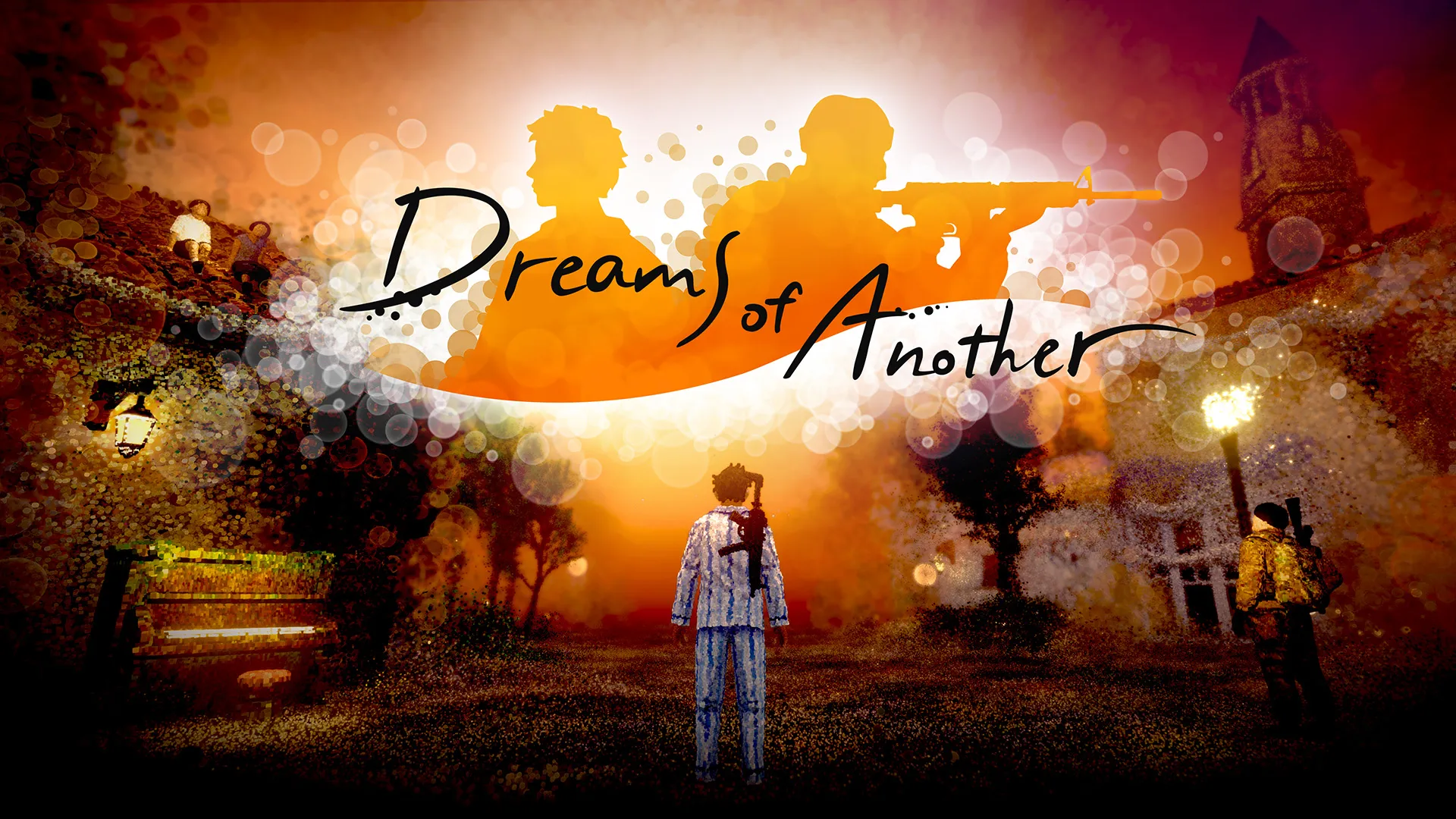

Dreams of Another arrives from Q-Games and director Baiyon, the creative mind behind PixelJunk Eden, carrying an ambitious premise that inverts traditional game violence. You step into the role of the Man in Pajamas, wandering through a realm constructed entirely from colored particles and geometric fragments. Here, weapons don’t destroy.
They create. Every bullet fired from your assault rifle forces the abstracted environment to materialize, transforming clouds of dots into recognizable shapes like trees, doorways, and people. This point cloud technology renders a world that exists between states, always threatening to dissolve back into formlessness.
The Wandering Soldier accompanies you throughout, unable to fire weapons himself after a traumatic opening sequence. He serves as both narrative anchor and gameplay mechanic, accepting collected items in exchange for upgrades. The game positions itself as an artistic exploration of existentialism, creativity, and the human condition, wrapped in dreamlike surrealism.
Completing the experience takes roughly eight to ten hours, with PlayStation VR2 support offering an alternative perspective on the abstract landscapes. The setup promises something different from conventional gaming experiences, leaning heavily into its philosophical ambitions and unconventional visual style.
Shooting Reality Into Existence
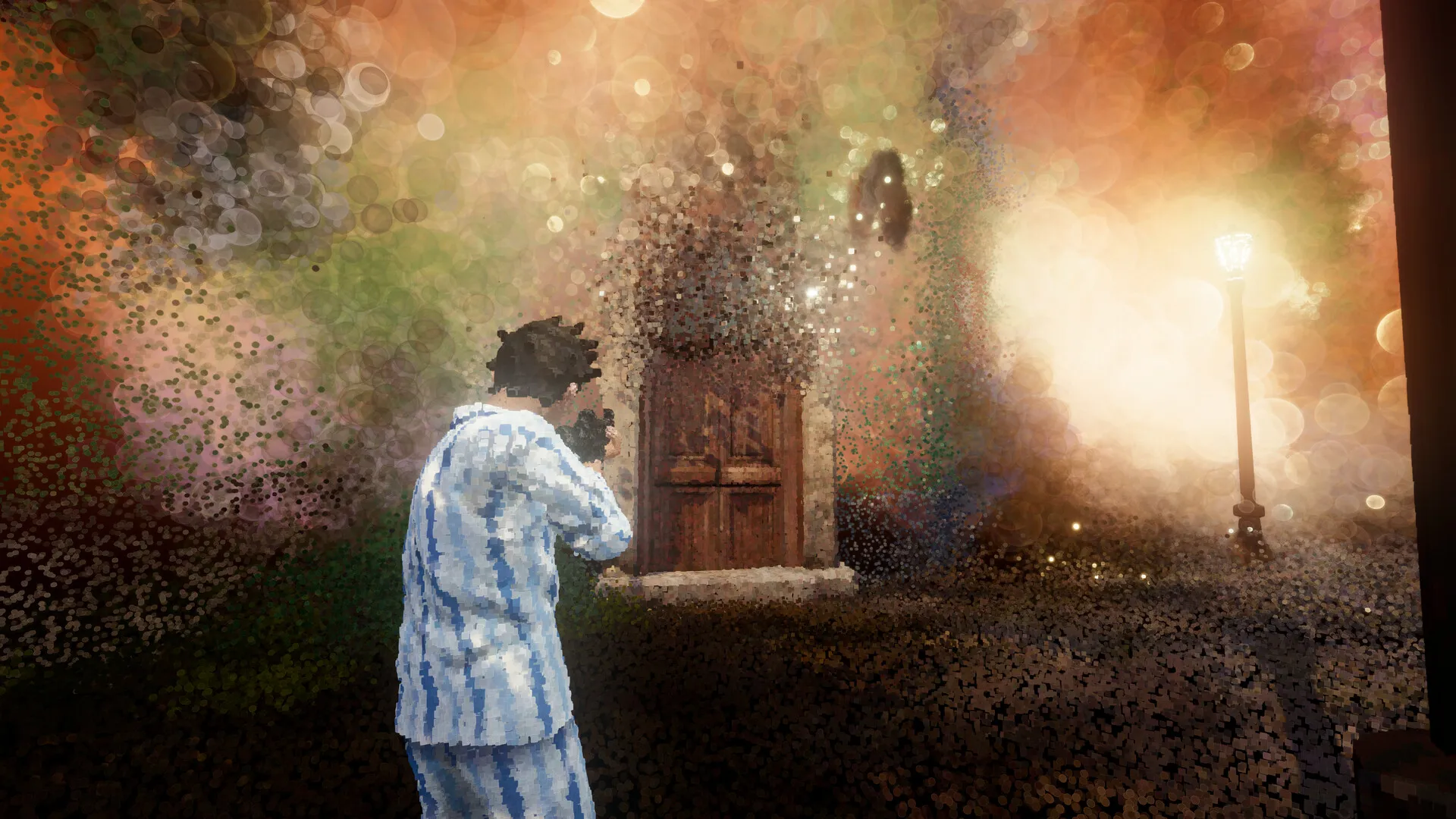
The core mechanic revolves around transforming abstracted space into tangible form. Everything exists in a clouded state until you shoot it. Movement through these obscured areas feels sluggish and disorienting. Firing your weapon cuts through the haze, forcing circular and square fragments to coalesce into solid objects. The sensation mirrors games like Powerwash Simulator in how it satisfies that compulsion to clear and reveal. You can spray bullets in wide arcs for quick progress or methodically target every cluster for thorough materialization.
This “destruction as creation” concept works well initially. Watching chaos snap into recognizable shapes carries genuine appeal. The issue emerges from how the game structures progression. Stories divide into smaller scenes across recycled environments. You’ll complete an objective in a town square, get kicked back to the main menu, then return to that same square with different goals. The game cycles through perhaps four or five locations repeatedly across its runtime. Each scene ends abruptly, breaking immersion before the next segment loads. This chopped-up delivery creates disorientation that feels less dreamlike and more jarring.
Progress varies between simply walking to a beacon and talking to specific characters or objects. The game offers minimal guidance about which approach applies, leading to confusion when you’re stuck because you missed talking to a particular bench or doorway. Enemy objects occasionally appear to shatter reformed areas, requiring you to shoot their auras repeatedly to “calm” them. These encounters lack challenge or threat, serving as minor pacing interruptions rather than meaningful obstacles. If your form splits apart from damage, you restart the current area, though sections stay short enough to minimize frustration.
The collection and upgrade system provides some relief from repetition. Scattered items like broken pottery, discarded rings, and empty bottles can be traded with the Wandering Soldier. These exchanges unlock weapon upgrades, special ammo, and abilities like sprint or dash. The improvements matter significantly. An upgraded weapon transforms the tedious process of shooting every fragment cluster into efficient room-clearing blasts. Enhanced sprint turns plodding movement into smooth traversal. Without these upgrades, the core loop feels like busywork. With them, it becomes tolerable.
The problem lies in how limited variety remains even with all upgrades unlocked. You’re still performing the same action across the same spaces for hours. The mechanic lacks the depth to sustain engagement through ten hours of gameplay. New Game Plus exists for completionists seeking missed dialogue or collectibles, but the prospect of repeating this process feels exhausting rather than enticing. The initial satisfaction of materializing the world fades as familiarity breeds tedium.
Philosophy Without Nuance
The opening sequence establishes promising tension. You control the Wandering Soldier during combat, watching him freeze when the moment comes to fire. Even with a gun pointed at his head, he can’t pull the trigger. The enemy mocks his cowardice before shooting him. This moment should catalyze everything that follows. Instead, the game immediately pivots to the Man in Pajamas, who wields the soldier’s gun without hesitation or moral complexity.
Multiple character stories interweave across the nonlinear narrative. The Man in Pajamas encounters others whose existential struggles mirror his own, though the connection remains vague and underdeveloped. The game scatters roughly 200 talking objects throughout its environments. You speak with doors, trees, benches, and discarded items, each offering philosophical observations about existence and purpose. A door asks whether it exists to open or to close. A tree discusses how perspective determines what counts as up or down. These musings aim for profundity but land closer to student philosophy lectures.
The themes tackle heavy subjects: life and death, creativity and destruction, legacy and purpose, modern anxieties about replacement by machines. The game wants to explore what we create, what we leave behind, and whether any of it matters when our time is finite. These questions deserve serious treatment. What Dreams of Another delivers instead feels like surface-level contemplation dressed in pretentious language. The writing tells you what to think rather than creating space for interpretation. Every concept gets spelled out explicitly, leaving no room for personal discovery or meaning-making.
Voice acting compounds these issues. Performances sound deliberately flat and monotone, actors reading lines without inflection or emotion. This choice serves the dreamlike atmosphere but grows grating across multiple hours. The droning delivery makes engaging with dialogue actively unpleasant during extended sessions. Some might argue this intentional flatness enhances the surreal quality. In practice, it makes listening to characters feel like a chore rather than an invitation to reflection.
The pacing suffers from constant menu interruptions and story threads that overstay their purpose. Certain narratives reach their obvious conclusions early, then continue for several more scenes before finally ending. The game’s structure forces you back to the main menu between segments, fracturing any momentum or immersion you’ve built. Beautiful moments exist within this framework: funny exchanges, somber realizations, genuinely touching character beats. The disjointed delivery undermines them all. You’re watching someone else’s dream unfold rather than experiencing your own.
Painterly Pixels and Ambient Soundscapes
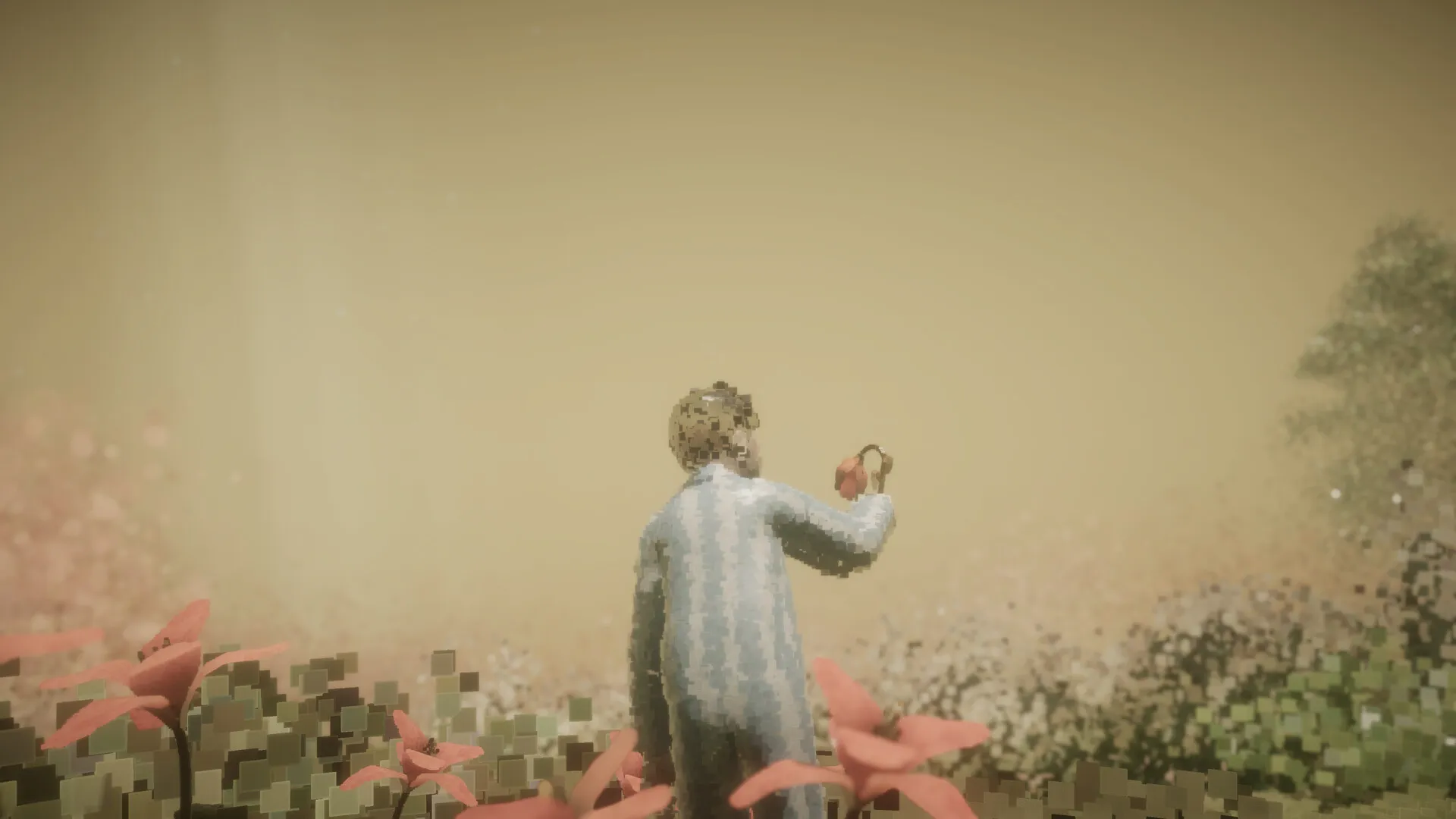
The visual presentation stands as Dreams of Another’s strongest achievement. Point cloud technology creates something genuinely distinctive: thousands of dots and fragments forming a painterly, impressionistic world. The aesthetic blends PS1-era voxel styling with modern rendering techniques, giving everything an ethereal quality where shapes blur and solidify depending on your actions. Watching abstraction coalesce into recognizable forms remains visually impressive throughout, even when the gameplay itself grows stale.

The art direction integrates seamlessly with core mechanics. Using destruction to reveal creation makes sense when the world exists in this perpetual state of forming and unforming. The visual language communicates gameplay clearly while maintaining its artistic vision. VR2 support amplifies the immersion for those with access, though this alone doesn’t justify purchasing the hardware. Existing headset owners gain another worthwhile experience to explore.
Baiyon’s soundtrack matches the visual quality. Soft, atmospheric compositions drift in and out, haunting locations without demanding attention. The music never intrudes or overwhelms, maintaining a dreamlike ambience that supports the experience rather than defining it. Menu music proves particularly soothing, pleasant enough to leave playing during breaks. The audio design succeeds at establishing mood where other elements falter.
Technical performance stays mostly stable at 60 FPS, though frame rates occasionally dip during intense materialization sequences. Camera controls can be finicky, fighting against smooth movement in tighter spaces. Voice acting suffers from inconsistent mixing, with some lines barely audible while others blast through clearly. More concerning are bugs where dialogue plays out of sequence, mismatched with subtitles in ways that create confusion about what’s actually happening in a scene. These issues break immersion, though the gameplay lacks enough complexity for technical problems to severely hinder progress.
Final Verdict
Dreams of Another constructs an intriguing facade from its unique visuals and inverted violence mechanics. The promise of shooting to create rather than destroy carries initial appeal, and the point cloud aesthetic delivers something genuinely fresh. Beneath that surface, however, lies an experience that can’t support its own ambitions. The philosophical writing comes across as pretentious rather than profound, spelling out themes without trusting players to find meaning themselves. The core gameplay loop grows repetitive quickly, recycling the same environments and mechanics across too many hours without meaningful variation.
Your tolerance for constant existential musings will determine how much value you extract here. If the themes resonate and you find depth in the philosophical dialogue, there’s potential for meaningful self-reflection. If you approach it focused purely on mechanics, you’ll discover something initially satisfying that wears out its welcome. The disjointed structure fragments any momentum, making the experience feel like watching someone else’s dream rather than participating in your own.
The brief runtime prevents complete exhaustion, and the presentation quality deserves recognition. For players seeking artistic, meditative experiences willing to overlook significant structural flaws and pretentious dialogue, Dreams of Another offers something different from mainstream gaming. Those wanting substantive gameplay satisfaction or coherent narrative delivery should approach with caution. The game reaches for profundity but settles for surface-level philosophy wrapped in beautiful visuals and tedious repetition.
The Review
Dreams of Another
Dreams of Another delivers striking visuals and an inventive core mechanic that quickly loses momentum. The point cloud aesthetic impresses, and Baiyon's soundtrack creates genuine atmosphere. However, repetitive gameplay across recycled environments, pretentious philosophical dialogue, and disjointed pacing undermine the experience. The writing tells rather than shows, spelling out every theme without room for interpretation. Technical polish wavers with inconsistent audio mixing and occasional bugs. This artistic experiment prioritizes style over substance, offering initial intrigue that fades into tedium.
PROS
- Stunning point cloud visuals with unique painterly aesthetic
- Excellent atmospheric soundtrack
- Inventive "shoot to create" core mechanic
- Strong art direction that integrates mechanics and visuals
- VR2 support enhances immersion
CONS
- Repetitive gameplay that grows tiresome quickly
- Pretentious, surface-level philosophical writing
- Disjointed structure with constant menu interruptions
- Flat, droning voice acting
- Limited environmental variety across recycled locations
- Technical issues with audio mixing and dialogue bugs







