

























![Kingdom Hearts Collection [I-III] Review](https://gazettely.com/wp-content/uploads/2026/10/Kingdom-Hearts-Collection-I-III-1-360x180.webp "Kingdom Hearts Collection [I-III] Review: KHII Holds Steady as Newer Entries Fluctuate 37")





Every era has its dominant language of power. In ages past, it was theology, then jurisprudence, then the rhetoric of political philosophy. Today, that language is mathematics. It is a grammar that underpins the invisible architecture of our lives, from the algorithms that curate our realities to the statistical models that assign us value and risk. Vicki Abeles’s documentary Counted Out is a powerful work of translation, making this often opaque language accessible.
The film begins with a compelling proposition: true citizenship in the 21st century requires a degree of numerical fluency. This is not a film about the abstract beauty of equations; it is a direct and moving examination of mathematics as a tool for social justice and civic agency.
Abeles constructs a narrative that is both an indictment of an educational system that fosters widespread math illiteracy and a hopeful testament to the human capacity for understanding. The film serves as a critical primer for anyone seeking to comprehend the forces that shape modern society, presenting its case with an intellectual clarity and emotional sincerity that is rare and vital.
The Civic Equation: Math as a Language of Power
Counted Out compellingly shifts the context of mathematics from an academic subject to a fundamental component of societal infrastructure. The film’s strength lies in its use of specific, human-scaled stories to illustrate how abstract numbers exert tangible force over our lives. It delves into the American criminal justice system, where proprietary risk-assessment algorithms can determine the length of a person’s sentence.
By following an individual who sought to understand the code that defined his fate, the film exposes the profound lack of transparency and accountability in these automated systems. This critique extends to the political sphere with a clear-eyed deconstruction of gerrymandering. Abeles’s visual storytelling translates the practice from a dry political science concept into a vivid demonstration of how simple geometry can be used to engineer elections and systematically dilute the power of a vote.
These examples, while centered in the United States, resonate with global concerns about algorithmic bias and digital ethics. The film posits that a public unable to question the outputs of these systems is a public that is easily managed. A lack of mathematical understanding is presented as a modern form of disenfranchisement, creating a population that is subject to decisions it cannot scrutinize, much less influence.
The Human Factor: Demystifying the Numbers
The documentary dedicates significant attention to the cultural and psychological roots of “math phobia,” treating it not as a personal failing but as a systemic outcome. It gives a platform to educators who are pioneering more humane and effective pedagogical methods. The late Bob Moses, a veteran of the Civil Rights Movement, emerges as the film’s philosophical guide.
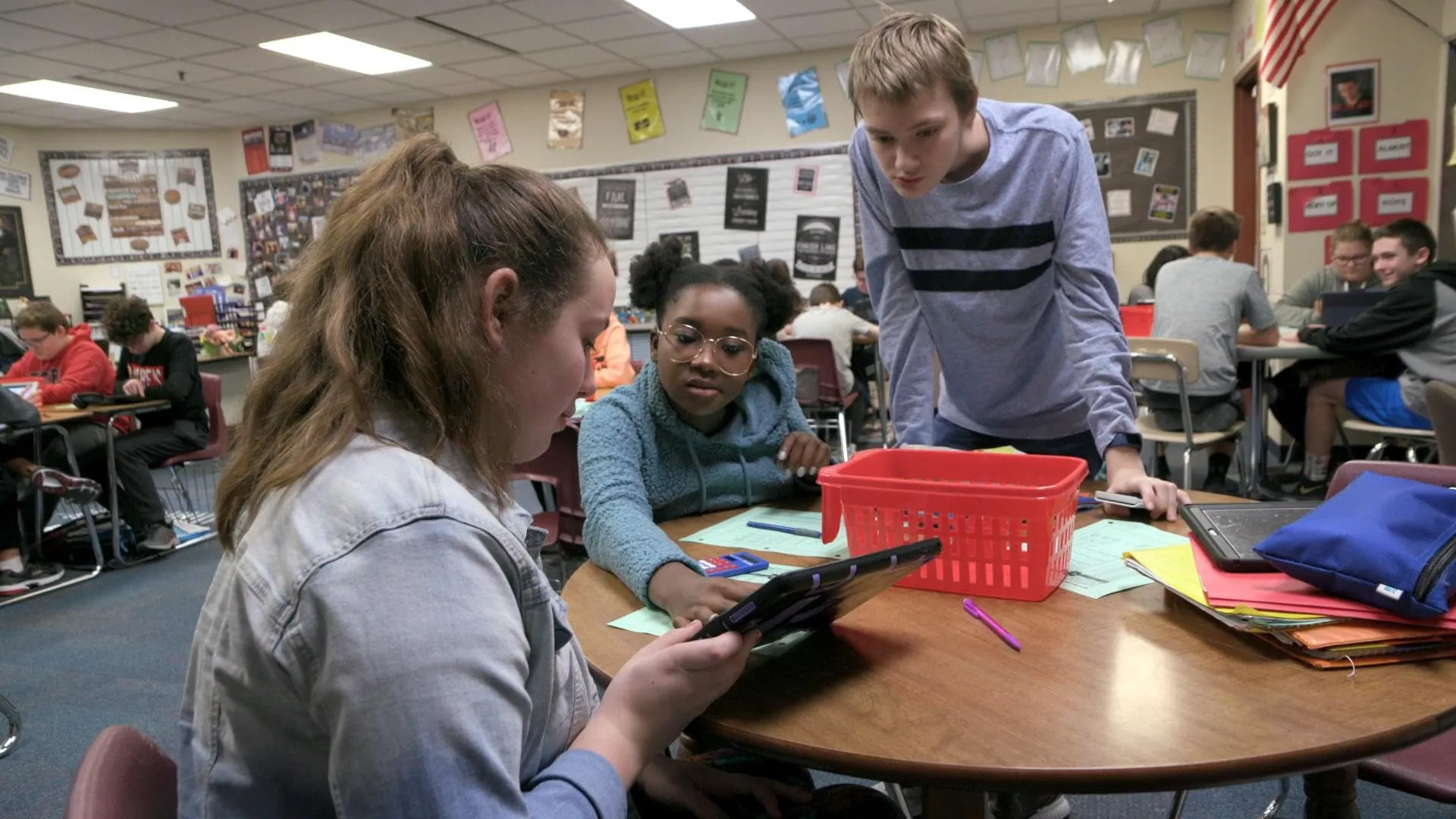
His work with The Algebra Project is framed as a crucial extension of his earlier fight for social justice, connecting the struggle for ballot access in the 1960s to the modern struggle for intellectual access to the tools of power. His teaching philosophy, which anchors abstract mathematical principles in the lived experiences of students, represents a radical departure from traditional methods that often function as gatekeepers. The film’s narrative is propelled by the intimate journeys of individuals confronting this educational barrier.
We witness the profound shift in a mother returning to her studies, her long-held belief in her own inadequacy dissolving as she gains competence. These personal arcs are the film’s emotional core, transforming its arguments about education into powerful stories of self-realization. They demonstrate that confidence is built through iterative effort and supportive instruction, making a case for an educational culture that values process over immediate perfection.
An Equation for Empowerment
Ultimately, Counted Out delivers a potent message about the purpose of education in a democracy. It argues that the goal of math literacy is not merely to feed a pipeline for technology and engineering careers, but to cultivate a citizenry capable of critical thought and systemic inquiry.

Vicki Abeles’s direction is lean and purposeful, weaving expert interviews, historical context, and personal stories into a cohesive and propulsive narrative. The film’s pacing is expertly managed, ensuring that its complex ideas remain digestible without sacrificing intellectual depth. This structural synergy, where personal emotion illuminates abstract concepts, is the key to its effectiveness. It uses sharp anecdotes, from a statistician challenging the basis of medical advice to a lesson on survivorship bias from WWII aircraft, to make its points memorable and clear.
The film’s tone is one of urgent encouragement. It avoids condescension, instead inviting the viewer to recognize their own stake in a conversation that has for too long been confined to experts. The result is a work of advocacy journalism that does more than just inform; it energizes. Counted Out successfully reframes mathematics as a fundamental tool for agency, leaving audiences with a deeper understanding of the world’s hidden grammar and a renewed conviction to participate in writing its future.
The documentary film Counted Out explores the hidden layer of mathematics that underpins modern society, and how math literacy, or the lack thereof, affects everything from political polarization and racial inequity to economic opportunity. The film is dedicated to civil rights leader Bob Moses, who saw math access as a critical issue of our time. It premiered at film festivals in the spring of 2024, including the San Francisco International Film Festival. The film had a limited theatrical release in late 2025, distributed by Reel Link Films. Currently, it is being shown primarily through community and educational screenings across the country, and is not widely available on major streaming platforms.
Full Credits
The Review
Counted Out
Counted Out is an essential piece of documentary filmmaking that transforms mathematics from an intimidating academic subject into a vital tool for civic engagement. With intellectual clarity and profound empathy, director Vicki Abeles crafts a persuasive and deeply moving argument for why numerical literacy is a modern civil right. The film is not just an analysis of a problem but an empowering call to action, successfully reframing a source of common anxiety into a language of accountability and power. It is an urgent, masterfully constructed, and deeply inspiring watch.
PROS
- Makes a complex and often feared subject accessible and emotionally engaging.
- Powerfully connects mathematical literacy to core democratic principles and social justice.
- Features compelling human stories of struggle and empowerment.
- Effectively uses clear, real-world examples like gerrymandering and parole algorithms.
- Presents a strong, coherent argument with persuasive expert commentary.
CONS
- The focus is primarily on the American educational and political system.
- Places less emphasis on the formative K-8 years where math anxiety often begins.







