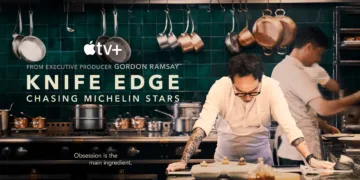

























My earliest memories of food on television are of Julia Child. There was a gentle, almost comforting chaos to her kitchen. A dropped potato was an occasion for a chuckle, not a crisis. Watching Knife Edge: Chasing Michelin Stars feels like tuning in from another dimension, one where that comforting world has been replaced by a high-stakes, high-stress theater of culinary perfection.
This Apple TV+ series documents the all-consuming quest for Michelin stars, embedding its cameras inside the kitchens of elite restaurants as they await the judgment of the world’s most famous and secretive food guide. The show immediately establishes that this pursuit is a brutal one, fueled by staggering financial risk and profound personal sacrifice. Restaurateurs speak of bleeding cash, sometimes tens of thousands of dollars a month, for the chance at recognition.
That star, we learn, is not just for show; it is a vital business tool, with a single one promising a twenty percent boost in revenue. This intersection of art and commerce creates a pressure cooker environment where every dish is a potential career-defining success or a catastrophic failure, and every customer dining alone might just be the anonymous inspector who holds the restaurant’s fate in their hands.
The Anatomy of Ambition
The series adopts a nomadic structure, moving us from one city to the next, a narrative choice that reflects the global nature of this culinary obsession. We spend a couple of episodes in New York before being transported to Chicago, each location offering a small constellation of chefs with wildly different stories. This structure is both a strength and a limitation. It prevents the deep, singular focus of a series like Chef’s Table, where an entire hour is dedicated to one artist’s soul.
Instead, Knife Edge presents a mosaic of ambition. In New York, we witness the startling intensity of Dae Kim at Nōksu, a young chef whose kitchen is tucked away in a subway station. His profound self-criticism over the smallest flaw is a window into a culture of relentless perfectionism. This contrasts sharply with the story of Mary Attea at The Musket Room, a chef who already possesses a star but now grapples with the immense pressure of maintaining that standard while simultaneously expanding her business. Her story is less about the initial ascent and more about the precariousness of staying at the top.
The series is most successful when its access is most intimate. When we follow Chicago chef Jake Potashnick into his car as he races to the bank, or listen to him candidly admit his daily mistakes, the show transcends its premise. It becomes a compelling study of entrepreneurship and vulnerability. In these moments, the editing and camerawork abandon polished observation for something more personal, lingering on a worried expression or using quick cuts to mirror a chef’s rising panic.
This is where the series speaks to a broader cultural moment, reflecting a generation defined by a “hustle culture” that demands passion be monetized and validated by external metrics. The Michelin star becomes the ultimate symbol of that validation, and the series shows us precisely what people are willing to endure to achieve it.
A Tale of Two Tones
Visually and sonically, Knife Edge operates with a split personality, a deliberate choice that highlights the chasm between the diner’s experience and the kitchen’s reality. The first style is pure food-porn elegance. The camera glides, often in luscious slow motion, across beautifully composed plates. The lighting is warm and inviting, the depth of field is shallow, and every ingredient gleams.
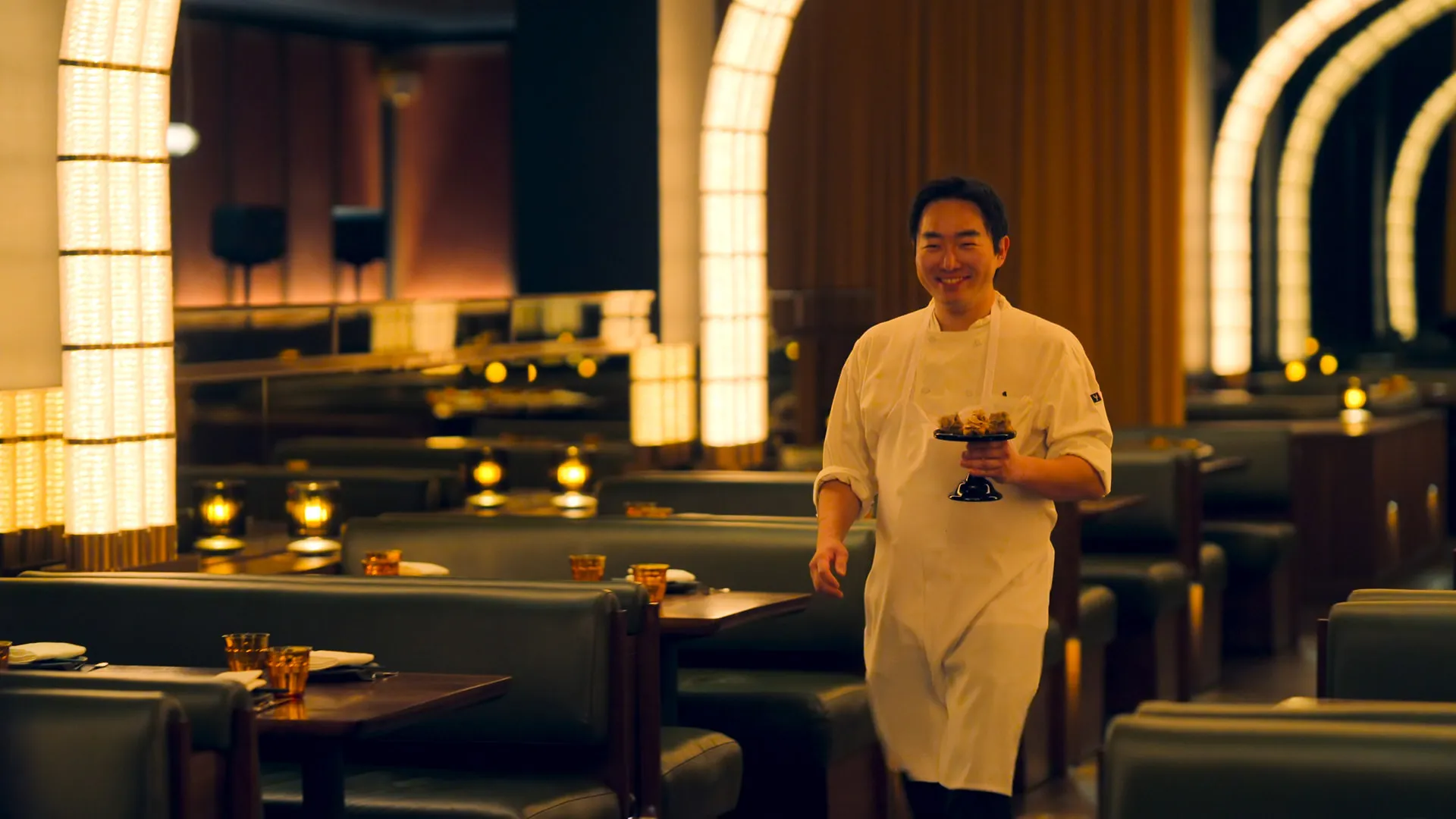
These segments feel like a luxury travelogue, a familiar mode of television that presents fine dining as an effortless art form. The sound design here is muted and sophisticated, filled with the gentle clinking of wine glasses and the soft murmur of contented patrons. It’s a carefully constructed fantasy, the one restaurants sell to their customers every night.
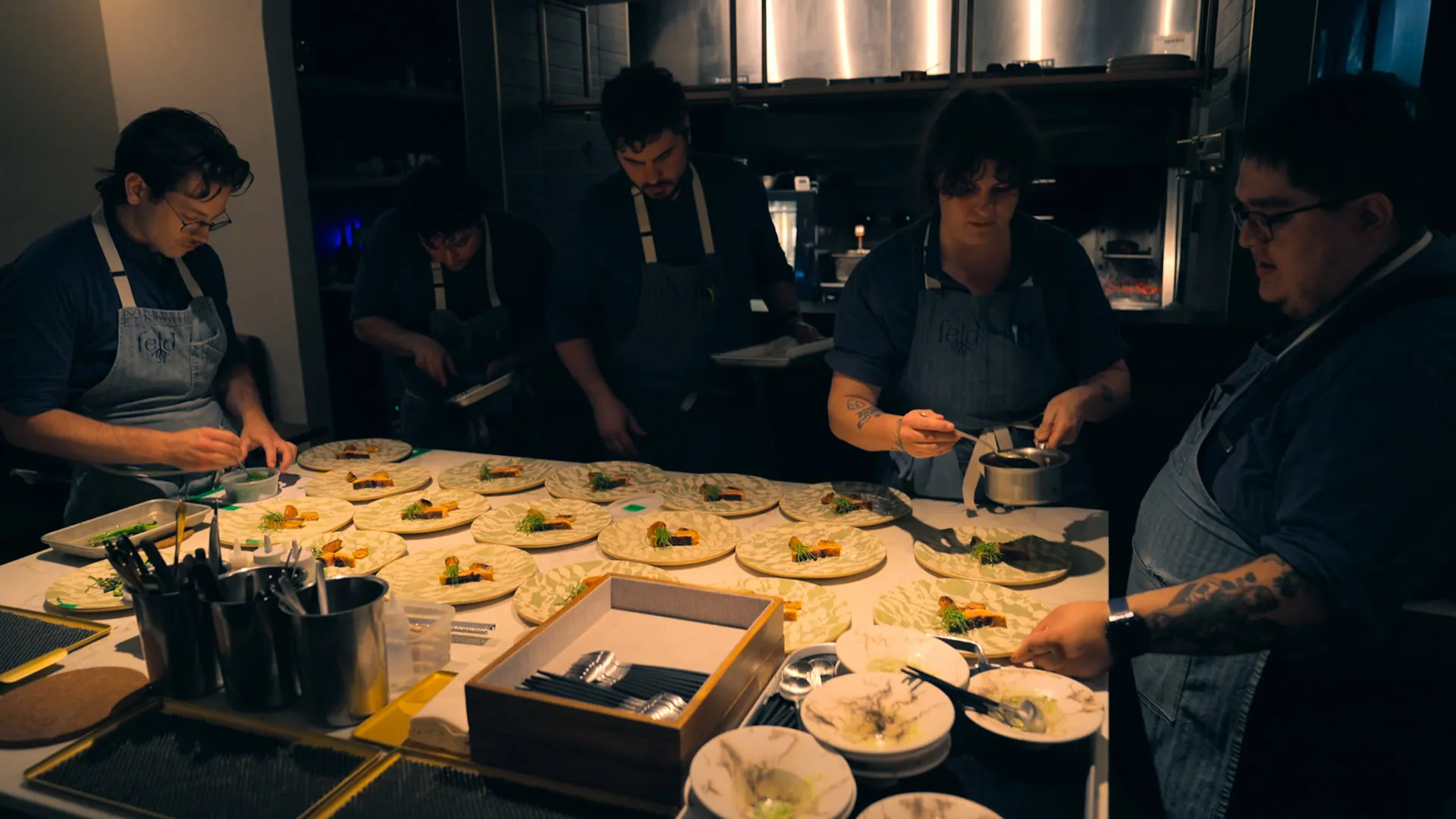
Then, the series pivots. A cut takes us through the kitchen doors into a completely different world, and the filmmaking style shifts to match. The camera becomes handheld, restless, and observational. The lighting is harsher, more functional, reflecting off stainless steel and steam. The editing pace quickens, mirroring the frantic energy of the service. Here, the soundscape is a dense, percussive symphony of clanging pans, the hiss of the grill, and the sharp, staccato shouts of orders.
This is the show’s verité heart, and it is in this raw, unpolished space that its truth resides. The contrast between these two modes is the series’ most effective narrative tool. It’s a constant reminder of the invisible labor and intense anxiety that goes into creating a moment of peace and pleasure for someone else. As the series progresses, it wisely leans more into this raw aesthetic, seeming to understand that the real story is not in the perfect dish, but in the sweat and stress required to produce it.
The Guides: Seen and Unseen
The narrative is framed by two guiding figures, one overtly present and the other a mysterious, spectral force. Our visible guide is the host, Jesse Burgess, a charming food enthusiast who serves as the audience’s point of entry. He walks us through city streets, sits down for elegant meals, and provides context for the chefs’ ambitions. However, his role often feels like a remnant of a more conventional television format, one that doesn’t fully trust its subjects to carry the narrative.
His commentary during the Michelin ceremonies is particularly jarring. As we watch a chef’s face contort with nerves, Burgess’s voiceover explains the very stakes the past hour has so carefully established. It’s a directorial choice that breaks the immersive spell the kitchen scenes work so hard to cast, pulling us out of the moment instead of drawing us further in. He feels like an unnecessary layer between the viewer and the compelling human drama unfolding on screen.
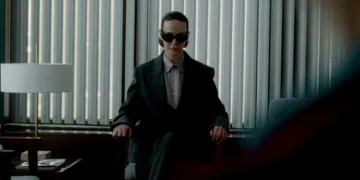
The series’ other guide is far more effective: the anonymous Michelin inspector. This figure is never truly seen, appearing only in shadow with a disguised voice. They are less a character and more a concept, the embodiment of faceless judgment. This stylistic choice is brilliant. The inspectors represent the abstract, unknowable standard these chefs are desperately trying to meet. Their interviews offer little in the way of concrete information, filled with platitudes about quality and consistency.
Their power lies in their mystique. The chefs are not reacting to a person but to an idea, a ghost whose presence is felt in every empty seat and every unexpected order. This dynamic captures a distinctly modern anxiety about working towards an invisible, often arbitrary, form of validation. In the end, the unseen guide drives the show’s tension far more effectively than the seen one. The fear of the unknown is the most powerful ingredient in this story.
The documentary series Knife Edge: Chasing Michelin Stars is an eight-part series that offers a rare, behind-the-scenes look into the intense, high-stakes world of fine dining and the ultimate culinary ambition: earning a Michelin Star. The series follows elite chefs at acclaimed restaurants around the world—including in New York, Chicago, the Nordics, the U.K., Mexico, Italy, and California—as they pursue their first, second, or elusive third star. Notably, the documentary features unprecedented access to the secretive Michelin Guide, including interviews with its famously anonymous inspectors. Executive produced by Gordon Ramsay and hosted by food expert Jesse Burgess, the series premiered globally on Friday, October 10, and is available to watch exclusively on the streaming platform Apple TV+.
Full Credits
The Review
Knife Edge: Chasing Michelin Stars
While occasionally hampered by a conventional host and a structure that hops between cities too quickly, Knife Edge succeeds brilliantly when it trusts its subjects. The series is at its most compelling in the raw, unfiltered moments inside the kitchen, capturing the profound human cost of relentless ambition. It masterfully contrasts the serene fantasy of fine dining with the frantic reality of its creation. For anyone fascinated by the intersection of art, commerce, and obsession, the moments of genuine, fly-on-the-wall drama make it essential viewing, even if you wish the narrator would occasionally step aside.
PROS
- Authentic, verité-style footage effectively captures the high-stress kitchen environment.
- Presents compelling human stories of chefs grappling with immense professional and personal pressure.
- The stylistic contrast between the polished dining room and the chaotic kitchen is a powerful narrative tool.
- Provides a genuine look at the punishing financial and personal stakes of the culinary world.
CONS
- An intrusive on-screen host whose commentary can feel redundant and distracting.
- The nomadic, city-hopping format prevents a deeper connection with any single chef or restaurant.
- Interviews with anonymous inspectors add to the mystique but offer little substantive insight.