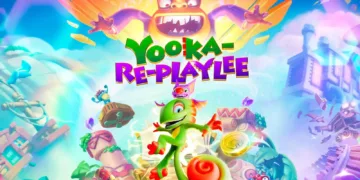

























Yooka-Replaylee arrives as something far removed from a typical remaster. This is Playtonic Games returning to their 2017 debut with surgical precision, reimagining nearly every system that made the original Yooka-Laylee stumble. The chameleon and bat duo, conceived as a spiritual successor to Banjo-Kazooie by former Rare developers, received a lukewarm reception in their first outing. Technical problems plagued the experience. Design choices felt dated even at launch.
This reimagining goes beyond fixing bugs or improving textures. Playtonic has restructured the entire adventure, altered its pacing, and rethought fundamental progression systems. The premise remains familiar: Yooka and Laylee must stop Capital B, a villainous corporate bee bent on monopolizing the book publishing world. The framing device positions this as the duo retelling their adventure through a scrapbook, with Laylee shamelessly embellishing details. This narrative excuse gives permission for dramatic changes that transform how the game feels to play.
Dismantling the Metroidvania Framework
The most radical shift happens immediately. All nine movement abilities unlock from the start. Gone is the gradual acquisition of new skills that defined the original’s Metroidvania-inspired structure. You can glide, roll, ground pound, and access every technique the moment you enter the first world. This fundamentally alters how exploration unfolds.
The change creates freedom that feels both liberating and strangely hollow. You can methodically clear each of the five main worlds without artificial barriers stopping progress. The Reptile Roll no longer drains stamina. The Tail Twirl transforms into a combat tool you can spam endlessly, creating a tornado that decimates enemies. These refinements make moment-to-moment control feel responsive.
Playtonic doubled the Pagie count from 25 per world to 50, bringing the total to 300. Yet you only need 125 to reach the final boss. Players who thoroughly explore the first two worlds might accidentally gather enough Pagies to skip directly to the endgame. Story cutscenes reference events from worlds you haven’t visited, creating narrative fragmentation.
The new fast travel system, accessed through a bookmark character named Mark, addresses genuine annoyances. A comprehensive map tracks collected Pagies, letting completionists systematically check off objectives. Frustratingly, Pagie Pieces don’t appear on this map, creating inconsistent information.
Activities vary wildly in complexity. Minigames, races, platforming challenges, boss fights, stealth sections, and quiz shows fill the worlds. Rextro’s Arcade Cabinet offers eight retro-inspired levels as games within the game. Transformation sequences let you become a snow plow, helicopter, or school of fish. The volume of content is impressive. Combat poses virtually no threat. Enemies struggle to land hits. Most puzzles solve themselves once you recognize which ability applies.
Visual Splendor Marred by Technical Stumbles
The visual transformation is immediately striking. Laylee’s purple fur looks genuinely plush. Yooka’s scales catch light convincingly. Environmental details pop with richer textures and dramatically improved lighting that eliminates murky shadows. Casino environments showcase impressive reflections. Fog effects react dynamically to your movement.

The Prague Philharmonic Orchestra recorded the soundtrack, transforming Grant Kirkhope’s compositions into lush orchestral arrangements. The music elevates every moment, adding weight to what could feel like simple nostalgia-driven melodies.
Technical issues undercut this polish. Frame rate drops occur frequently during boss battles and moments with multiple on-screen elements. The performance can tank dramatically, disrupting platforming sequences that demand precision timing. Crashes happen occasionally. Characters sometimes clip through level geometry, falling into voids or getting stuck.
The Switch 2 version specifically suffers from a 30fps cap. Playtonic is investigating a potential performance mode post-launch, but the choppy presentation impacts a game built around fluid movement. Audio bugs compound these problems. Sound can cut out entirely after sleep mode, eventually leading to crashes.
The improved camera system deserves credit. Where the original suffered from constant awkward angles, Replaylee’s camera rarely causes problems. The technical foundations work well when the performance cooperates.
Trading Personality for Polish
Yooka-Replaylee’s modernization reveals an identity crisis at its core. The design philosophy borrows heavily from Super Mario Odyssey. Collectibles appear constantly. A checklist mentality governs progression. The coin economy funds cosmetic purchases. 104 cosmetic items and 35 gameplay-modifying Tonics expand customization options.
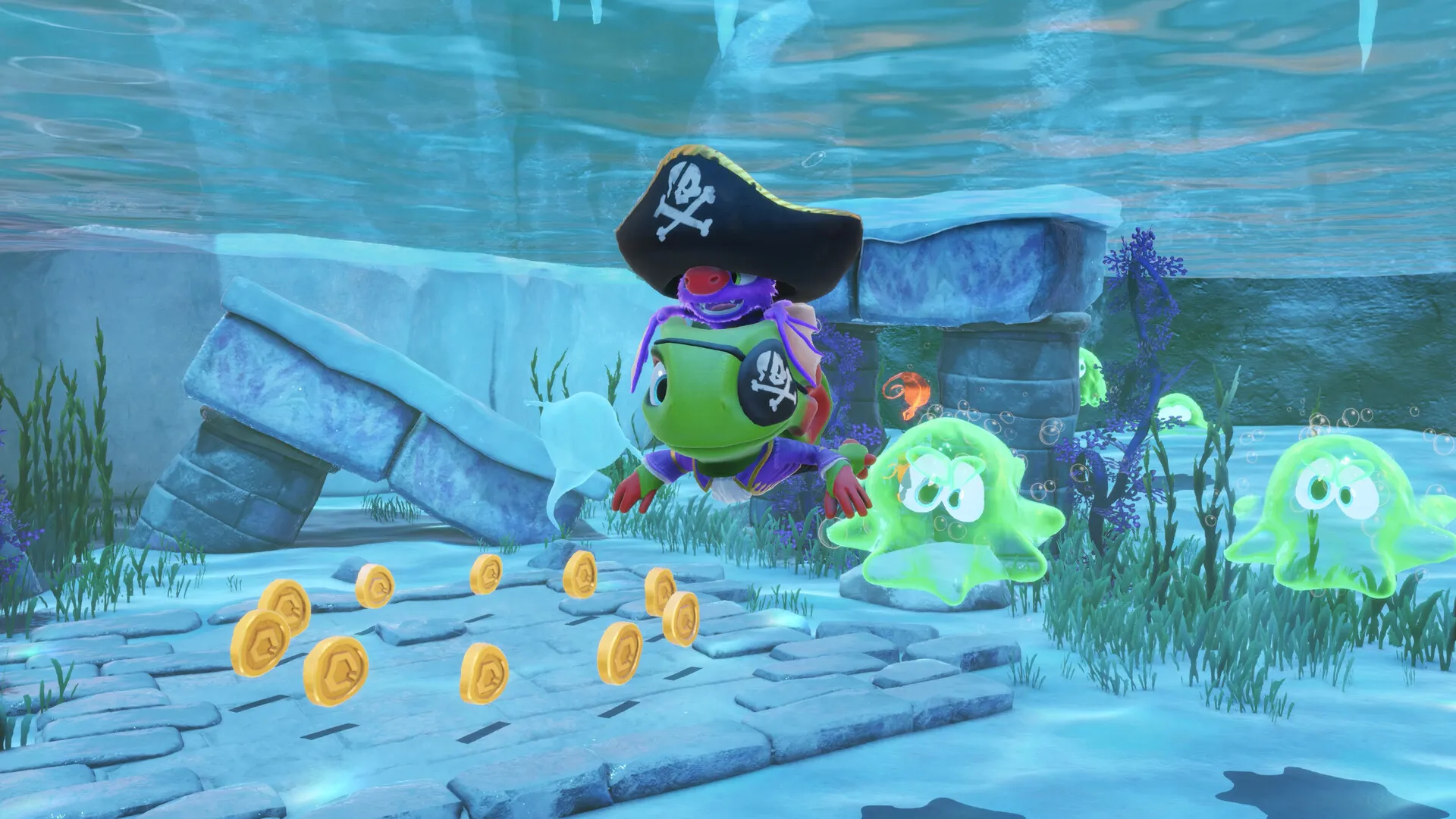
This approach smooths rough edges while sanding away distinctive character. The original featured dialogue boxes that filled slowly while characters made exaggerated grunting noises, directly mimicking Banjo-Kazooie’s presentation. Replaylee streamlines this. Dialogue boxes are smaller and faster. Character vocalizations reduce to brief grunts. The UI redesign removes visual callbacks to Rare’s aesthetic choices.
Structural changes create unintended casualties. Trowzer the snake previously sold you abilities throughout the adventure, his personality emerging through repeated interactions. Now that all abilities unlock immediately, he becomes an optional vendor you might visit once per world. Dr. Quack, a villain who previously administered quiz sections, gets removed entirely. These quizzes weren’t particularly fun, but they established character relationships. Their absence leaves the story feeling thinner.
The hub world, Hivory Towers, contains 50 Pagies of its own, functioning as a sixth major environment. The five main worlds (Tribalstack Tropics, Glitterglaze Glacier, Galleon Galaxy, Capital Cashino, and a fifth area) maintain their original layouts while doubling their content density.
The humor survives modernization better than other elements. British dry wit and innuendo persist throughout dialogue. This tonal consistency matters when so much else has changed.
The accessibility cuts both ways. Low difficulty welcomes younger players and platforming newcomers. The 125 Pagie requirement means casual players can experience the full story without exhaustive completion. For players seeking challenge, the simplicity becomes monotonous. Combat requires no strategy. Platforming demands minimal precision.
The question haunting this release is whether Playtonic should have made a proper sequel instead. The extent of changes creates something that barely resembles its source material. New ideas clash with legacy designs carried over from the original’s structure. Some Pagies hide behind challenging encounters while others sit in obvious locations, the distribution revealing how much content got retrofitted into existing spaces.
Replaylee sacrifices elements that connected it to Banjo-Kazooie’s lineage. The gibberish dialogue that defined Rare’s classics is mostly gone. The Metroidvania progression that gave exploration meaningful structure disappears. These weren’t flaws needing correction. They were deliberate choices that gave the original personality, even when technical execution faltered.
The result is a competent, polished platformer that follows contemporary genre conventions effectively. It’s also a game that lost confidence in its own identity, overcorrecting toward what other successful platformers do rather than refining what made it distinct. The improvements are real. The controls feel better. The camera works properly. The visual upgrade is substantial. But something intangible vanished in the process of making everything technically sound. Yooka-Replaylee fixes a flawed game by transforming it into something safer.
The Review
Yooka-Replaylee
Yooka-Replaylee succeeds at fixing technical problems while losing sight of what made the original interesting. The refined controls, stunning visuals, and orchestral soundtrack create a polished experience that welcomes newcomers. But aggressive modernization erases distinctive personality in favor of following contemporary platformer trends. Structural changes introduce new problems while solving old ones. Technical hiccups persist despite the visual overhaul. This is a competent collectathon that plays it safe, sacrificing identity for accessibility. Worth experiencing if you missed the original, though it leaves you wondering what a true sequel might have achieved.
PROS
- Dramatically improved controls and camera system
- Stunning visual upgrade with gorgeous orchestral soundtrack
- Massive amount of content and collectibles
- Accessibility options welcome newcomers
- Fast travel and map systems enhance convenience
CONS
- Frame rate drops and technical crashes
- Lost distinctive personality in modernization
- Combat and puzzles lack challenge
- Narrative inconsistencies from structural changes
- Identity crisis between honoring roots and chasing trends