











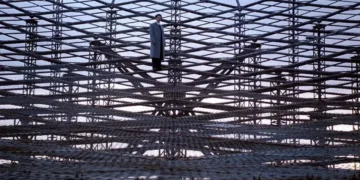














Water, in Istanbul, is not merely a geographic feature; it is a membrane separating histories, a silent witness to the rise and fall of empires. The Bosphorus strait cleaves a city and joins two continents, holding the past in its deep currents while reflecting the hyper-modernity of the skyline. It is this potent duality that flows through Old Money.
The series drops us into a world of immense wealth, where the fight for dominance is waged not with armies but with contracts and calculated whispers. At its center are two figures who embody the city’s temporal rift. Nihal is the inheritor of a storied shipping dynasty, a woman tasked with salvaging a legacy that is as grand and fragile as the waterside mansion she calls home.
Opposing her is Osman, a self-made titan of industry whose ambition was forged in tragedy. His desire for her family home is an act of conquest, a final settlement in a war of social and economic ideologies. Their conflict feels ancient yet immediate, a sophisticated drama of corporate maneuvering that conceals a raw, personal battle for identity.
A Trojan Horse Made of Steel and Debt
The central plot of the series is set in motion by an act of audacious corporate predation. Nihal returns to Istanbul from a life in France to confront a devastating reality: her family’s shipping empire is on the verge of collapse, crushed by an impossible debt owed to the Bulut family. The Buluts represent the city’s new elite.
They are not a family of bloodline but of circumstance, a tight-knit clan of four who were the sole survivors of an earthquake that destroyed their apartment building. This shared trauma is the bedrock of their fierce loyalty and relentless drive. They see wealth not as a luxury but as a fortress against the indiscriminate cruelty of fate. Osman, the family’s quiet financial genius, has orchestrated their ascent with meticulous precision.
The weapon he deploys against Nihal’s family is a masterstroke of predatory capitalism: a contract for a mega-yacht. The Buluts commissioned the vessel with an enormous seventy percent down payment, a sum they knew Nihal’s father would absorb to cover older debts, leaving him incapable of actually constructing the ship. The yacht was never the prize; it was the mechanism.
The contract was a Trojan horse designed from the outset to force a default, which would legally entitle the Buluts to seize their true target: Nihal’s ancestral mansion, a symbol of the established aristocracy that has long excluded them. The scheme reveals Osman’s character; he is a patient hunter who understands that the most effective traps are the ones his prey willingly enters. His strategy mirrors the subtle yet inexorable shift of power in a globalized economy, where old assets are liquidated to fuel new ambitions.
Nihal’s response is what elevates the story beyond a simple tragedy of decline. She refuses to be a casualty. In a move of stunning defiance, she calls Osman’s bluff and commits to building the yacht herself. This decision is a declaration of war. It transforms the conflict from a financial transaction into a direct, personal confrontation.
She meets his aggression not with despair but with her own form of resilience, leveraging her family’s deep knowledge of shipbuilding against his purely financial power. This act of resistance forces them into a tense professional proximity, a shared project that is simultaneously a battlefield. The construction of the yacht becomes a powerful visual metaphor for their relationship: a massive, complicated undertaking where every joint and rivet represents a point of friction, negotiation, and forced collaboration between two irreconcilable worlds.
The Anatomy of an Adversarial Romance
The series is defined by the potent interplay between its two leads, whose performances give the corporate drama its human weight. Aslı Enver’s Nihal is a carefully constructed character who systematically dismantles the stereotype of the spoiled heiress. She carries the poise of her upbringing, yet her spirit is entirely pragmatic. Her return to the family mansion is marked not by ceremonial grandeur but by an immediate, hands-on impulse to fix a derelict speedboat.
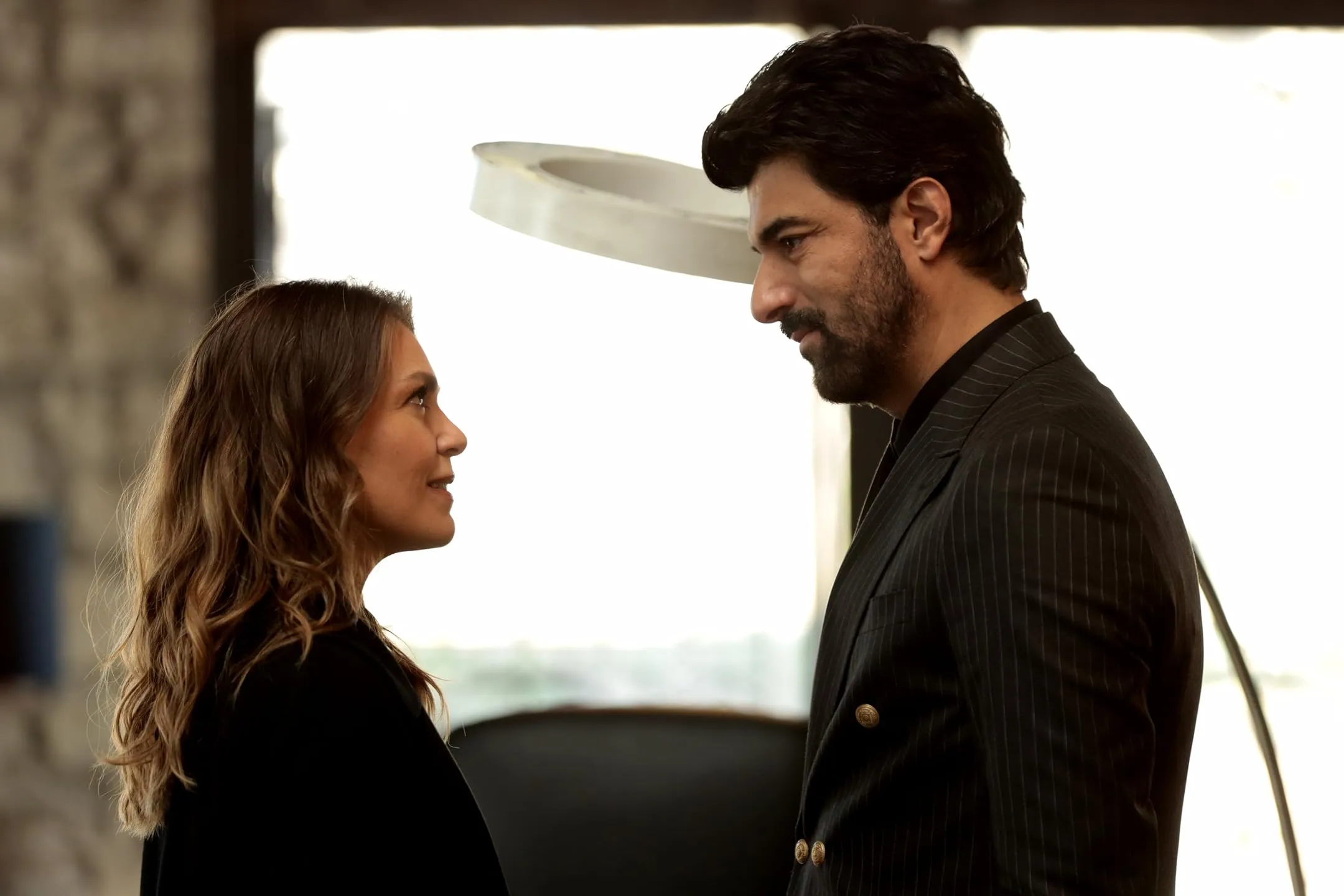
This small act speaks volumes about her character. She is a woman comfortable with grease on her hands, who sees problems as things to be solved rather than lamented. Enver portrays her with a blend of steely resolve and quiet vulnerability, her intelligence shining through in tense boardroom negotiations and her internal struggles visible in her solitary moments overlooking the water. She is fighting for a world of privilege that she seems to have partly outgrown, making her battle a complex defense of history itself.
Engin Akyürek’s Osman is a study in controlled intensity. His character is a familiar archetype, the brooding, self-made man, but Akyürek imbues him with a profound sense of stillness that is far more unsettling than overt aggression. Osman’s power lies in his silence. He observes, absorbs information, and rarely speaks until he has positioned all the pieces on the board to his advantage.
This quietude is a direct result of his past; it is the defense mechanism of a man who has learned that the world can be suddenly and violently upended. Akyürek’s minimalist performance is magnetic. He conveys Osman’s calculating mind through a flicker of the eyes and his buried emotional trauma through the rigid set of his jaw. This understated style is a welcome contrast to more theatrical portrayals of corporate power, suggesting a man whose greatest battles are internal.
The connection between Nihal and Osman is a masterclass in building tension. It is a slow, patient burn, constructed from a foundation of mutual opposition. Their chemistry is not born of flirtatious banter but of the intellectual respect that grows between two formidable opponents. The directors build this dynamic through careful visual storytelling: intense close-ups that hold for an uncomfortably long time, scenes staged with significant physical distance between them to emphasize their emotional chasm, and sharp, economical dialogue where every word is a strategic move.
The supporting characters add important layers to this dynamic. Osman’s siblings reflect different facets of the Bulut family’s psychology. Mahir, the older brother, is an adrenaline junkie whose reckless behavior seems a desperate attempt to feel something other than the survivor’s guilt that haunts him. Arda, the youngest, hides behind a carefree, party-loving facade, using pleasure as an escape from the immense pressure of their newfound status. Their subplots enrich the family portrait, showing the cracks in the fortress that wealth has built around them.
Wealth, Wounds, and Narrative Flaws
Old Money is built upon a thematic exploration of class and legacy that has a long tradition in global cinema. The collision between an entrenched aristocracy and an ascendant, ambitious new class is a story that resonates from the decaying feudal estates in the films of Satyajit Ray to the dynastic power struggles of South Korean television. The series thoughtfully examines how one’s relationship to money shapes identity.
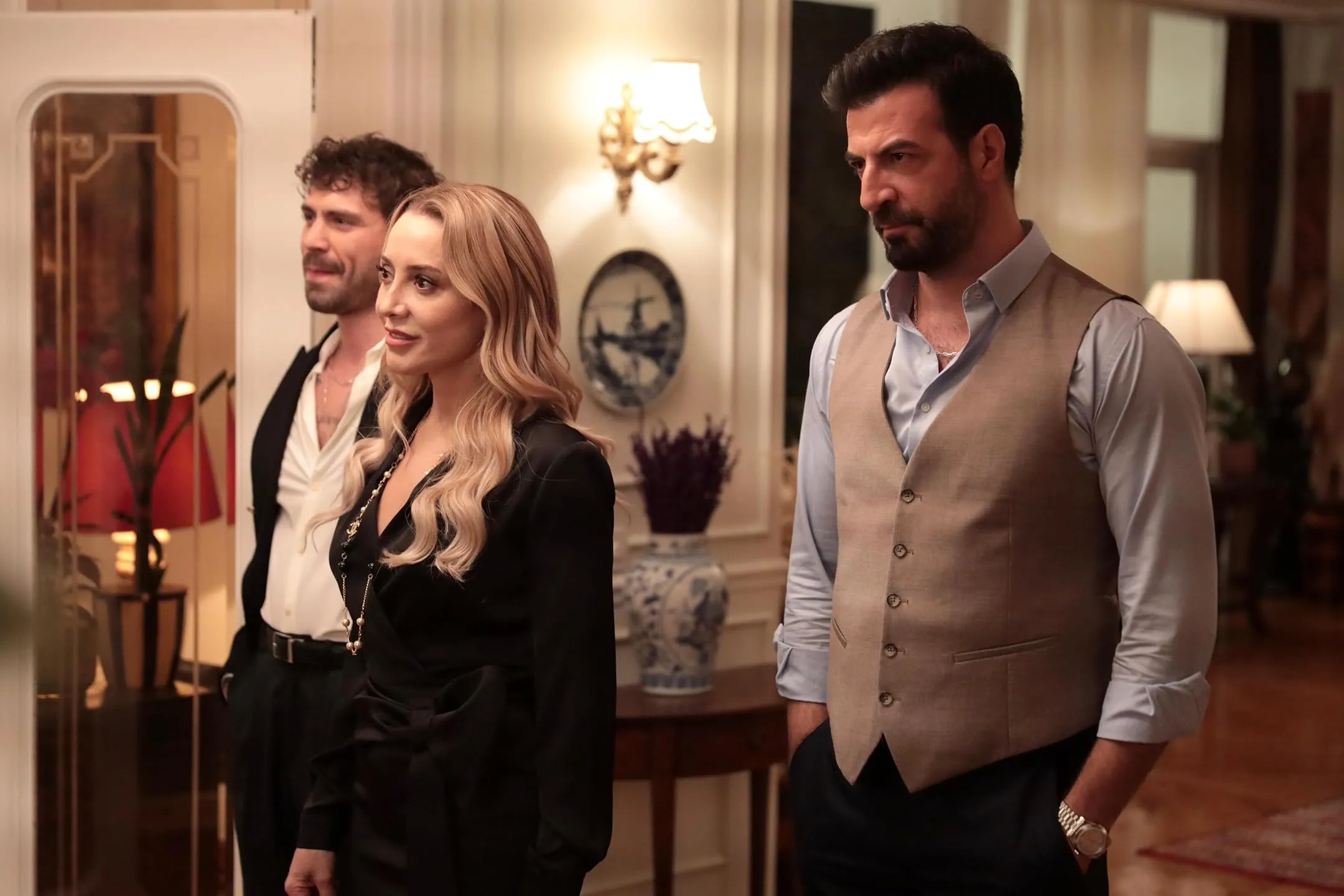
For Nihal, wealth is heritage, a responsibility tied to name and history. For Osman, it is survival, a shield forged in the fires of personal catastrophe. The show’s visual language consistently reinforces this dichotomy. The cinematography captures Nihal’s ancestral mansion with static, painterly shots, emphasizing its history and immobility.
In contrast, the world of the Buluts is depicted with a more modern, fluid camera style, reflecting their energy and relentless forward momentum. The opulent settings serve a critical narrative purpose, functioning as gilded cages and contested territories where the characters’ deepest insecurities are exposed. The series makes it clear that for all their power, these individuals are governed by emotional wounds that no amount of money can heal.
Despite its thematic richness, the show’s narrative execution sometimes falters. The pacing can become sluggish, particularly during extended sequences of business negotiation. These scenes, while necessary for the plot, occasionally get lost in financial details that slow the dramatic pulse and feel more expository than engaging. The script also has a tendency to rely on overly impassioned monologues where characters explain their motivations directly to the audience, a narrative shortcut that feels out of place in an otherwise subtle production.
There are moments when the series reaches for a poetic symbolism that it cannot quite grasp. An early scene where Osman’s shadow on a wall morphs into a wolf-like shape is a particularly heavy-handed attempt to visualize his predatory nature, a point the script and performance already make more effectively.
These are not fatal flaws, but they are noticeable imperfections in a series that is at its best when it trusts its actors and its audience. The story concludes not with a simple resolution but with a bittersweet, open-ended finale. This thoughtful choice avoids a conventional romantic outcome, suggesting that while a connection between Nihal and Osman is possible, the fundamental differences in their histories and worldviews represent a gap that may never be fully bridged.
Old Money is a Turkish television series scheduled to premiere on October 10, 2025, and will be available to stream on Netflix. The drama centers on the life of Nihal, who enjoys a wealthy and comfortable existence in Istanbul. Her life is disrupted when a powerful new tycoon arrives, leading to a complicated mix of love, ambition, and conflicts involving old traditions, which brings forth drama and unexpected surprises.
Full Credits
Director: Uluç Bayraktar
Writers: Meriç Acemi
Producers and Executive Producers: Burak Sagyasar, Timur Savci
Cast: Selin Sekerci, Sedef Avci, Serkan Altunorak, Taro Emir Tekin, Armagan Oguz, Zeynep Oymak, Nur Efsan Durmus, Ahmet Utlum
Director of Photography (Cinematographer): Feza Çaldiran
Composer: Ahmet Kenan Bilgic
The Review
Old Money
Old Money is a compelling Turkish drama that succeeds because of its powerful lead performances and the simmering tension between its protagonists. It thoughtfully explores themes of class and trauma against a luxurious backdrop. While its narrative momentum is sometimes hindered by uneven pacing and heavy-handed symbolism, the series remains a captivating watch. It is recommended for viewers who appreciate mature, character-driven stories where emotional stakes are the true currency.
PROS
- Engin Akyürek and Aslı Enver deliver captivating, nuanced portrayals.
- The slow-burn dynamic between the leads is electric and believable.
- The series thoughtfully examines the conflict between inherited legacy and new ambition.
- The corporate feud as a personal war provides a strong narrative hook.
CONS
- Certain plotlines, especially those focused on business negotiations, drag and slow the momentum.
- The script sometimes relies on overly direct monologues instead of showing character motivation.
- Moments of visual symbolism can feel forced and detract from the narrative's subtlety.