























![Kingdom Hearts Collection [I-III] Review](https://gazettely.com/wp-content/uploads/2026/10/Kingdom-Hearts-Collection-I-III-1-360x180.webp "Kingdom Hearts Collection [I-III] Review: KHII Holds Steady as Newer Entries Fluctuate 37")



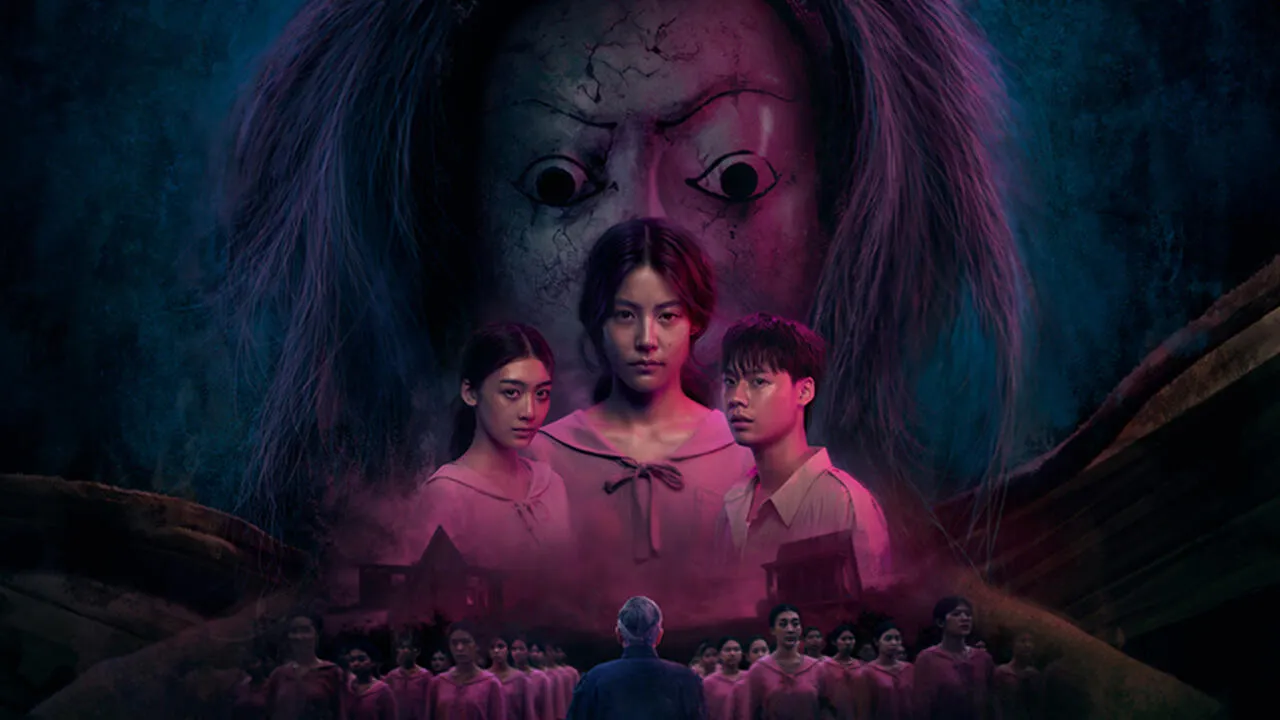

Host, directed by Pokpong-Pairach Khumwan, frames Thai supernatural horror as a study in systems and consequences. Set in 1976 at Pinthkun Reform School on a remote island, the film builds a locked-in design that shapes every choice and every emotion.
Ing arrives as a new student and her presence upsets the school’s brutal order, led by the ruthless Aim. The pressure that follows creates a steady charge of dread. Frights sit behind atmosphere, and the story points to institutional failure and the scars it leaves.
The True Terror of Place and Power
The location works like a core mechanic. The island cuts off rescue and compresses action into corridors and courtyards where fear compounds. That spatial trap functions like a survival-horror loop where help never comes. Images of crumbling halls and relentless surf keep that feeling active. The camera treats the school as a hostile system that grinds down anyone inside it.
The first wave of horror comes from people. The school’s hierarchy produces a rulebook of cruelty. Mother (Ms. Pristsana), the principal, keeps power by letting select girls police the rest, which turns discipline into abuse.
Aim operates inside that structure with unbroken violence toward Ing, establishing the primary conflict. The film places the sharpest emotional shock in that human aggression, which primes the ground for what later surfaces as the supernatural answer to rot that has festered too long.
Folklore, Performance, and Pacing
The film anchors its haunting in Thai folklore through the Mae Sue, or godmother spirit. Ing’s guardian rises in direct response to the harm she endures. That choice gives the horror a specific cultural logic and separates it from routine boarding-school scares.
Early manifestations stay quiet and uncertain, sliding alongside Ing’s fragile state of mind. The ambiguity asks the viewer to read every disturbance as either spiritual force or the psychological echo of a toxic environment.
Two performances carry the emotional arc. Thitiya Jirapornsilp plays Ing with restrained intensity, showing a delicate energy strained by trauma and pushed toward resistance. Veerinsara Tangkitsuvanich plays Aim with precision, holding the role of chief tormentor while reflecting damage baked into the system Mother created. Aim reads as both predator and product, which deepens the clash with Ing and boosts the film’s emotional range.
The pacing starts as a measured slow burn that lays down mood with care. The oppressive tone lands. The middle stretch loses shape. Repetition creeps in, cycling through bullying beats and brief jump scares that do not advance the story enough. Viewers used to faster narrative velocity may feel the drag before the final act finds power again. The structure still clears the runway for a closing movement that hits hard, but the route there wobbles.
The Cost of Retribution
The film doubles as social critique. It maps institutional abuse and tracks how violence circulates through a closed system. The story argues that survival under that pressure can twist victims into new sources of harm. Loyalty and moral certainty grow unstable. Ing and Aim stand as people pushed past breaking points, and the film keeps the boundary between protagonist and antagonist thin.
The final sequence lands with force. The ending withholds comforting closure and leans into tragedy. Ploy, quiet for most of the story, emerges with a calculated act of revenge that sharpens the film’s view of human nature.
Ing’s fate seals the arc when her guardian spirit carries her away to keep her from further pain. That image hurts. The film lets the unease linger after the credits, which fits a work designed around space, control, and the emotional aftershock of systems that crush the people inside them.
Host is a Thai supernatural horror film directed by Pokpong-Pairach Khumwan. The story follows Ing, a young woman sent to a strict reform school located on a remote island, where she immediately becomes the target of a brutal hierarchy and its leader, Aim. As the torment escalates, a series of disturbing, possibly supernatural events begin to unfold, tied to the Thai folklore of the “Mae Sue,” or guardian spirit. The film is an Amazon Original and is scheduled to be released globally on the streaming platform Prime Video later in 2025, where it will be accessible to viewers in over 240 countries and territories worldwide.
Credits
Title: Host
Distributor: Prime Video
Release date: Scheduled for release later in 2025 (Global Premiere on Prime Video)
Director: Pokpong-Pairach Khumwan
Cast: Baipor-Thitiya Jirapornsilp, Perth-Veerinsara Tungkitsuvanich, Jump-Pisitpol Ekaphongpisit, Wee-Weeraya Zhang, Nepjune-Nutkitta Poonsukwattana, Famed-Sanutcha Janchoom, Ae-Narinthorn Na Bangchang
The Review
Host
Host is a confident piece of Thai horror. It uses the remote school setting brilliantly to create deep emotional resonance. While the midsection drags slightly with repetitive bullying, the film's strength lies in its commentary on abuse, power, and the cycle of trauma. The exceptional performances by the leads give weight to the tragic climax. It is a thoughtful, flawed, and worthwhile cinematic experience for fans of character-driven supernatural dramas.
PROS
- Deep sense of dread and inescapable isolation.
- Powerful social commentary on abuse and power structures.
- Strong, complex portrayals by lead actors Thitiya Jirapornsilp and Veerinsara Tangkitsuvanich.
- Distinctive use of Thai Mae Sue (godmother spirit) mythology.
- A tragic and compelling final act.
CONS
- Middle section is slow and can feel repetitive.
- Ambiguity in some narrative turns may frustrate viewers.
- Some jump scares are considered generic or predictable.
- Secondary characters remain underdeveloped archetypes.