





























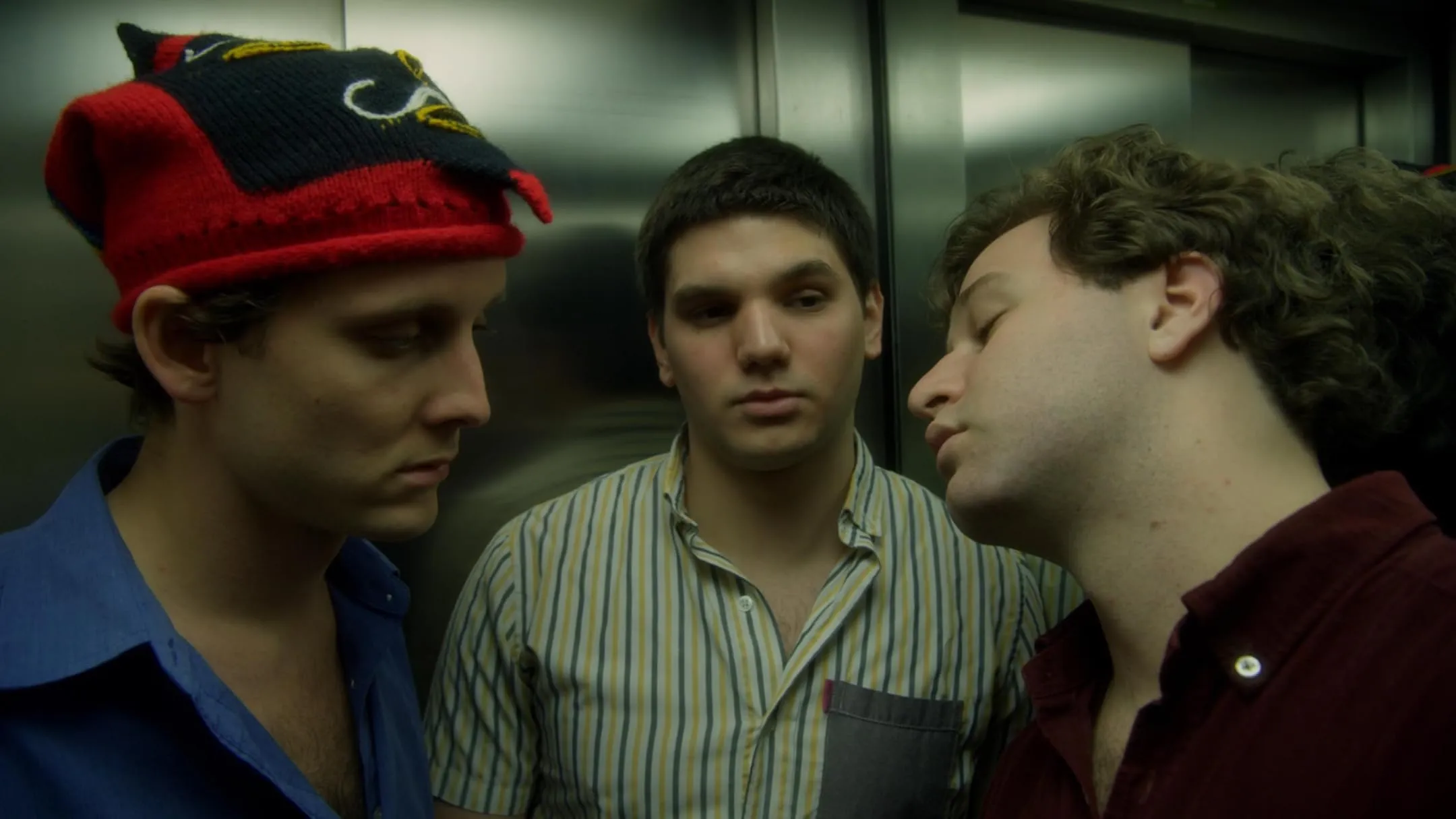

Alejandro Castro Arias’ debut feature, Harakiri, I Miss You, lands like a provocation with a purpose. The setup is spare and punishing: a volatile 24-hour slice of life with three young men in Madrid. Immediacy functions as method and argument, locking us inside a raw study of prolonged adolescence and the misogyny that calcifies around it. The film feels harsh and unaccommodating. The experience unsettles, yet the rigor earns attention.
Arias works in an improvisational register that reads as intensely real, channeling a cinéma vérité lineage associated with American independents, with a clear nod to Cassavetes transplanted into a contemporary European grid. The city becomes more than backdrop; it behaves like a witness, recorded with a clarity that catches beauty and bleakness in the same frame.
The Homosocial Inarticulation of the Trio
Conflict never leaves the triangle of Alejandro, Diego, and their unnamed companion. Immaturity and everyday sexism arrive early and recur without relief. Their bond functions as a closed circuit of performance, a social paralysis I would call homosocial inarticulation, where emotion only appears through posturing, mock bravado, and petty harm.

The early spying sequence sets the moral register with a jolt. One character leers and spits out a wish for the woman to “give me AIDS,” which locks the audience inside a climate of cruelty. This world runs on contempt and fear. The men drift, unable to form adult connections or secure any credible progress for themselves.
Their faltering becomes clearest during the clumsy exchange with Magdalena (Ines Efron), the neighbor who answers Diego’s pressure with a direct “No.” Alejandro then tries his hand and gets her drunk. Her protest, the escalation that follows, and her flight strip their antics of any charm they believe they possess.
The later drunken brawl and the self-pity that trails behind it read as a pattern: toxic masculinity as failure theater, all noise and no capacity. The film pins this mode of living to a recognizable social script, where male intimacy polices feeling and blocks growth. If that sounds like a small-scale story, the echoes carry farther; cultures have long rehearsed codes that prize dominance and then wonder why intimacy collapses.
Spectral Warnings: Figures of Failed Manhood
The film broadens its argument through encounters that feel like cautionary apparitions. A parking attendant offers a fleeting interlude of grace. His quiet warning against drunk driving, rooted in his own confessed experience, interrupts the boys’ recklessness with an unexpected human signal. The concern lands as a low-frequency kindness, a reminder that care survives even inside hard surfaces.
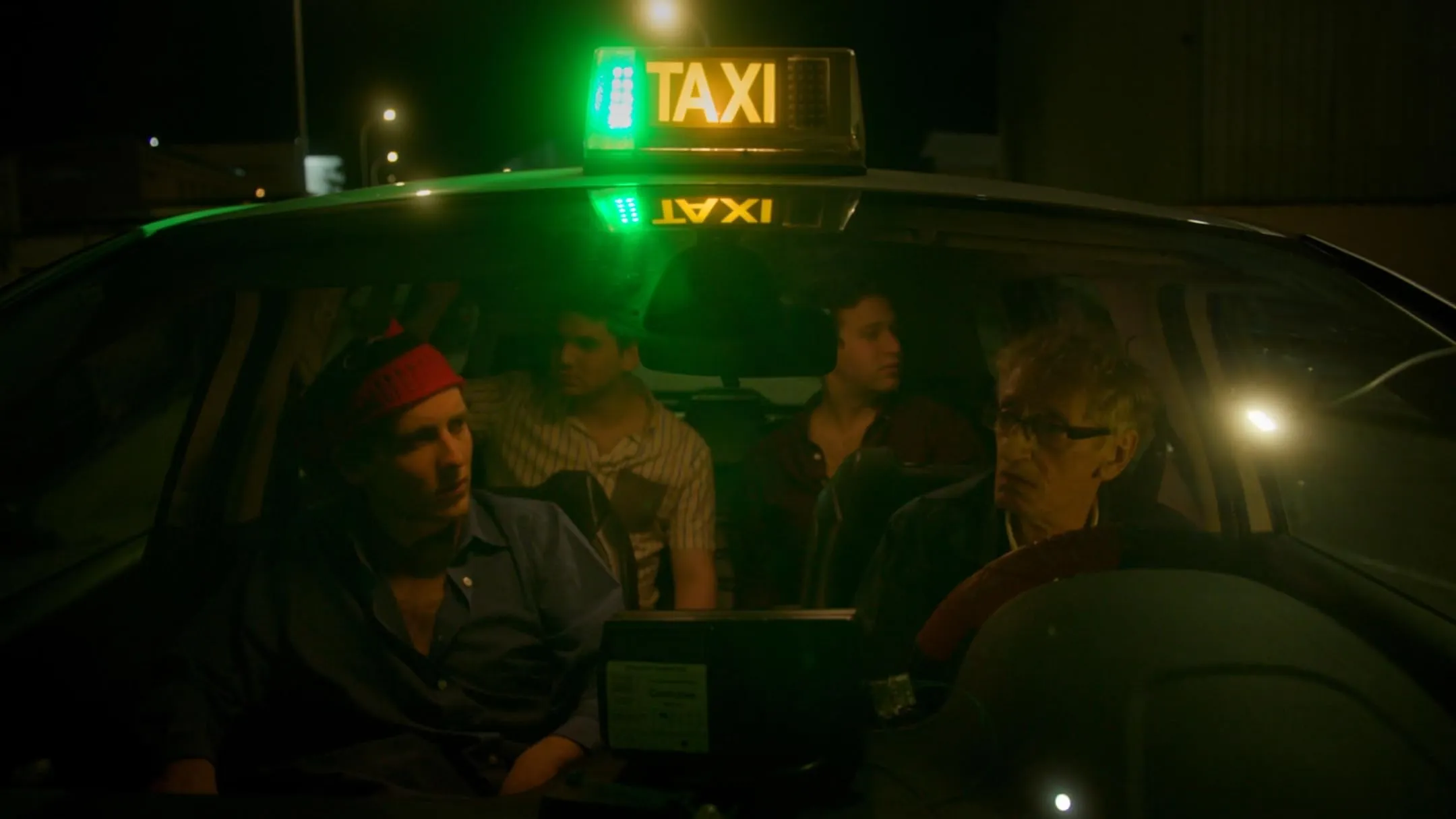
A starker mirror arrives with the taxi driver, Rogelio (Enrique San Francisco). He connects with the trio through an older strain of sexism that he treats like wisdom literature. The scene sketches a lineage of attitudes that travel across generations. What looks to the young men like camaraderie shows up on screen as a forecast: keep walking this road and the future looks worn, bitter, and empty.
The subway confrontation condenses the film’s symbolic charge. The men ogle a young woman across the car. She meets their gaze and chooses to reveal her body, not as capitulation but as a direct refusal to be consumed. Agency enters the frame and the trio collapses. They register defeat, not thrill. The moment maps a psychological block: when a woman acts with self-possession, their system shorts out. The sequence plays like a social diagram, a lesson in how entitlement falters when it meets autonomy.
Direction, Performance, and Atmosphere
Arias shows nerve by holding the tone steady in a first feature. Reports of a hectic shoot shadow the production, yet the control visible on screen feels deliberate. The camera’s documentary roughness produces friction that can tire the viewer, which is part of the design. Authenticity here depends on abrasion; the texture keeps the film honest.
The ensemble commits. The three leads build a lived-in group rhythm that convinces without special pleading. Ines Efron’s Magdalena offers the audience a point of humane gravity inside a story with little comfort. Small roles leave marks. The security guard and the driver arrive briefly, then linger like afterimages, giving the film unexpected weight.
Mood oscillates between melancholy and sour-sweet humor. Call it misery-chic if a label helps: an aesthetic that finds skewed comedy inside desperation without excusing the harm on display. The film holds its line, asking viewers to recoil at the trio and still recognize the loneliness that haunts them. The trick works because the sadness feels ordinary, almost routine. Cities produce these microclimates of bravado and shame; the camera records one long day inside such weather.
As cinema, Harakiri, I Miss You treats Madrid as a pressure chamber. The streets record footsteps, stairwells amplify breath, interiors shrink the frame until talk curdles. The style invites comparisons to earlier traditions and still feels specific to this place and these boys. Cultural impact often starts with uncomfortable mirrors. A piece like this can travel because the patterns are familiar: performative manhood, rehearsed callousness, and the stalled lives that trail behind. The film names the pattern without speeches, then lets the audience sit with the cost. If that sounds austere, it is. It is also the point.
Harakiri, I Miss You is the feature-length directorial debut of Alejandro Castro Arias. The film offers an intimate and unsettling look into 24 hours in the lives of three young men navigating their self-imposed social stagnation in Madrid. It premiered on the festival circuit around 2024, receiving recognition at events like the Oldenburg International Film Festival. As an independent feature, specific broad distribution platforms and ratings are not yet standardized, and it is primarily viewable at film festivals globally.
Credits
Title: Harakiri, I Miss You
Release date: 2024 (Festival Premiere)
Director: Alejandro Castro Arias
Writers: Alejandro Castro Arias (Inferred)
Cast: Ines Efron, Enrique San Francisco, Lautaro Bórquez, Gastón Cocchiarale, additional lead performers
The Review
Harakiri, I Miss You
The film functions as a stark sociological document, unflinchingly presenting the desolation and toxic cycles of young male insecurity. Arias manages to capture an era of stagnation, presenting figures who are both darkly funny and profoundly disturbing. While the vérité style makes for challenging viewing, requiring the audience's patience, the potent performances and symbolic encounters elevate the material beyond simple provocation. It is a necessary cinematic dispatch, providing sharp commentary on gender dynamics and generational stasis.
PROS
- An honest, unflinching portrayal of toxic masculinity and its origins in insecurity.
- Strong, confident debut direction from Alejandro Castro Arias.
- Believably "lived-in" and compelling performances from the central trio.
- The raw, realistic visual style lends authenticity to the thematic despair.
- Effective use of brief, contrasting encounters (the parking attendant, the taxi driver) to expand the film's scope.
- A sociologically relevant and timely commentary on arrested adolescence.
CONS
- The subject matter and vérité style make for deliberately uncomfortable and sometimes tedious viewing.
- The raw honesty of the characters may alienate some viewers.