







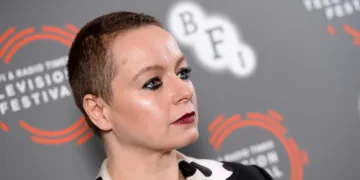














Emily Watson will receive the Richard Harris Award at this year’s British Independent Film Awards, a career honor that recognizes an actor’s outstanding contribution to British film. The prize will be presented at the 28th BIFA ceremony on 30 November 2025 at London’s Roundhouse, where it sits alongside competitive categories for new and emerging work.
Named for the late Irish star Richard Harris, the award has previously gone to performers including John Hurt, Daniel Day-Lewis, Julie Walters, Chiwetel Ejiofor, Riz Ahmed, Samantha Morton, Stephen Graham and Sophie Okonedo. BIFA describes the honor as a salute to a body of work that has shaped British cinema over time, positioning recipients alongside some of the country’s most influential screen actors. In a statement, Watson said she was “delighted and deeply honored” to receive an award given in Harris’s memory.
Watson first drew international attention with her debut film role in Breaking the Waves and followed it with Hilary and Jackie, earning Academy Award nominations for both performances. Since then she has moved between independent productions and studio projects, from period dramas to contemporary television. Her work in series such as Chernobyl and Appropriate Adult has brought major television awards recognition, while she has remained a regular presence in British film.
The honor arrives during a busy season for Watson. She plays Mary Shakespeare in Chloé Zhao’s Hamnet, a Shakespeare drama that has become a key awards contender after winning the People’s Choice Award at the Toronto International Film Festival and securing the Vanguard Award from the Palm Springs International Film Awards. The film’s focus on grief, creativity and family places Watson in another ensemble at the center of British and Irish storytelling traditions.
At the same time, she leads the HBO science fiction series Dune: Prophecy as Mother Superior Valya Harkonnen, a power broker inside the Bene Gesserit order in a story set millennia before the main Dune saga. The series, renewed for a second season after strong viewership, underlines Watson’s reach into global genre television while she remains closely associated with British independent cinema. Her Richard Harris Award places that long-running versatility within an institutional frame, celebrating work that now stretches from groundbreaking 1990s drama to current franchise storytelling and prestige festival titles.