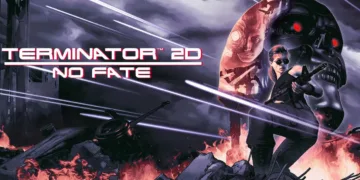
























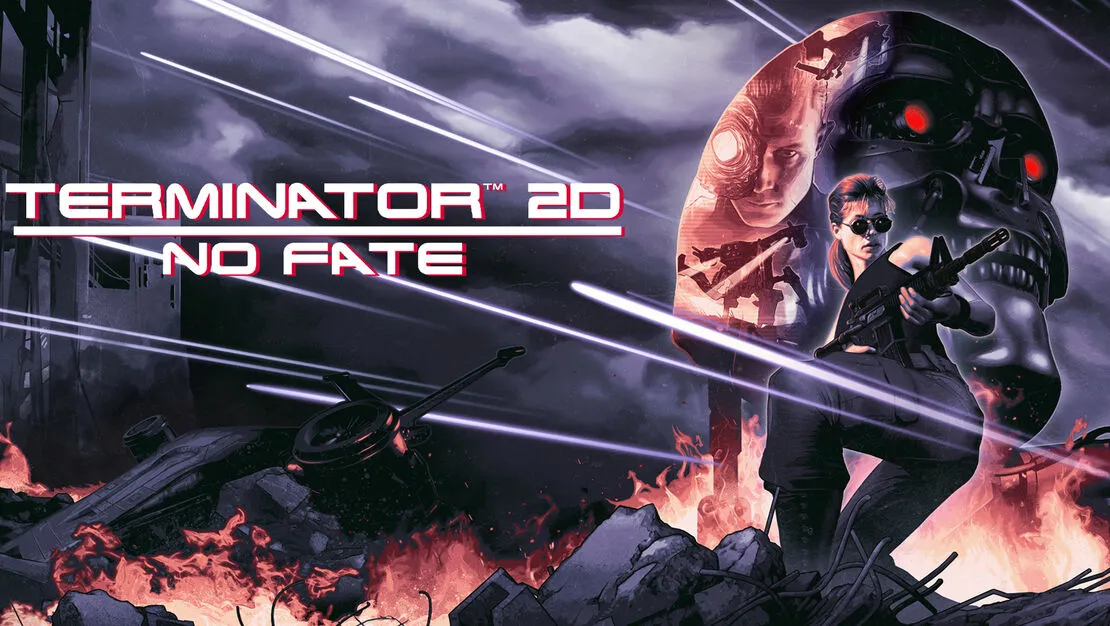

The year 1991 sits at a very specific point in pop culture. Terminator 2D: NO FATE feels built to preserve that moment. It plays like a premium cartridge pulled from a dusty warehouse and booted up for the first time. The opening sets that intent immediately: a rolling stretch of tarmac, yellow center lines scrolling into infinity, and industrial music laying down a cold, foreboding tone.
The sequence echoes the theatrical film’s final scene, then swaps Sarah Connor’s hopeful monologue for a blunt text warning about the horrors of Judgment Day. From there, the game makes its priorities clear. It puts authenticity first.
Bitmap Bureau frames the project as something early 16-bit consoles missed. The design locks onto a Super Nintendo and Sega Genesis aesthetic, and it treats early-90s action games as a reference point for feel, pacing, and presentation. That loyalty carries into the adaptation itself. The game sticks close to the source material, then widens the timeline by letting the player experience events from before the film and after the credits roll.
Scripted Destiny and Divergent Paths
The campaign uses digitized film stills as connective tissue between levels. These static images appear between gameplay segments to move the plot forward, with text descriptions standing in for voice acting to maintain the 16-bit illusion. Structurally, the game begins in the future.
Players start as a battle-hardened John Connor during the “Future War” prologue, and those early stages give the developers room to stretch. You fight massive Skynet machines and Centurions that never appeared in the 1991 film. After that, the timeline shifts to 1995, and the perspective shifts with it. You control Sarah Connor and the T-800 while the game runs through familiar set pieces.
The title NO FATE points to the biggest narrative mechanic: branching paths. At key moments, the game presents binary choices that change what comes next. One of the clearest examples is the decision to execute Miles Dyson or spare him. These choices reshape the route through the campaign and lead to alternate endings that pose “what if” scenarios inside the established lore. There’s a clear gate on that system, too. You need to finish the standard campaign once before these divergence points become available.
Also Read






That structure matches the game’s tight runtime. A single run takes less than an hour, and the pacing leans into the arcade tradition of beating a game in one sitting. The short length also gives the branching system room to work. Replays become the intended rhythm, since seeing every outcome and unlocking extras depends on repeated clears, including additional content like the “Mother of the Future” mode.
Mechanics of the Machine War
At its base, the gameplay loop follows the Contra template. You move left to right, you shoot constantly, and anything in your path becomes a target. The controls support 8-way directional firing, and the game gives you a way to lock your character in place so you can aim with precision without drifting out of position. On top of that retro foundation, the game adds a few modern conveniences that make moment-to-moment action feel cleaner. You can slide under projectiles. You can use crates and walls as cover to manage heavy fire.
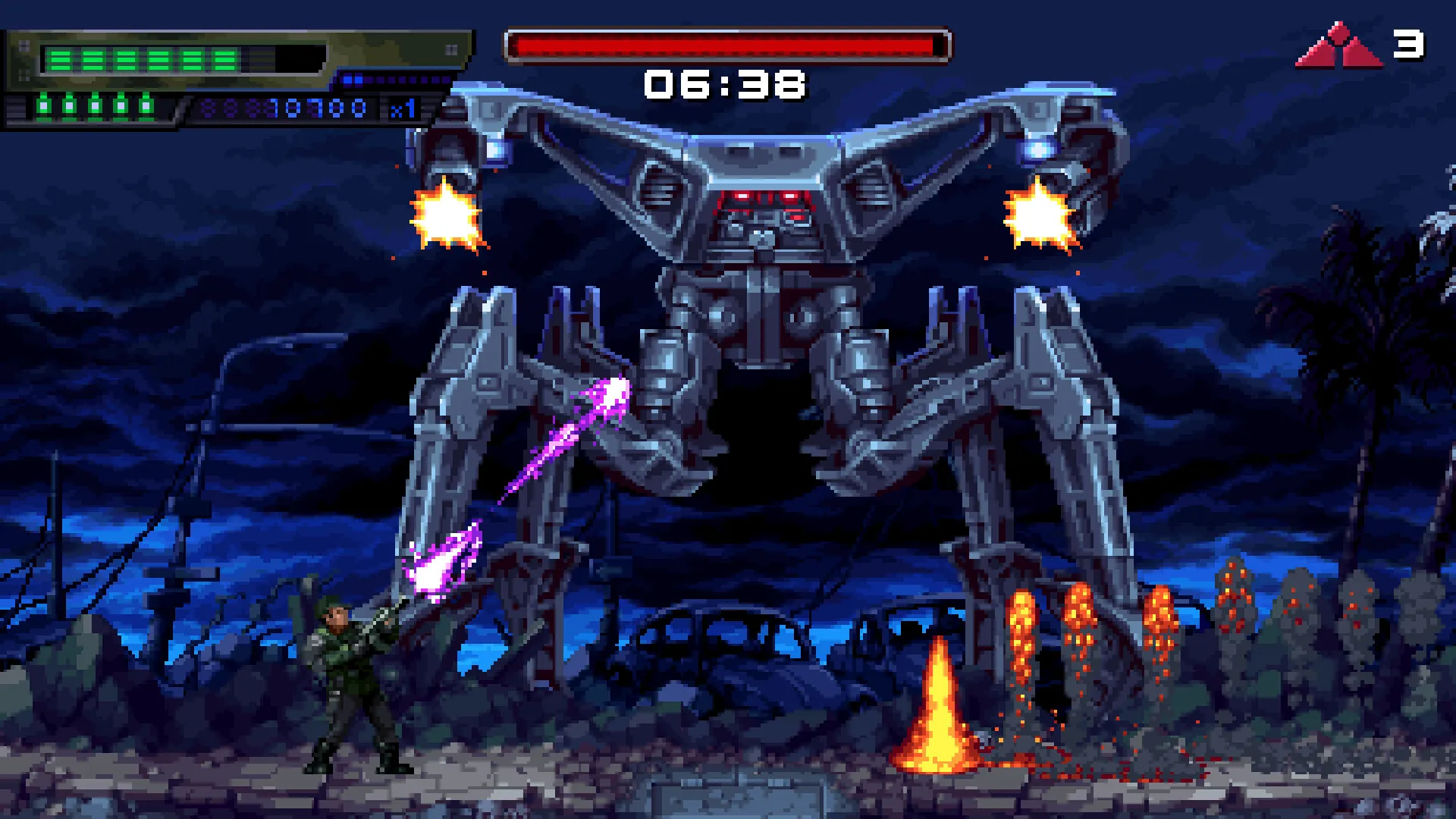
The weapon system keeps momentum high. Your primary guns come with infinite ammo, and power-ups scattered through the stages provide short-term spikes in output. Spread shots and homing plasma bolts show up as the most obvious examples, and they help you carve through waves of enemies before the effect wears off.
The campaign regularly changes the rules to keep the run-and-gun core from turning monotonous. One level removes Sarah Connor’s weapons and shifts the focus to escape and timing in Pescadero Hospital. The tension comes from vulnerability, with the T-1000 acting as a moving threat you need to avoid through careful movement.
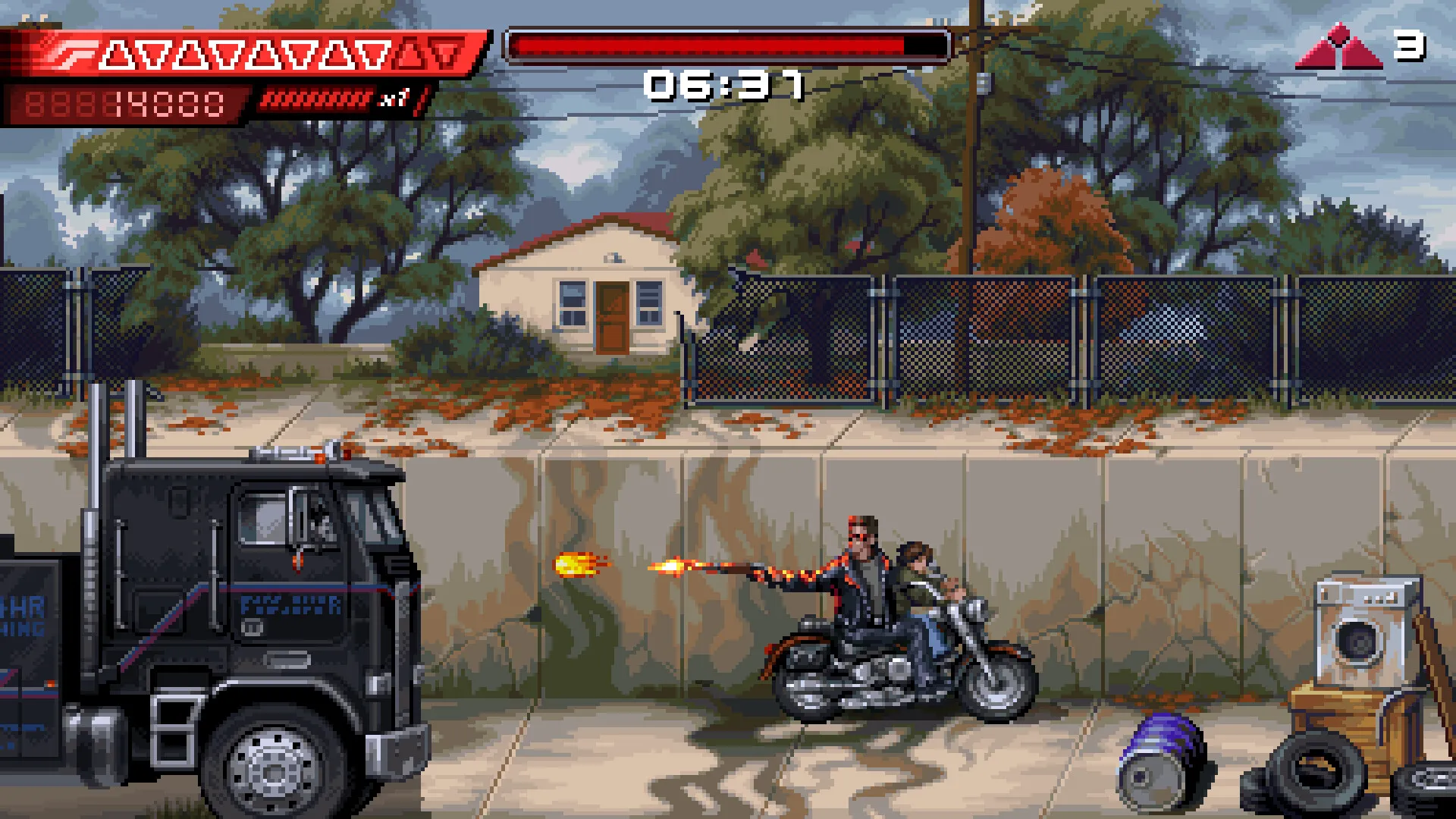
Another stage shifts into beat-em-up territory, putting you in control of a naked T-800 in a biker bar, throwing punches and even smashing the jukebox for a musical Easter egg. Then there are the driving sections: top-down sequences built around quick lane changes, dodging hazards, and returning fire at pursuers. The setup recalls the Turbo Tunnel from Battletoads, with a version of that pressure that lands as less punishing.
Difficulty settings make a real difference in how the game plays. Arcade mode restricts lives and continues, and higher settings ramp up enemy counts. Surviving on those modes leans heavily on memorizing placement and patterns, since the screen can fill fast and small mistakes compound quickly.
16-Bit Production Values
Visually, the game commits to early-90s hardware strengths and limitations. Pixel art builds its mood through dark blues and industrial greys, and the animation work often carries the presentation. The T-1000 stands out most. His movement has a liquid fluidity that reads clearly even at low resolution.
In the Steel Mill level, he melts through walls. When liquid nitrogen enters the sequence, he freezes and shatters into ice chunks. Those details echo the film’s special effects with striking clarity. Smaller character touches land too, like Sarah Connor swinging her body to build momentum when jumping onto ladders.
Some of the human animation falls short of that peak. The characters can move with a stiff gait, and Sarah’s walk sometimes locks her knees in a way that looks rigid next to the smoother machine motion.
Audio supports the visual direction closely. The soundtrack delivers 16-bit arrangements of the Brad Fiedel score, translating cinematic tension into chiptune form without losing the sense of threat. Sound effects do their share of work in the feedback loop: shotgun blasts hit with a crunchy impact, and plasma rifles cut through the mix with a high-pitched whine. Put together, the presentation hits its goal cleanly. The game looks and sounds like a premium title built for 1991.
The Review
Terminator 2D: NO FATE
Terminator 2D: NO FATE stands as a triumphant love letter to 16-bit action gaming. It captures the mood of the 1991 blockbuster with authentic pixel art, a thumping soundtrack, and tight run-and-gun mechanics. The short campaign and occasional stiffness in human animations remain minor drawbacks. The branching paths and varied gameplay styles offer plenty of reasons to return. It is the adaptation fans waited decades to play. This is a nostalgic and faithful experience.
PROS
- Authentic 16-bit visuals and audio
- Tight run-and-gun gameplay
- Branching narrative paths
- Faithful recreation of movie scenes
CONS
- Short campaign length
- Stiff human animations
- Locked alternate content