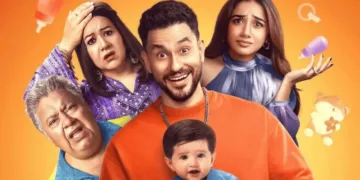






























The six-episode family-comedy-drama Single Papa opens on Gaurav Gehlot, a recently divorced man whose strongest wish is to become a parent. His desire sits at odds with his ex-wife Aparna’s refusal to have children, a fundamental incompatibility that ended their marriage. The plot gains momentum when Gaurav finds an abandoned infant in the backseat of his car and names the child Amul.
That discovery activates his long-standing longing and leads him to pursue single-parent adoption. The series then follows Gaurav’s legal fight to gain custody of Amul. That battle places him opposite the strict adoption officer Romila Nehra and brings him into conflict with his own disorderly family, who privilege reputation and convention over his emotional needs.
The show functions as a cultural critique, calling attention to the institutional and social barriers single men face when seeking to adopt in India. The premise connects to broader international conversations about shifting gender roles and the changing shape of family life inside Indian households.
The Ensemble and the Man-Child Archetype
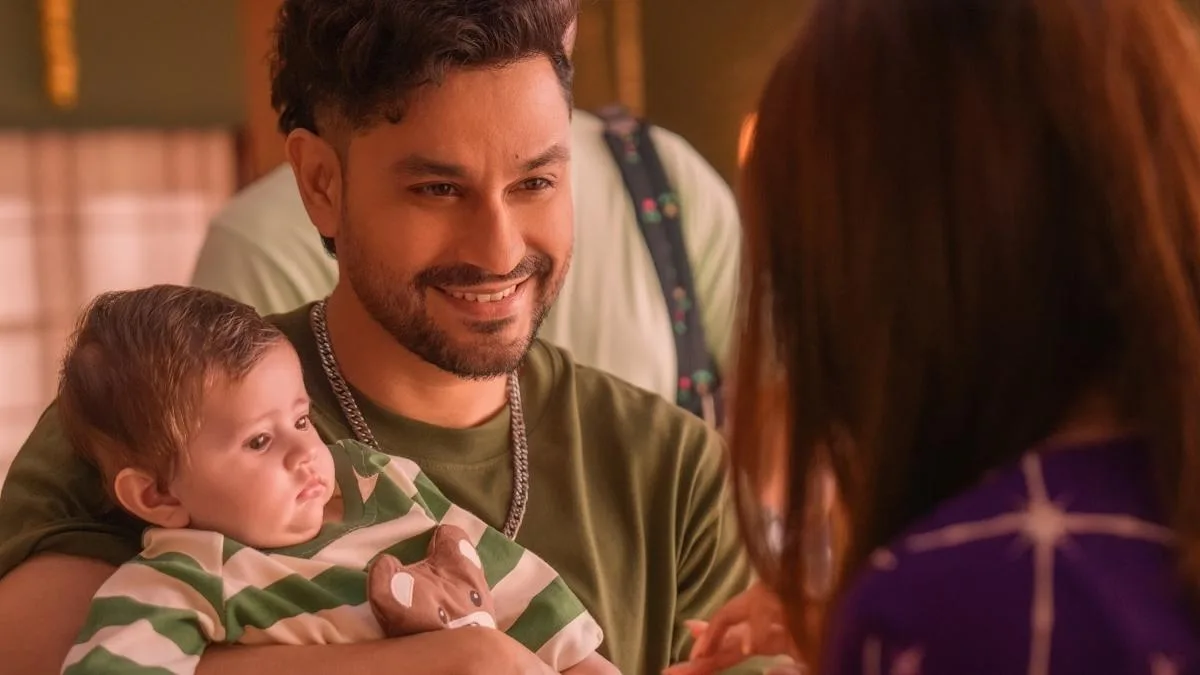
Kunal Kemmu plays Gaurav and anchors the series with a familiar “man-child” or “sweet-slacker” persona that appears in much recent Indian cinema. The script repeatedly shows his immaturity in the early episodes. He continues to rely on his mother for simple tasks, follows a pared-down to-do list, and greets the idea of fatherhood with a sense of entitlement, asking his ex-wife for a positive recommendation.
During the custody trial period his inexperience resurfaces; he becomes overwhelmed by basic childcare duties and is shown distracted while Amul is nearby. Despite these comic failures the writers give him a clear emotional commitment to the child that fuels his perseverance. That blend of irresponsibility and sincere paternal impulse forms the center of the character’s appeal.
Ayesha Raza, as Gaurav’s mother Poonam, delivers the series’ strongest performance. Poonam supplies the best comic beats by combining an extroverted manner with moments of gentle absurdity. Her response to a threat of self-harm with a butter knife and her insistence on eccentric, superstitious counsel from a religious leader are played for laughs yet remain grounded by her straightforward delivery. Neha Dhupia’s Romila Nehra acts as the principal institutional obstacle.
Also Read






As chairperson of the Central Authority for Child Adoption (CACA) she enforces rigid rules and regards Gaurav’s unstable family life and immaturity as grounds to question his fitness to parent. Seasoned supporting actors including Manoj Pahwa as the father Jatin and Prajakta Koli as the sister Namrata give reliable contributions, though some of their plots remain conventional, focusing on parental resistance and an impending wedding.
Cultural Context and Thematic Limitations
Single Papa raises a clear social question about why a single man’s capacity for committed parenthood or paternal affection is often judged as less stable than a woman’s within a patriarchal context. Gaurav’s quest exposes the bureaucratic and social hurdles single male applicants encounter in India. Romila’s repeated insistence on stability, and her preference for the female applicant Sayonee over Gaurav, illustrates institutional bias against non-traditional family forms.
The family conflict serves as a dramatized mirror of cultural tensions in conservative households. The parents’ strong opposition to adoption stems from worry about public image and concern that Namrata’s marriage prospects might suffer. That storyline shows how tradition and reputation can override a family member’s emotional wellbeing. The series earns credit for addressing this theme and it echoes public moments when single women, including Sushmita Sen, campaigned for the right to adopt.
At the same time the series frequently retreats into surface-level comedy. The writers lean on wordplay and situational jokes; an example is the repetitive gag that confuses “impotent” with “important” during a serious marriage discussion. This comic preference for adolescent humor reduces the opportunity for a deeper, reasoned examination of adoption discrimination.
The narrative tends toward sentimental resolutions and convenient moves rather than sustained exploration of the emotional costs or structural logic behind the bias it portrays. That approach trims the complexity the subject merits and often shortchanges realistic confrontation with the issues.
Direction, Script, and Execution
The script, credited to Neeraj Udhwani and Ishita Moitra, shows uneven execution. The premise remains strong, but the series struggles to hold a steady balance between its comic rhythms and emotional stakes, producing a sometimes lopsided narrative flow. The potential for domestic chaos in the home of a man suddenly responsible for an infant receives only intermittent attention, with many moments passed over in quick montages of a crying baby or Gaurav practicing basic care.
Pacing proves meandering in places. Several tangential subplots, such as the father’s social life and the mother’s search for spiritual guidance, add limited value and stretch running time. Direction by Shashank Khaitan and Hitesh Kewalya leans toward old-school Bollywood sentiment, which gives the series a light, family-accessible tone that will appeal to some viewers in contrast to grittier contemporary dramas.
Still, many conflicts that accumulate, including Romila’s strict opposition and the parents’ deep resistance to Amul, reach resolution with sudden emotional reversals in the final episodes. Those rapid turnarounds allow tidy endings but they read as forced, relying on sentiment to close narrative gaps rather than on developments that grow organically from the story.
Single Papa premiered on December 12, 2025, and is available for streaming on the platform Netflix. It is a Hindi-language comedy-drama consisting of six short episodes, each with a running time of approximately 30 to 45 minutes. The show centers on Gaurav Gehlot, a recently divorced man whose determination to adopt an abandoned infant, Amul, forces him into a chaotic battle against traditional societal norms and his own conservative family.
Full Credits
Title: Single Papa
Distributor: Netflix
Release date: December 12, 2025
Rating: 13+
Running time: 6 episodes, approximately 30–45 minutes each
Director: Shashank Khaitan, Hitesh Kewalya, Neeraj Udhwani
Writers: Ishita Moitra, Neeraj Udhwani
Producers and Executive Producers: Aditya Pittie, Samar Khan
Cast: Kunal Kemmu, Manoj Pahwa, Neha Dhupia, Ayesha Raza Mishra, Prajakta Koli, Suhail Nayyar, Isha Talwar, Dayanand Shetty
Editors: Manan Sagar
The Review
Single Papa
Single Papa is a light, emotionally driven family drama anchored by a committed performance from Kunal Kemmu and strong comedic support from Ayesha Raza. It succeeds in starting a necessary conversation about single-male adoption and challenging traditional ideas of parenthood in Indian society. However, the inconsistent writing, reliance on superficial humor, and overly convenient resolutions prevent it from truly capitalizing on its powerful premise. It is a feel-good, breezy watch, but one that sacrifices complexity for sentimentality and tidiness.
PROS
- Successfully highlights the societal bias against single men who wish to adopt.
- Her portrayal of Poonam provides the series' most successful and genuine comedic relief.
- His performance anchors the show, making Gaurav’s emotional dedication to the child believable.
- Offers a refreshing, sentimental viewing experience amidst a trend of aggressive dramas.
CONS
- The script often feels stretched and fails to sustain emotional momentum across all six episodes.
- Relies too heavily on repetitive wordplay and predictable situational comedy.
- Major conflicts are resolved abruptly through sudden emotional shifts rather than earned character growth.
- Side plots (like the religious leader track) feel unnecessary and distract from the main adoption story.