







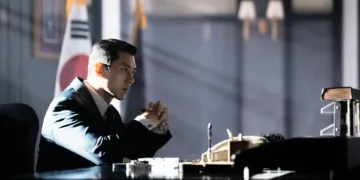


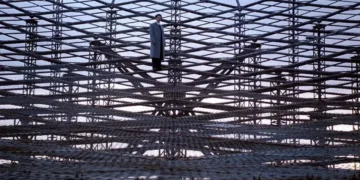











In 1975 Istanbul, tradition hangs in the air like expensive perfume, and upper-class rules tighten every room they enter. Kemal Basmacı sits comfortably near the top of that order: wealthy, educated, and preparing to marry Sibel, a woman who matches his status and polish.
Their engagement plays like a tidy merger between two elite circles, the sort of arrangement that looks perfect behind glass. Then a routine stop at a boutique cracks that display case. Kemal meets Füsun, a younger relative with far fewer resources, and that brief encounter knocks his life off its scripted track and into something private, obsessive, and carefully hidden.
The story leans on a framing device in which an older Kemal speaks about a museum, a place that holds the physical leftovers of his fixated years. It functions as memory storage with an admission fee. From the start, the series builds tension between social duty and a consuming inner life, with Istanbul’s polite surfaces masking the mess underneath. One chance meeting becomes the first domino in a decades-long pursuit of someone who starts to feel less like a person and more like a haunting.
Performers in a Gilded Cage
Selahattin Paşalı plays Kemal with a very specific kind of obliviousness. He moves from polished businessman to a man steered by a single obsession, and Paşalı sells that slide with eerie ease. He gives Kemal the vacant stare of someone who suddenly remembered he left the oven on thirty years ago. It’s funny until it isn’t. He captures the self-absorption of a man who carries zero guilt while maintaining a double life, moving through scenes like his feelings deserve the loudest seat at the table.
Across from him, Eylül Lize Kandemir gives Füsun a quiet strength and keeps her from reading as a passive figure. She grows from shop assistant into someone weighed down by Kemal’s constant presence, and Kandemir lets you feel that pressure in the stillness of her reactions. Oya Unustası brings sharpness to Sibel, the sophisticated fiancée forced to watch her world collapse in public.
Sibel has ideals and intellect, and the show makes it sting that these qualities register as background noise to Kemal once Füsun enters his line of sight. Tilbe Saran stands out as Kemal’s mother, Vecihe, a character who sees her son clearly when others keep admiring the packaging. She recognizes his flaws and doesn’t pretend they are charming.
There’s also a practical problem the series never fully solves: the chemistry between the two leads runs thin. The early attraction plays more like a plot checkpoint than a felt connection, and their scenes rarely generate the heat that could justify the damage that follows.
The Architecture of a Fixation
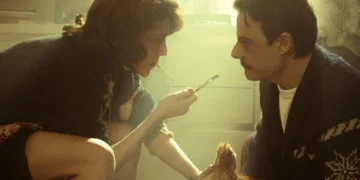
Kemal’s behavior skews clinical, like romance reframed as inventory management. He treats affection as stolen property, pocketing lipstick-stained teacups, gold butterfly earrings, and porcelain dog figurines. A wall covered in four thousand cigarette butts lands as the clearest image of his mania, both meticulous and unsettling. He collects objects to simulate ownership, treating them like extensions of Füsun and turning keepsakes into proxies.
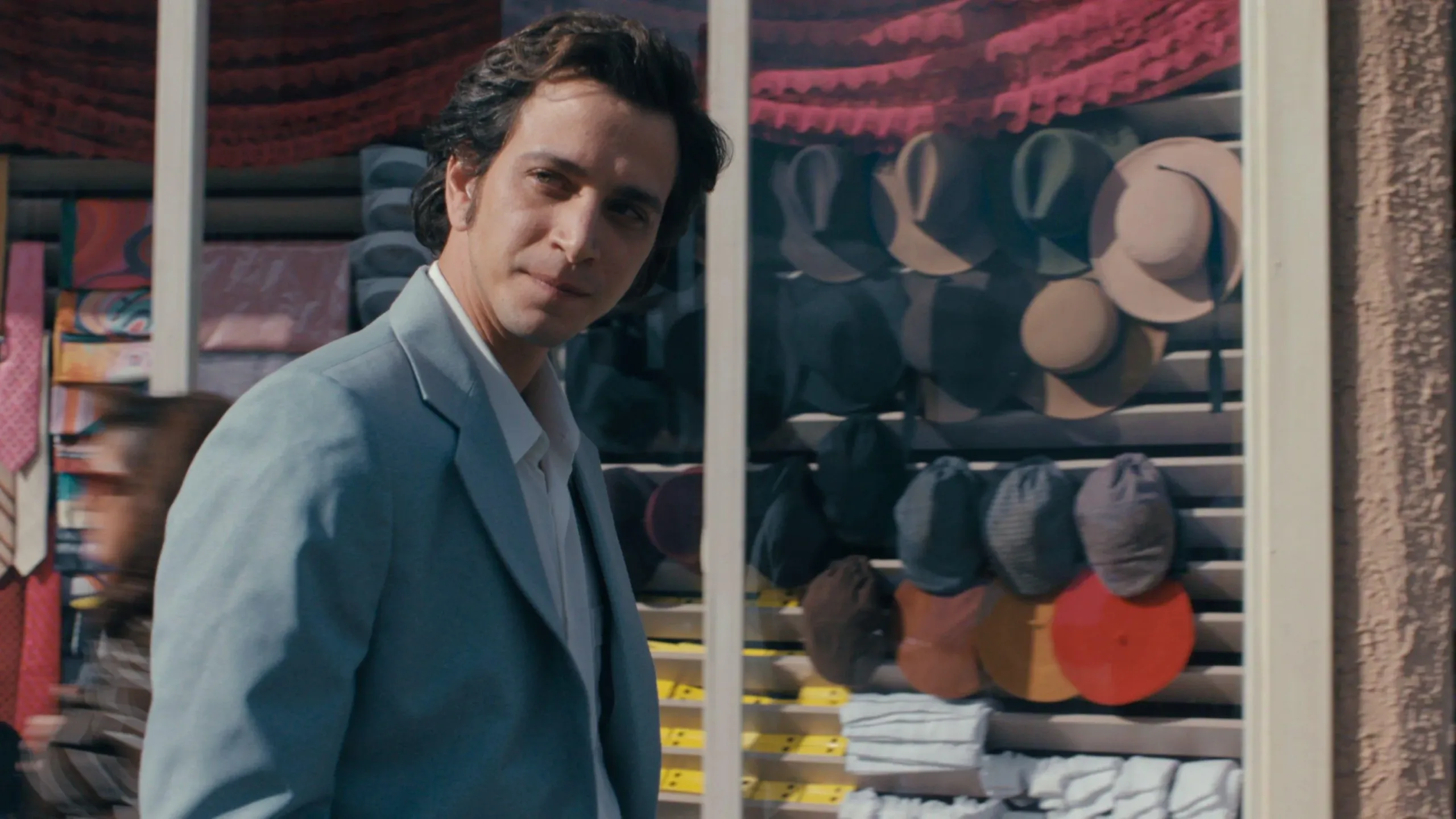
The show pushes that idea further in tactile, unpleasant ways. Kemal licks and lathers these items with a level of intimacy that feels grimy, and the direction wraps it all in soft golden light while gentle music hums along. That aesthetic choice creates a strange gap between the romantic coating and the reality of a stalker’s ritual.
The harm is real for Füsun and her family, and Kemal’s indifference to their distress becomes part of the portrait. As his fixation deepens, his career and social circle fall away, leaving him alone with his hoard of trinkets and his self-approved logic.
The museum stands as a monument to a toxic bond, a curated record of psychological decay. It tracks a man sliding into a self-made prison of souvenirs, choosing a plastic doll’s arm over the demands of an actual relationship. His love plays out as acquisition after acquisition, each object adding another bar to the cell he keeps calling devotion.
A Saccharine Lens on 1970s Turkey
Murat Güney’s production design is one of the series’ clearest strengths. The sets overflow with lush carpets and massive crystal chandeliers, details that broadcast the tax brackets of Istanbul’s 1970s elite in every shot. The period recreation looks meticulous and expensive, the kind of visual confidence that announces itself before any character speaks.
The cinematography commits to a saccharine sheen, with frames that look dipped in syrup. It creates a melodramatic atmosphere that leans into the texture of a high-end soap opera, where feelings arrive dressed for the gala. Editing and pacing turn into the bigger stumbling block. The narrative moves sluggishly, testing patience as it circles the same compulsions again and again. Watching Kemal return to the same house to steal the same types of items becomes exhausting, less like escalation and more like repetition with different lighting.
The series reaches for melancholy tied to the memory of the city and its history, and the background score keeps pressing that emotional weight into the scene. It lands like a somber take on modern stadium rock, guiding the viewer toward a prescribed mood. The visuals and sound team up to create a heavy viewing experience, and the show keeps betting on beauty even while its structure loosens. By the time the museum comes back into view, it feels less like preservation and more like a glass case filled with the cost of looking backward.
The Museum of Innocence premiered on February 13, 2026, as a Netflix limited series. This highly anticipated Turkish production follows the Nobel Prize-winning novel by Orhan Pamuk. It is currently available for streaming exclusively on Netflix. The story transports viewers to 1970s Istanbul. It explores the complex social dynamics and obsessive love between Kemal, a wealthy heir, and his distant relative, Füsun. With nine episodes, the series offers a deep, visually striking look into a transforming city.
Where to Watch The Museum of Innocence


Full Credits
Title: The Museum of Innocence
Distributor: Netflix
Release date: February 13, 2026
Rating: TV-MA
Running time: 33 to 60 minutes per episode
Director: Zeynep Günay
Writers: Ertan Kurtulan, Orhan Pamuk
Producers and Executive Producers: Kerem Çatay, Emrah Gamsızoğlu
Cast: Selahattin Paşalı, Eylül Lize Kandemir, Oya Unustası, Tilbe Saran, Bülent Emin Yarar, Gülçin Kültür Şahin, Ercan Kesal
Director of Photography (Cinematographer): Ahmet Sesigürgil
Editors: İdil Akkuş, Şenay İnce
Composer: Cem Ergünoğlu, Marios Takoushis
The Review
Museum of Innocence
While the production is visually stunning, it often confuses obsession with romance. The series traps its characters in a cycle of repetition that prioritizes a "syrupy" aesthetic over genuine emotional depth. It captures the look of a 1970s Turkish elite world perfectly but fails to justify the predatory nature of its lead. You are left watching a man curate a hoard of stolen trinkets rather than a meaningful love story. It is a beautiful, slow, and ultimately hollow monument to a very one-sided fixation.
PROS
- The recreation of 1970s Istanbul is meticulous and rich.
- Tilbe Saran and Oya Unustası bring gravity to their roles.
- The series uses a high-end, cinematic look that captures a specific sense of time and place.
CONS
- The narrative moves slowly with many repetitive emotional beats.
- The central romance lacks the spark necessary to fuel a nine-episode drama.
- The direction romanticizes behavior that is objectively predatory and controlling.