






















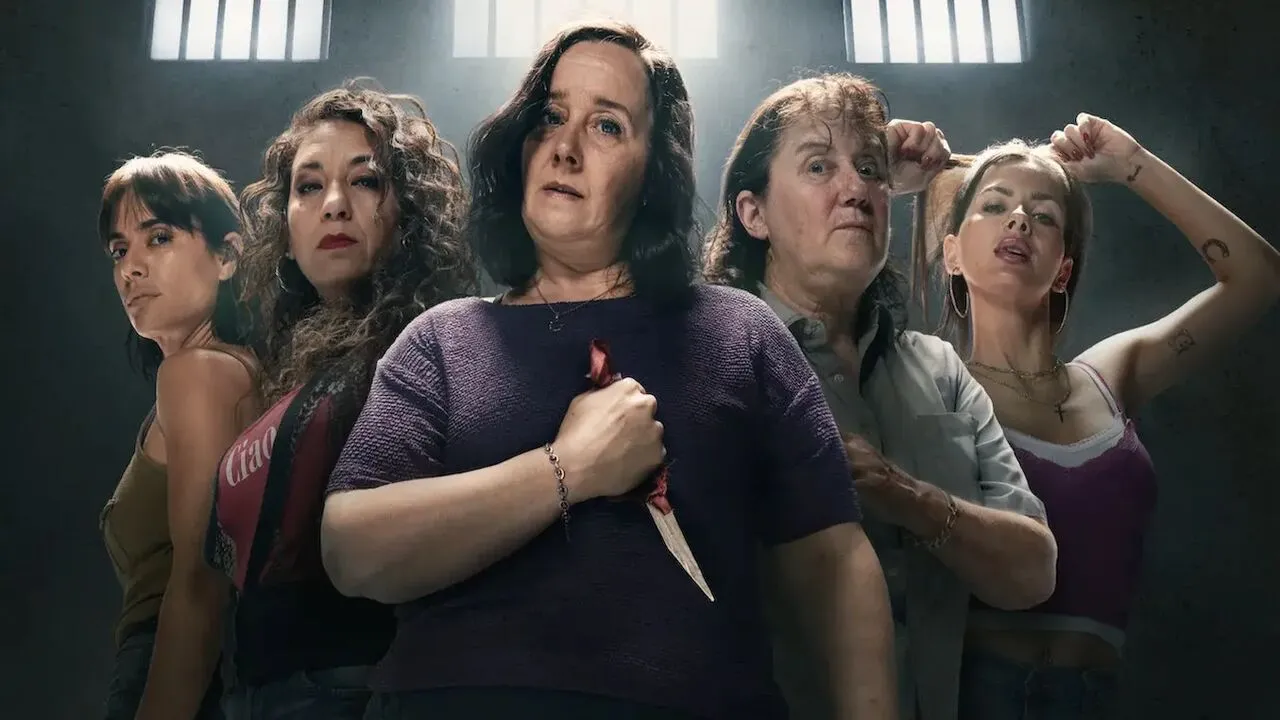

In the Mud Season 2 drops back into the drained corridors of La Quebrada, an Argentinian women’s prison where every breath seems weighed down by dread. It opens with Gladys Guerra trying to hold together a life on parole. Her days are spent stocking shelves at a supermarket, with one clear motive: give her grandson something steadier than the chaos she came from. That small patch of routine collapses after a drug transport job turns sour. An informant sets her up, she gets arrested, and she is sent back into the same confinement she already fought her way out of.
The version of La Quebrada she returns to carries familiar bleakness in Buenos Aires and inside the blocks, yet the social arrangement inside has changed shape. Inmates move through high-stakes criminal operations, including a crew of women who leave the facility at night to drug and rob unsuspecting tourists. The season does not treat prison life as a checklist of endurance clichés. It keeps its attention on what constant danger does to people, and on the thoughtless bargains and splintered alliances that form once a fresh power structure settles in.
Institutional Decay and the New Hierarchy
Beatriz Lanteri arrives as the new warden, and her presence marks a change in how La Quebrada is managed. She reads shifts in the inmate population with sharp instincts, keeping control through watchful, deliberate supervision that still feels fragile. Under her, the main block now answers to Gringa Casares. Gringa rules on impulse and intimidation, with violence as policy and fear as her main enforcement tool. She has pushed La Zurda out of her previous position of authority and left her living in submission.
La Zurda’s removal is practical as much as it is symbolic. She loses internet access and other means of communication, and the tools that once made her powerful disappear. Into that tense ecosystem comes Gladys again, carrying the kind of history that can change how people place their bets. A possible partnership between Gladys and La Zurda sits in the background like a lit fuse, because it carries the potential to loosen Gringa’s grip on the block.
The corruption here reads as structural, reaching past the prison gates. Antin has risen into the national security sector, and he still reaches straight into internal prison decisions. Alongside him, Aquino helps keep drug trafficking running and supports kidnapping schemes that serve political blackmail. The show frames this as a shared ecosystem of authority and criminality, a place where uniforms and rackets operate inside the same compromised machine. The irony lands hard: a prison marketed as containment functions like a pipeline.
Identity Forged through Consequence
Life in La Quebrada forces choices that arrive under pressure and collect interest immediately. Gladys Guerra stays tethered to her grandson, and the threats against the boy after her arrest inject urgency into every decision she makes. Her storyline puts a price tag on protection, especially inside a system that punishes altruism as a weakness other people can exploit.
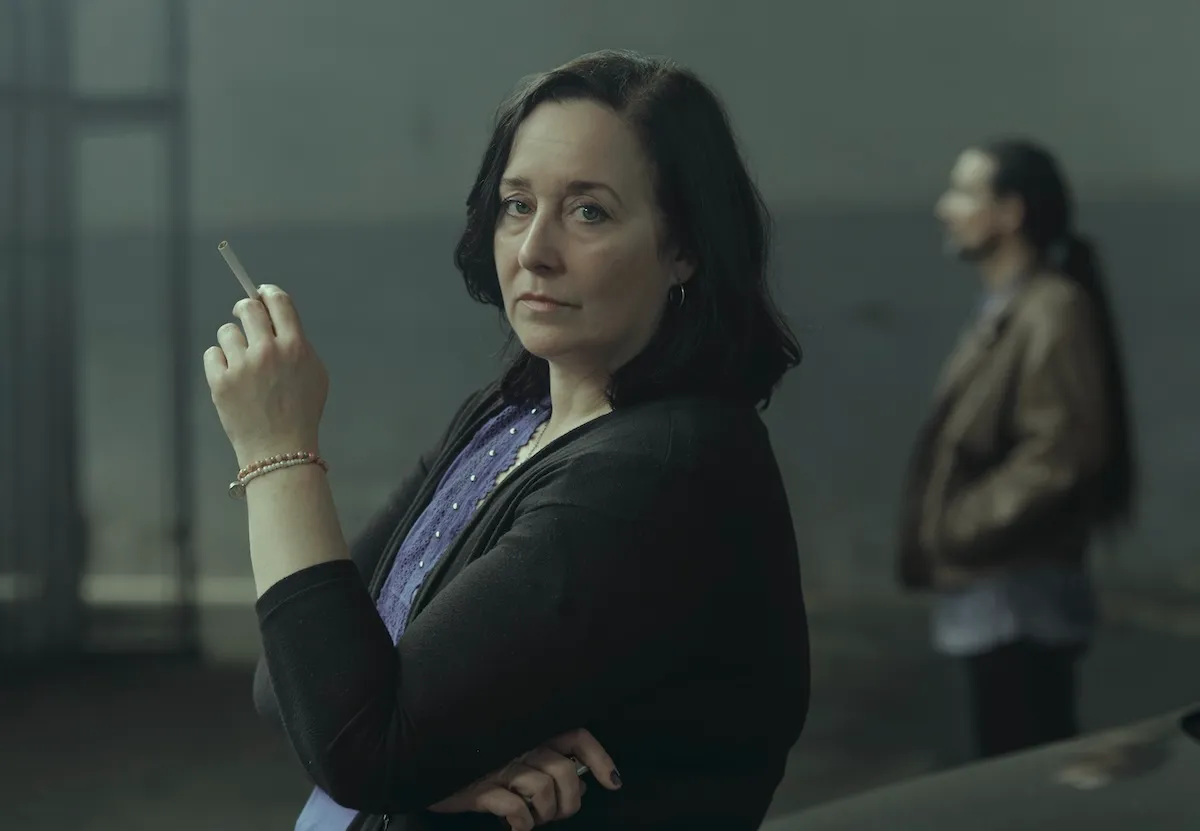
Nicole Garcia enters the prison as a high-class prostitute accused of money laundering. She takes on a complicated role as Gringa’s protégé, which gives her proximity to power and also traps her inside it. Her attraction to Solita sharpens the danger, because desire becomes a fault line in a relationship built on control and obligation. The season treats that friction as emotional and political at once, the kind of tension that grows in closed systems where safety is traded like currency.
Yael Rubinal moves through the facility like a lone wolf. She uses toy donations meant for children as a channel for narcotics, turning gestures of care into logistics for survival. Her thread carries grief and calculation in the same breath, a portrait of decision-making under scarcity that does not leave much room for sentimentality. Helena, a former history teacher, fights to protect her son’s future from inside a cage that flattens status fast. Her background sits against the prison environment in a way that makes class feel temporary and fragile, a label that evaporates once the doors lock.
Each of these women sits at a crossroads of sacrifice and necessity, and the show keeps their identities in motion. People here get remade by outcomes. Every choice leaves a mark, and every mistake becomes public knowledge inside a space built to watch, judge, and remember.
The Cinematography of Surveillance
Season 2 holds to a measured pace that lets tension accumulate without manufactured speed. A prison-wide investigation into a brutal murder triggers paranoia that spreads across every block, shifting relationships and turning ordinary exchanges into tests. The mystery reaches outward into external crime networks and kidnapping plots, which makes the prison feel permeable. The walls exist, yet the outside keeps bleeding in through money, leverage, and fear.
Visually, the series leans on tight framing and long hallway passages that keep the viewer in a state of observation. The camera language stresses confinement and the disappearance of privacy, underlining that these characters live in a place where being seen is the default condition. That look pairs with scenes of explicit content that help define the show’s refusal to soften its world for comfort.
The sound design stays minimalist. Music arrives sparingly, used to puncture moments of stress rather than carry them. Silence and thin audio cues leave space for the prison itself, letting ambient noise and quiet gaps do the work of atmosphere. The direction keeps editing restrained, focusing on small gestures that signal loyalties shifting in real time.
There’s a wider television trend embedded in these choices: a season structured like a slow-pressure system, built on institutions, networks, and complicity rather than standalone shocks. In a landscape shaped by streaming-era habits, this kind of pacing trusts the audience to sit with discomfort and track power as it mutates. The show’s cultural impact comes from that commitment and from its focus on women inside an apparatus that treats them as expendable, while also showing how quickly they build their own hierarchies once the state’s hierarchy reveals its own rot.
The second season of the Argentinian prison drama In the Mud (En el barro) premiered globally on Netflix on February 13, 2026. This season continues the gritty, high-stakes narrative of life inside the women’s prison of La Quebrada, expanding on the power struggles and survival tactics of the inmates following the events of the first installment. As an official spin-off of the acclaimed series El Marginal, the show has quickly become a standout for the streaming platform in Latin America and beyond. All eight episodes were released simultaneously, allowing fans to dive straight into the evolving criminal hierarchies and new alliances formed under the brutal leadership of Gringa Casares.
Where to Watch In the Mud Season 2


Full Credits
Title: In the Mud Season 2
Distributor: Netflix
Release date: February 13, 2026
Rating: TV-MA
Running time: 45–60 minutes per episode
Director: Alejandro Ciancio, Estela Cristiani
Writers: Silvina Frejdkes, Alejandro Quesada, Omar Quiroga, Sebastián Ortega
Producers and Executive Producers: Sebastián Ortega, Rodrigo Paz, Johanna Weinstein, Pablo Culell, Javier Pons, Juan Ponce
Cast: Ana Garibaldi, Eugenia Suárez, Verónica Llinás, Carolina Ramírez, Camila Peralta, Inés Estévez, Julieta Ortega, Gerardo Romano
Director of Photography (Cinematographer): Sergio Dotta, Miguel Abal, Miguel Valfré
Editors: Guillermo Gatti
Composer: María Becerra, Xavier Rosero Moreira (XROSS)
The Review
In the Mud Season 2
This second season succeeds by maintaining a focus on the gritty reality of life in La Quebrada. The shifted power dynamics and the introduction of Gringa Casares create a constant state of tension. Gladys Guerra remains a sympathetic anchor for the viewer. The series stays raw and visceral. It avoids softening the harsh environment. The minimalist style allows the emotional stakes to feel earned. This remains a brutal look at survival in a broken system.
PROS
- Strong ensemble cast performances.
- Visceral and atmospheric visual style.
- Direct exploration of institutional corruption.
- Tense and unpredictable plot progression.
CONS
- Occasional reliance on shock value.
- Formulaic prison drama elements.
- Underdeveloped subplots regarding external networks.
- Stylization that borders on glamorizing chaos.