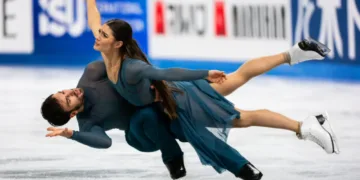































Netflix’s three-part Glitter & Gold: Ice Dancing enters the punishing, polished world of elite skating with a straightforward story engine: three premier teams chase qualification while preparing for the Milano Cortina 2026 Winter Olympics. Ice dancing is treated as craftwork built from strength, balance, and precise artistry. Scores remain part of the picture, yet the series keeps its attention on what produces them, the exhausting pursuit of a routine that can look effortless under arena lights.
The athletes at the front of this documentary are Madison Chock and Evan Bates for the United States, alongside Canada’s Piper Gilles and Paul Poirier. A new French partnership, Laurence Fournier Beaudry and Guillaume Cizeron, arrives late enough to send a ripple through a field decided by fractions.
The production looks past costumes and spectacle and stays with training blocks, travel fatigue, and the mental load of Olympic expectations. International events function as checkpoints, each one asking the skaters to prove readiness while protecting a season from collapse. The result is a grounded view of a sport often reduced to sparkle and illusion.
Dynamic Portraits of Ice Partners
Chock and Bates serve as the veteran anchor. The series leans on their long timeline together, showing how years of competition grew into a romantic relationship and, recently, marriage. That shared history adds emotional gravity to their skating and heightens the pressure behind every choice. They carry the awareness that this may be their final season, a reality that turns each program into a step toward a closing chapter. Their arc is legacy told in quiet beats: measured ambition, controlled nerves, and the knowledge that time is running short.
Gilles and Poirier bring a different kind of momentum. They are known for routines that some viewers label unusual, and the show treats that reputation as part of their competitive plan. The desire to stand out shapes how they choose material and how they sell it, and their segments underline how identity on the ice can be engineered as carefully as a lift. The series watches them chase clarity inside bold ideas, where a small adjustment can sharpen a concept or blur it.
Fournier Beaudry and Cizeron supply the sharpest shift in the group. The documentary stresses how new the partnership is, formed ten months before the games, and it presents that timeline as a public wager. Cizeron carries the weight of past legendary success, placing extra scrutiny on every choice made in this new venture. Their presence changes the air in shared spaces, and the series tracks the reaction through small details: looks during practice, a tightening of focus, and the sense that rivals are measuring one another in real time.
Also Read






Across all three teams, the documentary keeps the focus on the people behind the public image. It highlights personal health struggles and the anxieties that haunt elite athletes. These partnerships function as a single unit, held together by trust, routine, and an emotional bond that carries real cost. The show treats that bond with intimacy, keeping the Olympic goal concrete and personal.
The Construction of a Flawless Routine
The physical demands of ice dancing come through in training sequences that refuse to romanticize repetition. A single movement gets drilled until timing and balance become instinct. Countless hours go into making complex lifts look light, and the series returns again and again to the truth that “effortless” is a performance built through labor. A sweeping pattern that looks smooth on television sits on top of thousands of failed attempts, resets, and corrections.
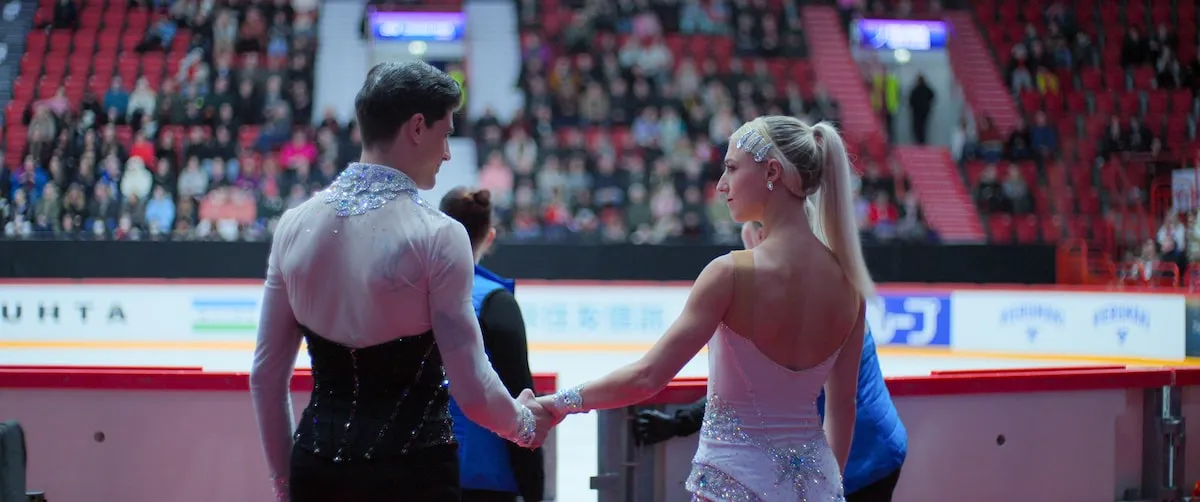
Coaches and technical advisors take a central role in this process. The documentary gives them room to show how routines are built through calculation, timing, and precision that borders on the scientific. In a scoring system where a fraction of a point can decide the podium, details carry consequences.
The series shows how that pressure filters into everything, down to hairspray used to keep a strand from breaking a line, or the genuine danger of a costume catching during a lift. The footage strips away the easy fantasy of the finished product and builds respect for the labor behind it.
The teams also move through a relentless international circuit, using events as milestones. Each outing offers feedback and fresh risk, and one mistake can end a season. The documentary mirrors that pressure, shifting from the hush of a practice rink to the roar of a stadium, letting the audience feel how quickly private work becomes public judgment.
Tensions and Technical Perspectives
The competitive atmosphere runs hot, and the series does not pretend otherwise. It captures the strain that grows when rivals share a practice space, especially with the French and American teams training in the same facility. Some sessions play like silent standoffs, heavy with unspoken comparison. The show frames these moments as part of the sport’s mental game, a form of psychological warfare carried out through presence, repetition, and restraint.
Adam Rippon joins as a commentator, offering technical clarity without turning the series into a classroom. He points out the specific energies that shift when a new partnership enters the field, and he helps explain why the Beaudry-Cizeron pairing caused such a stir in the skating community. His observations give viewers a vocabulary for what they are seeing, while still leaving space for the messy humanity the series wants to capture.
The documentary also acknowledges darker parts of the industry. It references past controversies and the pressures skaters face from governing bodies, giving the countdown toward Milan a harder edge. Training setbacks and emotional moments serve as narrative fuel, pushing the story forward without forcing anyone into a cartoon role. Ambition drives the conflict, and the series treats that conflict as a predictable result of athletes chasing the highest level.
A Grounded Approach to Visual Storytelling
The visual approach balances glossy cinematography with fly-on-the-wall access. Glamour shots on the ice are frequent, yet the strongest scenes happen away from the spotlight, in dressing rooms and hotel hallways where nerves show up in small gestures. The production avoids reality-television tricks. Moments play out without staged arguments or manufactured cliffhangers, and the competitors remain civil and professional, reflecting the culture the series is filming.
That restraint makes the emotional beats feel earned. The show explains the intricacies of the discipline while keeping the story moving, and it maintains an inspiring tone without pretending the work is gentle. The atmosphere holds enchantment and a stark sense of cost. Ice dancing comes across as beautiful and punishing, dependent on a frightening amount of work. That balance keeps the viewer engaged with both the technical detail and the human drama, and it lands as a refreshing take on the sports documentary genre.
Glitter & Gold: Ice Dancing premiered on February 1, 2026, as a three-part Netflix docuseries. Released just ahead of the 2026 Winter Olympics in Milano Cortina, the series provides an intimate look at the high-stakes journey of elite ice dancers as they prepare for the world’s most prestigious stage. It follows three premier pairs—Madison Chock and Evan Bates, Piper Gilles and Paul Poirier, and the newly formed duo of Laurence Fournier Beaudry and Guillaume Cizeron—documenting their rigorous training, technical challenges, and the personal sacrifices required to compete for gold. You can currently stream the entire series exclusively on Netflix.
Where to Watch Glitter & Gold: Ice Dancing Online


Full Credits
Title: Glitter & Gold: Ice Dancing
Distributor: Netflix
Release date: February 1, 2026
Rating: TV-14
Running time: 45 minutes per episode
Director: Katie Walsh
Writers: Katie Walsh, Giselle Parets
Producers and Executive Producers: Adam Christian Clark, Ameeth Sankaran, Giselle Parets, Gotham Chopra, JT Taylor, Victor Buhler, Yiannis Exarchos, Kostas Karvelas, Anne-Sophie Voumard, Jérôme Parmentier, David Herren
Cast: Madison Chock, Evan Bates, Piper Gilles, Paul Poirier, Laurence Fournier Beaudry, Guillaume Cizeron, Tara Lipinski, Adam Rippon, Amber Glenn, Isabeau Levito
Director of Photography (Cinematographer): Raphael Laski, Jessica Young
Editors: (Information not available)
Composer: Nikhil Seetharam
The Review
Glitter & Gold: Ice Dancing
Glitter & Gold: Ice Dancing provides a grounded look at the high-stakes world of elite skating. It prioritizes the human element instead of manufactured drama. The focus on the physical and emotional toll of training provides a refreshing perspective. This series respects the athletes and the discipline. It is a thoughtful examination of the sacrifices required for Olympic success.
PROS
- Intimate access to elite training sessions and athlete preparation.
- Avoidance of typical reality television tropes and artificial conflicts.
- Educational insights into the technical requirements of the sport.
- Strong focus on the emotional bonds between skating partners.
CONS
- Brief three part structure limits the depth of the narrative.
- Narrow focus on only three specific pairs leaves other perspectives out.