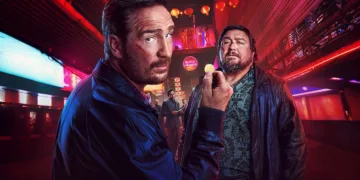





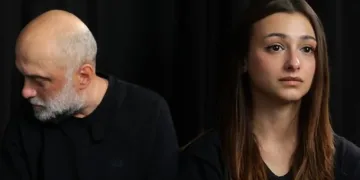
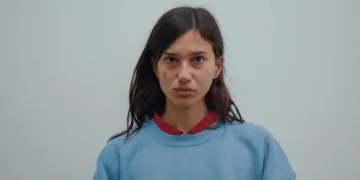
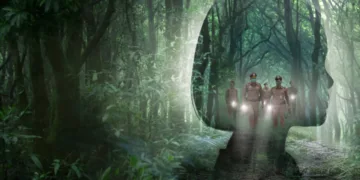
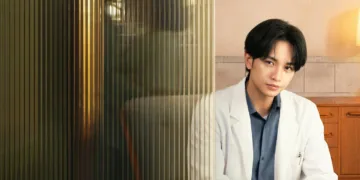





Charly returns like a ghost moving through the remains of his own existence. Two years after the failures that shaped him, he has settled into the gray routine of working as a locksmith in Berlin, a trade built on metal, secrecy, and intrusion. The calm has a false quality from the start. Detective Henning lingers as an instrument of the state, a steady reminder that guilt does not expire and that old crimes keep collecting interest. The search for the Catherine the Great ruble coin begins again.
A single piece of currency governs movement across countries and draws men into fresh danger. The narrative leaves Europe and heads toward the heavy air of Bangkok. Charly tries to inhabit the role of father to Jonas, yet his identity remains tied to the locks and safes he knows how to open. His tension with Samira gives the story one of its clearest pressures, the pull between domestic stability and criminal habit. The Georgian police enter the frame, and Arkadij remains a looming force.
The coin takes on the quality of greed turned mechanical, a system that keeps running long after any sane person would shut it down. Charly finds Joseph in Thailand, and their reunion unfolds through the debris of a restaurant fight involving Kees. The coin reduces national sovereignty to a kind of theater, full of uniforms and jurisdictions, still ruled by appetite.
Blunder-Competence and the Crim-Loop
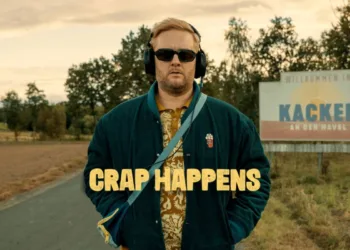
Frederick Lau plays Charly with a very specific species of exhaustion, the kind born from too many broken safes, too many bad calls, and too little sleep. He carries himself like a man who has been wearing the same clothes for ten years and has long since stopped asking for relief. Charly moves through this world like a reluctant pilgrim of failure, pushed forward by forces he understands far too well.
Christoph Krutzler supplies a strong counterweight in Joseph. Joseph is an improbable fighter, a man of considerable bulk whose reflexes arrive at strange, useful moments. Together they operate through a form of blunder-competence. Their survival rests on volatility. Nobody can predict them because they barely predict themselves.
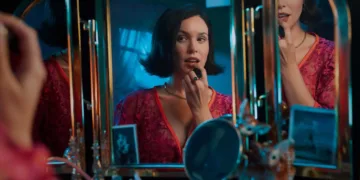
Samira gets material with shape and will. The writing gives her a distinct agency, and that matters. She wants a life that stands apart from the old pull of the safe and the men who keep circling it. Mark Ivanir returns as Arkadij and brings a chilly bureaucratic menace to the crime-lord function, as though the underworld had hired an administrator with a talent for dread.
Also Read





These figures exist inside what feels like a crim-loop, a cycle with its own merciless logic. They circle an inescapable gravity. Each effort at reinvention pulls the rope tighter. The series studies that trap with a bleak patience. It treats self-transformation as a story people tell themselves while the old machinery keeps humming.
The Aesthetics of Grubby-Realism
Marvin Kren works in a visual register of grime, something like the image equivalent of stale smoke clinging to fabric. The style favors sweat, stained concrete, and surfaces that look used up by bad luck. Darker tones dominate the frame, and the camera carries an agitated shimmer, as if the world itself were restless.
It captures danger as something immediate and shabby, never elegant. The contrast between Vienna’s cold streets and Bangkok’s neon humidity lands with force. That geographical shift gives the series a wider economic and moral map. Greed travels well. It adapts to climate.
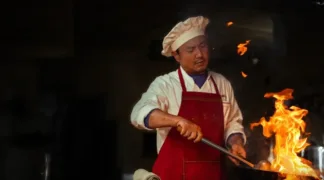
The action has weight. Bodies slam, strain, and absorb punishment. Violence arrives as a clumsy rupture, painful and disruptive, not as sleek choreography. That choice gives the series a physical honesty. Humor serves as a pressure valve inside all that dirt and panic. Joseph making schnitzel in a Thai kitchen has the rough absurdity of a man trying to preserve fragments of selfhood in a world that keeps stripping them away.
His participation in barroom shot contests adds the same flavor. These scenes keep the plot from floating into pure mechanism. They pin it to human foolishness, which is often funnier and sadder than any grand criminal scheme. The settings feel inhabited. Each room suggests prior mistakes, old damage, and lives that went crooked years earlier. Grubby-realism fits this series well. It gives the material a bruised texture.
The Momentum of Clutter
The story moves with frantic propulsion, like a car that has already lost control and is still picking up speed. Subplots crowd the frame and fight for air. Rio faces financial collapse in Austria while his relationship is falling apart. At first these strands seem to exist in separate compartments.
The coin eventually drags them into the same orbit. The writing does strain under the mass of its own design, though the pace helps conceal some of the seams. A few characters register as thinly drawn, functioning mainly as components in the larger machine. Even so, the chaos has a purpose. It acts as the series’ governing principle.
Problems accumulate until the structure nearly buckles. Twists appear frequently. Some land as credible developments. Some feel like abrupt turns taken in panic. The effect varies from scene to scene, and that inconsistency becomes part of the texture.
Every betrayal leaves residue. Every decision pushes somebody deeper into damage. The movement toward the ending is messy and unresolved in a way that suits the material. The series accepts clutter as fate. It presents lives trapped in a perpetual landslide, always moving, never cleanly arriving anywhere.
Crooks Season 2 premiered globally on April 14, 2026. This intense German crime thriller continues the story of an unlikely duo forced back into the criminal underworld. The series follows their high-stakes journey across international borders as they attempt to protect their families and secure a priceless artifact. The second season, along with the first, is currently available for streaming exclusively on Netflix.
Where to Watch Crooks Season 2 Online


Full Credits
Title: Crooks Season 2
Distributor: Netflix
Release date: April 14, 2026
Rating: TV-MA
Running time: 40–67 minutes
Director: Marvin Kren, Cüneyt Kaya
Writers: Benjamin Hessler, Georg Lippert, Marvin Kren
Producers and Executive Producers: Quirin Berg, Max Wiedemann, Marvin Kren, Kirstin Winkler
Cast: Frederick Lau, Christoph Krutzler, Svenja Jung, Jonathan Tittel, Brigitte Kren, Lili Epply, Lukas Watzl, Georg Friedrich, Florian Carove, Mimi Tao, D Gerrard, Thomas Mraz, Mark Ivanir, Maya Unger, Jan Georg Schütte, Raymond Thiry, Merab Ninidze, Martin Zauner, Marlene Hauser, Lucas Gregorowicz
Director of Photography (Cinematographer): Xiaosu Han, Andreas Thalhammer
Editors: Jan Hille, Christoph Loidl, Christoph Brunner
Composer: Stefan Will, Schallbauer
The Review
Crooks Season 2
This season succeeds through a commitment to a gritty, unpolished reality (a textured grime that clings to the screen). It trades narrative precision for a frantic, engaging momentum. The chemistry between the leads (a partnership built on shared exhaustion) remains the primary reason to watch. It is a messy, loud, and effective exploration of the inescapable crim-loop.
PROS
- Strong chemistry between lead actors
- Realistic and gritty aesthetic
- Fast pacing
- Expansion into international settings
CONS
- Narrative clutter
- Underwritten secondary characters
- Occasional logical gaps in the plot