




























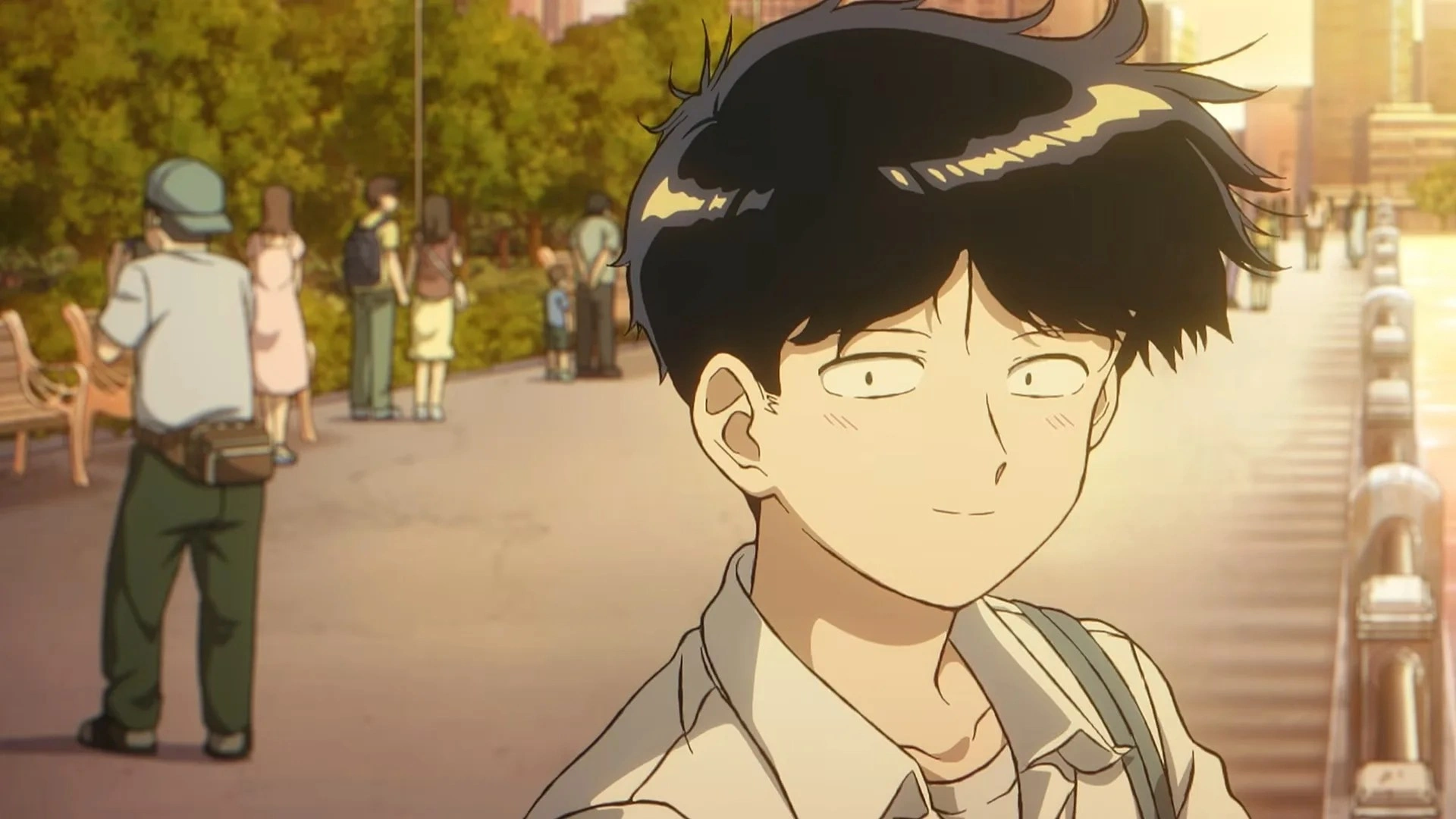

Hoshimi High opens with a soft detonation inside Okuto Nakamura’s head. Most freshmen have class schedules, social rankings, and cafeteria geography to worry about. Nakamura, fifteen and already at war with his own nervous system, has one concern: Aiki Hirose.
The school entrance ceremony sparks a crush that arrives fully formed, with no warm-up act and zero emotional brakes. Nakamura lives with severe social anxiety, a gloomy streak, and a social life represented by Icchan, his pet octopus. Hirose carries the traits Nakamura thinks he lacks: chestnut hair, easy warmth, and the kind of popularity that makes him seem open to everyone.
The series wastes no time pretending his feelings are a mystery. Nakamura admits his love to himself and the audience in the first minute, then spends the plot attempting the impossible task of becoming visible. His progress is awkward, slow, and tiny by any normal scale. For him, each step resembles a summit attempt. His mind screams while his body barely registers in the room. He is a boy sealed behind his own anxiety, searching for a ladder with shaking hands.
A Technicolor Artifact from Studio Drive
Studio Drive builds the series with the charm of a rediscovered animation cel. The visual approach pushes away from the polished digital sheen common in 2026 and leans into a retro style that recalls Rumiko Takahashi’s work. Rounded faces, soft lines, and watercolor-like backgrounds give the show a handmade texture.
That warmth matters. It softens Nakamura’s social chill and turns Hoshimi High into a place that feels remembered, slightly heightened, and emotionally oversized. The color palette is rich and saturated, so every hallway and classroom carries a nostalgic glow.
The opening sequence uses a comic-style layout and kicks things into a playful gear with “Let’s Fall in Love Instantly.” The song lands neatly inside the late 1980s mood, catchy enough to feel like the show is winking at its own romantic panic. Sound design handles much of the comedy’s weight. Nakamura’s voice acting is a major asset, with Nasim Benelkour filling the role with teenage anguish, cracked syllables, and stammers that sprint faster than his courage. Physical comedy gains snap from that performance.
Also Read






The animation stretches faces, delays reactions, and times visual gags like tiny catastrophes. Whenever Nakamura spots Hirose, the show turns embarrassment into a full-body system failure. The weekly ending credits adjust to Nakamura’s mood, including visuals of him moping on his bed after a rough day. Even the credits have emotional damage. Nice touch.
Cephalopods and the Art of the Cringe
The lead duo runs on weaponized awkwardness. Nakamura could teach a master class in rehearsal-based disaster. He can spend hours preparing a basic greeting, then collapse into silence because Hirose drops an eraser.

One sharp sequence uses biology class and a group of octopuses to shift the rhythm. Nakamura’s affection for Icchan gives him a brief flash of certainty. He knows how to handle the creatures and stops his classmates from cooking them. That shared interest creates the first real opening between the two boys.
Hirose stays interesting through plain kindness. He is popular because the show makes that popularity feel earned. He accepts Nakamura’s oddness without turning it into a spectacle. During the cockroach incident, Nakamura tries to look cool by catching the bug, then loses the entire performance once it crawls into his clothes. Hirose helps without hesitation, reaching into Nakamura’s blazer to pull out the insect.
The scene turns into accidental intimacy, which Nakamura is far too terrified to process like a functioning human being. The joke comes from the gulf between his operatic inner monologues and his barely coherent actions. He even steps on a handkerchief to stop someone else from returning it to Hirose. It is ridiculous, specific, and painfully recognizable. Teenage longing rarely has dignity. This show knows that and milks the cringe with excellent timing.
Sketches of Sincerity and Social Support
The supporting cast widens the world past Nakamura’s crush. Hifumi Kawamura stands out as a shy artist with an interest in boys’ love fiction. She spots Nakamura’s secret early, then shifts from quiet observer into oddball ally. Her sketches of Nakamura and Hirose as friends give him a kind of proof he cannot supply for himself. Someone sees the possibility before he can say it aloud.
The manga Lovable Lunches works as a recurring prop, with Nakamura treating it like an instruction manual for survival. That belief fuels a brutally embarrassing scene after he loses the book in front of the class. Later, he tries to replace it at a bookstore and grabs a far more explicit volume by mistake.
The scene succeeds because his panic feels human. The show presents his romantic feelings as part of ordinary high school life, free from heavy-handed drama about his orientation. The emotional tension rests on connection, timing, and the fragile courage required to speak.
Small gestures become the series’ main currency. Nakamura and Hirose share rides home. They hide in storage rooms to watch a family of mice. The story treats friendship as the ground where deeper feelings may grow, giving each successful conversation the charge of a major plot beat. Classic school comedy rhythms meet a sweeter, nervier romance here, paced through pauses, stammers, and tiny breakthroughs. Can Nakamura beat his own brain long enough to say hello?
Go for It, Nakamura-kun!! premiered as a highlight of the Spring 2026 anime season, with its first two episodes debuting on April 1, 2026. The series is currently available for streaming on Crunchyroll and Hulu, where new episodes release every Wednesday alongside the Japanese television broadcast on Tokyo MX. This adaptation of Syundei’s beloved manga has garnered attention for its striking 1980s-inspired aesthetic and its sincere, comedic look at the internal world of a socially anxious high schooler navigating his first crush.
Where to Watch Go for It, Nakamura-Kun!! Online




Full Credits
Title: Go for It, Nakamura-kun!!
Distributor: Crunchyroll, Tokyo MX, Hulu
Release date: April 1, 2026
Rating: TV-14
Running time: 24 minutes per episode
Director: Aoi Umeki, Naoki Yoshibe (Assistant Director)
Writers: Yasuko Aoki, Aoi Umeki, Syundei (Original Creator)
Producers and Executive Producers: Susie Nixon, Nakamura-kun!! Animation Project
Cast: Chiaki Kobayashi, Yuki Sakakihara, Takuya Eguchi, Fairouz Ai, Yūko Iida, Yukihiro Nozuyama, Atsushi Tamaru, Makoto Koichi
Director of Photography (Cinematographer): Yu Wakabayashi
Editors: Yusuke Ueno
Composer: Ayana Tsujita
The Review
Go for It, Nakamura-Kun!!
Go for It, Nakamura-Kun!! succeeds as a sincere look at the messiness of teenage longing. The retro aesthetic provides a warm backdrop for a story that values character growth over dramatic tropes. It turns social anxiety into a source of both humor and empathy. This series feels like a classic in the making. It offers a grounded perspective on friendship and the quiet courage required to seek a connection.
PROS
- Authentic retro art style and watercolor backgrounds.
- Sincere portrayal of queer high school life.
- Relatable and deeply expressive lead character.
- Effective physical comedy and vocal performances.
CONS
- Slow pacing in middle episodes.
- Notable changes from the original manga.
- Repetitive comedic structures.