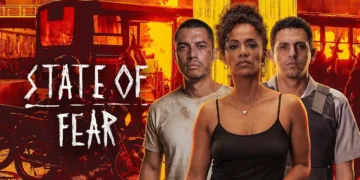











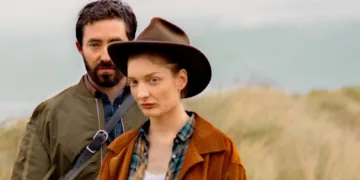
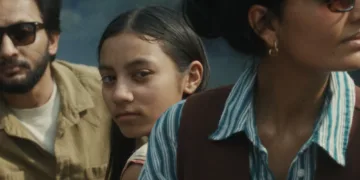







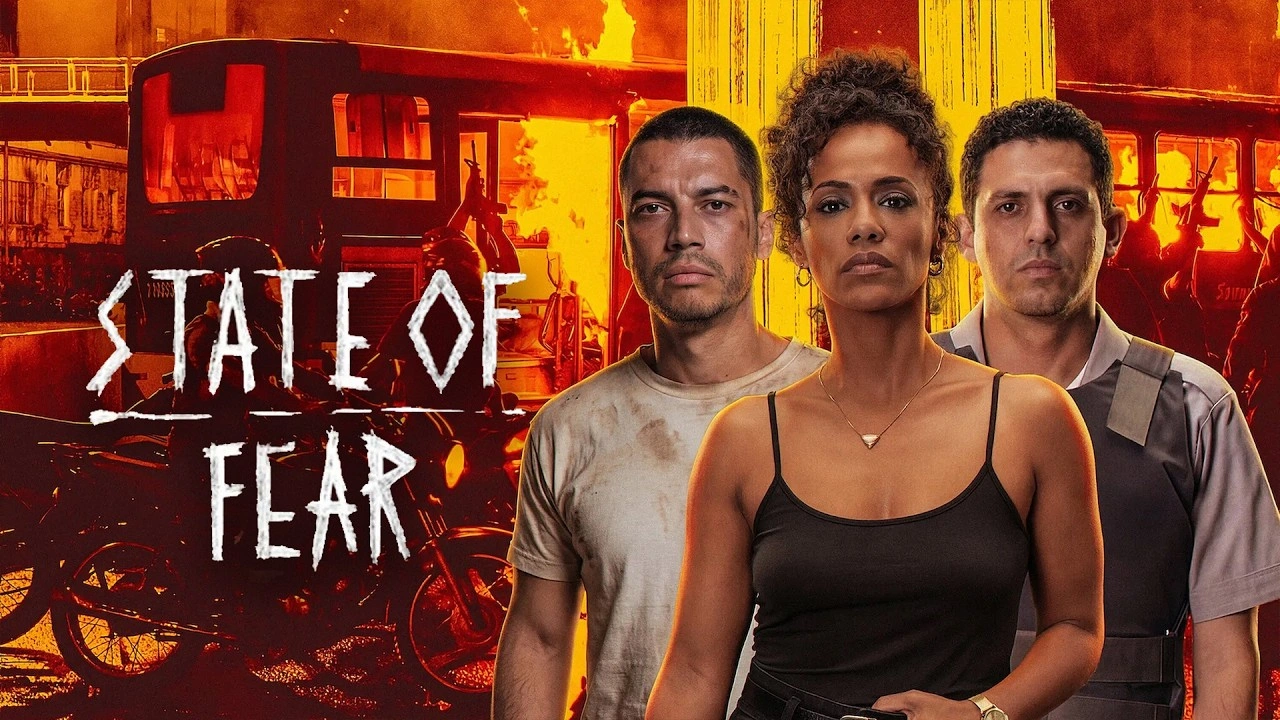

São Paulo behaves like a pressure cooker with the lid welded down. State of Fear resumes the threads left by Brotherhood, with Cristina Ferreira now far from her earlier position as a careful legal professional. She has given herself to the Irmandade, acting as the faction’s tactical legal brain while the organization holds power beyond that of local government.
The spark is the kidnapping of her niece, Elisa, during a Salve Geral. That coordinated offensive turns the city into a theater of urban war. Pedro Morelli directs the feature as a standalone work driven by raw, kinetic force. It imagines a society where institutional stability has melted into corruption, reprisal, and civic panic.
Every person in the frame must survive inside a place where the state has abandoned its first obligation: protection. The pacing feels like civic collapse at full speed. A metropolitan center becomes a tactical nightmare, and the terrifying part is how little effort the descent seems to require.
The Counselor and the Pathetic Predatory State
Ten years have passed since Edson’s death, and that silent gap has hardened Cristina into “The Counselor.” She lives inside a gray zone where law has become a survival instrument for the faction. This Cristina marks a severe shift from the protagonist viewers may remember.
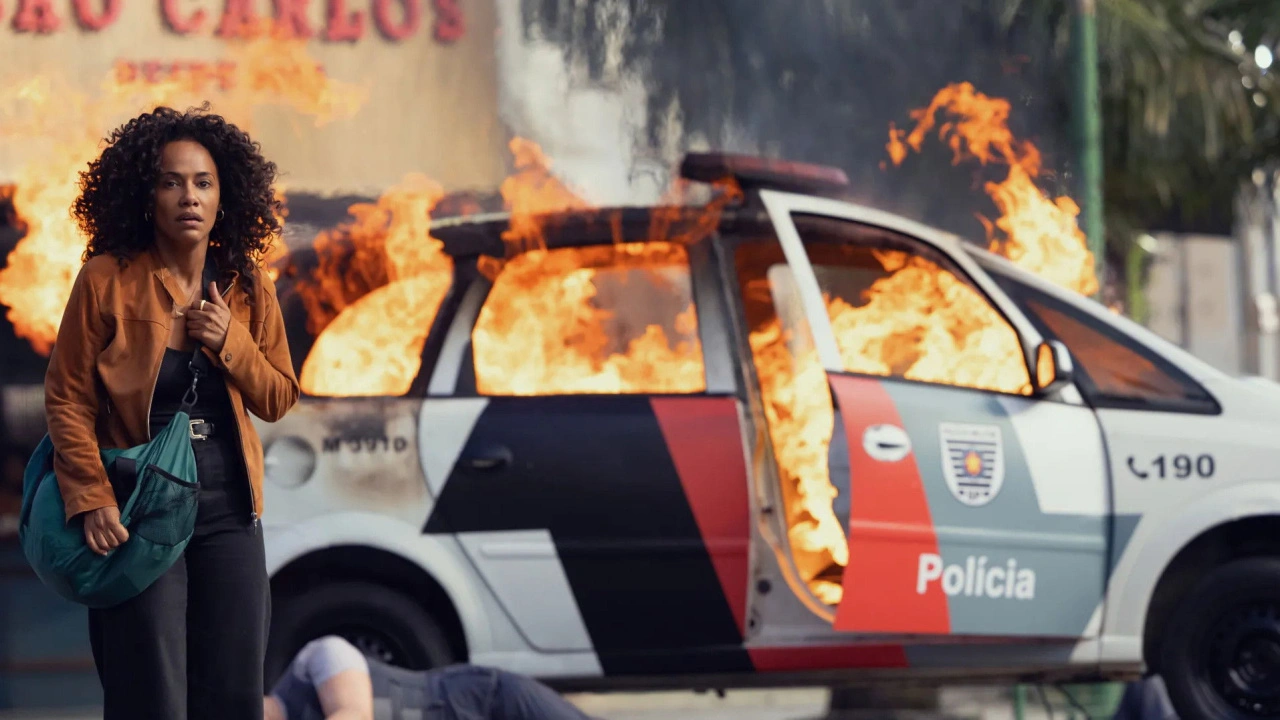
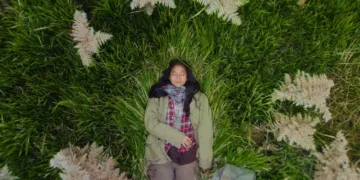
She now occupies a polished residence while coordinating prison riots by phone. Elisa serves as her ideological reflection, warped by generational distance. She is an idealist who turns to rap and non-violence to step away from her father’s shadow. Their conflict becomes the conflict of two Brazils: one sunk deep in the mud, the other still imagining dry land. Poor kid. Hope is expensive here.
Elisa’s abduction by officers Borges and Anselmo gives the film its sharpest view of local graft in its most pathetic-predatory form. Borges lacks the grandeur of a criminal mastermind. He is a lonely, small-time opportunist who still answers to his mother.
That domestic detail gives his villainy a banal chill. Cristina becomes trapped by competing obligations. She must guide the Brotherhood’s massive assault on the state while searching for her niece in a city frozen by her own faction’s explosives. The rescue mission becomes a race against a clock that her organization wound up and hurled into the street.
Unblinking Lenses and the Auditory Siege
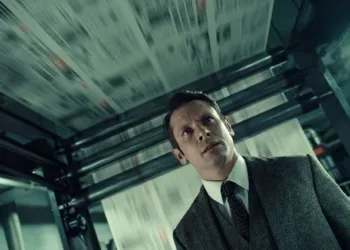
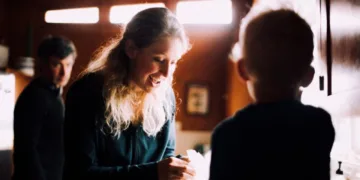
Morelli builds the film around an “unbroken” visual principle. The opening ten-minute shot is a technical feat, beginning at a baby shower and ending with a bloody birth inside a speeding car. It also captures an assault on a police station with relentless concentration. This sequence writes the film’s visual grammar in fire, glass, and panic. The camera refuses to blink while fireballs and shards fill the frame.
The drone shots create a colder kind of claustrophobia. They rise above street level to reveal the São Paulo skyline, showing chaos as systemic across the city. São Paulo appears as a bruised, monochrome organism beneath a thunder-heavy sky. Sound design becomes the main engine of anxiety. Sirens, rain, and distant percussion stack into a sustained auditory dread.
Morelli’s camera movement follows the frantic, erratic pulse of a population under siege. He treats the urban environment as an active participant in the carnage. The streets function as barriers that decide how long a person can remain alive. The filmmaking gains the same urgency as the plot, which gives the film a strange procedural terror: the city itself seems to know the next catastrophe before the characters do.
Anthro-Urban Collapse and the Birth-Death Parity
The film proposes an “anthro-urban” collapse, a condition where justice has gone extinct. Heroism has burned away. The police and the gang members share a devotion to brutality, creating a vacuum where survival replaces ethics. Morelli links birth and violence with blunt symbolic force. The opening birth sequence carries the same intensity and pain as the shootings that come before it. Life begins with a scream in a car under fire, a grim metaphor for a city locked in permanent trauma.
Violence becomes a closed loop with no visible exit. Elisa’s arc carries the deepest tragedy because it pushes her toward the conduct she has spent her life resisting. The characters often read as representational ciphers for a broken social contract. They become archetypes within a world so damaged that individual personality gives way to structural role. That symbolic weight gives the film force beyond its plot mechanics.
It reflects the historical reality of urban fractures across Latin America, where civic life can be carved apart by power, poverty, fear, and armed retaliation. The ending offers no comfort, leaving the sense of a cycle that feeds itself with bureaucratic rot, street-level desperation, and the oldest human sound in the film: a scream.
State of Fear premiered globally on Netflix on February 11, 2026. This Brazilian crime thriller serves as a cinematic expansion of the series Brotherhood, also created by director Pedro Morelli. It is currently available for streaming on the Netflix platform. The story follows a lawyer navigating a city consumed by a violent uprising while attempting to recover her kidnapped niece from corrupt officials.
Where to Watch State of Fear (2026) Online


Full Credits
Title: State of Fear
Distributor: Netflix
Release date: February 11, 2026
Rating: R
Running time: 103 minutes
Director: Pedro Morelli
Writers: Pedro Morelli, Julia Furrer
Producers and Executive Producers: Andrea Barata Ribeiro, Pedro Morelli, Cristina Abi
Cast: Naruna Costa, Camilla Damião, Seu Jorge, David Santos, Marcélia Cartaxo, Lee Taylor, Enio Cavalcante, Hermila Guedes, Yetunde Hammed, Elzio Vieira, Stefani Mota, Samurai Cria
Director of Photography (Cinematographer): Kauê Zilli
Editors: Helena Maura, Guilherme Porto
Composer: Lucas Vidal
The Review
State of Fear
State of Fear serves as a frantic technical autopsy of a society in mid-collapse. It prioritizes kinetic brilliance over deep psychological exploration. The sheer velocity of its vision remains undeniable (even if the narrative scaffolding feels slightly skeletal). It is a demanding, unblinking experience that trades sentiment for a surgical look at urban decay. Morelli succeeds in making the viewer feel the physical weight of a city under siege.
PROS
- Masterful use of long, unbroken shots to sustain physical tension.
- Immersive sound design that functions as a constant atmospheric threat.
- Grounding systemic corruption through lonesome, pathetic antagonists like Borges.
CONS
- Limited character depth beyond symbolic or representational roles.
- Pacing issues in the second act during the citywide lockdown.
- Significant reliance on the Brotherhood series for full emotional resonance.