


















In 1990, while Britain’s streets were flooding with heroin, Her Majesty’s Customs and Excise assembled one of the most audacious and quietly absurd anti-drug operations in modern British history. A handful of dissatisfied baggage handlers, VAT investigators, and clerical workers were handed false identities, given three weeks of training, and pointed at some of the most dangerous drug networks operating in London and Liverpool. The plan had the strategic confidence of a Hail Mary and the budget to match.
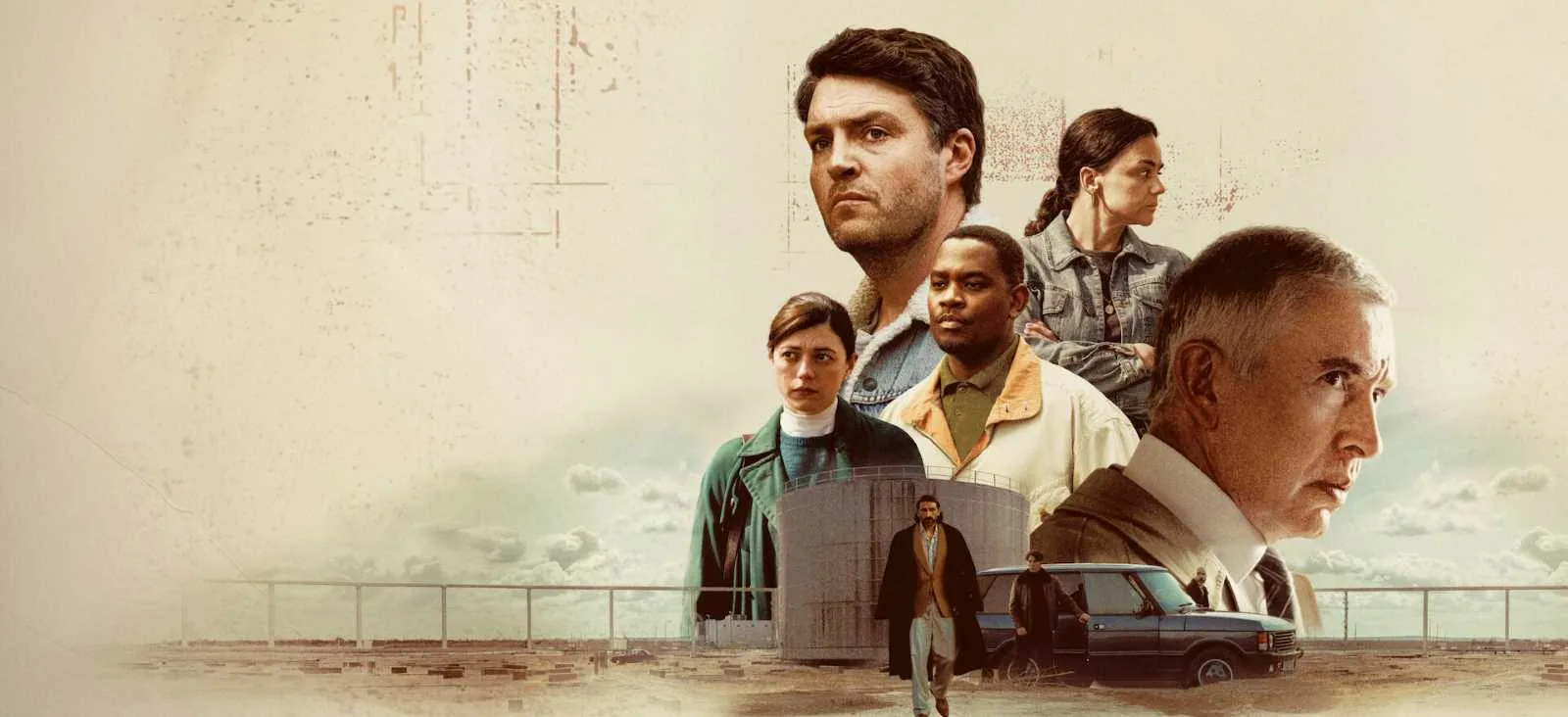
This is the story Neil Forsyth has adapted into Legends, a six-part Netflix crime thriller that arrives as one of the year’s most assured pieces of television. Forsyth, whose previous work demonstrated a rare gift for making forgotten chapters of British institutional history feel urgent and alive, brings the same instincts here. Steve Coogan and Tom Burke lead an ensemble that earns every minute of screen time, and the series itself maintains a tone that is grounded, restrained, and occasionally funny in the precise way that only genuinely desperate situations tend to be.
Thatcher’s Britain and Two Kinds of Crisis
The series opens with two deaths. A fifteen-year-old boy on a Liverpool council estate. An Oxford student in a well-appointed dormitory room. Different postcodes, different futures, killed by the same drug. The cold open is economical to the point of bluntness, and that is precisely the effect Forsyth is going for. Britain’s heroin epidemic of the late 1980s and early 1990s was not a secret. What changed the political calculus was whose children started dying.
Margaret Thatcher’s push for a British war on drugs is framed here as policy shaped by optics rather than empathy. The pressure lands on Angus Blake (Douglas Hodge), Director of Customs Investigations, who passes it down to Don Clark (Steve Coogan) with no meaningful budget and the kind of institutional support that exists mainly on paper. What Don gets is permission. From permission, he builds something extraordinary out of completely ordinary people.
The recruitment and training sequences deserve particular attention. Don’s process is deliberately unglamorous: recruits sit at desks parsing bank records, practice picking locks, and run low-stakes reconnaissance exercises. Anyone who asks too many legal questions gets shown the door immediately. The comedy in these scenes is genuine, but Forsyth never lets it overwhelm the underlying seriousness. Don knows what he is asking of these people. He has done it himself.
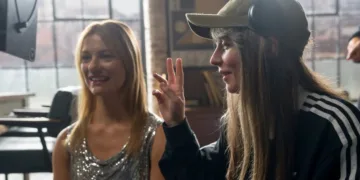
The operational split that follows gives the series its structural backbone. Kate (Hayley Squires) and Bailey (Aml Ameen) go to Liverpool, where Declan Carter (Tom Hughes) runs a distribution network through the ruins of deindustrialised dockland communities. Guy (Tom Burke) goes alone to London, tasked with infiltrating a Kurdish heroin operation running out of Green Lanes, where unremarkable cafés serve as the public face of a supply chain stretching back through Turkey to Pakistan.
Also Read





Both criminal worlds are drawn with care. The Liverpool operation is rooted in economic collapse, a community where industry vanished and drugs filled the gap. The London network is rendered with a different texture: quieter, more self-contained, and in some ways more chilling for it. Eddie (Johnny Harris), Carter’s enforcer, whose son’s overdose forces a reckoning the series handles with real sensitivity, provides the human cost on the criminal side. The show earns its emotional weight by refusing to reduce anyone on either side of the law to a simple plot function.
The People Who Disappeared
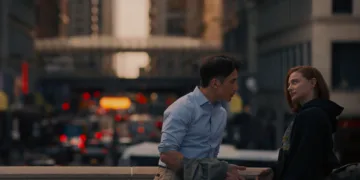
Tom Burke carries Legends with a performance that operates almost entirely in the register of quiet disintegration. Guy is introduced as a man moving through his own life at a slight remove, present but not quite engaged. Put him undercover and something shifts. He refers to his Legend in the third person, as if discussing a separate person with his own habits, his own logic, and his own appetite for risk. The series tracks, with real precision, the point at which that separation begins to close.
Burke avoids the trap of playing Guy as a man on the edge. He plays him as a man who has found, in the edge, something that feels like solid ground. The vulnerability lives in the silences, in the way Guy absorbs pressure before redirecting it. A scene in which he presses his head against a gun muzzle to protect a piece of paper his daughter made for him says more about his psychology than several episodes of exposition could.
Steve Coogan, as Don, functions as the series’ moral and operational spine. Serious, demanding, and prone to delivering warnings that land like small weather systems. Coogan, whose comic instincts are well-documented and probably visible from space, is deployed here against type, and the casting pays off in ways that are easy to underestimate. The viewer carries a background awareness that the tone could shift at any moment, which gives his scenes a low-level tension the series never quite explains but consistently exploits.
Don’s own undercover past is withheld rather than explained, and that restraint is one of Forsyth’s smarter decisions. What happened to Don is less important than the fact that something did, and that he has clearly not finished having it happen to him.
The supporting cast finds its footing at varying speeds. Squires is immediately assured as Kate, all dry wit and barely contained frustration. Ameen’s Bailey takes longer to open up, which is exactly right for a character who has spent his career being systematically underestimated. Jasmine Blackborow’s Erin works quietly in the background, generating the paperwork and intelligence that keeps everyone alive, and the series is wise enough to let her grow in stature without forcing it.
Gerald Kyd’s Mylonas is the season’s standout supporting performance. A Greek ex-convict sprung from prison to serve as Guy’s introduction to the Kurdish network, he is chaotic, voluble, almost impossible to trust, and completely riveting. Kyd plays him as a man of genuine intelligence disguised as pure noise. You cannot take your eyes off him, which is a problem if you are one of the criminals in his orbit, and a pleasure if you are watching at home.
Charlotte Richie’s Sophie, Guy’s wife and fellow Customs officer, does more here with limited screen time than many actors manage with twice as many scenes. She knows what her husband is walking into. That knowledge lives in every moment she has.
The Art of Holding Back
Forsyth’s most consistent creative choice across six episodes is restraint. The action sequences are limited and purposeful. The humour is earned, usually from the structural absurdity of the situation itself, rather than from jokes. Character development arrives through behaviour rather than confession. This is a show that trusts you to pay attention, and that trust is rare enough to be worth remarking on.
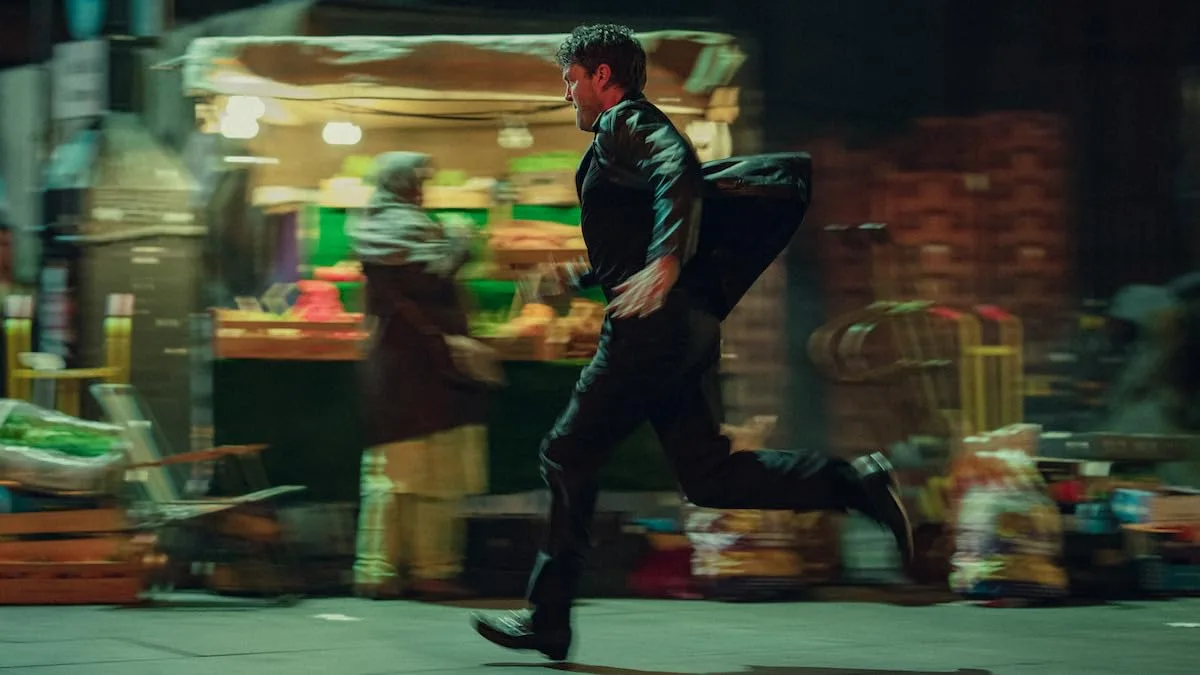
The risk built into the premise is real. “You think a few customs officers can take on the biggest drug gang in Britain?” is a line that sits a syllable away from self-parody. Forsyth sidesteps that risk by playing everything straight, never winking at the audience, never signalling that he knows how this sounds. The dramatic conviction holds.
Directors Brady Hood and Julian Holmes give the two operational theatres distinct visual personalities. Liverpool’s council estates are grey and rain-soaked, applied here with enough specificity to feel authentic rather than shorthand. Green Lanes is rendered with a denser, more layered texture, the sort of place where everything happens in plain sight and nothing is visible to outsiders. The period work is carried by production design and a well-curated soundtrack. The use of Depeche Mode’s “Personal Jesus” in one of the season’s better confrontations is a good example of music doing genuine dramatic work rather than simply marking a moment.
The plotting is dense. There are a lot of names, a lot of cities, a lot of overlapping criminal hierarchies running simultaneously, and Legends refuses to simplify any of it. Some viewers will find this demanding. The trade-off is a criminal landscape that feels genuinely large, the way actual organised crime is rather than the tidier version television usually offers.
The one significant weakness is Declan Carter. Tom Hughes is a capable actor given an underwritten villain, and when the back half of the season asks Carter to anchor a gang war he lacks the interior life to support, the seams show. The series compensates, reasonably effectively, by routing its emotional weight through Eddie instead.
The Self You Leave Behind
The richest idea in Legends is the one hiding in plain sight. A “Legend” is a false identity, a cover story, a mask. The series is interested in what happens when the mask fits better than the face underneath, and different characters sit at different points on that spectrum.
Bailey maintains a clean separation between himself and his Legend: professional, deliberate, a man who knows who he is and keeps that knowledge close. Guy is the opposite extreme. His Legend is a release valve. The version of himself he becomes undercover is the version that feels most alive, and that inversion is the show’s most unsettling observation.
Don is what lies at the far end of that road. A man who went too deep, came back, and has been living with the residue ever since. He recruits people knowing what the work costs, and does it anyway, because the alternative is to shut the whole operation down.
The class politics running through the series are pointed. Britain’s heroin epidemic was already well-established before it became a political priority. The cold open’s two deaths, a Liverpool teenager and an Oxford student, are a structural argument. The series makes that argument clearly without reducing it to a lecture.
What stays with you, beyond the performances and the plotting, is the question the series never quite answers directly: what does a person owe to a version of themselves they invented? And what do they lose when that invented version turns out to be the one they actually prefer?
Legends sits with those questions rather than resolving them. That is, as it turns out, exactly the right instinct.
Legends is a gripping six-part British crime thriller series that premiered globally on Netflix on May 7, 2026. Created by Neil Forsyth, the show is inspired by the remarkable true story of a secret undercover operation in the early 1990s. It follows a group of ordinary British Customs officers who, despite having no formal training in espionage, are sent deep undercover to infiltrate some of the UK’s most dangerous drug cartels. Starring Steve Coogan and Tom Burke, the series has been praised for its intense atmosphere and stellar ensemble cast, providing a raw look at the forgotten heroes of the 1990s war on drugs. You can currently stream the entire first season on Netflix.
Where to Watch Legends Online


Full Credits
Title: Legends
Distributor: Netflix
Release date: May 7, 2026
Rating: TV-MA
Running time: Approximately 60 minutes per episode
Director: Brady Hood, Julian Holmes
Writers: Neil Forsyth
Producers and Executive Producers: Charlie Leech, Neil Forsyth, Ben Farrell, Richard Bradley
Cast: Tom Burke, Steve Coogan, Hayley Squires, Aml Ameen, Jasmine Blackborow, Douglas Hodge, Charlotte Ritchie, Tom Hughes, Johnny Harris, Gerald Kyd, Numan Acar, Joshua Samuels, Kem Hassan, Thomas Coombes, Alex Jennings
Director of Photography (Cinematographer): Justin Brown
Editors: Dana E. Glauberman, Colby Parker Jr.
Composer: Sion Trefor
The Review
Legends
Legends is the kind of crime drama that earns its tension through conviction rather than spectacle. Forsyth has taken a buried piece of British history and shaped it into something that feels genuinely alive, anchored by Burke's career-best work and a supporting cast that rarely puts a foot wrong. The plotting occasionally buckles under its own density, and Carter is a villain the show deserves better than it gets. Those are real limitations. They do not, however, stop this from being one of Netflix's finest crime series in recent memory.
PROS
- Tom Burke delivers a psychologically rich, layered central performance
- Restrained tone and tight writing keep the stakes feeling real
- Strong ensemble, with Gerald Kyd's Mylonas a genuine revelation
- Historical backdrop adds weight and political sharpness
- Brisk six-episode structure wastes nothing
CONS
- Declan Carter is underwritten for a character asked to carry so much
- The plot density may lose less patient viewers early on
- Supporting characters outside of Guy take time to fully emerge