

















The documentary opens by placing pressure on the fragile fiction of an untouched childhood. Parents describe their toddlers as Gerber babies, and the phrase arrives loaded with idealized innocence. The home videos present children who appear headed toward ordinary, bright futures, which gives the film its first and most painful dramatic hinge.
Adolescence enters like a quiet break in the family story. Distance grows. The children become harder to reach, harder for their parents to understand, and harder for the family unit to hold in any familiar shape.
That uncertainty creates the entry point for the troubled teen industry. Parents act from fear, exhaustion, and a desperate hunger for guidance. They choose programs that sell therapeutic order and safety. Director Mikaela Shwer, who also produced and edited the film, spent a decade on this investigation, and that long commitment gives the narrative the weight of a life’s work.
The film studies the lasting harm caused by behavioral camps and schools. Its storytelling avoids the usual rhythm of true crime, choosing a slower, more corrosive structure. Shwer examines the gradual wearing down of identity inside these programs. The early footage matters because it restores personhood before the industry steps in and begins rewriting these lives.
The Commercialization of Fear and Systemic Failure
The behavioral health market becomes a billion dollar enterprise by converting parental anxiety into a business model. These programs present themselves as the final answer for families trapped at an impasse.
The film builds its argument carefully, showing how the industry turned the desperation of mothers and fathers into fuel for institutional growth. Medical professionals often treated these placements as credible therapeutic options, which gave the system a varnish of legitimacy it did not earn.
Shwer’s documentary exposes a vast lack of regulation. Without oversight, the industry becomes a place where profit carries greater value than child safety. Control takes the form of wilderness hikes and the psychological pressure of attack therapy. For years, these facilities operate behind secrecy, aided by a convenient social script.
The label of the bad kid functions like armor for the adults in charge. Abuse continues because these teenagers are already viewed as difficult, unreliable, or resistant to help. Harsh discipline gets accepted as part of the cure. That perception protects the camps from public accountability.
The film’s structure is strongest here, since it links individual suffering to a larger system without losing sight of either. It details the institutional failures that allowed these programs to grow and explains how the absence of medical standards created a dangerous environment for every child placed inside it.
The promise was seductively simple: return the child the parents thought they had lost. The cost proved enormous. The commercialization of discipline built a world where institutional expansion mattered far too much, and human rights far too little.
Portraits of Survival and the Cost of Silence
Liz Ianelli, known as Survivor 993, becomes the film’s main voice for the long-term wreckage left by the industry. Her arc moves from private endurance to public action, with her role becoming central to federal investigations. The documentary uses her perspective as a connective thread, giving the industry’s history a human shape and a moral throughline.

Cadilina Cady Deville’s story shows how these camps targeted identity itself. The programs treated gender expression as behavior marked for correction. Cady’s father sent her away after finding glitter on her after a night out. Years later, Cady builds a custom car with a blue exterior and a pink interior. It is one of the film’s clearest images, a material expression of a self that survived forced concealment. The documentary understands the power of that object. It says a great deal without straining for eloquence.
Cynthia Clark Harvey brings the emotional reality of the industry into sharp view. Her daughter, Erica, died on a poorly supervised hike one day after arriving at a wilderness camp. Cynthia uses art to sustain a connection with her daughter. She speaks about a drawing of their dog on a bathroom wall, a drawing she refused to leave behind. The detail is small, domestic, and devastating. It gives grief a location.
The story of Jon Martin Crawford adds another tragic dimension. His testimony before Congress marks a breakthrough for the movement. His later suicide reveals the long reach of institutional trauma. That loss pushes Liz toward a public stance against the industry. The production faces similar pain during its long filming period. Two participants die by suicide across the nine years of filming. These deaths make the film’s argument brutally clear: leaving campus did not mean leaving the damage behind.
Collective Action and the Pursuit of Justice
The path toward accountability begins in digital spaces, where survivors start finding one another. Private memory becomes public record. The documentary presents this shift as both practical and emotional, a movement built through testimony, recognition, and the refusal to let institutions control the story any longer.
The Child Victims Act gives survivors a legal route toward justice. It opens a narrow window for claims that old statutes had previously silenced. The 2025 trial and conviction of Paul Geer gives the film a rare moment of legal resolution. Geer was a serial abuser hired to work with children after a history of sexual addiction.
That history was hidden from the parents who trusted him with their children. On March 5, 2025, the legal system holds him accountable. One survivor recalls the click of the handcuffs as a sound that brought relief. In a film filled with systems protecting themselves, that sound carries unusual force.
The final scene places Liz Ianelli on a beach with her dog. The moment is quiet, spare, and earned. She speaks about staying alive long enough to fulfill promises made to the friends she lost. Her ability to dream marks a shift from trauma toward possibility. The documentary leaves the fight for reform unfinished, as the facts require. Its power comes from survival shaped into testimony, and testimony sharpened into action.
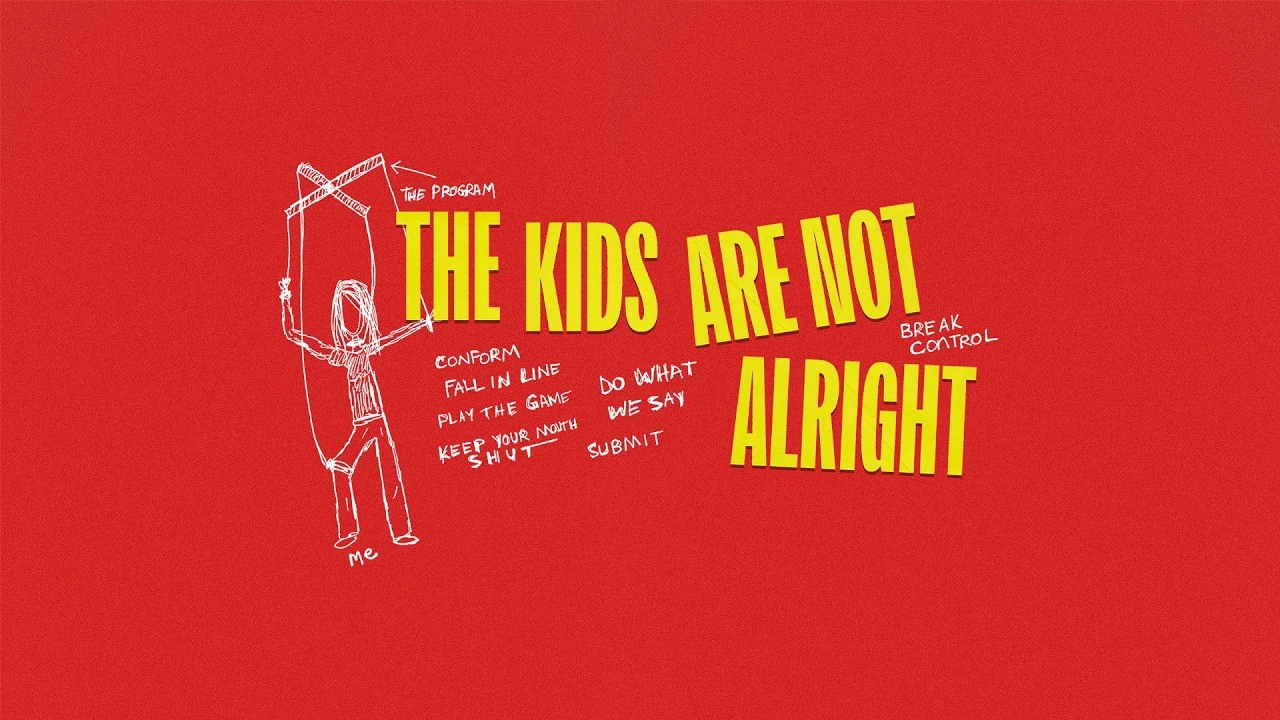
The Kids Are Not Alright is an investigative feature documentary that examines the deep-seated systemic failures and lasting trauma within the unregulated troubled teen industry. After nearly a decade in production, the film had its world premiere at the Dances With Films festival in late 2024 and was released to a wider audience on digital platforms on May 5, 2026. Viewers can currently watch or purchase the film on major VOD services, including Amazon Prime Video, Apple TV, Google Play, and YouTube Movies.
Where to Watch The Kids Are Not Alright (2024) Online



Full Credits
Title: The Kids Are Not Alright
Distributor: Freestyle Digital Media
Release date: May 5, 2026 (Digital), November 2024 (World Premiere)
Running time: 93 minutes
Director: Mikaela Shwer
Writers: Mikaela Shwer
Producers and Executive Producers: Kate S. Logan, Robyn Kopp, Kimberly Stuckwisch, Alana Maiello
Cast: Liz Ianelli, Cadilina “Cady” Deville, Cynthia Clark Harvey, Jon Martin Crawford, Erica Harvey
Director of Photography (Cinematographer): Autumn Eakin
Editors: Mikaela Shwer, Veronica Pinkham, Will Allegra Garofalo
Composer: Ben Messelbeck
The Review
The Kids Are Not Alright
The Kids Are Not Alright functions as a sobering record of institutional failure. Mikaela Shwer avoids the typical pitfalls of exploitative documentaries by focusing on the slow burn of recovery and the weight of legal accountability. While the pacing reflects the long duration of its production, the depth of character detail justifies the runtime. It is a necessary piece of investigative work that prioritizes the dignity of survivors.
PROS
- Extensive research spanning ten years of production.
- Refusal to use sensationalist true crime tropes.
- Clear focus on personal identity and reclamation.
- Inclusion of the 2025 trial provides a sense of justice.
CONS
- Pacing reflects the slow, methodical nature of the investigation.
- Heavy emotional themes make it a challenging watch.