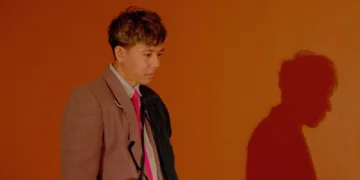


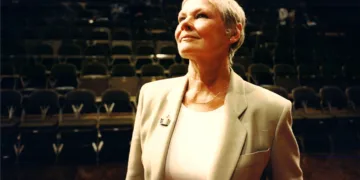
















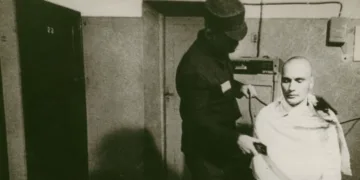








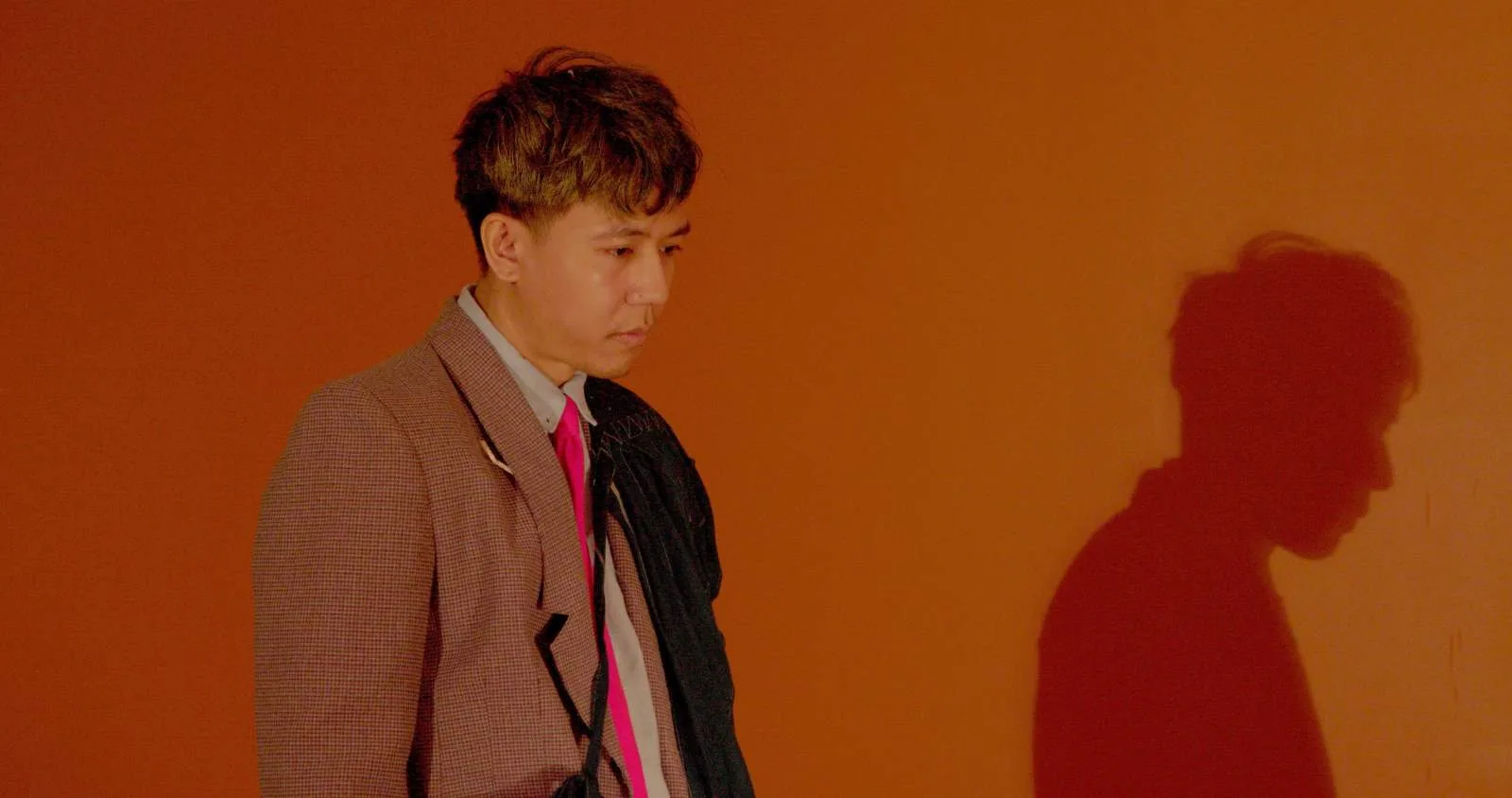

Gangsterism announces itself with a line of text before a single image appears: “I HATE YOU ALL.” The poster reinforces it: “Depiction = Endorsement.” Isiah Medina’s fifth feature is a film that refuses to pretend it is anything other than what it is, which is both its most confrontational quality and its most honest one.
The story, such as it is, follows Clem (Mark Bacolcol), a Filipino-Canadian filmmaker trying to collect money owed by collaborators and fund his next project, while suspecting someone in his circle of leaking his films. His partner Ez (Kalil Haddad) operates as an ideological engine, delivering arguments about cinema, language, race, and capitalism with the flat certainty of someone who considers the debate already settled. Around them are editor March (Charlotte Zhang) and collaborator Nico (Jonalyn Aguilar), each facing the same structural walls.
At 84 minutes, the film is dense enough to feel twice that length. That is the design. Gangsterism positions itself as a document of thought in motion, and it demands the same effort from its audience that it asks of its characters: to be present, to resist passivity, and to accept that discomfort is the point.
Art, Money, and the Machinery That Eats Both
What Medina constructs here is a sustained argument about what cinema owes its historical moment. The obstacles facing Clem are systemic and carefully named: film festivals that prize legibility over risk, critics who demand accessibility as a condition of legitimacy, landlords who interrupt rehearsals to conduct viewings, and grant money that paradoxically corrupts the very freedom it promises. “I felt so rich of world when I had no budget,” Clem says, and the line carries genuine weight. Wealth, the film implies, is the force that most reliably terminates thought.
The politics are blunt and specific. A TIFF lanyard hangs in frame next to an Israeli flag in one of the film’s most arresting images. Ez delivers a speech linking the logic of early cinema’s cross-cut to the psychological conditioning that allows people to observe genocide at a comfortable remove. These connections could read as overstated, but Medina earns them through formal rigor: the ideas are embedded in the film’s structure, not merely announced by its characters.
There is also a strand of self-awareness here that keeps the film from calcifying into pure manifesto. “Now I’ve found out that the way my characters talk isn’t human,” says Clem. The film registers this as a problem worth sitting with, even if it doesn’t resolve it. Whether or not Medina intends the film as auto-critique, that question lingers productively.
A Grammar Built From Scratch
Gangsterism is at its most alive and most divisive in its approach to editing and visual construction. Conversations flicker between angles in rapid succession, sometimes only a few frames apart, cutting before any single viewpoint can claim authority. In one key sequence, Clem and March sit at perpendicular angles rather than facing each other in the conventional shot-reverse-shot arrangement. His image seems to interject into hers, each cut a small collision rather than a polished exchange. The effect mimics how ideas actually meet: jagged, overlapping, insisting on being felt before they can be processed.
This flickering rhythm becomes the film’s pulse, and Medina deliberately unsettles it once the viewer begins to anticipate it. A close-up of March fidgeting with a pen is paired sonically with a metal creak; a train rushes past the window behind her. The train is a loaded image in cinema history, and its arrival at that precise moment is entirely pointed. Sound design operates similarly throughout: dialogue drops out, resurfaces, and is sometimes rendered deliberately inaudible. This is not technical failure. It is a structural choice that places the viewer inside the experience of thought being interrupted or suppressed.
The visual grammar Medina builds here is genuinely original. It has antecedents, but it does not feel derivative. It feels like a filmmaker discovering a language in real time, and documenting that discovery as the film itself.
Performance and the Character Problem
The cast operates in a register that sits somewhere between theatrical recitation and deadpan sincerity. These are not psychological portraits in any conventional sense. Bacolcol carries Clem with a brittle arrogance that makes him credible as both visionary and impossible, and Haddad gives Ez a relentless ideological momentum occasionally cracked open by dry humor. “Be proud: regardless of race, most people don’t like your work,” Ez tells Clem, and the line is funny, precise, and quietly devastating.

Zhang and Aguilar are given less material to work with, but both anchor the film’s more tender passages. The climax strips away the theoretical apparatus almost entirely, as the camera holds on a family of swans searching for food in extended, near-silent observation. The camera stops arguing and starts witnessing. Against everything that preceded it, the contrast is stark and genuinely moving.
Gangsterism is a film that demands something from its audience beyond passive reception. That demand is the point, and it is the price of entry.
Gangsterism is a crime drama that premiered on February 19, 2025. The film follows a director-gangster named Clem who, while attempting to manage the budget for his latest film, sends a group of artist associates to track down an old comrade suspected of leaking information. Directed by Isiah Medina, the film is known for its experimental and dense stylistic approach. As of May 2026, it is primarily available through limited festival screenings and select digital platforms associated with independent cinema, such as the director’s own production label, Quantity Cinema.
Where to Watch Gangsterism (2025) Online
Full Credits
Title: Gangsterism
Distributor: Quantity Cinema
Release date: February 19, 2025
Rating: Not Rated
Running time: 84 minutes
Director: Isiah Medina
Writers: Isiah Medina
Producers and Executive Producers: Kelley Dong, Isiah Medina
Cast: Diego Abbati, Jonalyn Aguilar, Mark Bacolcol, Erik Berg, Lisa Gal, Malcom-Jay, Matt Medina, Sae-Jin Medina
Director of Photography (Cinematographer): Isiah Medina
Editors: Isiah Medina
Composer: Isiah Medina
The Review
Gangsterism
Gangsterism is rigorous, confrontational, and formally inventive in ways that feel earned. Medina's visual grammar is genuinely new, and the film's anger is precise rather than performative. It will frustrate many viewers and reward a committed few. The swan sequence alone justifies the difficulty.
PROS
- Bold original visual language that refuses inherited cinematic conventions
- Intellectually sharp script with specific, grounded political analysis
- The swan sequence is genuinely affecting
- Bacolcol's performance holds the film's contradictions in productive tension
- Sound design used as argument, not just atmosphere
CONS
- Dialogue functions as an echo chamber for the director's own positions
- Some sound choices tip from challenging into inaccessible
- Character interiority is sacrificed almost entirely to ideology
- Dense enough that early stretches may lose viewers before the film earns their patience