


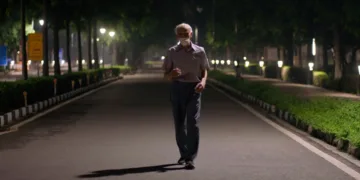












Giuseppe Tornatore has made a film about humane capitalism that refuses the mild inconvenience of skepticism. Brunello: The Gracious Visionary follows Italian fashion designer Brunello Cucinelli from a poor rural childhood to the summit of global luxury, where a cashmere sweater can cost as much as a used car and still be described with monastic calm. Cucinelli produced the film, narrates his life, walks through its reconstructions, and receives testimony from relatives, celebrities, employees, and friends. Access is abundant. Distance has apparently missed its train.
Cucinelli is an appealing presence. He speaks gently about philosophy, beauty, work, and the dignity his father lost inside a harsh factory after the family moved to the city. His belief that profit should preserve human worth gives Tornatore a serious subject. The problem is that the film treats the belief itself as proof.
Childhood in Soft Focus
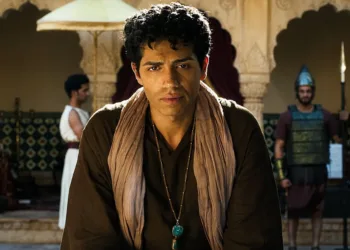
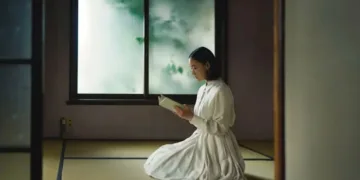
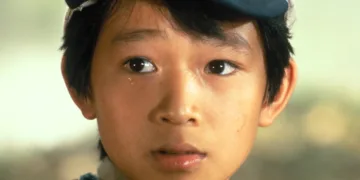
The first half reconstructs Cucinelli’s upbringing through polished dramatic scenes. A mischievous boy plays cards, resists school, absorbs the rituals of farm life, and grows into a young man drawn to parties and Scopa. He meets Federica, tries modeling, and develops the idea that cashmere for women need not remain trapped in grey and beige. Color becomes both business strategy and origin myth.
Tornatore photographs this past in wide CinemaScope frames filled with clean fields, stone houses, careful costumes, and children whose hair seems suspiciously prepared for memory. The countryside contains hardship in the narration, yet very little dirt reaches the image. Call it pastoral laundering: history passes through the luxury-brand machine and emerges with softer light, smoother edges, and excellent tailoring.
Cucinelli often appears inside these reconstructions as a guide to his younger self. The device could have exposed the instability of memory, showing an older man negotiating with the legend he has spent decades building. Tornatore instead lets him certify each scene. An episode in which the young Cucinelli urges the town prostitute toward a better life arrives with the blunt purpose of installing moral virtue early, like a plaque on a building before construction has finished.
The Humane Factory
The film gains focus once Cucinelli begins discussing the company itself. His “humanistic capitalism” responds directly to his father’s humiliation at work. The factories in Solomeo have large windows, natural light, and views of the landscape.
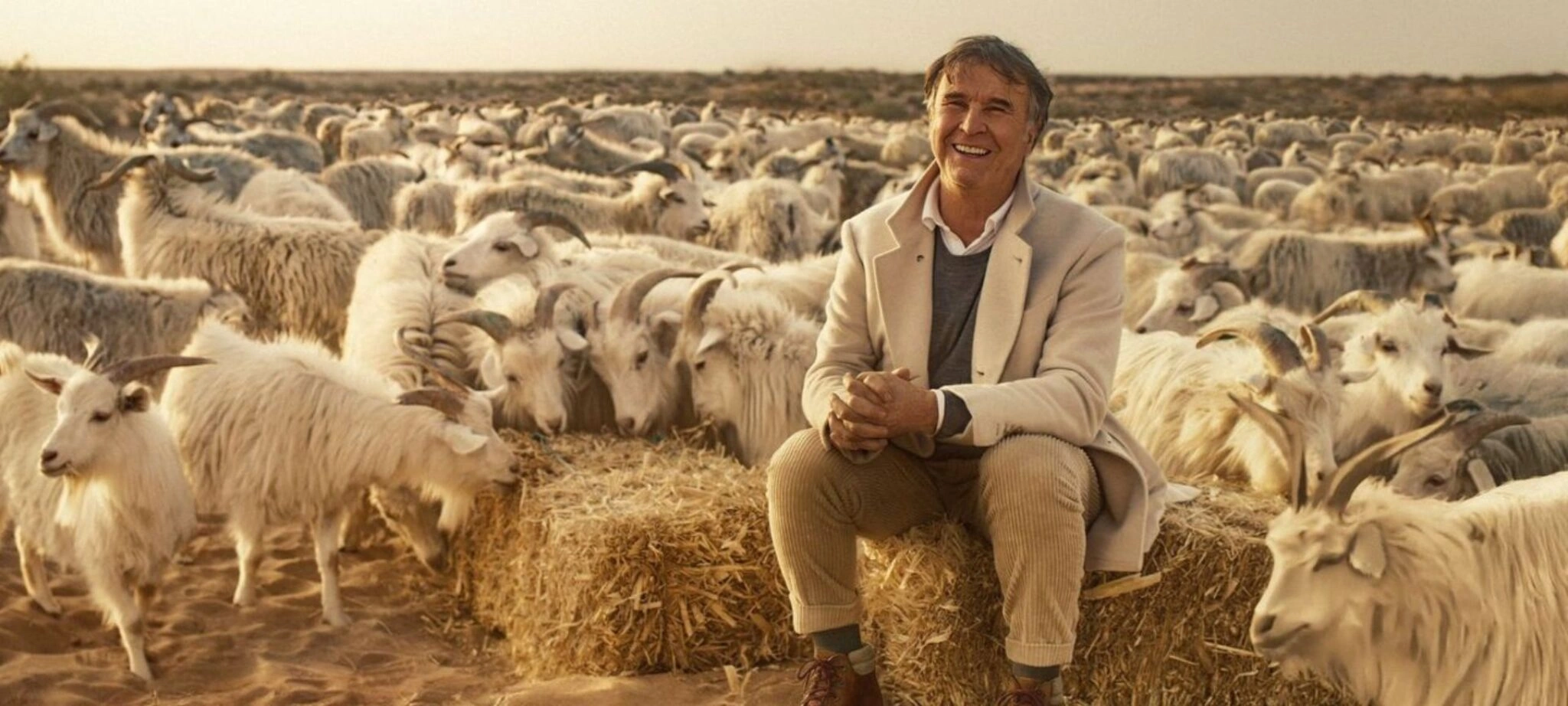
Employees are presented as people entitled to beauty rather than units sealed beneath fluorescent tubes. During the pandemic, Cucinelli says, salaries were maintained and layoffs avoided. He restores medieval buildings, funds cultural projects, and insists that dying rich would represent a failure of imagination.
These ideas deserve examination because they reject the usual corporate claim that efficiency must resemble punishment. A workplace can be profitable without training its employees to forget the sky. That proposition is simple, even radical in industries where exhaustion is marketed as ambition.
Yet Tornatore avoids the questions that could give Cucinelli’s philosophy weight. The film offers no sustained inquiry into wages, labor disputes, diversity, corporate hierarchy, environmental costs, or the moral geometry of selling clothing for thousands while speaking about universal dignity. Oprah Winfrey and Patrick Dempsey can testify to warmth and taste, but celebrity approval is not an audit. The family interviews bring affection. They do not create pressure.
The strangest image is archival footage of Cucinelli playing Jesus in an Easter Passion play. Tornatore includes it without apparent irony. The film has already arranged childhood, commerce, land, charity, and philosophy around one benevolent figure. The costume merely completes the diagram.
Cinema as Showroom
Tornatore’s craft is never careless. The Solomeo landscapes have scale, the restored buildings carry tactile detail, and Nicola Piovani’s score gives rural memory the solemnity of inherited ritual. Snow falls with impeccable timing. Drone shots glide above vineyards and stone roofs. The production design in the childhood scenes has the finish of an expensive historical drama.
That beauty creates a credibility problem. Every room feels approved. Every recollection arrives cleaned for display. Even the transition from dramatized youth to conventional documentary produces a strange structural break: reenactments dominate the early life, then largely vanish once the corporate story takes over. The film changes form at the exact point where scrutiny would become most useful.
The two-hour length magnifies this caution. Childhood scenes linger after their emotional point has landed, interviews repeat Cucinelli’s virtues, and institutional language begins to replace discovery. Tornatore’s previous documentary Ennio found movement through artistic contradiction, rivalry, insecurity, and craft. Here, contradiction is treated like a wrinkle in cashmere: something to be removed before presentation.
Brunello Cucinelli may sincerely believe everything he says. The factories may indeed offer conditions rare in luxury manufacturing. The restoration of Solomeo is visible, concrete, and admirable. Sincerity, though, is a starting point for documentary inquiry, not its final certificate. Tornatore builds a beautiful room around the philosophy and leaves every door unlocked, then chooses not to enter any of them.
This biographical documentary premiered on April 12, 2026, offering an intimate look at the life and philosophy of Italian fashion designer and entrepreneur Brunello Cucinelli. The film explores his humanistic capitalism model and his efforts to restore the medieval hamlet of Solomeo.
Where to Watch Brunello: The Gracious Visionary (2025) Online
Full Credits
Title: Brunello: The Gracious Visionary
Distributor: Independent
Release date: April 12, 2026
Running time: 92 minutes
Director: Davide Gambino
Writers: Davide Gambino
Producers and Executive Producers: Davide Gambino, Silvia Di Gregorio
Cast: Brunello Cucinelli
Director of Photography (Cinematographer): Emanuele Giannattasio
Editors: Davide Gambino
Composer: Teho Teardo
The Review
Brunello: The Gracious Visionary
Brunello: The Gracious Visionary presents humanistic capitalism as a beautiful room where every window has been cleaned before the camera arrives. Brunello Cucinelli remains an engaging subject, and Giuseppe Tornatore gives his memories the sweep of an Italian pastoral epic. Yet the film treats admiration as evidence. Its reenactments polish childhood into advertising, while its interviews protect the company mythology from friction. The result is luxurious, sincere, and intellectually underfed: a corporate self-portrait asking to be mistaken for inquiry.
PROS
- Handsome rural cinematography
- Cucinelli’s engaging presence
- Strong production design
- Informative management philosophy
- Nicola Piovani’s expressive score
CONS
- Heavy corporate reverence
- Sentimental reenactments
- Minimal outside scrutiny
- Inflated two-hour runtime
- Uneven documentary structure